
Table of Contents
- 1. Document Everything at the Scene and Beyond
- 2. Understand How Insurance Companies Minimize Claims
- 3. Gather Medical Evidence to Support Your Full Damages
- 4. Build a Strong Evidence Package Insurance Cannot Ignore
- 5. Negotiate Strategically When Facing Lowball Offers
- 6. Know When Professional Legal Representation Becomes Essential
- Frequently Asked Questions (FAQ)
1. Document Everything at the Scene and Beyond
If you’ve been injured in an accident, you have rights after an accident. The reality is that insurance companies employ trained adjusters whose job includes finding ways to minimize what they pay you. Their tactics range from subtle to aggressive, and without preparation, most injured people accept settlements far below what their claims are actually worth.
We’ve helped hundreds of Sacramento-area accident victims navigate these tactics and secure full and fair compensation. The difference between accepting a lowball offer and fighting back often comes down to preparation, evidence, and knowing exactly when to bring in professional legal support. Here’s what you need to know to protect yourself.
Your first moments after an accident are critical. Even if you’re injured and shaken, preserve any evidence and get medical care—but also capture what you can safely document at the scene.
Use your phone to photograph the accident location from multiple angles: the vehicle damage, road conditions, traffic signals, skid marks, and any visible injuries. If there are witnesses, get their names and phone numbers immediately. Ask the other driver for their insurance details, license plate number, and driver’s license information. If police respond, request the report number so you can obtain the official accident report later.
This initial documentation creates a record that insurance adjusters cannot dispute or reframe. Traffic camera footage, dash cam video, and photographs taken within hours of an accident carry far more weight than your memory alone, especially months later when a settlement offer is being negotiated.
Beyond the accident scene, document everything related to your recovery and losses. Keep a detailed log of medical appointments, treatments, medications, and how your injuries affect daily activities. Save all receipts for medical bills, transportation to appointments, and out-of-pocket expenses. If you’ve lost wages, obtain written statements from your employer showing dates missed and income lost. This paper trail becomes the foundation of your claim.
What to do next: Create a single folder (digital or physical) and file every document related to your accident, injuries, and expenses. Add to it as soon as anything happens. This habit alone prevents critical evidence from being lost or forgotten.
2. Understand How Insurance Companies Minimize Claims
Insurance adjusters are skilled at using specific tactics to reduce claim payouts. Understanding their playbook puts you on equal footing.
One common approach is the quick settlement offer. Within weeks of your accident, the adjuster may contact you with a settlement figure that seems reasonable on its surface. The goal is to settle before you fully understand the extent of your injuries or before you consult an attorney. Accepting this offer waives your right to pursue additional compensation later, even if your medical bills mount or your injuries prove more serious than initially apparent.

Another tactic involves questioning your medical treatment. Adjusters argue that certain treatments were “unnecessary” or “excessive” or that your doctor charged too much. They may suggest your injuries are pre-existing or exaggerated. They also dispute the connection between the accident and your injuries, particularly if there’s any gap in medical treatment.
Insurance companies also minimize damages by offering only what they calculate for clear, documented losses like medical bills and some lost wages. They routinely undervalue or ignore pain and suffering, reduced quality of life, emotional distress, and future medical needs. California law recognizes these as legitimate damages, but adjusters count on injured people not knowing this.
What to do next: Never accept the first settlement offer. Regardless of how reasonable it sounds, it’s almost certainly below what your claim is worth. Request a detailed breakdown of how the adjuster calculated the offer, and don’t respond until you’ve gathered complete medical evidence and consulted with an experienced attorney.
3. Gather Medical Evidence to Support Your Full Damages
Your medical records are the foundation of your claim’s credibility. They document your injuries, prove the need for treatment, and establish the direct link between the accident and your harm.
Follow all medical advice and complete prescribed treatments. This shows you took your recovery seriously and provides a complete clinical picture. If your doctor recommends physical therapy, imaging studies, or specialist consultations, pursue them fully. Insurance adjusters scrutinize treatment patterns; gaps or incomplete care give them ammunition to argue your injuries weren’t severe.
Request complete copies of all medical records, including office visit notes, test results, imaging reports, and treatment summaries. Have your healthcare providers prepare a detailed report explaining your diagnosis, the accident’s role in causing it, your prognosis, and any ongoing or future medical needs. This professional opinion carries significant weight in settlement negotiations.
Document how your injuries affect your daily life. Describe specific activities you can no longer do, pain levels throughout the day, sleep disruption, and emotional impacts like anxiety or depression. These details support claims for pain and suffering damages, which often represent 50-75% of a personal injury settlement’s value.
What to do next: Ask your primary care doctor or treating specialist to write a medical causation letter linking your accident directly to your injuries and explaining your expected recovery timeline. This single document often shifts settlement negotiations significantly in your favor.
4. Build a Strong Evidence Package Insurance Cannot Ignore
Beyond medical records, a comprehensive evidence package addresses every element of your claim and leaves no room for dispute.
Collect all witness statements. If anyone saw the accident, get their written account of what happened. Eyewitness testimony is powerful, especially if it supports your version of events or contradicts the other driver’s account. Follow up in writing—email witnesses thanking them and summarizing what they told you, creating a documented record.
Obtain the police accident report if one was filed. This official document often establishes fault, notes traffic violations by the other driver, and documents your initial injuries and the emergency responders’ observations.
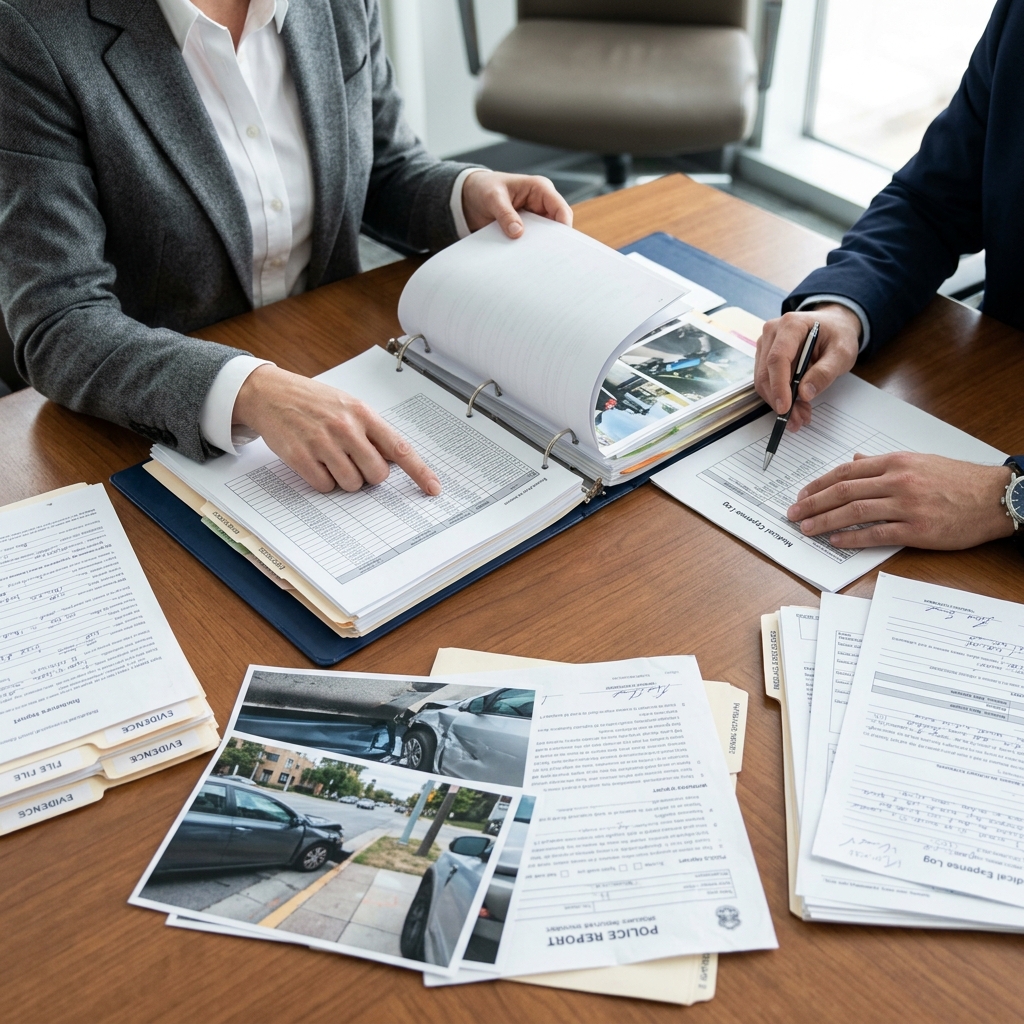
Gather photographic and video evidence beyond the accident scene. If possible, revisit the location and photograph road conditions, visibility, signage, and any hazards that contributed to the accident. For rideshare accidents or accidents involving commercial vehicles, request any available driver logs, maintenance records, or fleet data that may reveal negligence.
Create a detailed timeline of your losses and recovery. List each day you missed work, each medical appointment, each expense incurred. Insurance adjusters are accustomed to rough estimates; precise documentation demonstrates seriousness and professionalism, making them more likely to negotiate fairly.
What to do next: Compile all evidence into a organized settlement demand package. Include a cover letter summarizing your claim, medical summaries, loss calculations, and copies of key documents. Present this to the insurance adjuster in writing, giving them a complete picture of your damages at once.
5. Negotiate Strategically When Facing Lowball Offers
When the insurance company makes an initial offer, most injured people feel relief and pressure simultaneously. Resist both impulses and negotiate methodically.
Respond to any lowball offer in writing, explaining point-by-point why it’s inadequate. Reference your medical evidence, calculate damages clearly, and cite relevant California law regarding what damages are recoverable. A written response creates a record and signals that you’re serious and informed.
Make a counteroffer based on realistic calculations of your actual damages. Medical bills plus lost wages plus a reasonable multiplier for pain and suffering gives you a defensible starting position. Don’t inflate numbers—adjusters recognize unsupported claims immediately. Instead, anchor your counteroffer to documented facts.
Set a deadline for the insurer to respond and escalate within their organization. Many first offers come from junior adjusters. Request that a claims manager or settlement authority review your full evidence package. This step often results in higher offers without requiring litigation.
What to do next: If the insurer’s counteroffer remains below 70-80% of what you believe your claim is worth, stop negotiating directly. Time is limited — act now by seeking professional legal representation. A personal injury attorney can continue negotiations on your behalf and prepare for litigation if necessary.
6. Know When Professional Legal Representation Becomes Essential
At a certain point in most claim disputes, professional representation shifts the entire dynamic.
Insurance companies know that injured individuals often lack legal knowledge and typically don’t have resources to pursue litigation. When you retain an experienced personal injury attorney, that calculation changes. Adjusters recognize that an attorney will invest time investigating the claim, reviewing evidence, and litigating if necessary, which costs them far more than paying a fair settlement.
We investigate all available evidence and build cases that leave insurance companies with no reasonable alternative but to offer fair compensation. We handle the negotiation, manage deadlines and legal requirements, and prepare for trial if settlement discussions stall.
More importantly, we secure compensation that covers all your damages. Many injured people fail to account for future medical expenses, permanent disability, or loss of earning capacity. We calculate damages comprehensively and pursue full and fair compensation.
Our fee structure also protects you: no fee unless we recover for you. This means you pay nothing upfront, and we only profit if you do. We’re financially invested in maximizing your recovery because our success depends on it.
When to contact us: If an insurance company has made you an offer and you’re unsure whether it’s fair, if they’ve denied your claim, or if your injuries are significant and ongoing, reach out for a free consultation. We’ll review your claim, explain your rights, and advise whether representation will improve your outcome.
For rideshare accident claims specifically, our firm has extensive experience navigating the complex liability issues these cases involve. If you’ve been injured in a Rideshare accidents lawyer.
Contact us today for a Free Case Consultation!
Frequently Asked Questions (FAQ)
Why does the insurance company keep lowballing our settlement offer?
Insurance companies minimize claims because they profit by paying you less than you deserve. We’ve seen adjusters use delay tactics, dispute medical necessity, or claim your injuries aren’t as severe as documented. They count on injured people accepting quick settlements under financial pressure. That’s why we investigate all available evidence and build a strong case that makes their lowball offers indefensible.
What documentation should we preserve immediately after a rideshare accident?
You have rights after an accident, and preserving evidence protects those rights. Photograph the accident scene from multiple angles, vehicle damage, road conditions, and traffic signs. Get the driver’s insurance information, witness names and contact details, and medical records from your initial evaluation. Keep receipts for all medical treatment, lost wages, and accident-related expenses. We use this documentation to demonstrate the full scope of your damages during settlement negotiations.
When should we hire a lawyer instead of handling the insurance claim ourselves?
If the insurance company denies your claim, offers significantly less than your medical expenses and lost wages, or disputes liability, professional legal representation becomes essential. We negotiate with adjusters on your behalf and pursue full and fair compensation based on California personal injury law. Time is limited under the statute of limitations, so contact us for a free consultation. We work on contingency, meaning no fee unless we recover for you.