Understanding Negligence in Injury Law
Negligence is the foundation of most California injury cases. Proving negligence personal injury means showing that someone failed to act with reasonable care and that failure caused your harm. California law breaks this into four elements of negligence you must establish: duty, breach, causation, and damages.
- Legal duty of care: People and businesses must act as a reasonably careful person would in similar circumstances. Drivers must follow traffic laws and keep a safe lookout. Property owners must fix or warn of hazards they know or should know about. Manufacturers must design and warn against foreseeable risks.
- Breach: A breach occurs when that duty is violated. Examples include speeding, texting while driving, leaving a spill uncleaned in a grocery aisle, or ignoring a broken handrail. In some cases, violating a safety statute creates a presumption of negligence (negligence per se), such as running a red light or driving over the legal BAC.
- Causation in injury: You must connect the breach to your injuries. California uses the “substantial factor” test—was the negligence a substantial factor in causing the harm? Foreseeability also matters for proving fault accident cases. If a distracted driver rear-ends you and you suffer a herniated disc, medical records and expert opinions help distinguish accident-related injuries from pre-existing conditions. Defendants must take victims as they find them (the “eggshell plaintiff” rule).
- Damages: You need proof of actual losses—medical bills, lost income, future care, and pain and suffering. Thorough documentation strengthens the value of your claim.
Common evidence for injury claim building includes:
- Photos/video of the scene, dashcam, or surveillance footage
- Police or incident reports and 911 audio
- Witness statements and contact information
- Vehicle data (EDR “black box”), skid measurements, and crash reconstruction
- Property maintenance logs, cleaning schedules, and prior complaint records
- Cell phone records, intoxication tests, or citation records
- Medical records, imaging, and treating physician reports
California’s pure comparative negligence rule reduces compensation by your percentage of fault, but does not bar recovery. In mixed-fault scenarios, carefully collecting and presenting evidence is critical to accurately apportion liability.
Note: Some product cases proceed under strict liability, but negligence claims may still apply for negligent design, testing, or failure to warn.
The Four Essential Elements of Negligence
In California, proving negligence personal injury means showing—through solid evidence—that the defendant’s conduct legally caused your losses. The law requires proof of all four elements of negligence:
- Duty of care: You must first establish the defendant owed you a legal duty of care. Drivers owe others a duty to follow traffic laws and drive prudently. Property owners must fix or warn of hazards they know about or should discover through reasonable inspections. Professionals and businesses must act with the skill and caution expected in their field.
- Breach: Next, show the defendant breached that duty by acting unreasonably. Evidence for your injury claim can include police reports, traffic citations, surveillance footage, eyewitness statements, cell phone records (texting while driving), vehicle event data, store maintenance logs, incident reports, and photos of a spill without warning cones. In many cases, violating a safety statute—such as running a red light or speeding—supports negligence per se, easing the burden of proving breach.
- Causation: You must link the breach to your injuries. California uses the “substantial factor” test for causation in injury cases: the wrongful conduct must be a significant contributor to the harm. Medical records and expert testimony help connect the crash or fall to diagnoses, treatment, and future care needs. Accident reconstruction can tie impact forces to specific injuries. Be prepared for defenses claiming an intervening cause or preexisting condition; the law still holds defendants responsible for aggravating a prior injury.
- Damages: Finally, document actual losses. Economic damages include ER bills, imaging, prescriptions, therapy, out-of-pocket costs, and lost wages (pay stubs, employer letters, tax returns). Non-economic damages cover pain, limitations, and emotional distress; support these with treatment notes, photos of injuries, and a recovery journal.
To succeed in proving fault after an accident, align each piece of evidence with these elements, showing a clear, factual path from duty and breach to your injuries and measurable damages.
Defining the Legal Duty of Care
In California, the legal duty of care is the foundational element of negligence. It asks whether the defendant had a responsibility to act with reasonable care to avoid foreseeable harm. Under Civil Code section 1714 and the Rowland v. Christian framework, people generally must use ordinary care in their conduct. Establishing this duty is the first step in the elements of negligence and is essential to proving negligence personal injury.
Duty can arise from relationships and context:
- Drivers owe other road users a duty to follow the Vehicle Code and drive prudently.
- Property owners and businesses must maintain reasonably safe premises and warn of known hazards.
- Professionals (e.g., doctors) must meet the standard of their field.
- Manufacturers have duties to design, make, and warn about products reasonably safely.
The scope of duty is often defined by:
- Statutes and regulations (traffic laws, building and fire codes, OSHA rules).
- Contracts and leases (maintenance obligations, vendor responsibilities).
- Industry standards and professional guidelines.
- Company policies and training materials.
- Common-law principles of foreseeability and reasonableness.
To connect duty to proving fault accident, tie the expected conduct to specific facts. Example: A grocery store that fails to clean a spill for an hour despite foot traffic likely breached its duty to keep aisles reasonably safe. Or a delivery driver speeding in rain violates the duty to drive with care given weather conditions.
Useful evidence for injury claim to establish duty and breach includes:
- Traffic citations, dashcam footage, event data recorder downloads.
- Sweep/inspection logs, maintenance records, surveillance video.
- Safety manuals, training records, and company policies.
- Prior incident reports, complaint histories, emails or texts acknowledging hazards.
- Expert testimony to explain standards and practices.
Finally, link the breach to causation in injury. For instance, if unsecured cargo fell because loading protocols weren’t followed and struck your vehicle, the breached duty directly caused your harm. This clear chain supports both liability and damages.
Demonstrating a Breach of Duty
Once a legal duty of care is established, the next step is showing the defendant failed to act as a reasonably careful person would under similar circumstances. This breach is the core of proving negligence personal injury and often turns on specific, objective proof.
In California, breaking a safety statute or regulation can create a presumption of negligence (negligence per se) if the violation caused the harm and the law was designed to prevent that type of injury. Common examples include California Vehicle Code violations (speeding, running a red light) or building and safety code violations in a premises case.
Useful evidence for injury claim issues will vary by scenario:
- Traffic and rideshare crashes
– Traffic citations, dashcam or surveillance video, event data recorder/“black box” downloads, and traffic signal timing records
– Cell phone records suggesting texting or app use while driving
– Skid marks, debris fields, and accident reconstruction showing unsafe speed or following distance
- Trucking and commercial vehicle cases
– Hours-of-service logs, GPS/telematics, dispatch messages, and weigh-station receipts showing fatigue or deadline pressure
– Maintenance records indicating ignored brake or tire issues
– Company safety policies and training gaps
- Premises liability (stores, apartments, parking lots)
– Inspection and cleaning logs establishing whether reasonable inspections occurred
– Surveillance footage and incident reports revealing how long a spill, loose rug, or broken handrail existed (constructive notice)
– Prior complaints, lighting measurements, and code enforcement findings demonstrating hazards and industry standards
- Product and equipment failures
– Recall notices, quality-control records, testing protocols, and design change histories
– Expert analysis tying deviations from standards to the failure mode
Witness statements, photos, and expert testimony help translate these facts into a clear breach. Move quickly: businesses often overwrite video within days, and vehicles can be repaired or sold. While causation in injury is a separate element, aligning the breach evidence with how the accident unfolded strengthens proving fault accident and the broader elements of negligence required for your claim.
Proving Direct Causation of Injury
In California, you must connect the defendant’s conduct to your harm with more than speculation. Beyond showing duty and breach in the elements of negligence, you need proof that the breach was a substantial factor in causing your injuries. This addresses both actual cause (but-for the conduct, the harm wouldn’t have occurred) and legal cause (the harm was not too remote and was reasonably connected to the conduct).
Strong evidence for injury claim causation includes:
- Medical records establishing a clear before-and-after picture, including diagnostic imaging and physician notes tying symptoms to the incident
- Timeline documentation showing immediate or progressively consistent symptoms
- Accident reconstruction, skid and impact analyses, and vehicle “black box” data in proving fault accident cases
- Photos/video (dashcams, surveillance), scene measurements, and weather or maintenance logs
- Witness statements and 911 transcripts establishing mechanism of injury
- Expert testimony (medical, biomechanical, human factors) explaining how the forces caused specific injuries
- Employment and activity records showing changes in function and earnings after the event
Concrete examples help. In a rear-end collision, cervical MRI findings soon after the crash, coupled with no prior neck complaints and bumper deformation consistent with the force described, can support causation in injury for a herniated disc. In a slip-and-fall, footage showing a freshly mopped, unmarked tile and orthopedic notes linking the fall mechanics to a wrist fracture can establish the causal chain.
Pre-existing conditions do not defeat a claim; California law allows recovery when an accident aggravates a prior issue. The defendant is responsible for the added harm, even if the plaintiff is more susceptible. Conversely, a superseding cause—like an unforeseeable, independent criminal act—may break the chain. Routine medical negligence after an accident, however, is typically foreseeable and does not sever liability.
Comparative fault matters too. If you share some responsibility, your recovery is reduced by your percentage of fault, but the causal link remains if the defendant’s breach was a substantial factor.
Early medical evaluation, consistent treatment, and preserving evidence are critical to proving negligence personal injury claims under California’s duty, breach, causation, and damages framework.
Documenting Your Damages and Losses
Even when the legal duty of care and breach are clear, proving negligence personal injury claims still requires solid proof of your losses. The more specific and organized your evidence for injury claim, the easier it is to connect damages to the incident and establish causation in injury—both essential elements of negligence.
Document these categories:
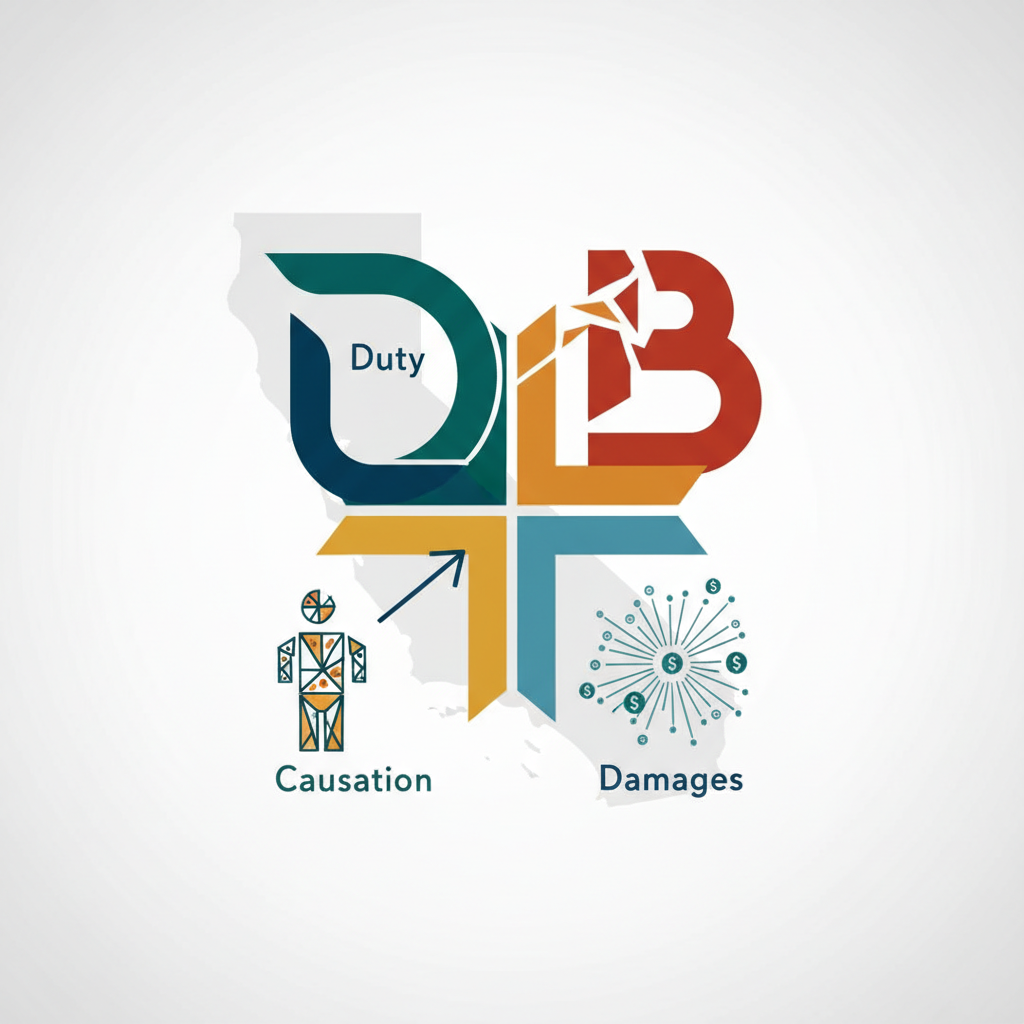
- Medical treatment: Gather itemized bills, ER and ambulance records, imaging reports, operative notes, prescriptions, and physical therapy notes. Ask treating providers to include diagnoses and statements tying injuries to the accident date (for example, “acute cervical strain consistent with rear-end collision”). Keep before-and-after records if you had preexisting conditions to show aggravation rather than unrelated pain.
- Lost income: Save pay stubs, W‑2s, and a letter from your employer detailing dates missed, hourly rate/salary, and lost benefits or overtime. Self-employed? Use 1099s, profit-and-loss statements, and customer cancellations. For reduced future earning capacity, vocational and economic expert opinions help quantify long-term impact.
- Out-of-pocket costs: Track copays, devices (braces, crutches), home or vehicle modifications, prescription and over-the-counter medications, household help, childcare, and transportation to appointments. Log mileage to medical visits.
- Property damage: Keep repair estimates, invoices, photos of vehicle damage, and appraisals for totaled property.
- Non-economic losses: Maintain a pain journal noting daily pain levels, sleep disruption, activity limits, and emotional distress. Include photos of bruising or scarring and statements from family or coworkers describing changes in your abilities and mood.
- Future damages: Obtain physician prognoses, treatment plans, and, in serious cases, a life care plan outlining projected surgeries, therapy, and costs. Document anticipated future wage loss.
Strengthen the link between the event and your losses. For example, an MRI showing a post-accident herniated disc, coupled with a doctor’s causation opinion, supports proving fault accident and damages.
Comply with your duty to mitigate: follow medical advice and attend therapy. Missed appointments or gaps in care can reduce recovery.
Organize everything by date, keep originals, and save insurer EOBs and lien notices (health insurance or MedPay). Thorough documentation positions your claim for strong negotiation or litigation if needed.
Key Evidence for Negligence Claims
Proving negligence personal injury claims hinges on collecting clear, admissible proof that ties each element of negligence—legal duty of care, breach, causation, and damages—to the facts of your case.
To establish duty, document relationships and rules that create obligations. Useful evidence includes contracts or service agreements, property deeds or leases showing control of a premises, medical intake forms, and applicable statutes or regulations (for example, relevant California Vehicle Code sections for drivers or local building and safety codes for property owners).
To show breach, focus on what the at-fault party did—or failed to do. Strong evidence includes:
- Police collision reports (CHP 555), citations, and 911 recordings
- Photos and video of the scene, skid marks, debris fields, and lighting conditions
- Surveillance or dashcam footage; vehicle event data recorders; GPS/telematics
- Cell phone records in suspected texting-while-driving cases
- Maintenance and inspection logs, “sweep sheets,” and prior incident reports for premises liability
- Training manuals, standard operating procedures, and industry standards
To prove causation in injury, link the mechanism of the accident to your diagnosis. Key evidence includes ER records, imaging, treating physician notes, and expert opinions (accident reconstructionists, biomechanical experts). Demonstrate temporal proximity and rule out alternative causes. In California, show the defendant’s conduct was a substantial factor in causing harm, and explain any aggravation of preexisting conditions.
To quantify damages, compile:
- Medical bills, treatment plans, and future care estimates
- Pay stubs, tax returns, and employer letters for lost income
- Photos of injuries and recovery, pain journals, and therapy notes
- Property damage estimates and receipts for out-of-pocket costs
Preserve time-sensitive proof. Send evidence preservation letters for surveillance video, vehicles, or defective products. Seek public records via CPRA requests when applicable.
In proving fault accident disputes, witness statements often tip the balance. Get full contact details and signed statements early, while memories are fresh. Together, this evidence for an injury claim builds a cohesive narrative that satisfies the elements of negligence.
Role of Expert Witnesses
In California injury cases, expert witnesses turn technical facts into persuasive proof that satisfies the elements of negligence: legal duty of care, breach, causation, and damages. When liability is contested, they supply objective evidence for injury claim presentation and help in proving fault accident scenarios with methods courts recognize as reliable.
Common experts and how they help prove negligence personal injury claims:
- Accident reconstructionists: Analyze scene measurements, skid marks, vehicle crush, and event data recorder (EDR) downloads to determine speed, timing, and visibility. Example: An EDR shows a driver was traveling 15 mph over the limit and never braked before impact, supporting breach of duty and causation in injury.
- Medical specialists: Orthopedists, neurologists, and radiologists explain the mechanism of injury, differentiate preexisting conditions from trauma, and outline future care. Example: A spine surgeon links an acute L5-S1 herniation to a rear-end crash and explains why surgery is medically necessary and reasonable.
- Safety/engineering experts: In premises liability, they assess code compliance, lighting, handrail design, and floor friction testing. Example: A safety engineer shows a grocery store lacked a reasonable inspection schedule and had a floor with inadequate slip resistance, clarifying the store’s legal duty of care and breach.
- Human factors/biomechanics: Address perception–reaction times, sightlines, and slip/trip dynamics to explain how an incident unfolded and whether conduct was reasonable.
- Economists, vocational experts, and life-care planners: Quantify lost earning capacity, household services, and the cost of future medical needs, anchoring the damages element.
California courts act as gatekeepers under Sargon to exclude speculative opinions, so credible experts rely on accepted methods and solid data. Early preservation of EDR downloads, vehicle parts, and surveillance video prevents spoliation and strengthens causation in injury analyses.
Effective counsel coordinates the right experts early, integrates their opinions into demand packages and depositions, and uses demonstratives to make complex findings clear—often driving fair settlements or trial success when proving negligence personal injury.
Navigating Comparative Negligence Rules
California follows pure comparative negligence. Your compensation is reduced by your percentage of fault, but you can still recover even if you’re mostly at fault. This makes strategy and evidence critical when proving negligence personal injury claims.
To limit fault shifting, build the elements of negligence against the at-fault party: legal duty of care, breach, causation in injury, and damages. At the same time, anticipate how insurers may argue you contributed to the crash or incident, and gather proof that minimizes or rebuts those arguments.
Useful evidence for injury claim scenarios includes:
- Video: traffic cams, dashcams, store surveillance showing speeds, distances, and signals
- Vehicle data: event data recorder downloads, braking and speed logs
- Phone and app data: call/text activity, rideshare trip data, delivery app timelines
- Scene proof: skid marks, debris fields, lighting conditions, weather records
- Property records: maintenance logs, cleaning schedules, incident reports
- Product evidence: design specs, recalls, warnings, instructions, and testing
- Expert analysis: accident reconstruction, human factors, biomechanical and medical experts tying mechanism of harm to the breach
- Medical documentation: contemporaneous complaints, imaging, and provider notes establishing causation in injury and ruling out alternative causes
Examples:
- Left-turn crash: Even if you entered on a stale yellow, EDR data and video showing the other driver speeding or running a red can push most fault to them.
- Slip-and-fall: A “wet floor” sign isn’t automatic defense. Time-stamped cleaning logs and video can show the hazard existed long enough that the owner breached the duty to fix or warn.
- Motorcycle lane splitting: Legal in California. Evidence that a driver made an unsafe lane change can outweigh claims that splitting was “unsafe.”
- Safety equipment: Not wearing a seat belt or helmet can reduce recovery for related injuries, but it doesn’t erase liability for the collision itself.
Practical tips:
- Preserve evidence immediately with spoliation letters.
- Document your own care: obey traffic laws, follow medical advice, and keep records.
- Avoid speculative statements to insurers; provide facts supported by proof.
Framing the case around clear duty, breach, and medical causation, while countering comparative fault, strengthens your position when proving fault accident claims.
How a Lawyer Proves Negligence
Attorneys build your case around the four elements of negligence: a legal duty of care, a breach of that duty, causation, and damages. In California, drivers owe others a duty to operate vehicles safely; property owners must fix or warn of hazards; manufacturers must design reasonably safe products. Breach is shown by conduct below what a reasonably careful person would do—speeding, texting while driving, ignoring a known spill, or selling a defective product.
Next, a lawyer connects the breach to your harm. California uses the “substantial factor” test for causation in injury, meaning the negligent act must be a significant contributor to the outcome. For example, if a distracted driver rear‑ends you and you develop a herniated disc, medical experts link the collision forces to your condition. Even with pre‑existing issues, we show the crash aggravated them. The standard of proof is a preponderance of the evidence—more likely than not.
To meet that burden, your attorney gathers targeted evidence for injury claim success:
- Police and incident reports, 911 audio
- Photos, video, vehicle “black box” data, and surveillance
- Eyewitness statements and depositions
- Cell phone records, maintenance logs, and prior complaints
- Medical records, imaging, and treating physician opinions
- Expert analyses (accident reconstruction, biomechanics, vocational, and economic loss)
When laws were broken—such as DUI or safety code violations—negligence per se may streamline proving fault accident elements by establishing duty and breach through the statute. Your lawyer still proves causation and damages.
Insurers often argue shared fault. California’s pure comparative negligence allows recovery even if you were partly responsible; your lawyer rebuts overstatements with reconstruction, timelines, and human factors evidence.
At Weinberger Law Firm, we preserve evidence with litigation hold letters, use subpoenas to obtain critical records, and present a clear narrative tying breach to losses. We then package the proof—liability analysis, medical causation, and damages—to negotiate firmly and, if needed, try the case to maximize compensation when proving negligence personal injury claims.
Secure Your Rightful Compensation
Securing full and fair compensation starts with proving negligence personal injury claims through clear, admissible evidence and a damages presentation that shows the full impact of the crash, fall, or defective product.
Build the liability case using the elements of negligence:
- Legal duty of care: Identify the rule the at-fault party broke. Example: a driver must stop at a red light; a store must fix or warn about a known spill.
- Breach: Show how the rule was violated (traffic cam of a red-light run; time-stamped store logs showing no inspections).
- Causation in injury: Link the breach to your harm through medical records and expert opinions. Example: an orthopedic report tying a torn meniscus to the slip, not a prior sports injury.
- Damages: Document medical costs, lost income, and pain and suffering with objective proof.
Prioritize evidence for injury claim early:
- Photos/video of the scene, vehicles, hazards, and visible injuries
- Police reports, incident reports, and 911 audio
- Witness statements and contact info
- Event data recorder downloads and surveillance footage (send preservation letters)
- Medical records from day one, diagnostic imaging, treatment plans
- Pay stubs, employer letters, and tax returns for proving fault accident-related wage loss
- A daily pain journal and activity limitations log
Account for California’s pure comparative fault. Even if you share some responsibility, you can recover compensation reduced by your percentage of fault. Careful evidence collection can minimize any alleged share of blame.
Present a comprehensive demand package that ties facts to the elements of negligence, addresses liability defenses, and quantifies all losses, including:
- Past and future medical care (with physician cost projections)
- Lost earning capacity supported by vocational analysis
- Non-economic damages supported by consistent symptom documentation
Identify insurance coverage and limits (at-fault liability, UM/UIM, MedPay) and protect your net recovery by negotiating medical liens and health insurer subrogation.
Mind deadlines: generally two years from injury, and as little as six months for government entities. When insurers dispute liability or causation, litigation and expert testimony may be necessary to secure rightful compensation. An experienced Sacramento attorney, like Weinberger Law Firm, can assemble the proof, pressure insurers, and take your case to court when needed.
Call to Action
Contact us today for a Free Case Consultation!