Understanding Personal Injury Claims
A personal injury claim seeks to hold a negligent party financially responsible for the harm they caused. In California, you must prove duty, breach, causation, and damages. For example, a driver who texts and rear‑ends you breaches a duty of care; if that crash causes a neck injury and missed work, those losses are compensable.
Strong evidence makes or breaks a case. Useful proof includes:
- Police or incident reports, scene photos, and surveillance video
- Medical records linking injuries to the accident
- Witness statements and expert opinions (accident reconstruction, medical)
- Phone records, vehicle “black box” data, and maintenance logs (helpful in truck or premises cases)
Damages typically fall into:
- Economic: medical bills, rehabilitation, lost income, diminished earning capacity, out‑of‑pocket costs
- Non‑economic: pain, emotional distress, loss of enjoyment of life
- In limited cases, punitive damages for egregious misconduct
California follows pure comparative negligence, so compensation is reduced by your percentage of fault. If you’re 20% at fault, your award is reduced by 20%. Deadlines matter: most personal injury lawsuits carry a two‑year statute of limitations; claims against government entities often require an administrative claim within six months. Medical malpractice has separate, shorter timelines and caps on non‑economic damages.
Insurance coverage shapes recovery. Claims may involve the at‑fault driver’s liability policy, your Med‑Pay, and UM/UIM benefits if the other driver is uninsured or underinsured. Avoid giving recorded statements before getting legal support for injuries; insurers often seek admissions that undermine liability or damages.
Here’s where personal injury lawyer help is critical. An attorney can coordinate medical care, preserve time‑sensitive evidence (like store video in a slip‑and‑fall), quantify future treatment needs, and prepare a demand package. Skilled accident claim assistance includes negotiating with insurance to challenge low offers and, if needed, filing suit and litigating to verdict. For Sacramento victims, Weinberger Law Firm provides a practical injury compensation guide through each step, from initial evaluation to resolution.
Immediate Post-Accident Legal Steps
Prioritize safety and get medical care right away, even if you feel “okay.” Tell providers about every symptom, however minor. Continuous treatment records are often the strongest proof of injury, and gaps in care can be used to minimize your claim.
Report the incident. For crashes, call the police and obtain the report number. For falls or other incidents, ask the property owner or manager to create an incident report and request a copy. Document the scene: photograph vehicles, hazards, lighting, weather, skid marks, damage, and visible injuries. Collect witness names and contact details. Preserve evidence such as damaged clothing, a broken helmet, or a defective product.
Be careful with insurers. Notify your own carrier promptly, but avoid recorded statements or broad medical authorizations to the at‑fault insurer before you get counsel. Do not speculate about fault. Early settlement offers are often designed to limit payouts. Keep communications factual and brief.
Contact a Sacramento personal injury lawyer quickly. Early personal injury lawyer help includes sending preservation letters for dashcam or store surveillance, securing traffic camera footage, downloading vehicle “black box” data, and inspecting the scene before conditions change. A firm like Weinberger Law Firm can identify all available coverage (at‑fault liability, med‑pay, UM/UIM), coordinate medical treatment and liens, and begin negotiating with insurance from a position of strength.
Track losses from day one. Save bills, prescriptions, mileage to appointments, and out‑of‑pocket costs. Keep a simple pain and recovery journal. Ask your employer for a letter confirming missed work and restrictions. Avoid social media posts about the accident or your activities.
Know key California timelines. In most injury cases, you have two years to file a lawsuit; claims involving public entities require a government claim within six months. California’s comparative negligence rules mean partial fault reduces, but does not bar, recovery.
Use this brief injury compensation guide as a starting point, then seek tailored accident claim assistance. Prompt legal support for injuries can protect evidence, preserve deadlines, and maximize the value of your claim.
Thorough Case Investigation and Strategy
A strong result starts with fast, methodical fact-finding and a strategy tailored to California law. Weinberger Law Firm provides personal injury lawyer help that prioritizes preserving evidence, proving fault, and building a damages model from day one—so you have both accident claim assistance and a clear path to maximum recovery.
Key investigation steps we take:
- Send preservation (spoliation) letters to secure vehicles, event data recorders (EDR), store surveillance, and maintenance logs
- Obtain police reports (including CHP 555), 911 audio, body‑cam/dash‑cam footage, and traffic camera video
- Conduct scene inspections, measurements, and photos of skid marks, debris fields, and sightlines
- Canvass for witnesses and nearby businesses with exterior cameras; take recorded statements
- Analyze vehicle damage and download EDR where available; engage accident reconstructionists when needed
- Compile medical records and bills; track diagnosis and causation; coordinate with treating physicians
- Document wage loss with employer verification, tax records, and vocational assessments
We tailor liability theories to the case type and anticipate defenses. In a rear‑end crash, we highlight safe‑following and speed evidence; in premises liability, we prove a dangerous condition and notice through cleaning logs and prior incident reports; in product cases, we evaluate defect and safer alternative designs. We also assess comparative fault under California law to protect your recovery.
Your compensation strategy is evidence-led. We calculate economic losses (medical expenses, future care plans, lost earnings, diminished earning capacity, and household services) and non‑economic harms. When helpful, we bring in medical experts, life‑care planners, and economists. We also handle lien resolution (health insurance, Medi‑Cal/Medicare) and explore MedPay and UM/UIM coverage—critical legal support for injuries that maximizes net recovery.
Negotiating with insurance starts with a comprehensive demand package that ties facts, law, and losses together with exhibits. If an insurer minimizes your claim, we’re prepared to file suit within California’s statute of limitations, leverage discovery, and position the case for mediation or trial. Consider this your practical injury compensation guide: build the evidence, value the claim correctly, and pair it with disciplined advocacy to secure fair compensation.
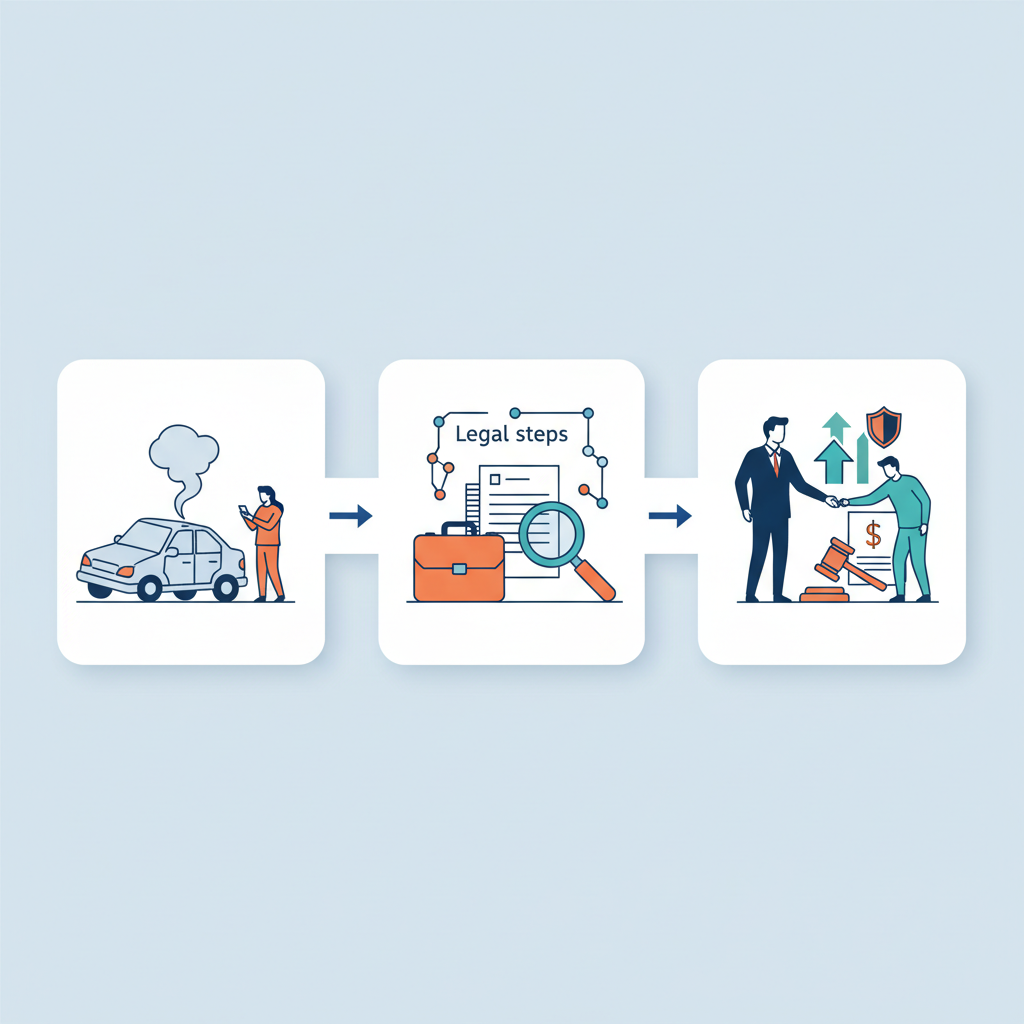
Navigating Complex Legal Procedures
After a crash, the process can move quickly—and missing a step can cost you. With personal injury lawyer help from Weinberger Law Firm, you get an organized plan that protects deadlines, preserves evidence, and positions your case for maximum value.
We start by locking down timelines. In California, most injury cases have a two‑year statute of limitations, but claims against government entities require an administrative claim within six months. Uninsured/underinsured motorist claims may have shorter, contract-based deadlines. We calendar every cutoff and confirm coverage early.
Evidence is preserved immediately. We send spoliation letters to businesses and carriers to retain CCTV footage, vehicle data, and incident reports. We collect medical records and billing ledgers (with ICD/CPT codes), wage-loss proof from employers, and expert statements when needed. If fault is disputed, we analyze police reports, scene photos, and witness accounts to counter comparative negligence arguments—California’s pure comparative fault can reduce recovery if not addressed.
Your demand package is built for impact. We craft a liability narrative, damage summaries, future care projections, and pain-and-suffering analysis, and when appropriate issue a time-limited policy-limits demand compliant with California law. This creates leverage when negotiating with insurance and helps avoid lowball offers.
Complexities we handle for you:
- Identifying all liable parties: employers (respondeat superior), rideshare or delivery platforms, product manufacturers, and public entities for dangerous conditions.
- Navigating special rules: Prop 213 limits non-economic damages for uninsured drivers, with exceptions (e.g., DUI defendant conviction).
- Lien and subrogation resolution: Medicare/Medi‑Cal, ERISA health plans, hospital liens, and MedPay reimbursements to maximize your net recovery.
- Litigation readiness: filing and serving the complaint, discovery, depositions, defense medical exams, motions, and expert retention—so insurers know we are trial-ready.
Think of us as your injury compensation guide. Our accident claim assistance and legal support for injuries keep your case on track from day one, so you can focus on healing while we handle the law and the negotiating with insurance.
Expert Negotiation with Insurers
Insurance companies are trained to minimize payouts. Having personal injury lawyer help from Weinberger Law Firm levels the playing field by anchoring negotiations in evidence, law, and policy language—not guesswork.
From day one, we build a valuation that insurers can’t dismiss. We gather complete medical records and billing, physician opinions on future care, wage-loss documentation, and proof of out-of-pocket costs. We analyze coverage (liability, MedPay, UM/UIM), policy limits, and California’s pure comparative negligence rules, which insurers often try to use to shift undue blame.
Our demand packages are precise and time-bound. We present liability theories, photos and scene evidence, witness statements, and a clear damages narrative linking each injury to the crash. Where strategic, we issue a time-limited policy-limits demand compliant with California Code of Civil Procedure § 999, forcing a decision window and creating bad-faith exposure if the insurer unreasonably refuses to settle.
Common insurer tactics we manage so you don’t have to:
- Pressuring you into a recorded statement or broad medical releases
- Early low offers before treatment is complete
- Disputing causation or necessity of care
- Overstating shared fault to reduce payout
- Ignoring liens and subrogation issues that cut into your net recovery
We handle all communications, protect you from traps, and negotiate lien reductions with hospitals, private insurers, Medi-Cal/Medicare to maximize what you take home.
Example: After a Sacramento rear-end crash, a client faced $22,000 in medical bills and $8,500 in lost wages. The adjuster offered $12,500, arguing “minor impact.” Our CCP § 999 demand included orthopedic reports, pain journal excerpts, and a vocational assessment. The carrier tendered the $30,000 per-person policy limit pre-suit, and we reduced medical liens by 28%, increasing the client’s net recovery.
If negotiations stall, our litigation readiness—filing before California’s two-year statute, using CCP § 998 offers, and preparing experts—adds leverage. For accident claim assistance, an attorney provides legal support for injuries that an “injury compensation guide” alone can’t deliver. Weinberger Law Firm focuses on negotiating with insurance to secure a full, fair resolution without unnecessary delay.
Maximizing Fair Compensation
Maximizing fair compensation starts with a precise, evidence-driven case strategy. With personal injury lawyer help from Weinberger Law Firm, your claim is built on solid proof of liability and fully documented damages under California law, not just the initial bills the insurer sees.
We move quickly to secure and preserve critical evidence: scene photos and measurements, vehicle data, incident reports, surveillance footage before it’s overwritten, and witness statements. In premises liability, we seek maintenance logs and inspection policies; in product cases, we preserve the product to prevent spoliation. For car and motorcycle crashes, we use accident reconstruction when fault is disputed.
To capture the full value of your losses, we substantiate both economic and non-economic harms with the right experts and records:
- Medical expenses: records and billing reconciled to amounts actually paid or owed (Howell), plus treating physician opinions.
- Future care: life-care planning for surgeries, therapy, or assistive devices.
- Lost wages and earning capacity: employer verification, tax returns, and vocational assessments.
- Pain, suffering, and loss of enjoyment: daily-impact journals and third-party statements.
- Out-of-pocket costs: travel, medications, and property damage.
- In egregious cases (e.g., DUI), we evaluate punitive exposure where the law allows.
Strong negotiating with insurance can shift outcomes. We prepare comprehensive demand packages that detail liability, damages, and policy limits; manage all adjuster communications; and leverage medical literature and expert reports. We also handle liens and subrogation (Medicare, Medi-Cal, ERISA plans), negotiating reductions to increase your net recovery. If the carrier delays or lowballs, litigation readiness—filing suit within California’s deadlines (generally two years, shorter for government claims)—creates leverage through discovery and expert testimony.

Example: In a grocery slip-and-fall, early preservation letters secured aisle video and sweep logs, undercutting the “no notice” defense. Coupled with a treating surgeon’s report on future care and a vocational opinion on restricted duties, the insurer reevaluated liability and value.
This is accident claim assistance that functions as a practical injury compensation guide—focused legal support for injuries that prioritizes results while protecting your rights at every step.
Preparing for Potential Litigation
When early settlement talks stall, litigation readiness becomes your leverage. At Weinberger Law Firm, we build every file as if a jury will see it—strengthening your position whether the case settles or proceeds to trial. This is where personal injury lawyer help makes a tangible difference.
We move fast to lock down time-sensitive proof:
- Send preservation letters for CCTV footage (often overwritten in 30–60 days), incident reports, 911 audio, and vehicle event data recorders.
- Inspect vehicles and scenes, take measurements, and capture photos before conditions change.
- Secure phone records in suspected distracted-driving crashes; gather maintenance logs in trucking cases; obtain store cleaning logs in slip-and-fall claims.
We develop a damages record that holds up in court:
- Collect complete medical records and itemized billing, obtain treating physician narratives, and forecast future care with specialist input when needed.
- Document wage loss with employer verification, pay stubs/1099s, and medical work restrictions; use vocational and economic experts for diminished earning capacity.
- Organize pain journals, daily-living impacts, and family witness statements to substantiate non-economic harms.
We map the legal path and protect deadlines:
- File within California’s two-year statute for most injuries (shorter, six-month claim deadlines may apply to government entities).
- Identify all responsible parties and insurance layers, including employers (respondeat superior), rideshare carriers, or product manufacturers.
- Choose proper venue and prepare a clear, fact-driven complaint that anticipates defenses and comparative fault arguments.
Discovery and testimony preparation are decisive:
- Handle written discovery, subpoenas, and depositions; prepare you thoroughly to testify with confidence.
- Challenge overreaching defense medical exams and exclude unreliable evidence through targeted motions.
While negotiating with insurance, we pursue resolution tracks in parallel:
- Update demand packages as new evidence develops, engage in mediation or mandatory settlement conferences, and position the case for trial with expert reports, demonstratives, and jury-ready exhibits.
For clients seeking accident claim assistance, our litigation-first process is a practical injury compensation guide and trusted legal support for injuries across car, motorcycle, premises, and product cases.
Client-Focused Support and Guidance
After an accident, you need more than forms and deadlines—you need personal injury lawyer help that centers you. Weinberger Law Firm guides clients step-by-step, translating California law into clear next actions and keeping you informed with prompt, plain-language updates.
From day one, the team focuses on preserving evidence and protecting your claim. They help you document injuries, coordinate with medical providers, and track expenses so your damages are fully accounted for. For example, after a Sacramento rear-end crash, they’ll secure the police report, collect photos and video, obtain diagnostic records, and verify lost wages with your employer—before an adjuster minimizes your losses.
Here’s how client-focused accident claim assistance looks in practice:
- Clarify your rights and deadlines, including California’s two-year statute of limitations and the six-month government claim window for public entities.
- Coordinate care and records with doctors and specialists; explore medical liens when appropriate.
- Calculate all recoverable damages: ER bills, ongoing treatment, lost income, diminished earning capacity, and pain and suffering.
- Handle insurer communications to prevent recorded-statement traps and lowball offers.
- Build liability proof: scene documentation, witness statements, vehicle data, premises inspection logs, and, when needed, accident reconstruction or biomechanical experts.
- Prepare a detailed demand package with evidence-backed valuation and a clear settlement range, while staying fully prepared to litigate if negotiations stall.
If fault is disputed—say, a motorcycle T-bone at an intersection with conflicting accounts—Weinberger Law Firm addresses comparative negligence arguments head-on and identifies additional coverage like med-pay or uninsured/underinsured motorist benefits. In a slip-and-fall, they move quickly to obtain incident reports and surveillance footage before it’s lost.
Throughout, you receive an injury compensation guide tailored to your situation: what to expect at each stage, how to avoid common pitfalls, and what “fair” looks like under California law. With responsive legal support for injuries and experienced negotiating with insurance, the firm’s focus remains constant—maximizing your recovery while reducing your stress.
Benefits of Professional Legal Counsel
When you’re hurt, having professional legal support for injuries can change the outcome of your case. Personal injury lawyer help means someone builds the evidence, values your losses accurately, and manages the insurer so you can focus on healing.
Here’s what effective accident claim assistance looks like in practice:
- Rapid investigation and evidence preservation: Attorneys secure crash reports, witness statements, scene photos, black-box (EDR) data in car and motorcycle cases, and store surveillance in premises liability claims. For example, a grocery’s CCTV may be overwritten in days; a spoliation letter sent immediately can preserve that footage.
- Liability strategy under California law: California’s pure comparative negligence allows insurers to argue you share fault. A lawyer counters blame-shifting with expert analysis (e.g., accident reconstruction for a multi-vehicle pileup or code compliance reviews in a stairway fall).
- Accurate damage valuation: Beyond current medical bills, counsel documents future treatment, lost wages, diminished earning capacity, and non-economic harm. In product liability matters, they may consult biomechanical or medical experts to link a defect to your injuries.
- Negotiating with insurance: Your lawyer handles all adjuster communications, prevents harmful recorded statements, and prepares a comprehensive demand with medical records, billing audits, and liability analysis. If the carrier lowballs, litigation readiness—including filing within California’s two-year statute (and preserving six-month government claim deadlines)—creates leverage.
- Coordinating medical care and liens: Guidance on treating providers, medical bill reviews, and lien negotiations (health insurance, Medicare, Medi-Cal) helps protect your net recovery.
- Clear guidance at every step: Think of it as an injury compensation guide tailored to your case—what to document, how to track symptoms, and when to consider settlement versus suit.
Example: After a Sacramento rear-end crash with disputed soft-tissue injuries, an attorney might secure vehicle EDR data, obtain a supportive treating-physician narrative, and uncover higher policy limits. The result is a stronger claim position and a settlement that reflects the full scope of your losses.
Call to Action
Contact us today for a Free Case Consultation!