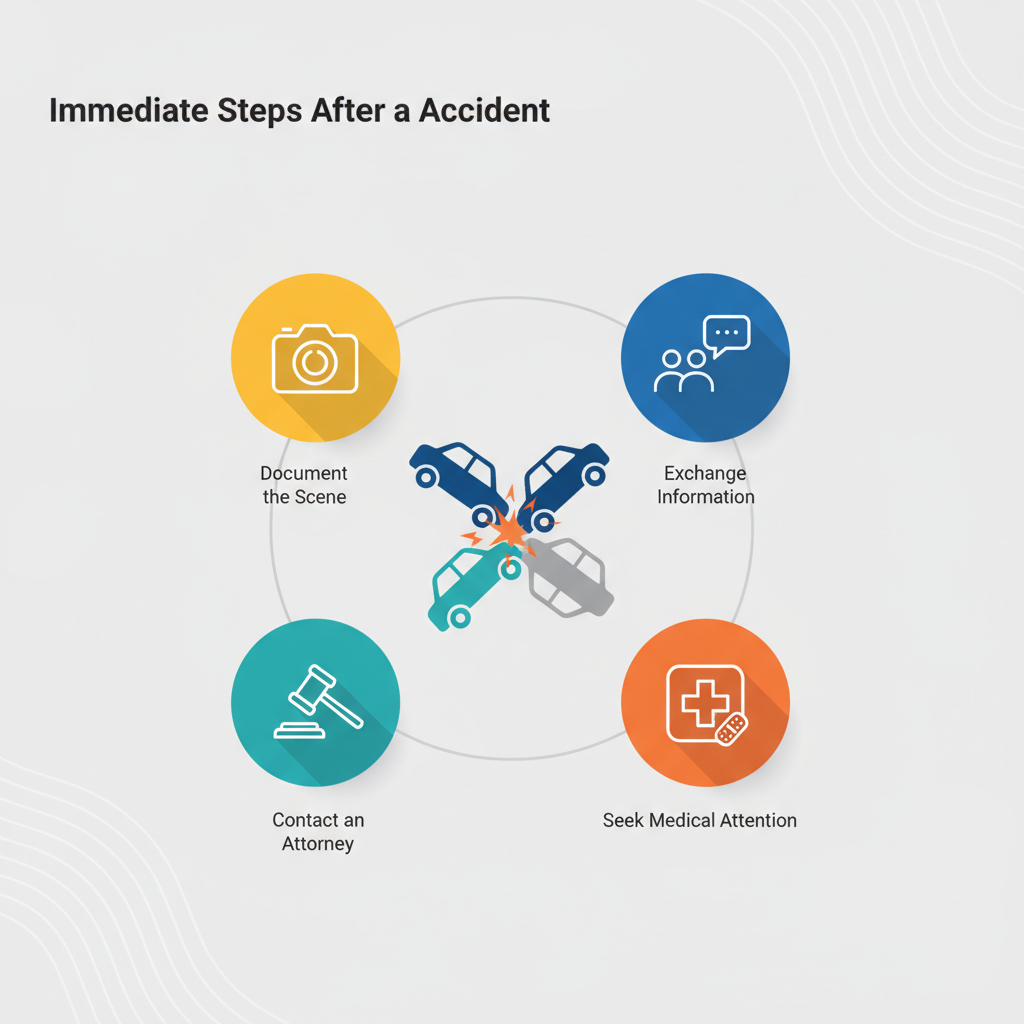
Immediate Steps After an Accident
Prioritize safety and call 911. Move to a safe area, turn on hazard lights, and check for injuries. Report the incident to law enforcement so a formal report is created; ask for the report number. If you’re Injured in California on someone else’s property, notify the manager and request an incident report. For product-related injuries, stop using the item and preserve it.
Get medical care the same day, even if symptoms seem minor. Some injuries appear hours or days later. Tell providers about every symptom (headache, dizziness, tingling, reduced range of motion) and follow treatment plans. These records will be critical in a California personal injury accident case.
Document the scene before anything changes:
- Take photos/video of vehicle positions, damage, skid marks, road conditions, lighting, weather, and visible injuries.
- For premises cases, capture the hazard (spill, torn carpet, broken handrail) and any warning signs—or lack thereof.
- Collect witness names, phone numbers, and emails.
- Exchange driver, insurance, and registration details; do not admit fault or speculate about causes.
Preserve evidence and track losses:
- Save damaged clothing, helmets, car seats, shoes, and the product involved.
- Download dashcam footage; request nearby business or traffic camera footage quickly, as it may be overwritten within days.
- Keep a daily pain and activity journal.
- Track all expenses: medical bills, prescriptions, mileage to appointments, home care, and lost wages.
Make required reports and protect your claim:
- File a DMV SR-1 within 10 days for any crash with injury, death, or property damage of $1,000 or more.
- Notify your insurer, but avoid recorded statements and broad medical authorizations until you’ve consulted a California accident lawyer.
- Be mindful of deadlines: most Personal injury claims California have a two-year statute of limitations; claims against government entities often require a claim within six months.
Before speaking with insurers, seek Legal help after accident California. An attorney can preserve evidence, handle insurers, and position your case for full Accident compensation California. Weinberger Law Firm is ready to guide you through each step.
Prioritizing Medical Care
Your health comes first. After any California personal injury accident, get a medical evaluation as soon as possible—even if you feel “fine.” Adrenaline can mask symptoms of concussion, internal bleeding, or soft-tissue trauma. Go to the ER or urgent care for red flags like head impact, loss of consciousness, severe pain, numbness/tingling, shortness of breath, or worsening headaches. Follow up with your primary care doctor or a specialist within 24–72 hours for less urgent symptoms.
Be thorough and consistent when reporting symptoms. Tell providers exactly how the incident happened and list every area of pain, stiffness, and limitation, even “minor” issues like dizziness or jaw soreness. Ask that your complaints and functional limits (e.g., difficulty lifting your child, driving, or sleeping) be documented. Photos of visible injuries taken over several days can show progression.
Careful documentation strengthens personal injury claims in California and helps prove causation and damages:
- Keep discharge summaries, imaging reports, and specialist referrals
- Save prescriptions, over-the-counter receipts, braces or medical device costs
- Track mileage to appointments and parking fees
- Maintain a pain and activity journal
- Obtain work status notes and restrictions
Follow your treatment plan. Start recommended imaging or physical therapy promptly and don’t skip appointments. Gaps in care let insurers argue your injuries are unrelated or resolved. Be honest about prior conditions; California law allows recovery for the aggravation of preexisting injuries.
Worried about costs? Use health insurance, and check for Medical Payments (Med-Pay) coverage under your auto policy. If you were injured in California without insurance, some providers will treat on a lien to be paid from any settlement. Don’t sign broad medical authorizations; a California accident lawyer can limit records to what’s relevant and coordinate appropriate care.
Taking these steps protects your health and supports accident compensation in California. For tailored guidance and legal help after an accident in California, Weinberger Law Firm can help you navigate care while preserving your claim.
Gathering Crucial Evidence
What you document in the minutes and days after a California personal injury accident often determines the strength of your claim. Capture objective details while they’re fresh, and preserve items that may later prove fault and damages.
Start with the scene:
- Take wide and close-up photos from multiple angles: vehicle positions, damage, skid marks, debris, traffic signals, signage, lighting, and weather. Include street names and nearby businesses.
- Record short videos of traffic flow and signal cycles. Save dashcam footage.
- Identify witnesses. Note names, phone numbers, and a brief summary of what they saw. Ask nearby businesses or homes about exterior cameras; many systems overwrite footage within 24–72 hours.
Secure official documentation:
- Call law enforcement for a Traffic Collision Report or, for premises injuries, ask management for an incident report. Get the report or reference number.
- File a DMV SR-1 within 10 days if anyone was injured or property damage exceeds $1,000.
- If you were injured in California, request your 911 call audio and any available body-cam or surveillance footage as soon as possible.
Prioritize medical proof:
- Seek medical care immediately and describe every symptom and the mechanism of injury.
- Keep records of diagnoses, treatment plans, imaging, prescriptions, and referrals.
- Maintain a daily pain and limitations journal; note missed activities and sleep disruptions.
Preserve physical and digital evidence:
- Save damaged clothing, shoes, helmets, child seats, and any defective product. Do not wash, repair, or alter them. Store in sealed bags.
- Do not dispose of or repair your vehicle until advised; its event data recorder (EDR) and telematics can show speed, braking, and seatbelt use.
- For slip-and-fall cases, photograph spills, torn carpeting, uneven surfaces, and the lack of warning cones; note cleaning schedules if posted.
Document financial losses:
- Keep pay stubs, tax returns, and an employer letter verifying missed work and duties.
- Save receipts for medical bills, co-pays, medications, medical devices, rides, childcare, and home services related to your recovery.
A California accident lawyer can send preservation (spoliation) letters, subpoena footage and records, and coordinate experts to strengthen personal injury claims California and support accident compensation California. For legal help after accident California, Weinberger Law Firm acts quickly to secure evidence and protect your rights.

Understanding California Injury Law
California uses a fault-based system. To recover after a California personal injury accident, you must show: a duty of care, a breach of that duty, causation, and damages. For example, a store that leaves a spill on the floor may breach its duty by failing to clean or warn; if you slip, break a wrist, and incur medical bills, you can pursue compensation.
California follows pure comparative negligence. Your recovery is reduced by your share of fault. If a jury finds you 20% at fault in a rear-end crash and your losses are $100,000, you can still recover $80,000. Insurers will use this rule to minimize payouts—having a California accident lawyer evaluate liability can protect your claim.
Deadlines matter. Most personal injury claims in California must be filed within two years of the injury. Claims against government entities require an administrative claim within six months, with short follow-up deadlines once it’s rejected. The “discovery rule” may extend timing if an injury wasn’t reasonably apparent right away, and minors often have longer.
Damages include economic losses (medical care, future treatment, lost income) and non-economic losses (pain, emotional distress, loss of enjoyment). Punitive damages are rare and reserved for egregious conduct like malice or fraud. There is no general cap on personal injury damages, but medical malpractice non-economic damages are capped by law and currently higher than in past years.
Strict liability can apply. Product manufacturers may be liable for defective designs or inadequate warnings (e.g., an e-scooter battery fire). Dog owners are generally strictly liable for bites occurring in public or when the victim is lawfully on private property.
Insurance factors can shape accident compensation in California. Auto liability minimums are 30/60/15 as of 2025. Uninsured drivers may face limits on non-economic recovery under Proposition 213. If you were injured in California, prompt evidence gathering, medical documentation, and legal help after accident California can significantly improve your outcome.
Common Personal Injury Cases
California personal injury accident cases most often arise from everyday events where someone else failed to act with reasonable care. Understanding the common scenarios can help you spot liability and protect crucial evidence early.
Personal injury claims California frequently involve:
- Motor vehicle collisions: Car, motorcycle, truck, and rideshare crashes caused by speeding, distracted driving, or unsafe turns. Example: a rear-end on I‑5 leading to whiplash, or a left‑turn crash at a Sacramento intersection. When an Uber or Lyft driver is “on trip,” up to $1,000,000 in liability coverage may apply.
- Pedestrian and bicycle accidents: Crosswalk impacts, “dooring,” and failure to yield in bike lanes. Camera footage, vehicle data, and prompt scene photos are key to proving fault.
- Premises liability: Slip/trip falls, falling merchandise, and negligent security at stores, apartments, or parking lots. Owners must fix hazards or post clear warnings. Claims against cities/counties (e.g., dangerous sidewalks) require a government claim within six months.
- Dog bites: California imposes strict liability on owners for bites in public or lawfully on private property, regardless of prior aggression.
- Product liability: Defective design, manufacturing errors, or inadequate warnings in items like e‑bikes, airbags, or household tools can make manufacturers and retailers liable without proving negligence.
- Wrongful death: Families may recover for lost financial support, funeral costs, and loss of companionship when negligence causes a fatality.
Accident compensation California can include medical bills, future treatment, lost income, diminished earning capacity, pain and suffering, and property damage. California’s pure comparative negligence allows recovery even if you’re partly at fault, with damages reduced by your percentage of responsibility.
Most injury claims must be filed within two years; property damage is generally three years. Shorter deadlines apply to government entities.
If you were injured in California, a California accident lawyer can evaluate liability, insurance coverage (including UM/UIM), and evidence to maximize recovery. For legal help after accident California, timely counsel preserves your rights and strengthens your case.
Navigating Insurance Claims
After a California personal injury accident, insurers move quickly to minimize payouts. Notify your own insurer promptly per your policy, but stick to the basics: when and where it happened, vehicles involved, and contact info. Do not admit fault or speculate about injuries. If you were injured in California, get medical care right away and follow your doctor’s plan—gaps in treatment are often used to discount claims.
Know the coverage that may apply to personal injury claims California residents file:
- At-fault party’s bodily injury liability (medical bills, wage loss, pain and suffering)
- Property damage liability (vehicle repairs or total loss)
- Your medical payments (Med-Pay), regardless of fault
- Uninsured/underinsured motorist (UM/UIM) for hit-and-runs or low-limit drivers
- Collision and rental reimbursement under your own policy
Protect your claim from the start:
- Decline recorded statements to the other driver’s insurer; refer them to your California accident lawyer.
- Don’t sign blanket medical authorizations that expose unrelated history.
- Avoid quick settlement checks before you understand your prognosis and full damages.
Document everything:
- Police report number, photos/video, and witness contacts
- All medical records and itemized bills
- Proof of income and missed work; out-of-pocket expenses and mileage
- Repair estimates and before/after vehicle photos; preserve damaged items when possible
- A simple pain and recovery journal
Expect common insurer tactics such as disputing fault or downplaying injury severity. Comparative negligence in California can reduce recovery, so careful evidence development matters. If liability may involve a public entity (e.g., dangerous roadway), an administrative claim is usually due within 6 months. Otherwise, most bodily injury claims carry a two-year statute of limitations and three years for property damage.
Weinberger Law Firm builds a comprehensive demand package, identifies all available coverage, negotiates firmly for accident compensation California victims deserve, and is ready to litigate if needed. For legal help after accident California cases, experienced counsel can also address medical liens and first-party bad faith issues, maximizing net recovery.
Potential Compensation for Injuries
After a California personal injury accident, you may recover both economic and non-economic damages. The goal is to make you financially whole for losses tied to another party’s negligence.
Economic damages generally include:
- Medical costs: ER visits, hospitalization, surgery, physical therapy, prescriptions, medical devices, and projected future care (e.g., injections or spine surgery).
- Lost income: wages, overtime, bonuses, and loss of earning capacity if your injury affects future work.
- Out-of-pocket expenses: travel to appointments, home health aides, childcare, and home or vehicle modifications.
- Property damage and replacement costs.
Non-economic damages cover the human impact of being injured in California:
- Pain and suffering and loss of enjoyment of life.
- Emotional distress, anxiety, PTSD, and sleep disruption.
- Loss of consortium for a spouse or registered domestic partner.
Punitive damages are rare but possible when a defendant acts with malice or conscious disregard (for example, an extreme DUI crash). Note: medical malpractice cases in California have caps on non-economic damages under MICRA as updated in 2023.
Accident compensation California law allows is reduced by your share of fault under pure comparative negligence. If you’re found 20% at fault, your recovery is reduced by 20%.
Compensation is also influenced by insurance and assets. Potential sources include:
- At-fault driver’s auto policy and, if applicable, their employer’s commercial policy.
- Your uninsured/underinsured motorist (UM/UIM) and MedPay.
- Property owner or product manufacturer policies in premises or product cases.
- Government entities (with special claims deadlines).
Example: A rear-end collision causes a herniated disc requiring surgery. Medical bills total $68,000, lost wages are $22,000, and home help/travel add $5,000. Non-economic damages account for pain, recovery time, and activity limits. A California accident lawyer may uncover an employer policy that exceeds the driver’s minimal limits, increasing the settlement potential.
For clear valuation in personal injury claims California, early documentation and Legal help after accident California are critical to maximize your rights and options.
Role of a Personal Injury Lawyer
After a California personal injury accident, a lawyer’s first job is to protect your rights and preserve evidence while you focus on treatment. Deadlines are strict: most personal injury claims in California must be filed within two years, and claims against a government entity generally require an administrative filing within six months. Early legal action helps secure surveillance footage, 911 audio, vehicle data, and witness statements before they disappear.
A California accident lawyer builds liability and maximizes recoverable damages by aligning facts, law, and proof. Expect a thorough investigation tailored to the case—download of a car’s event data recorder, accident reconstruction, skid and crush analysis for crashes; incident reports, sweep logs, and surveillance for slip-and-falls; design and warnings analysis for product defects. Medical experts and life care planners link injuries to the event and project future care and costs.
Key ways your attorney advances your case:
- Evaluate liability under California’s pure comparative negligence and counter insurer attempts to shift fault.
- Calculate full accident compensation California, including medical bills, future care, lost income and earning capacity, pain and suffering, and property loss.
- Manage medical billing, liens, and subrogation with health insurers, Medicare, or Medi-Cal; apply Med-Pay where available.
- Handle all insurer communications and negotiate using demand packages, evidence, and, when appropriate, strategic Code of Civil Procedure section 998 offers.
- Draft spoliation letters, file in the proper court, and prepare for trial from day one to strengthen settlement leverage.
Example: Injured in California in a rear-end collision with disputed liability? Your lawyer may secure traffic-cam footage and cell phone records, retain a reconstruction expert, and obtain a biomechanical opinion to rebut claims that a “low-impact” crash couldn’t cause your injuries—often moving an adjuster off an inadequate offer.
Another example: In a grocery store fall, counsel rapidly requests video, obtains floor inspection logs, interviews employees about spill timing, and consults a human-factors expert to prove the store had notice.
For clients in Sacramento and across the state seeking legal help after accident California, experienced counsel like Weinberger Law Firm guides every step—investigation, negotiation, and litigation readiness—to pursue fair results in personal injury claims California. Contingency representation is common, meaning fees are typically paid from the recovery.
The Personal Injury Lawsuit Process
After a California personal injury accident, your claim generally moves through predictable stages. Each step builds the evidence needed to prove fault, document losses, and pursue full compensation.
- Intake and deadlines: A California accident lawyer reviews what happened, identifies all at‑fault parties, and calendars strict deadlines. In most cases you have two years to file suit. Claims against a city, county, or state agency require a government claim within six months.
- Medical care and documentation: Prioritize treatment and follow doctor recommendations. Save bills, prescriptions, and imaging. Example: after a rear‑end crash, keep physical therapy notes and work restrictions to support wage loss.
- Investigation: Collect the police report, photos, 911 audio, witness statements, and available video (store cameras, traffic cams, dash cams). Experts may be retained for accident reconstruction or premises safety. In a grocery slip‑and‑fall, early notice helps preserve spill logs and surveillance.
- Insurance claims: Notify the at‑fault insurer and your own carrier for med‑pay or UM/UIM. Handle property damage separately from bodily injury. Be cautious with recorded statements.
- Demand package: Your attorney sends a detailed demand summarizing liability, medical treatment, bills, projected future care, wage loss, and pain and suffering, with supporting records. This frames negotiations for accident compensation California.
- Negotiation: Insurers may dispute causation or push comparative fault. If a fair number isn’t reached, filing suit keeps leverage.
- Lawsuit filing: The complaint is served on all defendants. Discovery follows—written questions, document exchange, depositions, and a defense medical exam.
- Mediation and trial: Most Personal injury claims California resolve at mediation or a settlement conference. If not, a jury decides fault and damages. California’s pure comparative negligence reduces recovery by your percentage of fault if you were partly responsible.
- Resolution and liens: Health insurers, Medicare/Medi‑Cal, and workers’ comp are reimbursed from the settlement, then net funds are disbursed. Structured settlements may be considered.
Timelines vary. A straightforward rear‑end may settle within months after treatment ends; a disputed premises or product case can take 12–24+ months. If you were injured in California, legal help after accident California from a team like Weinberger Law Firm can keep your case on track and maximize your recovery.
Important California Deadlines
After a California personal injury accident, timeline rules can decide whether you recover compensation. Key filing periods to know:
- General personal injury: 2 years from the date of injury to file a lawsuit (for most negligence claims). Example: if you were rear-ended on 6/1/2025, you must file by 6/1/2027.
- Property damage: 3 years to sue for vehicle or other property losses.
- Claims against a government entity: You must file a Government Claim within 6 months of the incident. If the claim is denied in writing, you generally have 6 months from the denial to sue. If no written denial is issued, you may have up to 2 years from the incident. Examples include crashes with a city bus or injuries from a defective public sidewalk.
- Medical malpractice: 1 year from when you discovered (or should have discovered) the injury, or 3 years from the date of injury—whichever occurs first, with limited exceptions. For minors under 6, the deadline is the later of 3 years from injury or the child’s 8th birthday.
- Wrongful death: 2 years from the date of death.
- Uninsured/underinsured motorist (UM/UIM) claims: Your auto policy may require a UM arbitration demand within 2 years; UIM timelines often run from when at-fault limits are exhausted. These are contractual deadlines—miss them and coverage can be barred. A California accident lawyer can review your policy and preserve your rights.
- DMV reporting: File an SR-1 within 10 days if anyone was injured or if damage is $1,000+.
- Insurance notice: Notify your insurer promptly. Policies can deny benefits for late notice.
Act fast on evidence. Send preservation letters for vehicle data, surveillance, or electronic records—some are overwritten within days.
Exceptions and tolling rules can extend or shorten time limits (for example, claims by minors or delayed discovery). For Personal injury claims California and Accident compensation California, get legal help after accident California from a firm that calculates the correct deadlines, files on time, and protects your recovery if you were injured in California.
Call to Action
Contact us today for a Free Case Consultation!