
Prioritize Safety and Medical Care
Your first steps after crash or fall should focus on removing immediate danger and addressing injuries. If you can, get to a safe area away from traffic, broken glass, or fire risks. Turn on hazard lights and, if available, set out triangles. In California, if vehicles are drivable and no one appears seriously hurt, carefully move them out of traffic to reduce secondary collisions. If injuries seem serious, leave vehicles where they are and wait for responders.
Call 911. Request medical evaluation even if you feel “fine.” Adrenaline can mask pain, and early care is critical in a California accident guide for both health and the accident legal process. Give your location, describe hazards, and note symptoms like dizziness, neck pain, or numbness.
If you must render aid while waiting for help:
- Do not move someone with suspected head, neck, or back injuries unless there’s immediate danger.
- Control bleeding with steady pressure and clean cloths.
- Keep the injured person warm and still.
- For motorcyclists, do not remove the helmet unless necessary to maintain breathing.
- Avoid giving food or drink.
Seek a prompt medical evaluation the same day or within 24 hours. Many post injury actions hinge on timely diagnosis:
- Car crash: rule out concussion, whiplash, and internal injuries even without visible trauma.
- Slip-and-fall: assess for fractures and head injuries; document any swelling or reduced range of motion.
- Dog bite: get wound care and infection/rabies guidance; document puncture depth and location.
Tell every provider your injuries are from an accident so records clearly link your condition to the event. Ask for copies of discharge notes, imaging, and prescriptions. Follow all treatment instructions, take medications as directed, and attend follow-ups or physical therapy. Keep a daily symptom journal and save receipts for medications, braces, or transportation.
Address emotional impacts too. If you experience anxiety, sleep disruption, or flashbacks, request a mental health referral. Early care supports recovery and strengthens your claim among the steps after personal injury accident and what to do after accident.
Gather Accident Information Promptly
Your first steps after crash or fall should prioritize safety and medical care, then shift quickly to preserving facts. Evidence fades fast, and clear documentation strengthens your claim in the accident legal process.
At the scene, gather:
- Police details: Call 911. Ask the officer for the agency name (CHP or local PD) and report or incident number. Note badge numbers.
- Parties’ information: Full names, phone and email, driver’s license numbers, license plates, insurance carriers and policy numbers, employer and vehicle owner (if commercial vehicle or rideshare).
- Witnesses: Names and best contact info. Ask what they observed and jot it down. In California, do not record voices without consent.
- Photos and video: Capture wide and close shots from several angles. Include vehicle positions, damage, skid marks, debris, traffic signals, construction zones, and road or weather conditions. Photograph injuries, torn clothing, and any safety gear. For premises incidents, document the hazard (spill, broken handrail, uneven flooring), lack of warning signs, lighting, and surveillance cameras. For product injuries, save the product, packaging, instructions, receipts, model/serial numbers.
Preserve evidence:
- Keep damaged items and do not repair or wash them.
- Save dashcam/GoPro footage and note any nearby businesses or homes with cameras so your attorney can request preservation promptly.
- Start a symptom log: pain levels, new or worsening symptoms, missed work, and daily limitations.
- Organize medical records and bills as they arrive. Photograph discharge paperwork and prescriptions.
If you couldn’t collect information due to your injuries, return as soon as possible or ask someone you trust to do so. Note time-sensitive details like changing roadwork or quickly cleaned hazards.
What to do after accident with insurers: exchange only basic facts at the scene and avoid admitting fault. Decline recorded statements from insurance adjusters until you’ve received legal guidance.
In California, these post injury actions are core steps after personal injury accident claims. A thorough file—scene evidence, contacts, medical documentation—helps your lawyer build liability, address comparative fault, and maximize compensation under this California accident guide.
Document the Scene Meticulously
Once emergency needs are addressed, make documentation your priority. Clear, time-stamped evidence is critical in California’s at-fault system and can directly impact liability decisions, insurance negotiations, and the accident legal process.
Use your phone to capture:
- Wide shots of the entire scene from multiple angles before vehicles are moved.
- Close-ups of vehicle damage, license plates, VIN stickers, shattered glass, deployed airbags, seatbelt condition, and any cargo.
- Roadway details: skid marks, debris, potholes, faded lane markings, obstructed views, malfunctioning signals, and signage.
- Weather and lighting conditions, traffic density, and construction zones.
- Visible injuries (photograph immediately and again over the next days as bruising develops).
- For premises incidents: the hazard (spill, uneven flooring, broken handrail), lack of warnings, and the exact location.
- For product injuries: the product, packaging, instructions, warnings, serial/lot numbers, and the area where the failure occurred.
Gather information:
- Other parties’ names, driver’s license numbers, insurance carriers/policy numbers, vehicle make/model, employer (if commercial), and rideshare status if applicable.
- Witness names, phone/email. Ask for a brief recorded statement on your phone (“I saw…”), and note where each witness stood.
- Responding agency, report number, and officer name/badge. Photograph business cards and tow truck info.
Preserve evidence:
- Keep damaged clothing, shoes, helmets, and personal items unwashed and in bags.
- Save dashcam footage and note nearby cameras (storefronts, homes, transit). Request that businesses preserve video promptly; many systems overwrite within days.
- Start a symptom journal noting pain levels, limitations, missed work, and sleep issues. Save all medical records, bills, receipts, and mileage to appointments.
Additional California-specific post injury actions:
- Request a copy of the police report when available and verify accuracy.
- If there’s injury, death, or property damage over $1,000, you must file a DMV SR‑1 report within 10 days—one of the key steps after personal injury accident claims.
These first steps after a crash or fall strengthen your California accident guide playbook for what to do after accident claims and help protect your right to full compensation.
Report the Incident Officially
One of the most important steps after personal injury accident is making an official report. Timely, factual reporting creates a neutral record that supports your claim and helps move the accident legal process forward.
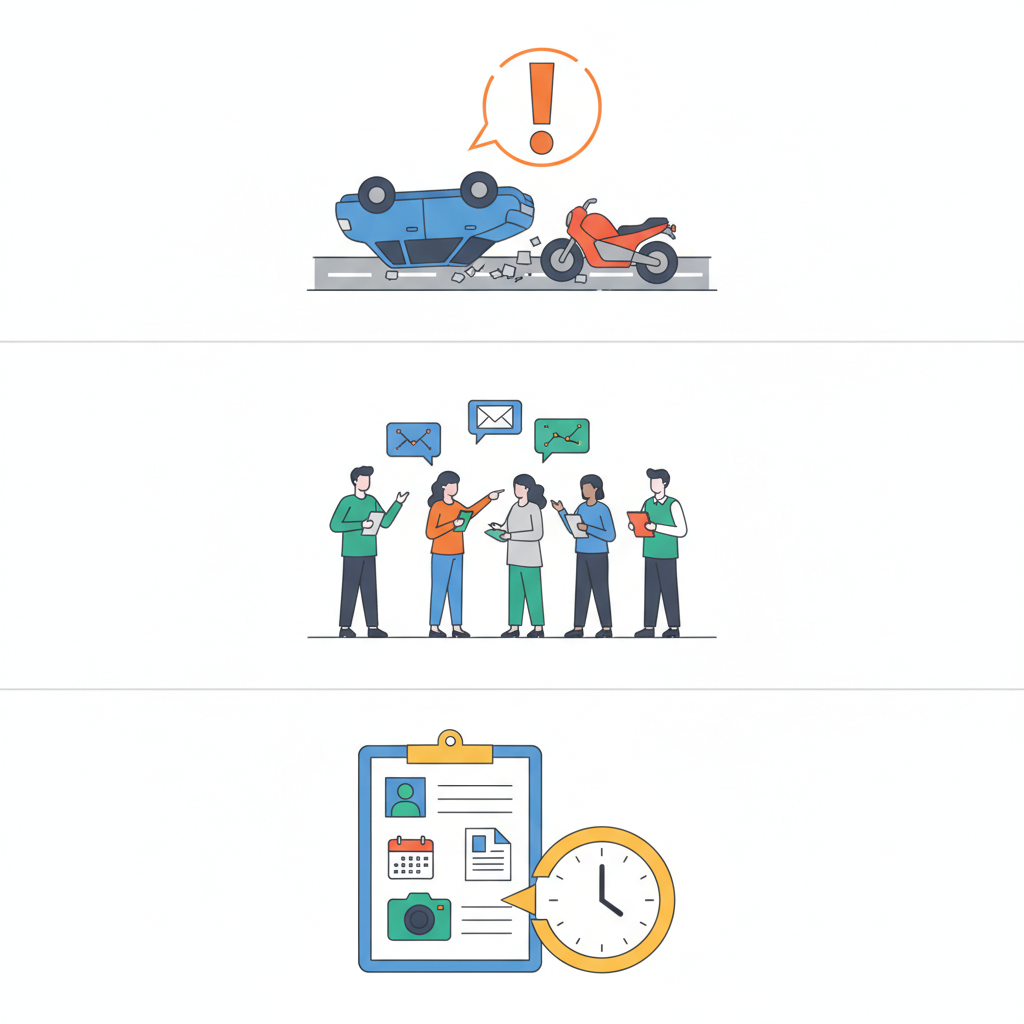
For vehicle collisions, call 911 so police or CHP document the scene. Exchange information, ask the officer for the report number, and note the agency and badge name. In California, you must file a DMV SR-1 within 10 days if anyone is injured or property damage appears to exceed $1,000—regardless of who was at fault. Notify your insurer promptly, but avoid giving recorded statements until you’ve spoken with counsel. Example: After a rear-end crash on I‑80, request CHP response, get the incident number, and complete the SR‑1 as a first step after crash.
Report to the right authority based on the incident:
- Car, motorcycle, bicycle: Local police or CHP; DMV SR‑1 within 10 days; your insurer.
- Premises (stores, apartments, parking lots): Property owner/manager. Ask to file an incident report, request a copy or report number, and ask them to preserve any surveillance video.
- Dog bites: Local animal control or public health for rabies verification; get the owner’s contact and vaccination info.
- Workplace injuries: Notify your supervisor immediately; the employer must document and, for serious injuries, report to Cal/OSHA (within 8 hours).
- Public entity hazards (city bus, defective sidewalk): Notify the agency’s risk management department promptly. Formal claim deadlines can be as short as six months in California.
When you report, stick to facts: who, where, when, visible injuries, and property damage. Do not admit fault or speculate about causes. Keep copies of reports, the report number, names of officials, and any written incident or case numbers—these post injury actions strengthen your file and support what to do after accident steps outlined in this California accident guide.
Seek Immediate Medical Attention
Your health comes first. After a crash, fall, or other incident, call 911 if anyone is hurt, and get evaluated the same day—even if you feel “okay.” Adrenaline can mask injuries like concussions, internal bleeding, or soft-tissue damage, and delayed treatment can worsen outcomes.
Go to the emergency room for red flags such as head injury or loss of consciousness, severe pain, heavy bleeding, chest pain, numbness/weakness, suspected fractures, or pregnancy-related concerns. Urgent care can handle moderate injuries like whiplash, sprains, or lacerations. Follow up with your primary care provider for ongoing care and referrals to specialists or physical therapy.
Tell the provider exactly how the incident happened and every area that hurts, from your neck and back to wrists, knees, or hips. Mention prior conditions (for example, a prior low-back issue) and how your pain now is different. Ask whether imaging or specialist evaluation is appropriate. Don’t minimize symptoms like dizziness, headaches, ringing in the ears, or vision changes—common after rear-end collisions.
Document everything:
- Request copies of discharge summaries, imaging reports, and test results.
- Save bills, copays, prescription costs, and mileage to appointments.
- Keep a daily symptom journal (pain levels, sleep issues, missed activities).
- Get written work restrictions or off-work notes to support wage-loss claims.
Follow the treatment plan. Attend all appointments, take medications as prescribed, and start recommended physical therapy promptly. Gaps in care or inconsistent attendance are often used by insurers to argue you weren’t seriously hurt, which can affect the accident legal process and your compensation.
California considerations: As part of the steps after personal injury accident, you must take reasonable post injury actions to mitigate damages by getting timely care. You generally have two years to file a personal injury lawsuit in California, but government claims require a formal claim within six months. If you’re uninsured, ask about medical liens or using Medi-Cal/health insurance. Early, consistent medical documentation is one of the most important first steps after a crash in any California accident guide and helps your attorney build a clear record of injury and need for treatment.
Avoid Admitting Fault
In the first steps after crash, resist the urge to apologize or accept blame. California uses pure comparative negligence, so any statement suggesting you were at fault can reduce your compensation in proportion to assigned responsibility. Early remarks to police, the other driver, property owners, or insurers can be used in the accident legal process, even if you didn’t have all the facts.
Keep your statements factual and limited. Describe what happened without opinions or guesses. For example, say “I was traveling about 30 mph in the right lane” rather than “I was probably speeding.” Let investigators determine fault based on evidence, not off-the-cuff comments.
Use these post injury actions at the scene and soon after:
- Share only required information: name, contact, insurance, and vehicle details.
- Cooperate with officers, but stick to observable facts. It’s fine to say “I’m not sure” if you don’t know.
- Do not speculate about causes (e.g., “I was distracted,” “I shouldn’t have turned”).
- Avoid phrases that can be twisted, such as “I’m sorry,” “It was my fault,” or “I didn’t see you.”
- Decline recorded statements with any insurance company until you’ve spoken with an attorney.
- Preserve evidence instead: photos of damage, road conditions, skid marks, traffic signals, and your injuries; collect witness names and contact details.
Note: California law generally shields expressions of sympathy from being used to prove liability, but any accompanying statement of fault is admissible. In practice, it’s safer not to apologize at all.
When insurers call, provide basic details and your claim number, then refer them to your lawyer. A Sacramento personal injury attorney can handle communications, evaluate evidence like surveillance or vehicle data, and prevent misstatements from harming your claim.
As you follow the steps after personal injury accident matters—what to do after accident, medical care, documentation, and legal guidance—this California accident guide principle remains simple: protect your rights by avoiding fault admissions until the facts are fully known.
Handle Insurance Company Contact
Expect a call from an insurance adjuster within days of the incident. One of the crucial steps after personal injury accident claims is managing these conversations carefully so you don’t jeopardize your case.
What to do after accident insurer outreach:
- Notify your own insurer promptly. Most policies require timely notice and cooperation. You can report the basics without giving a recorded statement until you’ve spoken with counsel.
- Limit what you share. Provide only facts: date, time, location, vehicles/parties involved, and whether there were injuries. Avoid speculation about fault or your medical prognosis.
- Decline recorded statements from the at‑fault party’s insurer. In California, you’re not required to give one, and it can be used to minimize your claim.
- Don’t sign blanket medical authorizations. These allow broad access to your health history and can be used to argue preexisting conditions.
- Avoid quick settlements. Early offers rarely account for future treatment, lost wages, or pain and suffering.
- Keep communications in writing when possible. Ask for the adjuster’s name, claim number, and email, and confirm key points by email.
Useful scripts:
- “I’m willing to share basic facts, but I won’t give a recorded statement at this time.”
- “Please direct further questions to my attorney. Here is their contact information.”
California accident guide specifics:

- Comparative negligence means offhand comments can reduce your recovery if they’re interpreted as admitting fault.
- Med‑Pay coverage can help with immediate medical bills regardless of fault; your insurer may seek reimbursement if you recover from a third party.
- Uninsured/Underinsured Motorist claims require prompt notice; don’t settle with the at‑fault insurer without addressing UM/UIM rights.
- Property damage and bodily injury are separate. You can resolve vehicle repairs without signing a bodily injury release.
- Short deadlines apply if a public entity is involved (government claim typically due within six months).
As part of your post injury actions and first steps after crash, document every call, save voicemails and emails, and consult an attorney early. Skilled counsel can handle all communications and negotiations within the accident legal process while you focus on recovery.
Consult an Experienced Attorney
Reaching out to an experienced personal injury attorney early is one of the most important steps after personal injury accident. The right counsel helps you avoid costly mistakes in the accident legal process—such as giving a recorded statement to the other party’s insurer or accepting a quick, low settlement before you know the full extent of your injuries.
An attorney moves fast to preserve evidence that can disappear within days. For example, they can send spoliation letters to secure store or traffic-camera footage in a premises liability case, download event data recorder (black box) information after a car crash, or capture rideshare trip data from apps. In a motorcycle collision (including lane-splitting, which is legal in California), a lawyer may retain an accident reconstruction expert before skid marks fade or vehicles are repaired.
What an attorney can handle for you:
- Communicate with all insurers and adjusters so you don’t have to, and stop requests for blanket medical authorizations or recorded statements.
- Document and value all damages, including ER and follow-up care, lost income, diminished earning capacity, rehabilitation, property loss, out-of-pocket costs (e.g., mileage to appointments), and pain and suffering.
- Coordinate medical treatment and address liens or subrogation with health insurers and providers.
- Track critical deadlines: generally two years to file a personal injury claim in California, only six months to file a government claim if a public entity is involved, and three years for most property damage claims.
- Build liability despite comparative fault arguments by interviewing witnesses, collecting scene photos, and working with experts.
If you’re unsure what to do after accident, think of a lawyer as your California accident guide for post injury actions and first steps after crash. Sacramento-based Weinberger Law Firm provides thorough case evaluation, strong negotiation with insurers, clear communication, and litigation readiness to maximize your compensation under California law.
Understand Your Legal Rights
Knowing your rights in California helps you make the right steps after personal injury accident and protects the value of your claim.
You have the right to pursue compensation when another party’s negligence causes harm. This can include medical bills, future treatment, lost wages, reduced earning capacity, pain and suffering, and property damage. For example, after a rear-end crash, you can claim ER costs, physical therapy, and the pay you miss while recovering.
California follows pure comparative negligence. Even if you’re partly at fault, you can still recover damages, reduced by your percentage of responsibility. If a jury finds you 30% at fault in a collision, your compensation is reduced by 30%, not eliminated.
Deadlines matter. In most injury cases, you have two years from the date of injury to file a lawsuit. If a government entity is involved—such as a city bus or a fall on government property—you must file an administrative claim within six months, or you may lose your right to sue. Property-damage-only claims generally have three years.
You control key parts of the accident legal process:
- You can choose your own doctors and use your health insurance; you don’t have to wait for an insurer’s approval.
- You can refuse a recorded statement to the at-fault insurer and should avoid signing blanket medical authorizations or quick settlements before you understand your losses.
- You can request important evidence, such as police reports or store video in a premises case, and ask that it be preserved.
- You can make claims under your own policies (e.g., MedPay, uninsured/underinsured motorist), subject to policy deadlines.
First steps after crash or fall that protect these rights include prompt medical evaluation, documenting injuries and expenses, saving photos and witness info, and keeping a recovery journal. If you’re unsure what to do after accident events or how California accident guide rules apply to your situation, a case evaluation can clarify your post injury actions and options.
Prepare for Compensation Claims
Once you’re safe and have received initial medical care, start building the record that will support your compensation claim. The strongest claims are evidence-driven and organized. These steps after personal injury accident in California help protect your rights through the accident legal process.
Preserve evidence immediately:
- Photograph vehicles, the scene, hazards, weather, skid marks, and visible injuries from multiple angles.
- Collect names and contact info for witnesses; note nearby businesses that may have cameras. Request preservation of video quickly—footage is often overwritten within days.
- Save damaged items (helmet, clothing, car seats) and do not repair or discard them.
- For vehicle crashes, ask your attorney about preserving “black box”/EDR data. For premises incidents, request an incident report and identify the hazard’s condition.
- In product cases, keep the product and packaging; avoid altering it.
Document medical care and follow through:
- Get timely diagnosis, follow treatment plans, and attend all appointments. Gaps in care can reduce value.
- Keep copies of records, bills, imaging, prescriptions, and mileage to medical visits.
- Maintain a daily pain and limitations journal noting sleep issues, missed activities, and emotional impacts.
Track financial losses:
- Save pay stubs, tax returns, and an employer letter confirming missed work and duties you can’t perform.
- Keep receipts for out-of-pocket costs (co-pays, devices, home help, rides).
Be strategic with insurers:
- Promptly report claims, including med-pay, UM/UIM if applicable.
- Avoid recorded statements and signing blanket medical authorizations without counsel.
- Don’t agree to a broad release when resolving property damage if injury issues remain.
Mind key California deadlines:
- Most injury claims must be filed within two years; claims against government entities generally require a claim within six months.
- California’s pure comparative negligence rule can reduce recovery, so avoid social media posts that could be misinterpreted.
When you’re ready, compile a demand package with records, bills, photos, witness statements, and wage proof. A California personal injury attorney can coordinate evidence, manage liens, and negotiate with insurers as you move from post injury actions to resolution. If you’re unsure what to do after accident, this California accident guide of first steps after crash helps you prepare effectively.
Call to Action
Contact us today for a Free Case Consultation!
