
Table of Contents
- Why Insurance Companies Undervalue Motorcycle Accident Claims
- The Real Cost of Your Injuries: Beyond Medical Bills
- How We Investigate and Build Your Strongest Case
- Strategic Evidence Gathering to Strengthen Your Position
- Negotiating with Insurance Companies: Where Our Expertise Makes the Difference
- Understanding Your Rights Under California Personal Injury Law
- The Timeline You Need to Know: Statute of Limitations and Deadlines
- Documentation That Wins: What You Must Preserve Now
- Common Settlement Mistakes That Cost Riders Thousands
- How We Calculate Full and Fair Compensation for Your Damages
- Getting Ready for Litigation if Settlement Negotiations Stall
- Your Next Step: Free Consultation With Our Experienced Team
- Frequently Asked Questions (FAQ)
Why Insurance Companies Undervalue Motorcycle Accident Claims
If you were injured in a motorcycle accident, you have rights after an accident. We understand this is a difficult time. Medical bills are arriving, you may be unable to work, and you’re facing questions about how to move forward. The insurance company’s first offer often falls far short of what you truly deserve. That’s where our experience matters. We pursue full and fair compensation by negotiating strategically with insurers, investigating thoroughly, and preparing your case for litigation if necessary.
This guide walks you through how we maximize motorcycle accident settlements and what you need to know to protect your claim.
Insurance companies routinely offer less than fair value for motorcycle accident claims. This happens for predictable reasons, and understanding them puts you in a stronger position.
Motorcyclists often face a bias that works against them. Some adjusters and defense attorneys assume riders take greater risks or share responsibility for accidents more readily than car drivers. They may downplay injuries, arguing that motorcycle riders are inherently exposed to danger. This prejudice directly impacts settlement offers.
Claims involving motorcycles also tend to be more complex. Unlike a straightforward car-on-car rear-end collision, motorcycle accidents often involve multiple injury patterns, specialized medical care, and questions about visibility or protective gear. Insurers use this complexity as leverage, hoping you’ll accept a lower offer rather than pursue costly litigation.
Insurance adjusters are trained negotiators working within strict guidelines. Their job is to minimize payouts while staying within legal limits. They know most injured riders have limited resources and urgent medical needs, which creates pressure to settle quickly. A low initial offer tests whether you’ll accept without pushing back.
The statute of limitations (the filing deadline for lawsuits in California) adds urgency that favors the insurer. You typically have two years from the accident date to file a personal injury lawsuit. If time passes without a settlement, you face a choice: litigate or lose the claim entirely. We will investigate all available evidence to build leverage before that pressure mounts.
What to do next: Don’t accept the first offer. Contact us for a free consultation before responding to any settlement proposal. We review the insurer’s reasoning and identify what’s missing from their calculation.
The Real Cost of Your Injuries: Beyond Medical Bills
Medical bills are only part of your financial loss. Understanding the full scope of your damages strengthens your negotiation position.
Immediate medical expenses are clear: hospital visits, surgery, emergency care, physical therapy, and follow-up treatment. But injuries from motorcycle accidents often create ongoing costs. Chronic pain may require long-term pain management. Scarring or disfigurement might necessitate reconstructive surgery. Some riders need orthopedic devices, mobility aids, or home modifications to regain independence.
Lost wages represent another major category. Time off work for surgery, hospital stays, and recovery compounds financial hardship. If your injuries prevent you from returning to your previous occupation, we document the difference between your pre-accident earning capacity and your current or future earning potential. A rider earning $60,000 annually who loses six months of work is missing $30,000 in income, plus any benefits lost during that period.
Beyond economics, motorcycle accidents cause emotional and psychological harm. You may experience anxiety, depression, post-traumatic stress, or fear of riding. These non-economic damages are real and quantifiable in settlements. California law recognizes pain and suffering, emotional distress, and loss of enjoyment of life as compensable injuries.
Permanent scarring, disfigurement, or disability adds another layer. If your injuries leave visible marks or limit your mobility long-term, the settlement should reflect that ongoing burden. We work with medical experts who document these impacts for negotiation purposes.
Pre-existing conditions complicate but don’t eliminate your claim. If you had back problems before the accident and the accident aggravated them, you recover for the aggravation and worsening. The insurer cannot escape liability simply because you had a prior condition.
Actionable insight: List all medical providers you’ve seen since the accident, gather every bill and receipt, and calculate lost income for each week you missed work. This documentation forms the foundation of your damages claim.
How We Investigate and Build Your Strongest Case
A strong settlement starts with rigorous investigation. We don’t rely on the police report or the insurer’s account. We pursue full and fair compensation by uncovering evidence the insurance company may have overlooked or downplayed.
Our investigation process begins with a detailed interview. We listen to your account of the accident, document your injuries, and understand the impact on your daily life. We ask about witnesses, weather conditions, traffic patterns, and any statements made by the other driver.
Next, we gather evidence systematically. This includes the police accident report, medical records from every provider, wage loss documentation, photographs of vehicle damage and the accident scene, and traffic camera footage if available. Traffic camera footage can be decisive. Nearby businesses, traffic lights, and municipal cameras often capture the moments before and after impact.
We also investigate the other driver’s history. Driving records may reveal prior violations, accidents, or patterns of reckless behavior. If the other rider or driver was distracted, speeding, or under the influence, this strengthens your negligence claim significantly.
Vehicle inspection matters, especially for motorcycles. Skid marks, point of impact, vehicle positioning, and mechanical condition all tell the story of how the accident occurred. A motorcycle expert can examine your bike and determine speed estimates, sight lines, and whether protective equipment functioned as intended.
Once we compile the evidence, we present it strategically. Insurance adjusters respond to clear, documented facts. When we show video evidence that contradicts their narrative, supporting witness statements, and medical documentation proving the severity of your injuries, their leverage disappears.
What to preserve now: Secure any photos you took at the accident scene. Save text messages, emails, or voicemails from witnesses. Request the police report immediately. Contact us before speaking further with the insurance company.
Strategic Evidence Gathering to Strengthen Your Position
The quality of your evidence determines settlement value. We gather evidence methodically to maximize negotiating power.

Witness statements are foundational. We interview anyone who saw the accident. Their independent accounts corroborate your version of events and undermine any claim that you were at fault. We document their information in written statements and, if necessary, recorded interviews that can be referenced later.
Medical documentation creates the evidentiary backbone of your damages claim. We obtain complete medical records from every treating provider: hospitals, doctors, physical therapists, pain management specialists, and mental health professionals. These records establish the nature, extent, and duration of your injuries. We also obtain future medical evaluations that project ongoing treatment needs.
Expert testimony becomes critical in complex cases. We work with accident reconstruction experts who analyze vehicle damage, skid marks, and scene evidence to establish fault and impact dynamics. Medical experts can explain your injuries, treatment rationale, and long-term prognosis in terms that adjusters and judges understand.
Photographs and video document everything. Scene photos show road conditions, signage, visibility issues, and vehicle positioning. Medical photos document injuries as they heal. Video of you performing daily activities (or struggling to perform them) illustrates functional impact more powerfully than words alone.
Social media and digital evidence can support or undermine your claim. We review your online presence to ensure nothing contradicts your injury narrative. We also examine the at-fault party’s social media for statements or actions that admit fault or reveal prior accidents or reckless behavior.
Financial documentation quantifies losses precisely. We gather pay stubs, tax returns, employment letters, and billing records. For self-employed riders, we obtain business records and accountant statements that prove lost income. Every receipt for medical care, transportation, or disability equipment strengthens your damages claim.
Next step: Give us access to all evidence you’ve gathered. We’ll request additional records from medical providers and identify any gaps that need filling before negotiation begins.
Negotiating with Insurance Companies: Where Our Expertise Makes the Difference
Negotiation is an art informed by years of handling motorcycle accident claims. We bring strategic leverage to every conversation with insurers.
We never lead with a demand. Instead, we send a comprehensive demand letter backed by evidence. This letter tells the story of your accident, documents liability, details your injuries and damages, and explains why the insurer’s position is legally and factually weak. The letter cites California law, references our evidence, and projects the cost of litigation if negotiation fails.
Insurance adjusters respond to pressure. They know we’re prepared to litigate. They see our track record of successful trials. When we present evidence of clear liability, serious injuries, and damages exceeding their initial offer, they adjust their position. Our reputation for thorough preparation and aggressive advocacy translates into better settlements for you.
We also understand insurer psychology. Adjusters work under budget constraints and caseload pressure. A case that’s expensive to defend because of strong evidence and a serious injury profile becomes a liability. They’d rather settle at fair value than risk a jury verdict. We frame our negotiating position to highlight that risk.
Timing matters in negotiations. We don’t rush. We allow time for the insurer to absorb evidence, consult with defense counsel, and adjust their authority levels. We also monitor the statute of limitations carefully. Near the filing deadline, we shift negotiation tone to make clear we’re prepared to file suit if fair settlement isn’t reached.
Counter-offers and back-and-forth are normal. We evaluate each insurer response carefully and counter strategically. We never accept a settlement below what your case is worth, but we also recognize when an offer reaches fair value. Our goal is your best financial recovery, not fighting endlessly.
If negotiation stalls, we prepare for litigation without hesitation. The insurer knows this. That credible threat of trial often breaks settlement deadlocks and brings the insurer to reasonable terms.
Practical takeaway: Let us handle all communication with the insurance company. Every statement you make to an adjuster can be used against you. We control the message and negotiate from strength.
Understanding Your Rights Under California Personal Injury Law
California law provides strong protections for injury victims. Understanding these rights empowers you to stand firm in negotiations.
Negligence is the legal foundation of your claim. California requires that the at-fault party owed you a duty of care, breached that duty, and caused injury as a result. Every driver and rider has a duty to operate their vehicle safely and follow traffic laws. When they breach that duty and injure you, they’re liable for your damages.
Comparative negligence complicates some claims but rarely eliminates them entirely. If you were partially at fault for the accident, California allows recovery as long as you’re less than 50% responsible. Your damages are reduced by your percentage of fault. So if you’re 20% at fault and your damages total $100,000, you recover $80,000. This rule prevents the insurer from denying claims outright just because you contributed somewhat to the accident.
Strict liability applies in specific cases. If a motorcycle part was defectively manufactured or designed, you may recover even if the manufacturer wasn’t negligent. Product liability cases often involve motorcycle helmets, braking systems, or tire failures.
Premises liability applies if you crashed on someone else’s property due to their negligence. A store owner who failed to maintain their parking lot, or a property manager who ignored a hazardous condition, can be held liable for accidents that occur on their property.
California also recognizes damages for future medical care, future lost earning capacity, and permanent disfigurement or disability. These future damages are calculated based on medical evidence and expert testimony, not just bills you’ve already received.
The statute of limitations sets a firm deadline: you typically have two years from the accident date to file a personal injury lawsuit. Missing this deadline bars your claim permanently. Time is limited — act now by contacting us early in your case.
Key action: Understand that you likely have a valid claim under California law. We can explain your specific legal position during a free consultation.
The Timeline You Need to Know: Statute of Limitations and Deadlines
Deadlines are absolute. Missing them eliminates your right to compensation entirely.
The primary statute of limitations deadline is two years from the accident date to file a lawsuit in court. This is the ultimate backstop. If we haven’t reached a settlement and you haven’t filed a lawsuit within two years, your claim expires. California courts won’t hear the case, and the insurer owes you nothing.
Insurance company deadlines are shorter and less flexible. Most insurers require that you file a claim within a specific window, often 30 to 90 days after the accident. Missing this deadline can result in claim denial. We file promptly to preserve your rights.
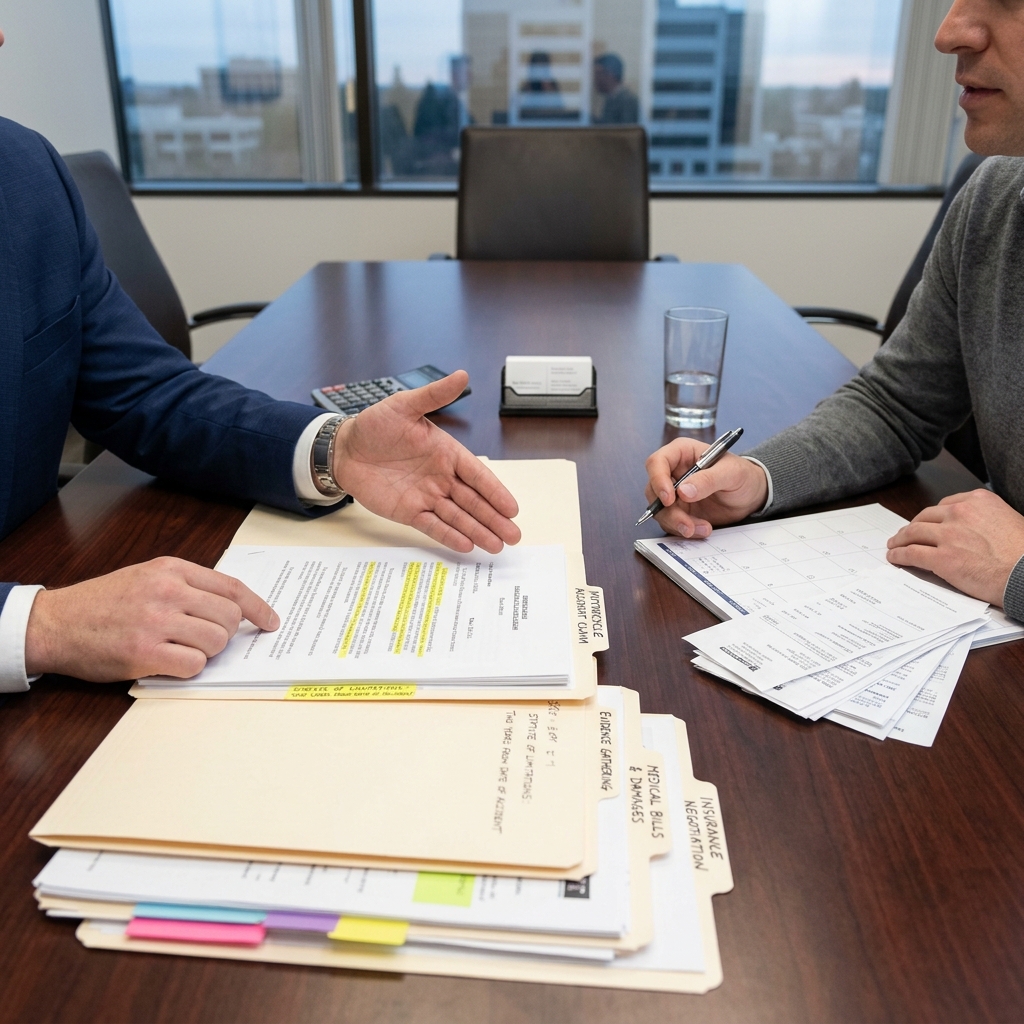
Lien and medical payment deadlines also apply. If you received medical treatment through health insurance, workers’ compensation, or an emergency room, those entities may have claims against your settlement. We track these liens and negotiate their reduction as part of settlement discussions.
Pre-litigation demand letters typically give insurers 30 to 60 days to respond. This allows time for them to investigate and adjust their settlement authority. If they don’t respond or offer inadequate compensation, we file suit and move into litigation.
The litigation discovery process has its own timeline. After filing suit, we have months to exchange documents, take witness depositions, obtain expert reports, and prepare for trial. Court calendars can be crowded, so trials may occur 12 to 24 months after filing.
We manage all timeline requirements on your behalf. Preserve any evidence and get medical care immediately after the accident, then contact us. We’ll ensure every deadline is met and every opportunity for maximum recovery is pursued.
What you must do: Don’t delay. Contact us within the first few weeks after your accident. Early involvement gives us maximum time to investigate and negotiate before the statute of limitations pressure becomes critical.
Documentation That Wins: What You Must Preserve Now
Evidence preservation is non-negotiable. Every document, photo, and recording strengthens your claim.
Preserve any evidence and get medical care starting immediately. Photographs of the accident scene, vehicle damage, and your visible injuries are crucial. Take photos from multiple angles. Show road conditions, weather, traffic signs, and any hazards. If bystanders photographed the scene, collect their contact information and request their images.
Medical records are your most important documentation. Attend all medical appointments and follow provider recommendations completely. Insurers will argue that you delayed treatment or didn’t follow medical advice. Consistent, documented care proves the injury is real and serious. Keep every receipt, invoice, and explanation of benefits from medical providers.
Maintain a detailed injury journal. Document pain levels, medication use, mobility limitations, and how injuries affect daily activities. This contemporaneous record is more persuasive than vague memories months later. Include dates, times, and specific limitations.
Preserve communication records. Save text messages, emails, photos, and voicemails related to the accident. Don’t delete anything. If the other driver made statements admitting fault, those statements are gold. Document any conversations with witnesses, medical providers, or the insurance company.
Maintain financial documentation meticulously. Keep pay stubs showing lost income, receipts for all accident-related expenses, and invoices for medical treatment. If you’re self-employed, preserve business records showing lost income during recovery.
Don’t repair or destroy the motorcycle until we’ve inspected it. The vehicle itself is evidence. Its condition, damage pattern, and mechanical function tell the accident story. We may need to bring in an expert to examine it, and that examination must happen before repairs.
Avoid social media statements about the accident or your recovery. Don’t post photos showing you active or seemingly healthy if you’re claiming significant injury. The insurance company monitors social media and will use anything you post against your claim.
Immediate action: Gather all photos, medical records, pay stubs, and receipts you have. Create a folder (digital or physical) and give us access. We’ll identify any additional documentation we need.
Common Settlement Mistakes That Cost Riders Thousands
We’ve seen injured riders make preventable errors that reduce their settlements significantly. Knowing these mistakes helps you avoid them.
Accepting the first offer without negotiation is the costliest mistake. Insurance companies count on injured people being desperate and uninformed. Their first offer is routinely 30 to 50% below fair value. Accepting it without our review costs you tens of thousands. Let us evaluate every offer before you respond.
Speaking directly with the insurance adjuster is dangerous. Adjusters are trained to minimize claims. Casual statements you make to them can be twisted to suggest you weren’t seriously injured, that you share fault, or that you’ve recovered faster than medical evidence supports. Every word can be used against you. We communicate with insurers on your behalf.
Failing to seek immediate medical care undermines your entire claim. If you didn’t go to the hospital or see a doctor immediately after the accident, insurers argue the injury wasn’t serious. Medical documentation created close in time to the accident is most credible. Go to the ER or urgent care immediately, even if you think the injury is minor.
Delaying treatment or missing appointments weakens your damages claim. Insurers argue that gaps in treatment mean the injury resolved or wasn’t as serious as claimed. Consistent, documented medical care is essential. We help you coordinate appointments and maintain the treatment record that proves ongoing injury.
Settling without understanding permanent impairment is a mistake. Some motorcycle accident injuries cause permanent limitations in mobility, pain, or function. These permanent impairments are worth significant compensation beyond current medical bills. We obtain medical evaluations that quantify permanent disability before settlement.
Ignoring liens and medical payment obligations creates liability after settlement. Health insurance, workers’ compensation, and medical lien companies may claim portions of your settlement. If you don’t account for these, you could owe funds from your recovery. We identify all liens early and negotiate their reduction.
Relying on insufficient documentation weakens negotiation leverage. Vague recollections about medical treatment, lost income, or accident facts don’t persuade insurers. Detailed, documented evidence does. We ensure complete documentation before negotiation begins.
Prevention strategy: Partner with us before you make any decisions. We guide you past these mistakes and protect your claim’s value.
How We Calculate Full and Fair Compensation for Your Damages
Settlement value is based on a clear formula: damages add to create total value. Understanding this formula helps you evaluate offers.
Economic damages are quantifiable: medical bills, lost wages, transportation costs, and disability-related expenses. We total every bill and receipt. For ongoing treatment, we work with medical experts to project future care costs. For lost income, we calculate each week of missed work and project loss of earning capacity if the injury is permanent.
Non-economic damages (pain and suffering, emotional distress, loss of enjoyment of life) are more subjective but legally significant. We use multiplier methods and comparable case analysis to assign reasonable value. A serious injury that resolves might carry a 3-5x multiplier on economic damages. A permanent, disabling injury might carry a 5-10x multiplier. So $50,000 in medical bills and lost wages might translate to $150,000 to $500,000 in total value when pain and suffering is included.

Liability strength directly impacts settlement value. If liability is clear and uncontested, settlement value is higher. If there’s any question about fault, value decreases because there’s litigation risk. We assess liability strength and explain how it affects your case value.
Injury severity and permanence drive damages. A fractured arm that heals completely is worth less than a spinal cord injury causing permanent paralysis. We work with medical experts who quantify injury severity and permanence in ways that support your settlement position.
Insurance policy limits cap recovery. If the at-fault party’s policy limits are $100,000 and your actual damages are $300,000, we recover up to the limit. In some cases, we pursue claims against multiple parties or additional insurance policies to maximize recovery. Your own underinsured motorist coverage might apply if the at-fault driver’s limits are insufficient.
Comparable settlement data informs our demands. We review similar motorcycle accident cases in California courts and prior settlements to establish reasonable value ranges. This data grounds our negotiating position in market reality.
Transparency principle: We’ll explain the calculation behind every settlement number we present or demand. You’ll understand exactly how we arrived at our position.
Getting Ready for Litigation if Settlement Negotiations Stall
Sometimes fair settlement is impossible without the threat of trial. We prepare for litigation aggressively to push insurers to reasonable terms and to win if necessary.
Our litigation readiness sends a signal. When we file a lawsuit and begin discovery, the case becomes expensive and time-consuming for the insurer’s defense counsel. The insurer’s insurance defense costs mount. Depositions of the adjusters and defense counsel begin. Our evidence must be disclosed and defended in court. This litigation pressure often brings settlement offers close to fair value.
Discovery is the process where evidence is exchanged. We obtain documents from the insurer, the at-fault party, and other relevant parties. We take depositions of witnesses, medical providers, and the at-fault driver. These depositions lock in testimony and reveal contradictions that help at trial.
Expert reports are prepared and exchanged. Our accident reconstruction expert explains how the collision occurred. Our medical expert explains the nature, extent, and permanence of your injuries. These expert opinions are powerful evidence at trial.
Mediation often occurs before trial. A neutral mediator meets with both parties and tries to facilitate settlement. Many cases settle in mediation when both sides have invested in discovery and expert preparation. We advocate assertively for your interests during mediation.
If mediation fails, trial preparation accelerates. We develop trial strategy, prepare you for testimony, and ready all witnesses and exhibits. Trial can last days or weeks depending on complexity. We present our case to a jury, which decides liability and damages. California juries are often sympathetic to motorcycle accident victims, particularly when injury is serious and liability is clear.
Our complex motorcycle accident litigation guide explains the trial process in detail if you want to understand it more thoroughly.
Reassurance: We’ve tried cases and won substantial verdicts. The insurer knows this. That credibility translates into better settlements before trial.
Your Next Step: Free Consultation With Our Experienced Team
You’ve been injured, and you have rights after an accident. Taking the first step is contacting us.
A free consultation with our team gives you clear answers about your claim’s value, the strength of liability, the timeline for resolution, and what we recommend. We ask detailed questions about your accident and injuries. We listen to your concerns. We explain California personal injury law and negotiation strategy in plain language.
During the consultation, we’ll review any documents you have and identify what additional evidence we need. We’ll discuss the statute of limitations and explain why early action matters. We’ll answer your questions honestly, even if the news isn’t what you hoped.
Contact us for a free consultation today. No fee unless we recover for you. We work on contingency, meaning you pay nothing unless we win your case. That alignment of interests means we only take cases we believe in and only settle or litigate for fair value.
Time is limited — act now. The statute of limitations is two years from the accident date, but don’t wait that long. Early investigation, evidence gathering, and negotiation produce better outcomes. Every week that passes, evidence degrades, witnesses’ memories fade, and opportunities narrow.
Reach out to Weinberger Law Firm today. We’re here to guide you through this difficult time and secure the compensation you deserve.
Contact us today for a Free Case Consultation!
Frequently Asked Questions (FAQ)
Why do insurance companies often offer less than my motorcycle accident claim is worth?
Insurance companies are businesses focused on minimizing payouts, and they know many accident victims don’t understand the full value of their claims. We’ve seen them systematically underestimate non-economic damages like pain and suffering, future medical needs, and lost earning capacity. Our role is to investigate all available evidence, document every cost and impact on your life, and present a compelling case that reflects what you actually deserve.
What should I preserve right after my motorcycle accident to strengthen my claim?
Preserve any evidence at the scene: photos of vehicle damage, road conditions, traffic signals, and your injuries; contact information from witnesses; the police report; and medical records from your initial treatment. We also recommend keeping detailed records of medical appointments, prescriptions, physical therapy, lost work days, and how your injuries affect your daily activities. Time is limited under California’s statute of limitations, so documenting everything now prevents crucial evidence from disappearing later.
How do we calculate fair compensation, and what damages can we pursue?
We pursue full and fair compensation by calculating economic damages (medical bills, lost wages, ongoing treatment costs) and non-economic damages (pain and suffering, emotional distress, reduced quality of life). We also evaluate whether your case warrants punitive damages based on the at-fault party’s conduct. Our investigation determines the true scope of your injuries and their long-term impact, ensuring we don’t settle for less than your claim is worth.