
Table of Contents
- Understanding Your Rights After a DUI Injury
- Why Evidence Preservation Matters in DUI Cases
- Critical Evidence Types We Investigate
- How to Preserve Evidence at the Scene
- Medical Documentation and Health Records
- Police Reports and Official Records
- Witness Statements and Contact Information
- Surveillance Footage and Traffic Cameras
- Building Your Compensation Claim With Evidence
- Why We Pursue Full and Fair Compensation
- Contact Us for Your Free DUI Injury Consultation
- Frequently Asked Questions (FAQ)
Understanding Your Rights After a DUI Injury
When a drunk driver causes an accident, the road to recovery is rarely simple. Medical bills pile up. Lost wages mount. The emotional toll lingers. But you have rights after an accident, and collecting the right evidence now can make the difference between a modest settlement and full compensation for your damages.
At Weinberger Law Firm, we’ve helped countless injury victims in Sacramento and across California navigate the aftermath of DUI collisions. We know that preserving evidence quickly is crucial. Many victims don’t realize that critical proof can disappear within hours or days if action isn’t taken immediately. This guide explains what evidence matters most, how to preserve it, and why your next steps matter now.
California law protects you when someone else’s negligence causes your injury. A DUI accident is negligence at its clearest: the driver chose to operate a vehicle while impaired, knowing the risks. That choice makes them liable for your damages.
Your rights include compensation for:
- Medical expenses (emergency care, surgery, ongoing treatment, rehabilitation)
- Lost wages and lost earning capacity
- Pain and suffering, emotional distress, and permanent scarring or disability
- Property damage to your vehicle and personal property
The statute of limitations—the legal filing deadline—gives you two years from the date of injury to file a personal injury claim in California. That timeline sounds long, but it passes quickly when you’re recovering from injuries. Delays in evidence preservation can cost you far more than delay in filing.
Why Evidence Preservation Matters in DUI Cases
Evidence is your proof. Without it, your claim rests on your word against the driver’s insurance company. Insurance adjusters will challenge your account, minimize your injuries, and offer far less than fair compensation if you cannot document what happened.
Here’s why evidence matters in DUI cases specifically: a DUI accident already has some built-in proof (the police report, the arrest record, blood alcohol test results). But that official record alone doesn’t tell the full story of your injuries or the full scope of damages. You need to build that story with your own evidence.
Physical evidence from the scene—skid marks, vehicle damage patterns, roadway hazards—can vanish within days. Witness memories fade. Security camera footage gets overwritten or deleted after 30 days at many businesses. The longer you wait, the weaker your case becomes.
We will investigate all available evidence on your behalf. That’s our job. But we can only work with what still exists. Preserving evidence now protects your future compensation.
Critical Evidence Types We Investigate
When we take on your case, we pursue multiple forms of evidence to build an ironclad claim:
- Scene photographs and measurements showing road conditions, vehicle positions, and damage
- Medical records documenting your injuries from the moment of treatment onward
- Police report and toxicology results confirming the driver’s impairment
- Eyewitness statements describing how the collision occurred
- Traffic camera and surveillance video from nearby businesses or public intersections
- Expert analysis of vehicle damage, accident reconstruction, and causation
- Insurance policy information and coverage limits
- Documentation of lost wages, medical bills, and out-of-pocket expenses
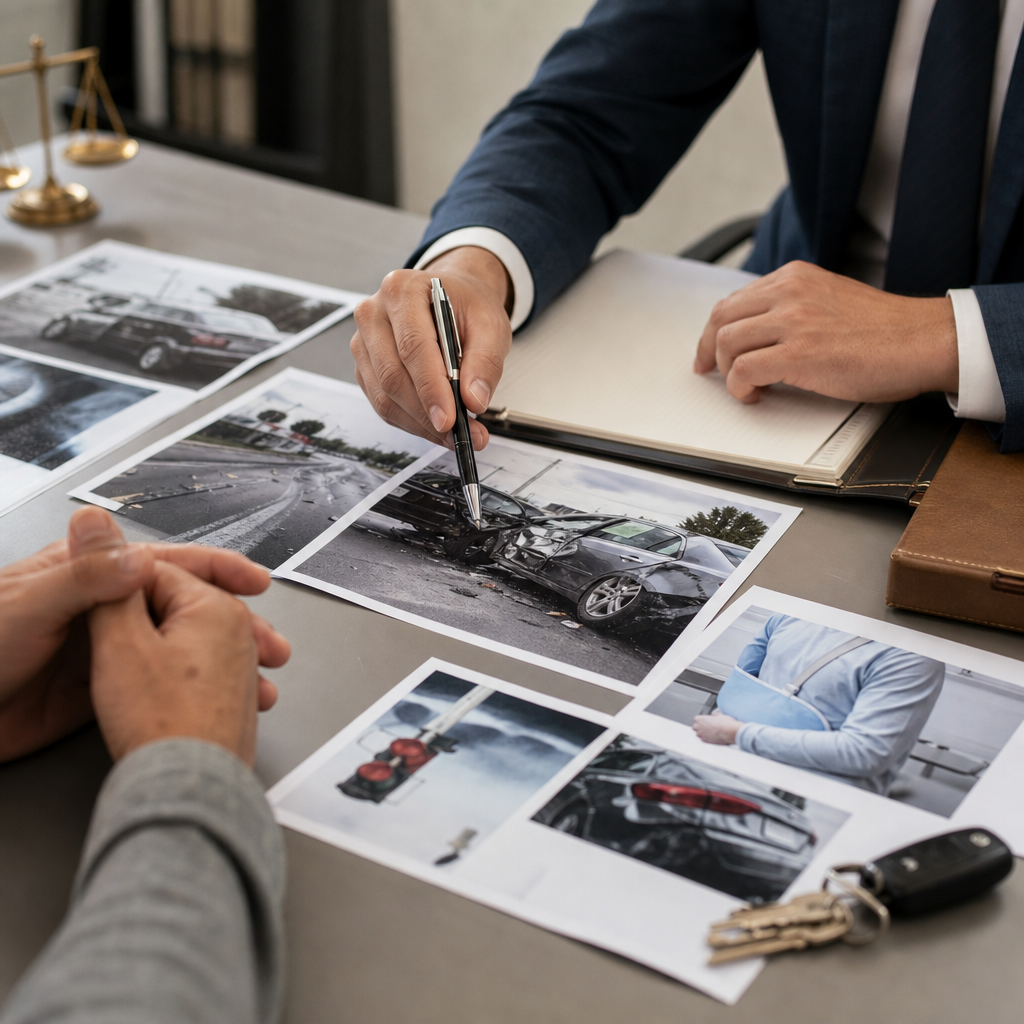
Each type of evidence serves a specific purpose. Together, they create a comprehensive picture: how the accident happened, why the drunk driver is at fault, what your injuries are, and what you deserve to recover.
How to Preserve Evidence at the Scene
If you are able and safe to do so, take action immediately after an accident:
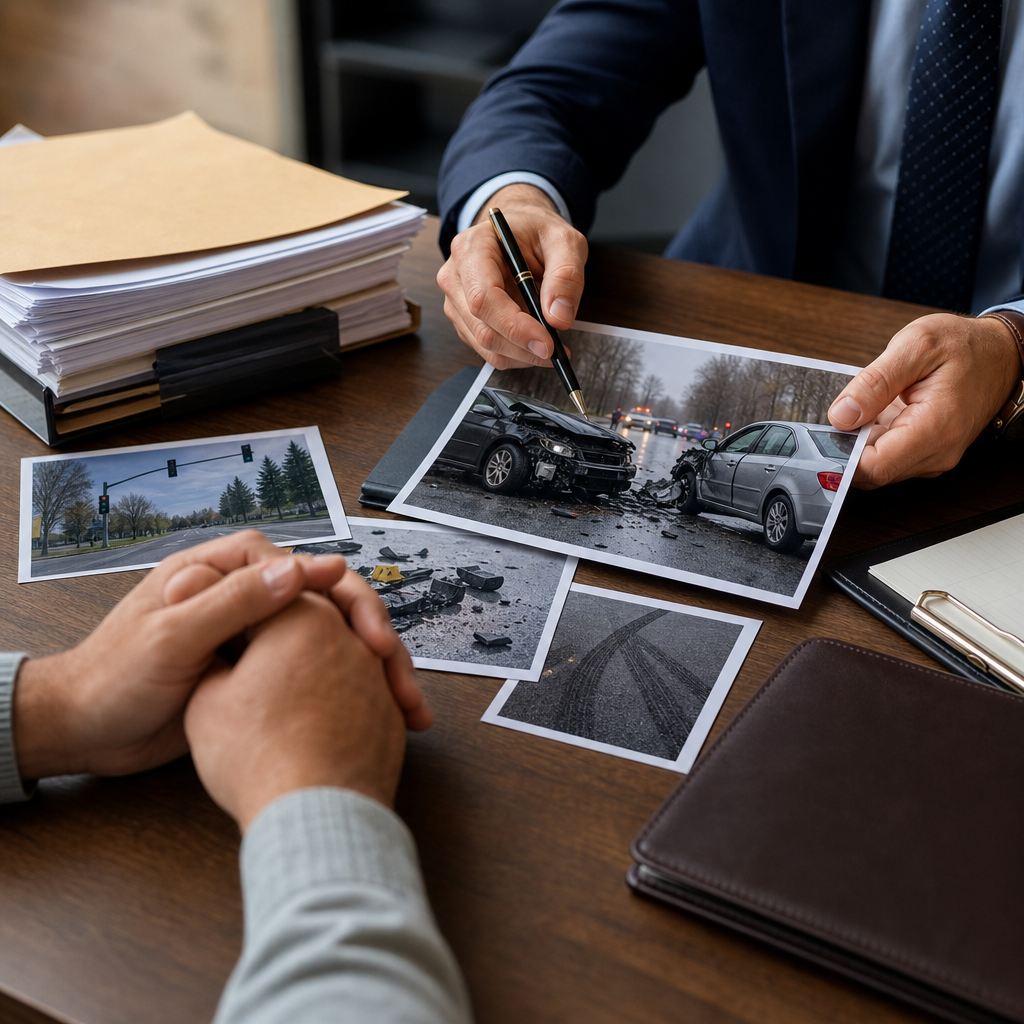
Document the scene yourself. Use your phone to photograph the vehicles, their positions relative to each other, road markings, traffic signals, weather conditions, and any visible property damage. Capture wide shots and close-ups. Take photos of skid marks, debris, and the overall intersection or roadway. These images can become critical if the scene is cleaned up or altered within hours.
Identify and record witness information. Ask anyone who saw the collision for their name, phone number, address, and email. Don’t rely on memory. Write it down immediately or photograph their ID. Witnesses scatter quickly, and their recollection fades.
Preserve your own condition. If you have visible injuries (cuts, bruises, visible trauma), photograph them before you leave the scene, and continue photographing them over the following days and weeks as your injuries evolve. This photographic record is powerful evidence of impact.
Preserve your vehicle. Do not have it repaired immediately. The damage pattern tells a story about impact force and the direction of the collision. Repair shops will document it, but preserve photos and the vehicle itself until we’ve had it inspected.
Get medical care promptly. Even if you feel “okay,” internal injuries and soft tissue damage often emerge hours or days after impact. Seeking immediate medical attention creates a medical record that links your injuries directly to the accident.
Medical Documentation and Health Records
Your medical records are among the most valuable evidence in your case. They create a clear chain of causation: accident occurred, you sought treatment, medical professionals diagnosed and documented injuries.
Request copies of all medical records related to your accident, including emergency room visit notes, imaging results (X-rays, CT scans, MRI), surgical reports, physical therapy notes, and follow-up appointments. These documents show the severity of your injuries, the treatment you required, and your recovery timeline.
Keep every medical bill and receipt, even for items insurance doesn’t cover initially. Document prescriptions, co-pays, mileage to and from appointments, and any lost wages due to medical appointments. Many injury victims underestimate their total medical expenses because they don’t track every receipt. Comprehensive documentation maximizes your claim.
If your injuries require ongoing care, continue seeking treatment as medically necessary. The longer your treatment extends, the stronger the evidence that your injuries are serious and lasting. We can advise you on what documentation we need as your case develops.
Police Reports and Official Records
The police report is public record. It documents the officer’s observations, the driver’s statements, witness statements collected at the scene, the police conclusion about who caused the accident, and—critically—any evidence of impairment or a DUI arrest.
Obtain a copy of the accident report within days of the collision. In California, you can request it from the law enforcement agency that responded. The report provides official corroboration of basic facts and may include chemical test results showing the driver’s blood alcohol level.
If the driver was arrested or cited for DUI, those records are also relevant. A DUI conviction (or a guilty plea) is powerful evidence that strengthens your claim substantially. It removes any ambiguity about the driver’s fault.
Pay particular attention to any statements in the report about hazardous road conditions, vehicle defects, or other contributing factors. If the report attributes fault clearly, bring it to our attention immediately.
Witness Statements and Contact Information
Eyewitnesses are invaluable. They have no stake in the outcome and can describe what they saw in neutral terms. One credible eyewitness who saw the drunk driver swerving, accelerating recklessly, or running a red light can settle a disputed liability case.
Collect witness information at the scene if possible. Get full names, phone numbers, addresses, email addresses, and a brief statement of what they saw. Ask them to describe the driver’s behavior before impact (Was the car weaving? Speeding? Running lights?). Record this information clearly—don’t assume you’ll remember it.
If you cannot get information at the scene, try to identify witnesses in the days following the accident. They may have left the scene before police arrived or may be reluctant to give statements to other drivers. Return to the accident location at the same time of day and ask nearby business owners or residents if they witnessed the collision.
We can follow up with witnesses to obtain formal statements and preserve their recollections. The sooner we contact them, the fresher their memory.
Surveillance Footage and Traffic Cameras
Traffic cameras at intersections and security cameras from nearby businesses or properties are often the most persuasive evidence available. Video footage shows, without ambiguity, how the collision occurred and who was at fault.
Identify any cameras that may have recorded the collision. Look for cameras mounted on traffic signals, on buildings facing the intersection or roadway, at nearby gas stations, banks, or retail locations. Note the location and direction the camera was pointing.
Contact the business or property owner immediately and request that they preserve any video footage from the date and time of the accident. Many systems automatically overwrite footage after 30 days. Your request to preserve it creates a legal obligation and prevents deletion.
If the footage still exists, we can obtain it formally through the discovery process or by direct request. Video evidence often resolves disputes about liability quickly, leading to faster, higher settlements.
Building Your Compensation Claim With Evidence
Evidence alone doesn’t secure compensation. We use evidence strategically to build a persuasive narrative and negotiate with insurance companies from a position of strength.
Here’s our process: we organize all evidence chronologically and by category. We prepare a demand package that includes your medical records, documented expenses, photographs, witness statements, and a detailed explanation of how the defendant’s negligence caused your injury and damages. We present this to the insurance company with a specific compensation demand backed by evidence at every step.
Insurance companies respond to evidence. When we show photos of your injuries, medical records confirming diagnosis and treatment, wage loss documentation, and eyewitness corroboration of the driver’s impairment, they understand that a jury would side with you. That understanding motivates settlement.
If the insurance company refuses a fair offer, we pursue litigation. We prepare your case for trial, depose witnesses, retain experts if needed, and present evidence to a judge or jury. Throughout this process, comprehensive evidence preserves your credibility and strengthens your position.
Your role is to preserve the evidence now while it still exists. Our role is to investigate thoroughly, document meticulously, and pursue full and fair compensation on your behalf.
Why We Pursue Full and Fair Compensation
You shouldn’t have to negotiate with insurance companies while recovering from injuries caused by someone else’s recklessness. That’s why we pursue cases on contingency: we charge no fee unless we recover for you.
We pursue full and fair compensation because your damages are real. Medical bills are real expenses. Lost wages are income you should have earned. Pain and suffering is a genuine harm. Many injury victims accept lowball offers because they need money quickly or feel overwhelmed. Insurance companies count on that desperation.
Our job is to handle the legal complexity so you can focus on healing. We investigate all available evidence, negotiate assertively, and litigate aggressively if necessary. We won’t accept inadequate offers, and we will document and present the facts to secure what you’re entitled to.
When you work with us, you’re not facing the insurance company alone. You have a dedicated legal team pursuing your rights and your recovery.
Contact Us for Your Free DUI Injury Consultation
If you were injured in a DUI accident, time is limited. Evidence vanishes. Witness memories fade. The statute of limitations clock is running.
Call Weinberger Law Firm today for a free consultation. We’ll review the details of your accident, explain your rights, assess what evidence we need to preserve immediately, and outline a strategy to maximize your compensation.
You don’t pay us unless we recover for you. That commitment means we only take cases we can win, and we work relentlessly to secure full and fair compensation for every client.
Contact us now. Document, preserve, and present the facts with our help. Your recovery depends on it.