
Table of Contents
- Why Passengers Need Protection: The Uber Injury Challenge
- Understanding Uber’s Liability for Passenger Injuries
- Types of Uber Accidents and Negligence Cases
- California Law and Your Rights as a Rideshare Passenger
- How We Investigate and Build Your Injury Claim
- Preserving Evidence and Protecting Your Case
- Negotiating Fair Compensation With Insurance
- The Statute of Limitations: Why Time Matters
- What Full Compensation Looks Like for Uber Injuries
- Why You Need Dedicated Legal Representation
- Contact Weinberger Law Firm for Your Free Consultation
- Frequently Asked Questions (FAQ)
Why Passengers Need Protection: The Uber Injury Challenge
If you were injured as a passenger in an Uber vehicle, you’re facing a complex situation. Your medical bills are mounting, you’ve lost income while recovering, and you’re unsure who is legally responsible for your injuries. Rideshare accidents are different from typical car accidents because the liability landscape involves the driver, Uber itself, and multiple insurance policies that often conflict.
Unlike a conventional taxi or private vehicle, Uber operates under a specific legal framework that determines when the company bears liability for passenger injuries. Many injured passengers don’t realize they have strong rights under California law, or they settle quickly with insurance companies that offer far less than fair compensation. You have rights after an accident, and understanding them is your first step toward securing the recovery you deserve.
The challenge intensifies because Uber’s liability depends on the circumstances of your accident. Was the driver at fault for negligent driving? Was the vehicle defective or poorly maintained? Did Uber fail to properly vet the driver? Each scenario triggers different legal obligations. We help you navigate these questions and build a claim that accurately reflects Uber’s responsibility for your injuries.
Understanding Uber’s Liability for Passenger Injuries
Uber is not automatically liable for every accident involving one of its drivers. California law distinguishes between the app company and the driver based on the concept of independent contractor status. Uber classifies drivers as independent contractors, which typically limits the company’s direct liability. However, this classification does not eliminate Uber’s responsibility in your case.
We will investigate all available evidence to determine Uber’s liability through several potential avenues:
- Negligent hiring or retention of a driver with a dangerous driving record
- Failure to maintain the vehicle or conduct adequate safety inspections
- Defective vehicle equipment that contributed to the accident
- Inadequate background checks or vetting procedures
- Negligent supervision or company policies that encourage unsafe driving
When Uber’s insurance coverage applies, the company carries commercial coverage that can provide substantial compensation. This coverage activates when the driver is logged into the app and actively providing rides to passengers. Your passenger status strengthens your claim because you are a third party using Uber’s service, and Uber has a duty of care toward you.
The key is proving that Uber breached a duty of care. If evidence shows that Uber knew (or should have known) about a driver’s negligent or dangerous behavior and failed to act, we can hold the company accountable. This requires thorough investigation and access to Uber’s records, which we routinely obtain through the discovery process.
Types of Uber Accidents and Negligence Cases
Uber passenger injuries arise from several distinct accident categories, each requiring a different investigative approach. Understanding which category applies to your situation helps us build a stronger claim.
Driver Negligence Cases are the most common. These involve accidents caused by the driver’s careless conduct: speeding, distracted driving, failure to obey traffic laws, or reckless maneuvers. We document the driver’s actions through police reports, witness statements, and traffic camera footage.
Vehicle Defect Cases occur when a mechanical failure or maintenance issue caused or contributed to the accident. A faulty brake system, worn tires, or malfunctioning airbags may indicate that Uber failed in its duty to maintain safe vehicles. We engage accident reconstruction experts to isolate the mechanical cause.
Premises Liability During Pickups or Dropoffs can also result in injury. If you were injured due to unsafe conditions at a pickup location or during loading, Uber may bear responsibility for failing to ensure safe access.
Assault or Criminal Conduct by the Driver represents a tragic but significant category. Uber has a duty to conduct thorough background checks and remove drivers with violent histories. If Uber’s negligence in vetting enabled a driver to harm you, we pursue compensation for both the physical and emotional damages you suffered.
Each case type demands specific evidence. For driver negligence, we need accident data and witness accounts. For vehicle defects, we need maintenance records and expert analysis. Preserve any evidence and get medical care immediately after your injury, regardless of the accident type.
California Law and Your Rights as a Rideshare Passenger
California recognizes rideshare passengers as customers entitled to protection under negligence law. When you book an Uber ride, you enter into a contractual relationship with the company, and Uber assumes a duty of care toward you. This is not a favor; it’s a legal obligation.

California’s comparative negligence rules also work in your favor. Even if you were partially at fault for your injury (for example, if you were not wearing a seatbelt), you can still recover compensation. Your recovery would be reduced by your percentage of fault, but you’re not barred from suing. This flexibility is important because it allows us to pursue claims even in situations where multiple parties share responsibility.
The law also recognizes several categories of damages you can recover:
- Medical bills and lost wages from the date of injury through recovery
- Pain and suffering (physical pain, emotional distress, reduced quality of life)
- Permanent disability or disfigurement
- Future medical care and ongoing treatment costs
- Loss of earning capacity if your injuries prevent you from working
We pursue full and fair compensation, which means calculating not just your current expenses but your projected long-term needs. This requires detailed documentation of your medical treatment, employment records, and expert testimony on future costs.
How We Investigate and Build Your Injury Claim
Our investigation starts immediately after you contact us. Time is limited, and evidence can disappear quickly. We move fast to preserve witness statements, obtain police reports, secure traffic camera footage, and request Uber’s internal records.
Here’s our systematic approach:
Gather Initial Evidence: We request the police accident report, obtain witness contact information, and document the scene through photos and video. We preserve the dashcam footage from the Uber vehicle if available.
Medical Documentation Review: We compile your medical records, imaging studies, surgery reports, and ongoing treatment plans. We calculate your medical bills and projected future costs with help from medical experts when necessary.
Uber Records Discovery: We demand Uber’s records related to the driver, vehicle maintenance history, accident reports, and insurance coverage details. We also obtain the driver’s app data and communication logs from the ride in question.
Expert Analysis: For complex cases, we engage accident reconstruction specialists, vehicle mechanics, or medical experts to establish causation and quantify damages. Their testimony strengthens our negotiating position and trial readiness.
Insurance Investigation: We identify all applicable insurance policies and coverage limits. Uber carries commercial insurance, and the driver may carry personal coverage. We ensure all available insurance is properly invoked.
Throughout this process, we communicate clearly with you about findings and next steps. You’re not left in the dark wondering about your case status.
Preserving Evidence and Protecting Your Case
Evidence preservation is critical and often determines the outcome of your claim. Immediately after your injury, take these concrete steps:
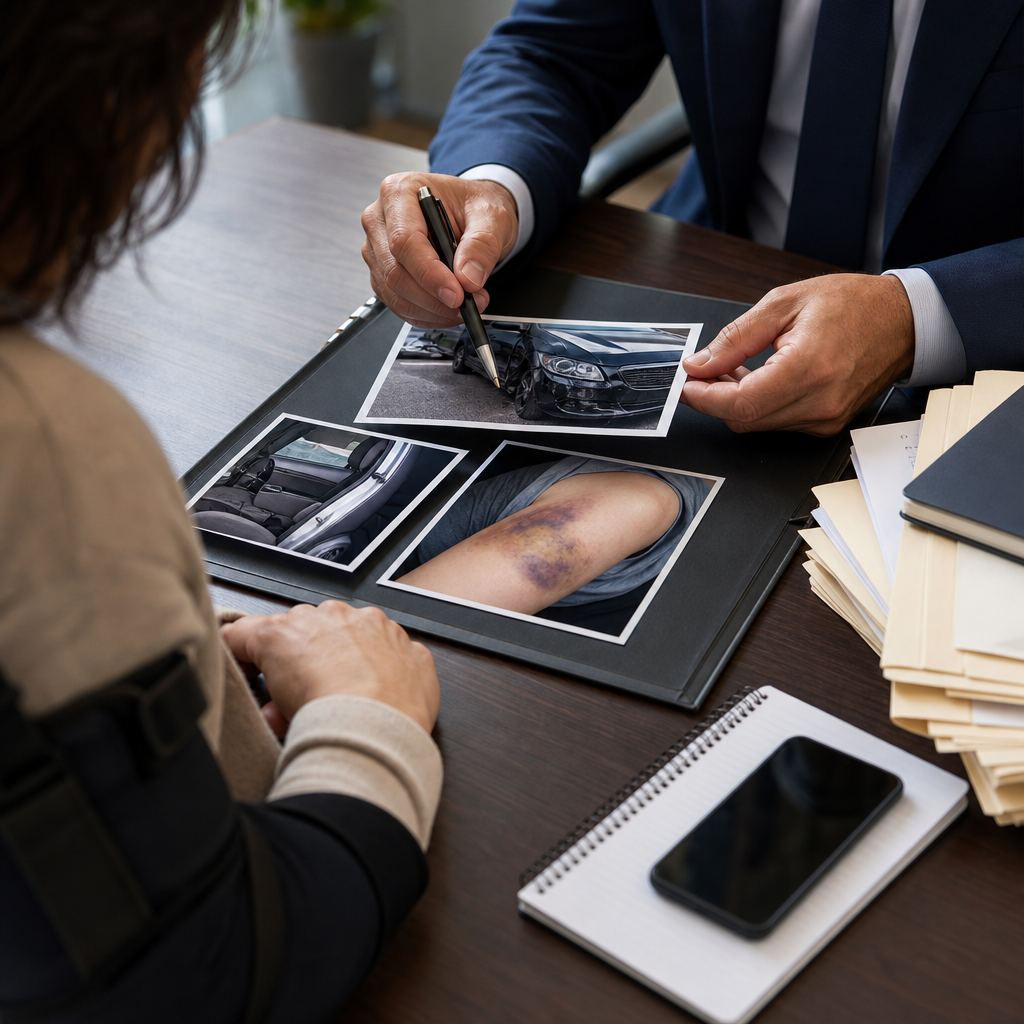
Document your injuries through photographs taken regularly during recovery. Capture visible bruises, wounds, surgical scars, and swelling. These images are powerful evidence of your suffering.
Preserve the Uber ride receipt and any communication with the driver or Uber through the app. Screenshot everything. Uber’s systems delete ride data after a certain period, so your copies protect against loss.
Obtain the names and contact information of other passengers or bystanders who witnessed the accident. Their statements corroborate your account and challenge any contradictory driver claims.
Request a copy of the police report and photograph the accident scene if you’re able. Note vehicle damage, road conditions, weather, and traffic patterns at the time of the accident.
Keep all medical records, receipts, and bills organized in one place. Maintain a journal documenting your recovery, including pain levels, missed work days, and functional limitations. This personal record becomes powerful testimony about your suffering.
Request that Uber preserve all records related to the driver, vehicle, and accident through a formal preservation letter. This prevents the company from claiming data was routinely deleted.
We handle formal evidence preservation requests, but your immediate actions in the hours and days after injury are equally important. Act quickly.
Negotiating Fair Compensation With Insurance
After we’ve investigated your case and calculated your damages, we enter settlement negotiations with Uber’s insurance carrier. Insurance adjusters are skilled negotiators who typically start with low offers hoping you’ll accept quickly. We don’t settle for less than fair value.
Our negotiation strategy is straightforward but firm:
We present detailed documentation of your damages, supported by medical records, expert reports, and clear calculations of lost wages. We explain how the evidence proves Uber’s liability and the driver’s negligence. We emphasize the strength of our case and our readiness to litigate if necessary.
We counter lowball offers with reasoned counterproposals grounded in California law and comparable settlements. We’re patient but persistent, understanding that some cases require multiple rounds of negotiation.
We keep you informed at every stage. You understand the insurance company’s position, our response, and the reasoning behind our settlement recommendations. Your approval is required before we accept any offer.
If the insurance company refuses to offer fair compensation, we proceed to litigation. We’re prepared to file a lawsuit, conduct discovery, and present your case before a judge and jury. Insurance companies know this, and it influences their willingness to negotiate seriously.
The Statute of Limitations: Why Time Matters
California law imposes strict deadlines for filing personal injury lawsuits. For claims against Uber and its drivers, the statute of limitations is two years from the date of your injury. This is the filing deadline, and missing it means losing your right to sue forever.
Two years sounds like a long time, but it passes quickly. During those two years, we must investigate, communicate with insurance, attempt settlement, and file a complaint if necessary. Evidence also deteriorates over time. Witnesses move away, surveillance footage gets deleted, and memories fade.
We track all important deadlines and ensure that your claim is filed well before expiration. We also understand that some cases involve multiple defendants (the driver, Uber, vehicle maintenance companies), and each may have different deadlines depending on the circumstances.
Time is limited, so contact us immediately after your injury. The sooner we engage, the more evidence we can preserve and the better our negotiating position. Delay reduces your options and weakens your claim.
What Full Compensation Looks Like for Uber Injuries
Fair compensation in an Uber passenger injury case includes both economic and non-economic damages. Understanding what you should recover helps you evaluate settlement offers and trust our negotiating decisions.
Economic Damages are your measurable financial losses:
- All past and future medical bills, including emergency care, hospitalization, surgery, physical therapy, and ongoing treatment
- Lost wages from the date of injury through your return to work, calculated from your pay stubs and employment records
- Reduced earning capacity if your injuries prevent you from returning to your previous job or earning level
- Out-of-pocket costs for transportation, medication, medical equipment, and home care assistance
Non-Economic Damages compensate for your suffering and losses that don’t have a simple dollar amount:
- Pain and suffering during recovery
- Emotional distress, anxiety, and depression resulting from the trauma
- Permanent scarring, disfigurement, or disability
- Loss of enjoyment of life if your injuries prevent participation in activities you previously enjoyed
- Loss of consortium if your injuries affected your relationship with a spouse
Full and fair compensation also accounts for the severity of your injuries, the permanence of any disability, and the strength of Uber’s liability. A passenger with severe, permanent injuries caused by clear Uber negligence should recover substantially more than one with minor injuries.
We calculate damages using industry standards, comparable case outcomes, and medical expert guidance. We don’t accept arbitrary figures; every dollar we pursue is grounded in evidence and law.
Why You Need Dedicated Legal Representation
Representing yourself against Uber and its insurance company puts you at a severe disadvantage. Insurance adjusters negotiate professionally every day; they know how to identify undervalued claims and extract concessions from unrepresented claimants.
Legal representation provides concrete advantages:
Insurance companies take claims more seriously when represented by counsel. They allocate more resources to evaluation and are more willing to negotiate fairly. They know an attorney will pursue litigation if necessary, which increases their risk and cost.
We understand California personal injury law deeply. We know which arguments succeed, which evidence matters most, and how courts interpret rideshare liability statutes. This expertise translates directly into higher settlements.
We handle the administrative burden, allowing you to focus on recovery. We manage deadlines, prepare documents, conduct discovery, and communicate with opposing counsel. You can rest assured that your claim is progressing properly.
We access resources you cannot obtain alone. We hire accident reconstruction experts, medical specialists, and investigators. We obtain insurance information, police reports, and Uber records that would be difficult for you to secure independently.
We negotiate without emotion. Your case is our professional responsibility. We can advise you objectively about settlement value and recommend decisions based on law and evidence, not frustration or hope.
Most importantly, our clients recover substantially more with representation than they would alone. The difference typically far exceeds our fee, which is why we work on a contingency basis. No fee unless we recover for you.
Contact Weinberger Law Firm for Your Free Consultation
You have rights after an accident, and we’re ready to fight for them. If you were injured as a passenger in an Uber, contact Weinberger Law Firm today for a free consultation. We serve clients throughout California, and we understand the specific challenges of rideshare injury claims.
During your consultation, we’ll review your accident, explain your legal options, and answer your questions. We’ll assess the strength of your claim, identify available insurance coverage, and outline a path toward compensation. You’ll leave with a clear understanding of what to expect and how we can help.
Our office is located in Sacramento, and we’re available to meet in person or by phone, whatever is most convenient for you. We respond promptly to calls and emails because we know you’re dealing with injury recovery and financial stress.
Time is limited, so act now. Call Weinberger Law Firm or visit our website to schedule your free consultation. We’re here to help you secure the compensation you deserve and guide you toward recovery.