
Table of Contents
- Introduction: Understanding Your Legal Options After a Motorcycle Accident
- Key Criteria for Evaluating Motorcycle Accident Claims
- Option 1: Insurance Settlement Negotiations and Claims
- Option 2: Out-of-Court Settlement Agreements
- Option 3: Litigation and Trial Representation
- Comparison Summary: Evaluating Your Best Path Forward
- Selection Guide: Choosing the Right Legal Approach for Your Situation
- Protecting Your Rights: Critical Steps to Take Immediately After an Accident
Introduction: Understanding Your Legal Options After a Motorcycle Accident
A crash can leave you facing medical bills, missed work, and an uncertain path forward. In California’s at-fault system, you generally pursue compensation from the driver or party who caused the wreck, and a Sacramento motorcycle accident lawyer can help you understand which avenues fit your situation. Early legal guidance clarifies deadlines, evidence needs, and the strategies most likely to protect your recovery.
Your motorcycle injury legal rights include seeking damages for emergency care, surgeries, rehabilitation, lost income and earning capacity, pain and suffering, and bike repairs or replacement. California follows pure comparative negligence, so even if you were partly at fault—for example, a driver made a left turn across your lane but you were slightly over the speed limit—you can still recover, reduced by your percentage of fault. Helmet use is required by law; not wearing one does not bar a claim but may affect damages tied to head injuries.
Depending on the facts, your personal injury claim options can include:
- Third-party liability claim against the at-fault driver’s insurance for bodily injury and property damage.
- Uninsured/underinsured motorist (UM/UIM) claim through your policy if the driver lacks adequate coverage or in a hit-and-run.
- Product liability claim if a defective part (e.g., faulty brakes or tires) contributed to the crash.
- Government claim for dangerous road conditions, such as a poorly maintained pothole or obscured signage (special six-month claim deadline applies).
- Employer liability if the at-fault driver was on the job at the time of the collision.
- Wrongful death action for eligible family members when a crash is fatal.
Understanding the injury settlement process helps you avoid costly missteps. Strong cases are built on prompt medical evaluation, the police report, scene photos, helmet and gear inspection, witness statements, and expert analysis when needed. Insurers may seek recorded statements or quick, low offers; consult counsel before agreeing, and consider whether to settle or litigate after a full damages assessment. You can also compare professional legal advocacy and direct insurance settlements to decide the best path.
Act quickly to protect your claim: California’s general deadline is two years from the injury, and government-related claims require filing an administrative claim within six months. Keep all medical records, receipts, and a journal tracking pain and activity limits, and avoid posting about the crash on social media. For accident compensation guidance tailored to Sacramento roads and insurers, Weinberger Law Firm provides thorough case evaluation, evidence development, and negotiation or trial readiness for motorcycle negligence claims. Speaking with their team early can help maximize compensation and preserve crucial evidence.
Key Criteria for Evaluating Motorcycle Accident Claims
The strength of a motorcycle claim starts with liability. A Sacramento motorcycle accident lawyer will look at how the crash happened—unsafe left turns, sudden lane changes, dooring, or a failure to yield are classic driver errors. Liability can also stem from roadway defects (poor signage, uneven pavement) or a defective part (brakes, tires, helmet), opening the door to public-entity or product claims. California’s pure comparative negligence rules apply, so any fault assigned to you reduces— but doesn’t erase—your recovery.
Facts win cases, so evidence quality is critical. Police reports, photos of the scene and your bike, skid measurements, nearby business or traffic-camera footage, and data from the other vehicle’s EDR can clarify speed and braking. Helmet- or dash-cam video is powerful, especially for lane-splitting crashes—legal in California when done safely. Prompt medical documentation ties injuries to the crash and helps defeat causation disputes.
Damages must be fully developed and supported with records and expert opinions where needed. Consider both current losses and future impacts:
- Medical bills and rehabilitation, plus projected future treatment or surgery
- Lost wages, overtime, and diminished earning capacity if you can’t return to prior work
- Pain, suffering, and loss of enjoyment of life, often significant in motorcycle cases
- Property damage to your bike and gear
- Loss of consortium for a spouse in serious injury cases
- Potential punitive damages in egregious cases (e.g., DUI)
Insurance coverage and collectability often set the ceiling on recovery. California’s minimum auto liability limits are now 30/60/15, but many drivers carry only the minimum. Uninsured/underinsured motorist (UM/UIM) coverage, MedPay, umbrella, rideshare, or commercial policies can expand available funds. Deadlines matter: most injury claims have a two-year statute of limitations, while claims against public entities typically require a government claim within six months.
Insurers commonly lean on rider bias or argue unsafe lane splitting to depress value. A strong injury settlement process starts with a comprehensive demand package—liability proof, medical and wage documentation, and expert support—followed by firm negotiation and, if needed, filing suit to leverage discovery, mediation, and trial. Litigation readiness often moves stubborn carriers toward fair numbers.
Weinberger Law Firm provides accident compensation guidance grounded in California law, from investigating motorcycle negligence claims to maximizing damages and resolving medical liens. As a local team, they understand Sacramento juries, roads, and insurers—advantages you may not get with national outfits (see their take on choosing a Sacramento lawyer vs national firm). If you’re weighing personal injury claim options, their early case evaluation can clarify value and next steps.
Option 1: Insurance Settlement Negotiations and Claims
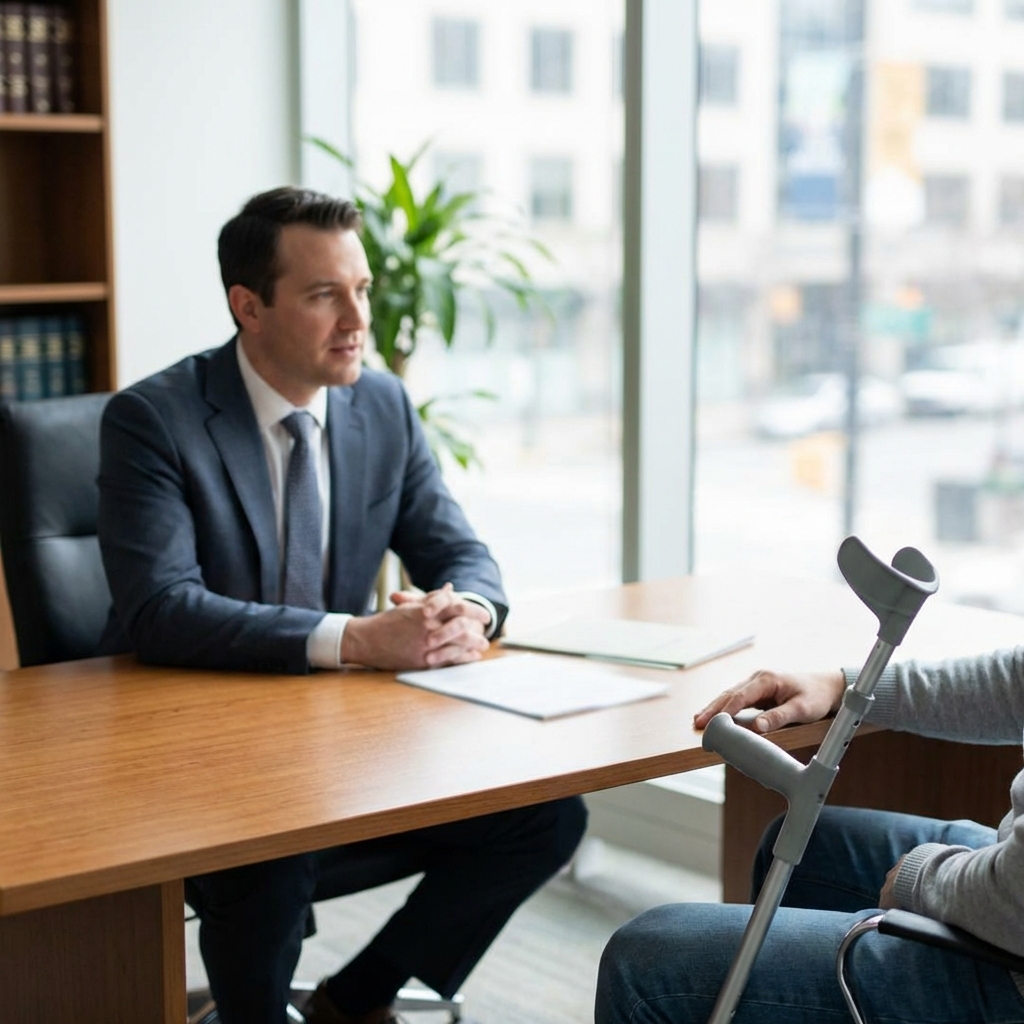
For many injured riders, the first and fastest path to compensation is an insurance claim and negotiated settlement. You may pursue the at-fault driver’s liability policy for bodily injury and property damage, and, when needed, turn to your own coverages. A Sacramento motorcycle accident lawyer can help coordinate these overlapping claims and protect your motorcycle injury legal rights while insurers evaluate fault and damages.
Multiple policies may apply after a crash. Third-party bodily injury and property damage coverage address your losses caused by a negligent driver. Your own MedPay can cover immediate medical bills regardless of fault, and uninsured/underinsured motorist (UM/UIM) coverage can fill gaps when the other driver has no insurance or low limits. Effective accident compensation guidance often means stacking these personal injury claim options in the right order.
Build a thorough demand package with clear, verifiable proof. Include:
- Police report, photos/video of the scene, and contact info for witnesses
- Helmet, gear, and motorcycle damage documentation with repair or total-loss estimates
- All medical records, bills, and treatment plans, including future care needs
- Proof of lost income, reduced earning capacity, and out-of-pocket expenses
- A concise narrative explaining liability (e.g., left-turn impact, unsafe merge), injuries, and how life has changed
Report the claim promptly, but be careful with recorded statements and broad medical authorizations. California’s pure comparative negligence rules reduce recovery by your percentage of fault, so precise liability framing matters. Lane-splitting is legal in California; insurers sometimes misapply blame when a rider was lane-splitting safely. Helmet nonuse can be argued in some motorcycle negligence claims, particularly for head injuries, but it does not erase liability.
A fair settlement should address current and future medical care, wage loss, diminished earning capacity, pain and suffering, and property damage (including totaled bike, aftermarket parts, and riding gear). Don’t overlook health insurance, Medi-Cal, or Medicare liens—these must be resolved from settlement proceeds. In some cases, you can also pursue diminished value for your motorcycle even after repairs.
Mind critical deadlines. Most California personal injury claims have a two-year statute of limitations, with only six months to file an administrative claim if a government entity is involved. Property damage claims generally have a three-year limit, and UM/UIM policies often have strict, policy-specific notice and arbitration deadlines. Missing a deadline can bar recovery.
Example: After a Midtown Sacramento left-turn crash, an insurer might offer $15,000 based on initial ER bills. With a documented rotator cuff tear, projected physical therapy, wage loss verification, and a strong liability analysis, negotiations could yield a significantly higher figure more aligned with long-term needs. Weinberger Law Firm evaluates coverage, prepares persuasive demands, and negotiates strategically to maximize the injury settlement process—while remaining ready to litigate if the offer isn’t fair.
Option 2: Out-of-Court Settlement Agreements
Settling a motorcycle injury claim outside the courthouse can deliver faster, more certain results than trial, while keeping your medical history and financial details private. The tradeoff is that early offers often undervalue long-term needs, especially when future surgeries or reduced work capacity are possible. A Sacramento motorcycle accident lawyer helps you weigh these personal injury claim options against timelines and evidence strength to decide when it’s wise to settle and when to press forward.
The injury settlement process typically starts with a detailed demand package. This includes the collision report, photos and video, helmet and gear damage, witness statements, medical records and bills, proof of lost income, and expert opinions on future care. In California, comparative negligence applies, so the insurer may argue rider fault—often citing speed, visibility, or lane positioning—yet lane splitting is legal when done safely, which can be crucial in motorcycle negligence claims.
Insurers commonly seek recorded statements, comb medical files for preexisting conditions, and push low initial offers before the full scope of injuries is known. Policy limits play a major role; serious injuries can quickly exceed minimum coverage, making uninsured/underinsured motorist (UM/UIM) benefits and multiple liable parties important to explore. A focused negotiation strategy aims to establish clear liability and document damages in a way that leaves little room for discounting your losses.
Valuing a settlement means accounting for both economic and non-economic harms. That usually includes emergency transport, surgeries, physical therapy, future treatment and medications, lost wages and reduced earning capacity, motorcycle repairs or replacement, and pain and suffering. For example, a rider with a compound tibia fracture and nerve damage may need hardware removal later, job retraining, and periodic pain management—costs that should be explicitly projected and supported before finalizing terms.
Before you sign, examine the release carefully. California settlement agreements often include a Civil Code §1542 waiver, which gives up unknown claims; make sure all injuries have been fully evaluated. Confirm whether the payout is a lump sum or a structured arrangement, and plan for lien resolution with health insurers, hospitals, Medi‑Cal/Medicare, and any medical providers who treated on a lien basis.
Practical steps that strengthen negotiation leverage include:
- Following all medical advice and keeping a treatment journal
- Preserving damaged gear and the motorcycle for inspection
- Tracking mileage, out-of-pocket costs, and missed work
- Avoiding social media posts that can be misconstrued
- Not accepting the first offer without accident compensation guidance
Weinberger Law Firm combines thorough case evaluation with firm, evidence-based negotiations to maximize compensation while preparing every matter as if it may go to trial. If an insurer won’t make a fair offer, the team is ready to file suit within California’s deadlines (often two years, shorter for government entities), ensuring your motorcycle injury legal rights stay protected from start to finish.

Option 3: Litigation and Trial Representation
When insurers deny liability, minimize your injuries, or stall the injury settlement process, filing a lawsuit may be the most effective way to protect your motorcycle injury legal rights. Litigation puts the case on a court timeline, compels evidence through subpoenas, and allows a jury to decide disputed facts. A Sacramento motorcycle accident lawyer evaluates whether the facts, medical documentation, and damages warrant moving beyond negotiation.
California uses pure comparative negligence, so even if a rider is found partially at fault, compensation is reduced by that percentage rather than eliminated. The burden of proof at trial is a preponderance of the evidence, meaning your side must show it’s more likely than not that the defendant’s negligence caused your injuries. Juries consider economic losses like medical bills and lost wages, and non-economic harms such as pain, loss of enjoyment, and disfigurement. Helmet use can be raised in motorcycle negligence claims, but it only affects damages if the defense proves it contributed to the specific injuries.
What to expect once litigation begins:
- Filing the complaint, serving the defendant, and receiving an answer that may dispute fault or damages.
- Discovery, including depositions, written interrogatories, document requests, and independent medical exams.
- Law-and-motion practice, such as motions to exclude improper evidence and, in some cases, summary judgment arguments.
- Court-ordered mediation or settlement conferences that may resolve the case before trial.
- Trial preparation, jury selection, witness testimony, expert evidence, and verdict.
Persuasive trial presentation hinges on evidence. Your attorney may obtain intersection camera footage, vehicle event data, and cell phone records to prove distraction or speeding. Expert witnesses—accident reconstructionists, orthopedic surgeons, and vocational or economic experts—connect the crash mechanics to your injuries and quantify lifetime costs. Detailed medical timelines, imaging studies, and photographs help jurors understand the trajectory from impact to treatment and ongoing limitations.
Consider a left-turn crash where the driver insists you were speeding and not visible. A thorough case might combine nighttime visibility studies, skid-mark analysis, and brake-light metadata to rebut those claims, while medical experts explain how a tibial plateau fracture and shoulder labral tear affect future work capacity. If a defense argues a preexisting condition, treating physicians can distinguish aggravation from baseline.
Weinberger Law Firm litigates motorcycle negligence claims in Sacramento courts and is ready to try cases when settlement offers fall short. With strategic discovery, credible experts, and clear courtroom storytelling, their team advances personal injury claim options that keep pressure on insurers and position you for a fair verdict. For accident compensation guidance tailored to California law and your facts, working with an experienced Sacramento motorcycle accident lawyer like Weinberger Law Firm can make the difference.
Comparison Summary: Evaluating Your Best Path Forward
After a motorcycle crash, your options usually fall into a few buckets: negotiate directly with insurers, make an uninsured/underinsured motorist (UM/UIM) claim under your own policy, pursue a claim against a government entity for dangerous road conditions, explore a product defect claim, or file a lawsuit if negotiations stall. The best path depends on fault clarity, injury severity, available insurance limits, and deadlines. In California, most personal injury claims carry a two-year statute of limitations, while claims against public entities require a government claim within six months.
Here’s a quick comparison of common routes, with practical trade-offs to consider:
- Handle the claim yourself: Works best for clear liability and minor, fully resolved injuries. Pros: speed and no attorney’s fee. Cons: risk of undervaluation, pressure to give recorded statements, and signing a release before the full extent of harm is known.
- Early settlement with the at-fault insurer: Can end the process quickly, but the first offer often excludes future care, lost earning capacity, or pain and suffering.
- Hire a Sacramento motorcycle accident lawyer: Strong option where injuries are significant, fault is disputed, or policy limits may be tight. Counsel can investigate liability, quantify all damages, negotiate liens, and litigate if needed; contingency fees apply.
- UM/UIM claim: Critical when the other driver lacks enough coverage. Often resolved by arbitration; notice and cooperation requirements in your policy matter.
- Government road defect claim: Viable for hazards like potholes, faulty signage, or unsafe roadway design. The six-month claim deadline is strict, and expert proof is often required.
- Product liability: Consider if brakes, tires, a helmet, or other components failed. Preserve the motorcycle and gear to enable forensic testing.
- Workers’ compensation plus third-party claim: If you were on the job (e.g., delivery rider), you may have comp benefits and a separate negligence claim against the at-fault driver.
Understand how California’s pure comparative negligence works: even if you were partly at fault (for example, lane splitting at an unsafe speed), you can still recover damages, reduced by your percentage of fault. Universal helmet use is required; lack of a compliant helmet can complicate arguments about injury causation. Avoid recorded statements to the other insurer and social media posts about the crash.
Expect the injury settlement process to follow a cadence: stabilizing medical care and reaching maximum medical improvement, assembling a demand package with medical bills, lost income, and future care projections, then negotiation and potential mediation. Complex cases—such as multiple fractures or traumatic brain injury—often justify litigation to obtain fair value, especially when policy limits or liability disputes cap offers.
Weinberger Law Firm helps riders compare personal injury claim options with a thorough, fact-driven evaluation. As a Sacramento motorcycle accident lawyer team, they investigate motorcycle negligence claims, deal directly with insurers, and stay trial-ready to maximize compensation. If you’re weighing DIY negotiation versus counsel, a focused consultation can provide tailored accident compensation guidance grounded in California law and local courts.
Selection Guide: Choosing the Right Legal Approach for Your Situation
The right path after a crash depends on liability clarity, injury severity, and available insurance. Start by mapping your motorcycle injury legal rights: in California, you can seek economic and non-economic damages from any negligent party whose conduct contributed to the collision. A Sacramento motorcycle accident lawyer can quickly assess fault, policy limits, and evidence to recommend a focused strategy rather than a one-size-fits-all approach.
For many riders, the first step is a claim and demand package to the at-fault driver’s insurer. This route can be efficient when liability is obvious and injuries are well-documented, such as a rear-end crash with imaging-confirmed fractures. Strong medical records, consistent treatment, and a clear narrative of lost income set the stage for constructive negotiations in the injury settlement process.

Escalate to litigation if an insurer disputes fault, downplays injuries, or refuses fair value. California’s pure comparative negligence means compensation is reduced—but not barred—by your share of fault; careful reconstruction can minimize that percentage in motorcycle negligence claims. Filing suit unlocks discovery, depositions, and expert testimony that may shift leverage, but it also extends timelines and requires litigation readiness.
Explore parallel personal injury claim options when the at-fault policy is insufficient or other factors are in play. Uninsured/underinsured motorist coverage can bridge gaps after the liability carrier “tenders” low limits, while Med-Pay can ease immediate bills regardless of fault. If a defective part (e.g., brake failure) or unsafe roadway contributed, product liability or a government claim may be viable; note California’s six-month deadline to present a claim against public entities, and the general two-year statute for injury claims.
Evidence drives outcomes. Preserve your motorcycle before repairs, secure the police report (and correct inaccuracies), download dash-cam or helmet-cam footage, and collect witness info. Consistent, timely medical care both aids recovery and anchors damages for pain, suffering, and future treatment—key components in accident compensation guidance.
Use these decision points to choose an approach:
- Is liability clear or disputed, and what proof supports it (video, citations, experts)?
- What are injury severity, prognosis, and documented wage loss?
- What are all applicable policy limits (at-fault, UM/UIM, umbrella) and lien obligations?
- Are there additional defendants (employer, manufacturer, public entity) or short deadlines?
- Do your goals favor speed or maximizing total recovery through litigation?
Weinberger Law Firm evaluates these factors in Sacramento cases daily, coordinating evidence, valuing claims, and pressing insurers toward fair results—or filing suit when needed. With clear communication and strong negotiation, they help riders choose a strategy that protects rights and maximizes compensation under California law.
Protecting Your Rights: Critical Steps to Take Immediately After an Accident
Get to safety, call 911, and accept medical evaluation at the scene even if you feel “okay.” Shock and adrenaline can mask concussions, internal injuries, or fractures common in motorcycle crashes. Ask officers to document all details; a clear police report is foundational for liability and insurance decisions.
Exchange information and start gathering evidence right away if you can do so safely. Photograph the scene from multiple angles, including lane positions, skid marks, and traffic signals. Note the other driver’s behavior and statements, and record road defects or debris that may support motorcycle negligence claims or product liability theories.
Capture and preserve the following:
- Scene photos: bike damage, points of impact, helmet and gear condition
- Conditions: weather, lighting, construction zones, potholes, gravel
- Other driver: license/insurance, plate, apparent impairment, admissions
- Witnesses: names, numbers, and any nearby businesses with cameras
- Your injuries: visible wounds, torn clothing, and a pain journal
Seek same-day medical care at an ER or urgent care, and follow the treatment plan. Soft-tissue injuries and traumatic brain injuries often present delayed symptoms; timely records link your harm to the crash. Save all bills, diagnostic results, and proof of missed work to support the injury settlement process.
Comply with California reporting rules. File a DMV SR-1 within 10 days if anyone was injured or property damage appears to exceed $1,000, and notify your insurer promptly. Do not admit fault; California follows pure comparative negligence, and even lane splitting—legal in California—can be safe and lawful depending on circumstances.
Be cautious with insurers. Avoid giving a recorded statement or broad medical authorization to the at-fault carrier. Keep communications brief and factual, and consider directing adjusters to your Sacramento motorcycle accident lawyer to protect your motorcycle injury legal rights.
Preserve physical evidence. Do not repair or discard your motorcycle, helmet, jacket, or boots until they can be inspected. These items may prove impact forces, defect issues, or causation, which can expand your personal injury claim options.
Know your deadlines. Most California personal injury claims must be filed within two years, and claims against government entities (e.g., dangerous road conditions) generally require an administrative claim within six months. Review your MedPay and uninsured/underinsured motorist coverages for immediate accident compensation guidance.
Consult an experienced Sacramento motorcycle accident lawyer early. Weinberger Law Firm, based in Sacramento, offers thorough case evaluation, evidence preservation support, and strong negotiation with insurers to maximize your recovery while you focus on healing. Their clear communication and litigation readiness help position your case for the best outcome.
Contact us today for a Free Case Consultation!