
California Premises Liability Lawyer: Prove Notice
Published
On this page
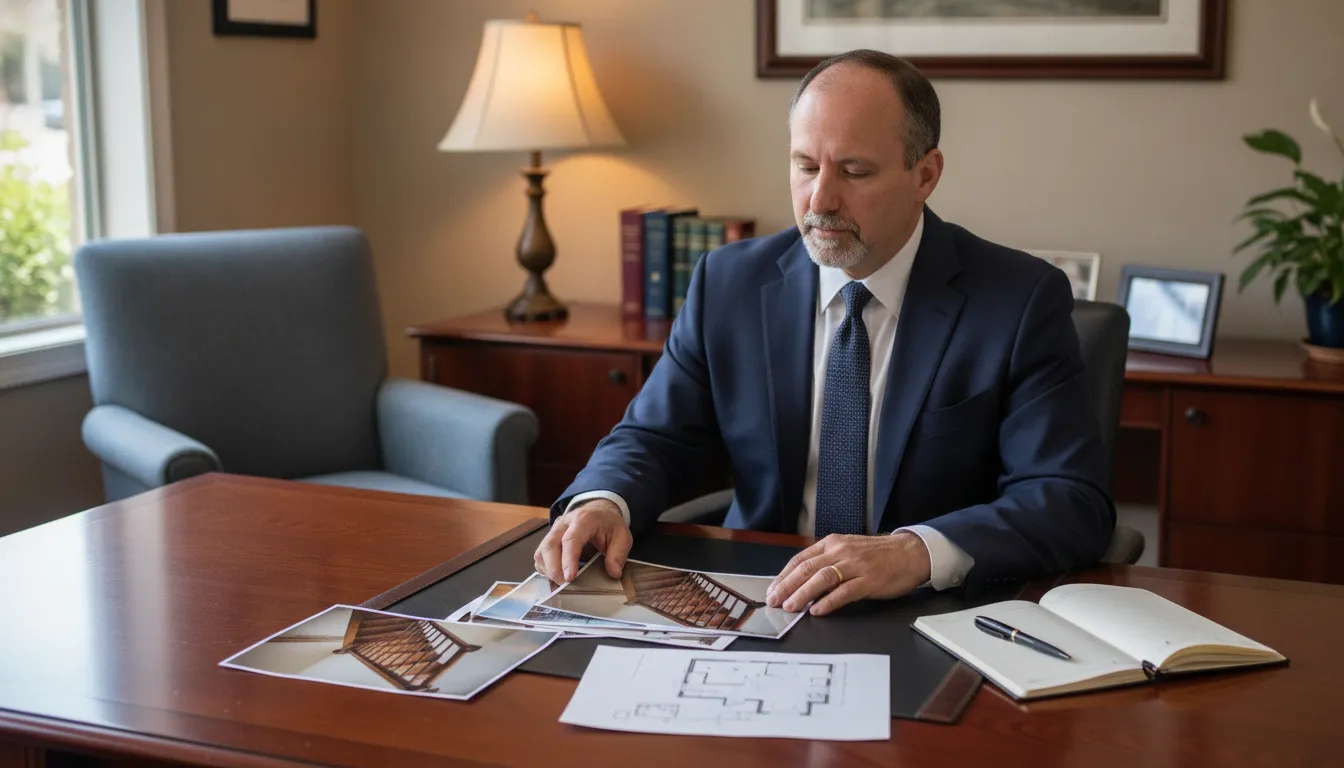
A California premises liability lawyer proves notice by showing the responsible party knew about the danger, or should have found it in time to fix it, guard it, or warn you. A spill, a broken step, or a dark walkway is not enough by itself. The question is what the owner, tenant, or manager knew, and when.
Call Weinberger Law Firm at 916-357-6767 for a free consultation about the property condition and the records that may show notice.
Joseph Weinberger founded the firm in Sacramento in 1991 and stays directly involved in each case. There is no fee unless the firm recovers compensation. From the Roseville office at 2270 Douglas Blvd #220, the firm also serves Sacramento, Folsom, and nearby communities.
This page is about the notice proof, not every part of a property claim. For the wider duty and the claim elements, start with our California premises liability rights guide. If you want a lawyer to review the property and the timeline, our premises liability help page explains that review.
How a California Premises Liability Lawyer Proves Notice
California Civil Code section 1714 says everyone must use ordinary care in managing their property. A store, landlord, or other occupier is not an insurer of every visitor. The owner can be responsible when a failure to use ordinary care causes the injury.
Notice is the bridge between a dangerous condition and that failure of care. If nobody knew about a brand-new hazard, and a careful inspection would not have found it yet, the claim may fail even though you were hurt. If someone knew, or if the hazard sat long enough that a careful person would have found it, the claim can move forward.
California cases describe two paths. Actual notice means the defendant, or an employee acting for the defendant, knew about the condition. Constructive notice means the condition existed long enough, and was obvious enough, that the defendant should have discovered it by using reasonable care.
You do not have to win both paths. One solid path can be enough. Many cases start with a guess and then follow the records. A wet-floor sign can point to actual notice. A missing inspection log can point to constructive notice. Photos of a worn, dirty edge can support either story.
How Actual Notice Is Proved
Actual notice is direct knowledge. Someone responsible for the property saw the hazard, was told about it, created it, or wrote it down before you were hurt.
Useful proof of actual notice is often simple. It usually sits in ordinary business records rather than in a formal legal file. Look for facts like these.
- An employee mopped the spot, placed a cone, or walked past the hazard and kept working.
- A tenant, shopper, or guest reported the problem before your fall.
- A work order, email, text, or maintenance ticket names the same defect.
- The defendant created the condition, such as a leak from a repair, a torn mat, or a display that blocked an aisle.
- Video shows staff near the hazard before the injury, not only afterward.
A warning sign is not always an admission, but it can be powerful. A cone next to a puddle suggests someone already knew the floor was wet. A handwritten note on a broken rail can do the same work. Ask who placed the warning, and when.
Complaints matter even when the owner says they were minor. A prior report of the same step, the same leak, or the same dark lot can show knowledge. The report does not have to come from you. It can come from another tenant, a delivery driver, or a corporate hotline.
Creation of the hazard is its own form of actual notice. If a worker leaves a pallet in a walkway, or a contractor pulls up a mat and does not replace it, the defendant does not get to claim surprise. The people who made the condition knew about it.
How Constructive Notice Is Proved
Constructive notice covers hazards the defendant did not admit knowing about. The jury asks whether the condition was such, and had existed long enough, that a careful owner had time to find it and then repair it, guard it, or warn about it.
In Ortega v. Kmart Corp. (2001) 26 Cal.4th 1200, the California Supreme Court held that a shopper can use circumstantial evidence on this point. If nobody can prove how long a spill sat on the floor, a missed inspection can still support an inference that the hazard was there long enough to be found and fixed. The jury, not a formula, decides what a reasonable time was.
California Civil Jury Instruction 1011 puts the same idea in plain terms. The jury looks at all the circumstances. It decides whether the condition existed long enough for the defendant, using reasonable care, to discover it and then repair it, protect people from it, or warn about it. The instruction also says a commercial owner must make reasonable inspections. A missed inspection can itself suggest the hazard was there long enough. The Ortega opinion is the case that states this inspection rule.
Duration can be shown without a stopwatch. A puddle with footprints and cart tracks looks older than a fresh splash. A banana peel that is dry, black, and gritty looks older than one that is still wet. Dust, rust, rounded edges, and dirt ground into a crack can show a defect that did not appear in the last minute.
The type of property changes what is reasonable. A busy grocery aisle may need more frequent checks than a quiet storage hall. A landlord of an apartment stair may not need a clerk walking the steps every hour, but a repeated complaint about a loose nosing is hard to ignore. Weather matters too. A known roof leak during a storm is different from a sudden spill.
Which Records Show Actual or Constructive Notice
The best notice file is built early, while video and logs still exist. Weinberger Law Firm looks at who controlled the area, what inspections were supposed to happen, and what the scene itself shows. These are the records that usually decide the notice fight.
| Record | What it can show | Notice path |
|---|---|---|
| Surveillance video with a time stamp. | When the hazard appeared, who walked past it, and whether staff responded. | Actual or constructive. |
| Sweep or inspection logs. | Whether checks happened on schedule, or a gap exists before the injury. | Constructive. |
| Work orders and repair tickets. | A prior report of the same defect, and how long the repair waited. | Actual. |
| Incident reports and prior complaints. | Earlier falls, guest complaints, or employee notes about the spot. | Actual. |
| Photos of wear, dirt, or dried liquid. | A condition that looks older than a few minutes. | Constructive. |
| Policies and staffing schedules. | How often the owner claimed to inspect, and who was on duty. | Constructive. |
| A lease, contract, or vendor agreement. | Which company had the duty to maintain the floor, lot, or stair. | The right defendant. |
Ask for the video in writing, and do it quickly. Many systems overwrite footage in days, not months. Photograph the scene before it is cleaned, including the wider area, the lighting, and any warning that was or was not present. Keep your shoes and the clothes you wore.
If a manager writes a report, ask for a copy. Do not guess at times you do not remember. A careful timeline is stronger than a dramatic one. For a closer look at scene photos, repair history, and what to say to an adjuster, see our negligent maintenance claim roadmap.
How Notice Changes on Public Property
A city sidewalk, a county building, or a state park is not the same claim as a store. Government Code section 835 requires a dangerous condition of public property, a foreseeable risk, and causation. It also requires either that a public employee created the condition, or that the public entity had actual or constructive notice under section 835.2 in time to protect against it.
That second path still uses notice, but the claim has extra rules and a short government-claim deadline that is separate from a lawsuit against a private owner. Do not assume the ordinary two-year clock is the only date that matters. If a public agency controls the spot, get the deadline checked before you write a long letter. Our premises filing-deadline guide covers the private-owner clock in more detail.
Creation by a public employee can replace the need to prove later notice. A crew that leaves a trench plate uneven, or a worker who removes a handrail and does not replace it, may put the entity on a different footing. Photos of fresh work, cones, or city vehicles can matter as much as an inspection log.
What a Careful Review Looks For
A notice review is a fact review. It is not a promise that every fall becomes a case. These are the steps we use when someone calls about a property injury in Roseville, Sacramento, Folsom, or the surrounding area.
- Fix the time and place. Where exactly did it happen, and who was open or on duty?
- Identify who controlled the spot: owner, tenant, manager, or vendor.
- Separate actual notice from constructive notice, and list the proof for each.
- Save video, logs, shoes, and photos before they disappear.
- Compare the private-property deadline with any public-entity claim deadline.
- Decide whether the file is strong enough to send a demand or to keep investigating.
Code of Civil Procedure section 335.1 generally gives two years to file a lawsuit for injury caused by the neglect of another. Notice proof and the filing deadline are different clocks. Waiting to build the file can cost the video even when the lawsuit deadline is still open.
Bring what you already have. A lease, a guest report, a photo of a worn stair, or a text to the landlord can be enough to start. You do not need a legal theory before the first call. You need a clear account of the condition and who might have known.
Common Defenses and How the Facts Answer Them
Property owners rarely say the floor was perfect. They say they had no fair chance to find the problem. That defense is about notice, so the answer has to be about time, inspections, and knowledge.
"It just happened" is the most common line. A fresh spill from another shopper can be a real defense if the store was checking the aisle. It is a weak defense when the puddle has tracks through it, when the mat was curled for days, or when no one can name the last inspection. Ask for the log. A blank log is not the same as a careful store.
"You should have seen it" is a different argument. California comparative fault can reduce a recovery if you were not watching where you walked. It does not erase the owner's duty to look for hazards. An open hole, a burned-out stair light, or a clear liquid on a shiny floor is not always obvious to a visitor. Lighting, crowds, and a display that hid the spot all belong in the file.
"We are only the landlord" comes up in apartments, shopping centers, and office parks. The lease may put daily cleaning on the tenant and structure repairs on the owner. Both can still have notice. A tenant who mops the lobby may have actual notice of a leak. An owner who got three emails about the same leak may have actual notice too. Read the lease before you accept that only one of them is responsible.
"We warned you" depends on the warning. A sign in the wrong aisle does not warn about the aisle where you fell. A general lease clause that says floors can be slippery is not a warning about a specific broken tread. A useful warning is timely, specific, and placed where a careful person would see it before reaching the hazard.
None of these answers requires you to win a debate in the parking lot. Write down what you saw, who you told, and what the property looked like. Then let the records test the defense. A short, dated note the same day is often more useful than a long statement written weeks later.
Crime on the property is a different notice problem, focused on prior similar incidents and security measures. That topic is covered in our inadequate security lawsuit guide, not here.
If you were hurt by a condition someone should have found, call Weinberger Law Firm at 916-357-6767. The consultation is free, and you pay nothing upfront.
Frequently Asked Questions
Do I have to prove the owner knew about the hazard?
Not always. Actual knowledge is one path. You can also prove constructive notice by showing the condition lasted long enough that a careful owner should have found it through reasonable inspection.
What if nobody knows how long the spill was on the floor?
You can still build the case with circumstantial proof. Ortega v. Kmart allows a jury to infer that a hazard sat long enough when the owner cannot show a reasonable inspection before the fall. Wear, dirt, and footprints can help.
Does a wet-floor sign prove the store was careful?
A sign can cut both ways. It may show the store tried to warn people. It can also show that staff already knew the floor was dangerous. Where the sign was placed, and when it went up, usually matters more than the sign itself.
How is a city sidewalk different from a store?
A public entity claim still turns on a dangerous condition and notice, or on a public employee creating the condition. It also has its own claim deadline. Do not wait for the ordinary two-year lawsuit period if a city, county, or state agency controls the property.
What should I save in the first week?
Save photos of the hazard and the surrounding area, the shoes you wore, names of witnesses, and any report you made. Send a written request for video right away. Ask for inspection logs, work orders, and prior complaints once a lawyer is helping you request them.