
Table of Contents
- Why Motorcycle Accidents Demand Specialized Legal Preparation
- Understanding California’s Statute of Limitations for Motorcycle Claims
- Critical Evidence We Preserve From Your Accident Scene
- Medical Documentation and Damages You Must Not Overlook
- Building Your Case: How We Investigate Liability Thoroughly
- Insurance Company Negotiations and Settlement Strategy
- When Litigation Becomes Necessary: Trial Readiness Essentials
- California Laws That Protect Motorcycle Accident Victims
- What Our Litigation Process Looks Like From Start to Finish
- Your Rights to Full and Fair Compensation
- Taking Action Now: The Cost of Delay
- Frequently Asked Questions (FAQ)
Why Motorcycle Accidents Demand Specialized Legal Preparation
If you were injured in a motorcycle accident, you have rights after an accident. The path to fair compensation is often complex, and the decisions you make now directly affect what you can recover. We understand that motorcycle crashes bring immediate medical concerns, mounting bills, and uncertainty about what comes next. Our role is to guide you through every step of litigation preparation so you can focus on healing while we handle the legal strategy.
Motorcycle accidents differ fundamentally from car accidents in the eyes of insurers, juries, and courts. Motorcyclists face inherent bias: some assume riders take unnecessary risks or lack proper protection. This prejudice can reduce settlement offers or jury sympathy if your case goes to trial. We combat this bias with thorough documentation, medical evidence, and investigative rigor.
Additionally, motorcycle injuries tend to be more severe. Impact without the protective shell of a vehicle means broken bones, road rash, spinal injuries, and traumatic brain damage occur more frequently. These injuries demand higher compensation to cover extended rehabilitation, ongoing medical care, and lost earning capacity. Insurance companies understand this too, which is why they often employ aggressive tactics to minimize payouts.
Our approach accounts for these dynamics. We build cases that neutralize bias by presenting clear liability, comprehensive medical evidence, and witness testimony. We pursue full and fair compensation by documenting not just your injuries, but your entire recovery journey and its financial impact.
Next step: Document everything from the moment of impact forward. Preserve medical records, communication with insurers, and any photographs of the scene or your injuries.
Understanding California’s Statute of Limitations for Motorcycle Claims
Time is limited when it comes to filing a motorcycle accident claim. California law sets strict deadlines, and missing them can forfeit your right to recover entirely. For personal injury claims, you generally have two years from the date of your accident to file a lawsuit. This statute of limitations is the deadline within which you must initiate legal action.
This deadline applies whether your case settles quickly or requires years of litigation. Even if you are negotiating with an insurance company, filing a lawsuit before the deadline protects your legal standing. Settlements can happen at any stage, but without a filed lawsuit, you have no leverage once the two-year window closes.
If another party’s negligence caused your death or caused injury to a minor, different rules may apply. We evaluate your specific situation immediately upon intake to ensure we file before any deadline passes. Waiting too long is one of the costliest mistakes injured riders make.
Next step: Contact us now for a free consultation. Do not delay—the two-year clock is running.
Critical Evidence We Preserve From Your Accident Scene
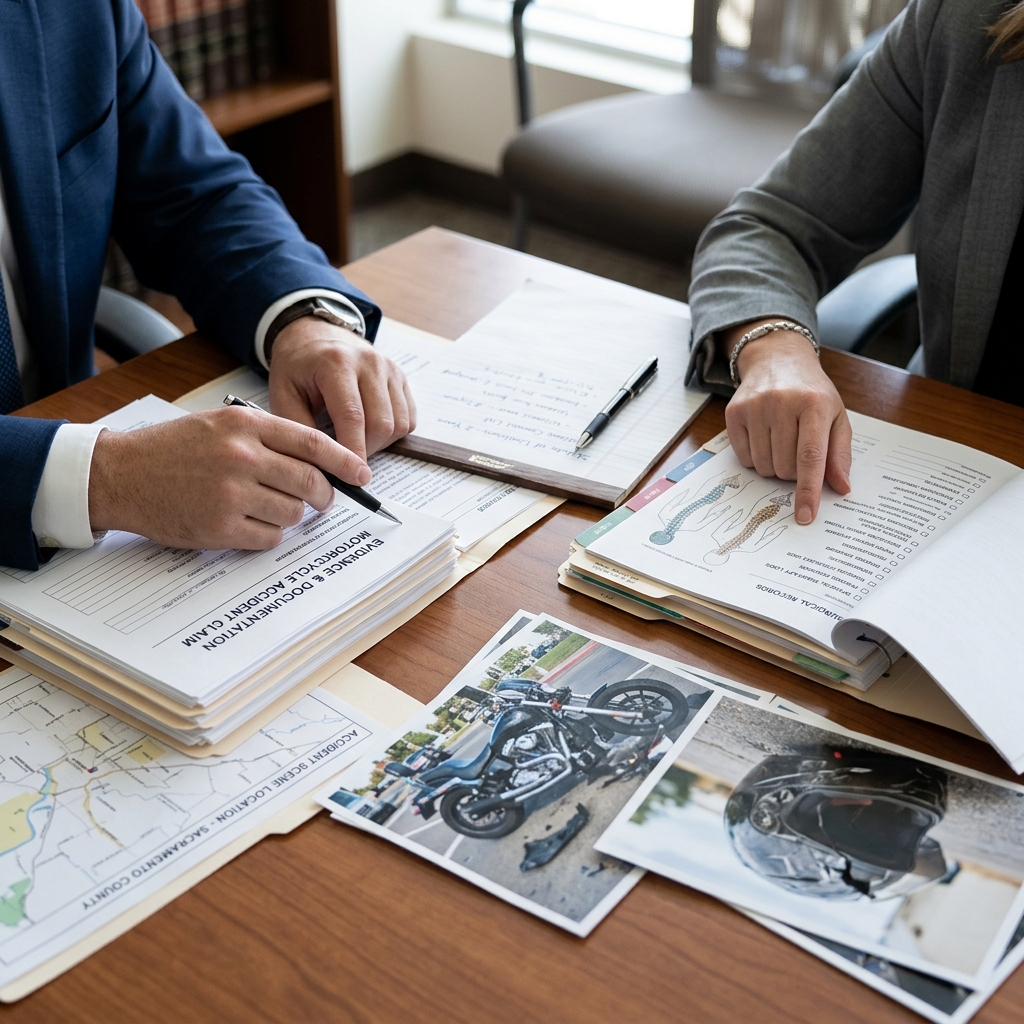
Evidence preservation is everything in motorcycle accident litigation. Physical evidence, photographs, and witness statements can become unavailable within weeks if not documented promptly. We will investigate all available evidence immediately after you engage us.
Here is what we prioritize:
- Traffic camera footage from nearby intersections or businesses
- Photographs of vehicle damage, road conditions, and accident debris
- Witness statements and contact information
- Police accident report and incident numbers
- GPS or dashcam recordings if available
- Weather and lighting conditions at the time of impact
- Skid marks, vehicle positions, and scene measurements
The opposing party and insurance companies conduct their own investigations. They may request footage before you do, potentially withhold it, or lose it “accidentally.” By acting quickly, we secure evidence independently and preserve it for trial.
We also send preservation letters to relevant parties, legally requiring them to maintain all evidence. This creates a documented record of our diligence and prevents the defense from claiming evidence was lost through normal operations.
Next step: If you have photos, videos, or witness names from the scene, preserve them now. Email them to us or store them in a safe location.

Medical Documentation and Damages You Must Not Overlook
Your medical records are the foundation of your damages claim. Every injury, treatment, surgery, and therapy session directly translates to compensation. Insurance companies will minimize your injuries if medical evidence is incomplete or delayed.
Document these damages categories:
- Medical bills and treatment costs (emergency care, hospitalization, surgery, physical therapy)
- Lost wages during recovery and ongoing income reduction
- Pain and suffering (the emotional and physical toll of your injuries)
- Permanent scarring, disfigurement, or disability
- Loss of enjoyment of life (inability to participate in activities you enjoyed)
- Future medical care or ongoing treatment needs
Many riders delay seeking treatment due to cost or stoicism. This is understandable, but every gap in medical records weakens your claim. Continue treatment as long as medically necessary and document everything. We review your medical file thoroughly to identify all compensable damages and ensure nothing is overlooked.
Next step: Maintain all medical appointments and request complete copies of your medical records. Create a spreadsheet tracking medical expenses, lost work days, and out-of-pocket costs.
Building Your Case: How We Investigate Liability Thoroughly
Liability determines who pays. We do not assume fault is obvious. We investigate systematically to establish clear, documented negligence.
Our investigation includes:
- Depositions of witnesses and the at-fault party
- Expert analysis of vehicle dynamics and impact angles
- Review of traffic laws relevant to the accident
- Background checks on other drivers (prior accidents, violations)
- Reconstruction of the accident timeline and positioning
- Analysis of violations: speeding, red light running, failure to yield, reckless driving
We also evaluate comparative fault. California law reduces your recovery by your percentage of fault, if any. If the accident was 80 percent the other driver’s fault and 20 percent yours, you can still recover 80 percent of damages. We demonstrate our client’s minimal or zero fault while establishing clear negligence by the other party.
Next step: Write down everything you remember about the accident while details are fresh. Share this account with us—it informs our investigation strategy.
Insurance Company Negotiations and Settlement Strategy
Insurance companies want to close claims cheaply and quickly. They will contact you directly, often within days of the accident. Do not accept their first offer or sign anything without legal review. Insurers employ adjusters trained to minimize payouts, and they have data suggesting most injured people accept low settlements.
We handle all negotiations on your behalf. We review settlement offers objectively, comparing them against your actual damages. We pursue full and fair compensation by presenting a strong damages portfolio, expert testimony if needed, and our readiness to litigate.
Settlement timelines vary. Some cases settle within months; others take years. We keep you informed at every stage and never recommend accepting an offer that does not align with your case’s true value. If negotiation stalls, we escalate to formal litigation without hesitation.
Next step: Do not communicate directly with insurance adjusters or opposing counsel. Refer all contact to us immediately.
When Litigation Becomes Necessary: Trial Readiness Essentials
Not every case settles. If the insurance company refuses a fair settlement, litigation is the next step. Trial readiness means preparing your case as if it will go before a judge or jury, even if settlement happens later.
Trial readiness requires:
- Comprehensive discovery (exchanging evidence with the other party)
- Expert witness preparation and reports
- Deposition transcripts of all key witnesses
- Clear, organized presentation of damages
- Jury strategy tailored to local Sacramento juries
- Anticipated defense arguments and counter-strategy

We prepare thoroughly because juries respect it. A well-prepared case signals strength and credibility. Defense counsel knows when they face real litigation readiness versus bluffing. This preparation strengthens our settlement position and ensures we can win at trial if necessary.
Next step: Understand that litigation preparation takes time and resources. We manage this process; you focus on recovery.
California Laws That Protect Motorcycle Accident Victims
California law provides several protections specific to motorcycle riders. Understanding these laws strengthens your case and your negotiating position.
Helmet laws exist, but wearing a helmet does not negate liability or reduce your right to compensation. Insurance companies sometimes argue that not wearing a helmet caused additional injury. California law does not allow this argument to reduce damages—though evidence of helmet use does help your case if questioned.
California’s comparative fault rule allows recovery even if you were partially at fault, provided you were not more than 50 percent responsible. This protects riders from total loss even if the other party claims shared blame.
Wrongful death claims protect your family if a motorcycle accident proves fatal. Surviving family members can pursue damages for lost income, loss of companionship, and funeral costs.
We leverage these statutes and legal principles throughout your case. Our knowledge of California motorcycle accident law gives you an advantage.
Next step: Review the complex motorcycle litigation guide for deeper understanding of how these laws apply to your situation.
What Our Litigation Process Looks Like From Start to Finish
Understanding the litigation timeline helps you prepare mentally and financially. Most motorcycle accident cases follow this progression:
Initial consultation and case evaluation: We meet, review your facts, and determine next steps.
Investigation and evidence gathering: We collect evidence, interview witnesses, and analyze liability thoroughly.
Demand and negotiation: We send a settlement demand to the insurance company and negotiate in earnest.
Complaint filing: If negotiation stalls, we file a formal lawsuit with the court.
Discovery: Both sides exchange evidence, conduct depositions, and prepare expert reports.
Motion practice: We file motions to dismiss weak defenses or narrow the case scope.
Trial preparation: We finalize witnesses, exhibits, and trial strategy.
Trial or final settlement: The case resolves through settlement or jury verdict.
Each stage takes weeks to months. Complexity increases litigation timeline. We keep you informed and involved throughout, never making major decisions without your input.
Next step: Ask us to outline your specific case timeline during your consultation.
Your Rights to Full and Fair Compensation
You have rights after an accident, and compensation covers more than just medical bills. California recognizes economic and non-economic damages.
Economic damages are quantifiable: medical bills, lost wages, rehabilitation costs, and future earning capacity. These are straightforward to calculate and document.
Non-economic damages address your suffering: pain and suffering, emotional distress, lost enjoyment of life, and permanent scarring or disfigurement. These require narrative evidence—your testimony, medical provider statements, and expert testimony—to establish value.
Some cases warrant punitive damages if the other party’s conduct was particularly reckless. These damages punish the defendant and deter similar behavior. While rare, punitive damages can significantly increase your recovery.
We pursue every available avenue to maximize your compensation. We do not accept settlement offers that undervalue your suffering or future needs.
Next step: Start a personal journal documenting your daily pain, recovery challenges, and emotional impact. This becomes powerful evidence later.
Taking Action Now: The Cost of Delay
Every day you wait costs you. Evidence degrades, witness memories fade, and your statute of limitations ticks toward expiration. Delay also extends your recovery uncertainty—the sooner we engage, the sooner we pursue resolution.
We offer a free consultation with no obligation. We work on a contingency basis, meaning no fee unless we recover for you. This removes financial barriers to representation and aligns our interests with yours: we succeed when you do.
Preserve any evidence and get medical care immediately. Document everything. Then contact us to discuss your case and your rights under California law.
Time is limited. Contact us today to schedule your free consultation and take the first step toward the compensation you deserve.
Contact us today for a Free Case Consultation!
Frequently Asked Questions (FAQ)
What is the time limit for filing a motorcycle accident lawsuit in California?
We work within California’s statute of limitations, which gives you two years from the date of your accident to file a personal injury claim. This deadline is critical, and we encourage you to contact us immediately because preserving evidence and witness testimony becomes more challenging as time passes. We handle all filing requirements to ensure you don’t miss this window.
How do we investigate liability in motorcycle accident cases?
We conduct a thorough investigation that includes gathering police reports, analyzing accident scene evidence, interviewing witnesses, and reviewing medical records to establish how the other party’s negligence caused your injuries. We may also consult accident reconstruction experts to build a strong factual foundation for your claim. Our goal is to document and present the facts so clearly that we maximize your compensation potential during settlement negotiations or trial.
What compensation can we pursue for your motorcycle accident injuries?
We pursue full and fair compensation covering your medical bills, lost wages, pain and suffering, and other damages resulting from the accident. We calculate your claim’s value by examining all available evidence and the true extent of your injuries, not what insurance companies initially offer. No fee unless we recover for you, so your financial interests align with ours from day one.