Introduction to California Personal Injury Law
California personal injury laws govern how injured people prove fault and recover money after a crash, fall, or defective product incident. Because California is fault-based—not no‑fault—the responsible party and their insurer typically pay in California accident claims.
Most cases are built on negligence laws California. To win, you must show:
- Duty: A legal duty of care California existed. Example: drivers must follow traffic laws; stores must keep aisles reasonably safe.
- Breach: The duty was broken. Example: texting while driving, or ignoring a spill for hours.
- Causation: The breach caused the injury. Example: a rear-end collision leading to a herniated disc.
- Damages: You suffered losses—medical bills, lost income, pain, or other harm.
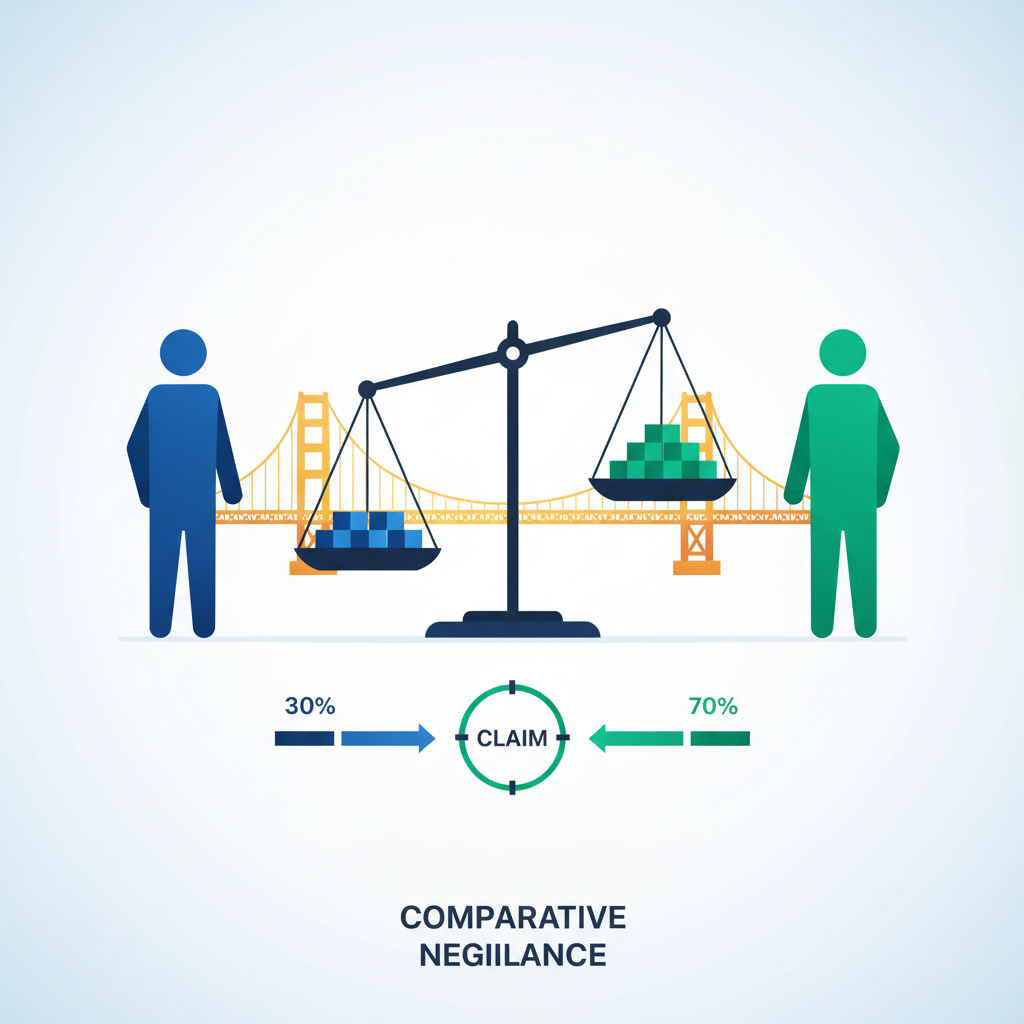
California uses pure comparative negligence. If you’re partly at fault, your personal injury compensation CA is reduced by your percentage of fault. Example: If you’re 20% responsible for a $100,000 verdict, you recover $80,000. California also applies joint and several liability for economic damages (like medical costs), but not for pain and suffering.
Know the statute of limitations California:
- General injury: 2 years from the date of injury.
- Property damage: 3 years.
- Claims against government entities: an administrative claim must be filed within 6 months; if denied, you usually have 6 months to sue.
- Discovery rule: the clock may start when you reasonably discover the injury and its cause.
- Special rules apply to minors and medical malpractice (generally 1 year from discovery or 3 years from injury, with limited exceptions).
Damages include:
- Economic: medical expenses, rehabilitation, lost wages, loss of earning capacity.
- Non-economic: pain, suffering, and emotional distress.
- Punitive damages: only for egregious misconduct.
In medical malpractice, non‑economic damages are capped by statute (caps increased in 2023 and continue to rise annually), unlike most other negligence claims.
Defining Negligence and Liability
Under California personal injury laws, most accident cases turn on whether someone was negligent and therefore legally liable for your losses. To recover, you must prove by a preponderance of the evidence:
- Duty: The defendant owed you a duty of care California recognizes.
- Breach: They failed to act as a reasonably careful person would under similar circumstances.
- Causation: Their breach was a substantial factor in causing your injuries.
- Damages: You suffered actual losses (medical bills, lost income, pain and suffering).
California imposes a broad duty of care under Civil Code section 1714. Drivers must follow traffic laws and keep a proper lookout. Property owners must maintain reasonably safe premises or warn of hazards they know or should know about. Manufacturers must not put defective products into the stream of commerce.
Breach often involves concrete rule violations. Under negligence laws California applies, breaking a safety statute (e.g., speeding, running a red light, building code violations) can create a presumption of negligence (negligence per se) if the law was designed to prevent the type of harm you suffered.
Causation links the conduct to your harm. In a rear‑end crash, failing to maintain distance typically causes the impact and resulting back injuries. In a slip‑and‑fall at a grocery store, liability may hinge on how long a spill was on the floor and whether reasonable inspections would have found it.
California uses pure comparative negligence. If you’re partly at fault, your recovery is reduced by your percentage of responsibility. For example, if damages total $100,000 but you’re 20% at fault, personal injury compensation CA would be $80,000.
Liability can also arise from:
- Respondeat superior: Employers are liable for employees acting within the scope of employment.
- Premises liability: Landowners are responsible for dangerous conditions they knew or should have known about.
- Strict liability: Defective products and many dog bites impose liability without proving negligence.
Multiple defendants may share fault. California applies joint and several liability for economic damages, with fault‑based allocation for non‑economic damages.
Deadlines matter. The statute of limitations California generally sets is two years from the injury (shorter for claims against government entities, which require an administrative claim in as little as six months). Timely action preserves evidence and strengthens California accident claims.
Understanding California’s Comparative Negligence
California uses “pure” comparative negligence. Under these California personal injury laws, your recovery is reduced by your percentage of fault, but you aren’t barred from pursuing damages—even if you’re mostly at fault. In California accident claims, insurers and juries assign each party a fault percentage based on the evidence.
Example: If your total losses are $120,000 and you’re found 25% at fault, your award becomes $90,000. If you’re 80% at fault, you can still recover 20%, or $24,000. This is why building a clear record on fault can significantly impact personal injury compensation CA.
How fault gets shared in practice:
- Rear-end collision where the lead car’s brake lights were out: both drivers may share blame.
- Pedestrian jaywalking hit by a speeding driver: each side’s conduct is weighed.
- Lane-splitting motorcyclist and a driver making an unsafe lane change: percentages turn on speed, signaling, and spacing.
- Slip and fall where a store failed to clean a spill promptly, but the customer was texting: comparative fault can apply.
Evidence drives these determinations. Useful proof includes scene photos, vehicle telematics, surveillance video, 911 calls, cell phone records, incident reports, expert accident reconstruction, and consistent medical documentation. Be cautious with recorded statements; insurers may use them to inflate your share of fault.
California’s negligence laws California also interact with Prop 51: defendants are jointly responsible for 100% of your economic losses (medical bills, lost wages) but only pay their percentage of noneconomic damages (pain and suffering). In multi-defendant cases, fault allocation can meaningfully affect your net recovery.
Comparative negligence applies after establishing a breach of the duty of care California and causation. Don’t delay: the statute of limitations California is generally two years from injury (shorter—often six months—to present a claim against a public entity). Waiting can erode evidence and leverage.
Weinberger Law Firm develops liability proof, challenges unfounded fault arguments, and negotiates with insurers to maximize your proportionate recovery under California personal injury laws.
Key Elements of a Personal Injury Claim
Every successful claim rests on proving negligence under California personal injury laws. You must show:

- Duty: The defendant owed you a legal duty of care. Duty of care California is broad—drivers must operate safely, property owners must maintain reasonably safe premises, and manufacturers must design and warn against foreseeable risks.
- Breach: The defendant failed to act with reasonable care. Examples include running a red light, leaving a spill uncleaned without warning signs, or selling a product with an unguarded moving part.
- Causation: The breach was a substantial factor in causing your injury. California uses the “substantial factor” test; you don’t have to prove it was the only cause, just a significant one.
- Damages: You suffered losses such as medical bills, lost wages, pain and suffering, or property damage.
Negligence laws California also include pure comparative fault. If you are partly at fault, your recovery is reduced by your percentage of responsibility (e.g., 20% at fault means a 20% reduction), but you can still recover.
Pay close attention to deadlines. The statute of limitations California for most bodily injury claims is two years from the date of injury. Property damage is generally three years. Claims against government entities require an administrative claim within six months, with strict follow-up timelines. Medical malpractice has a shorter period: one year from discovery or three years from injury, whichever occurs first, with limited exceptions for minors and fraud.
Liability theories may extend beyond simple negligence:
- Premises liability: Show a dangerous condition, the owner’s actual or constructive notice, and failure to fix or warn.
- Product liability: CA recognizes strict liability for manufacturing defects, design defects, and failure to warn.
- Vicarious liability: Employers can be responsible for employees acting within the scope of employment; negligent entrustment can apply to vehicle owners.
Document everything to support California accident claims: police reports, medical records, photographs, witness statements, wage loss evidence, and a pain journal. Insurance policies (BI, UM/UIM, MedPay) and policy limits often shape personal injury compensation CA; strong, evidence-backed demands and timely follow-up preserve leverage for settlement or trial.
Statute of Limitations in California
Filing deadlines can make or break California accident claims. Under California personal injury laws, the statute of limitations California sets the window to sue. Miss it, and you may lose the right to pursue personal injury compensation CA, no matter how strong your evidence of negligence or duty of care California.
Key timelines most claimants face:
- General personal injury (car, motorcycle, slip and fall, product defects): 2 years from the date of injury.
- Wrongful death: 2 years from the date of death.
- Property damage (vehicle or other property): 3 years.
- Medical malpractice: 1 year from when you knew or should have known of the injury, but no more than 3 years from the date of injury (limited exceptions for fraud, concealment, or a retained foreign object).
- Claims against government entities (city, county, state, public agencies): You must file a government claim within 6 months of the injury. If denied, you typically have 6 months from the denial to file suit.
Limited tolling and special rules can extend or alter these periods:
- Minors: Time is usually paused until age 18, but medical malpractice claims for minors have stricter limits.
- Delayed discovery: If an injury was not reasonably discoverable despite diligence, the clock may start when you discovered (or should have discovered) the harm.
- Defendant out of state, fraud, or incapacity may also pause the clock in specific circumstances.
Examples:
- Car crash on January 1, 2023: File suit by January 1, 2025.
- Collision with a city bus on January 1, 2023: File a government claim by July 1, 2023; if rejected on August 15, 2023, sue by February 15, 2024.
- Post-surgery injury discovered months later: The 1-year medical malpractice period starts at discovery, but the 3-year outer limit still applies.
Negligence laws California require proving duty, breach, causation, and damages, but you must act before the statute runs. Early legal counsel helps confirm your exact deadline, preserve evidence, and keep negotiations with insurers aligned with filing requirements.
Types of Recoverable Damages
Under California personal injury laws, you can pursue compensation in three categories: economic, non-economic, and, in rare cases, punitive damages. The scope of recovery depends on how clearly the evidence shows another party breached a duty of care California recognizes (drivers, property owners, manufacturers) and how the injury impacts your life now and in the future.
Economic damages cover measurable financial losses, such as:
- Past and future medical bills (ER visits, surgery, physical therapy, prescriptions)
- Rehabilitation and assistive devices (braces, prosthetics, wheelchairs)
- Lost wages and loss of earning capacity if you can’t return to your prior job
- Property damage (e.g., vehicle repair or total loss)
- Paid household services while you’re injured (childcare, cleaning, yard work)
- Travel to medical appointments and other out-of-pocket costs
- Home or vehicle modifications and paid caregiving
Non-economic damages compensate for human losses not shown on receipts, including:
- Pain and suffering and loss of enjoyment of life
- Emotional distress, anxiety, PTSD, and sleep disruption
- Disfigurement or scarring
- Loss of consortium for a spouse/registered domestic partner
Note: Under California accident claims involving motor vehicles, uninsured drivers may be barred from recovering non-economic damages (with limited exceptions), per negligence laws California (Civ. Code 3333.4).
Punitive damages are available only when the defendant acted with malice, oppression, or fraud—not mere carelessness. They are generally unavailable in wrongful death claims but may be pursued in a related survival action, and there is a narrow felony homicide exception.
If a loved one was lost, wrongful death damages include funeral/burial costs, loss of financial support, companionship, and the value of household services. A survival action can recover the decedent’s medical bills and lost earnings between injury and death.
Other rules that shape personal injury compensation CA:
- Pure comparative fault reduces recovery by your percentage of responsibility
- Statute of limitations California: typically two years; claims against public entities require an administrative claim within six months
- Medical malpractice caps non-economic damages, with higher limits beginning in 2023 and increasing annually
A thorough case evaluation, comprehensive documentation, and strategic negotiation with insurers are critical to maximize recoverable damages.
The Role of Insurance Companies
Insurance carriers sit at the center of most California accident claims because compensation is typically paid from liability, MedPay, or UM/UIM policies. Adjusters evaluate fault under California personal injury laws, including the duty of care California imposes on drivers, property owners, and product manufacturers. Expect them to apply the state’s pure comparative negligence rules to reduce payouts—for example, alleging you were 25% at fault for “sudden braking” in a rear-end collision or for “not watching your step” in a grocery store spill.
Insurers also control timing and documentation. Common tactics include:
- Asking for a recorded statement or broad medical release to mine for statements or prior conditions that devalue your claim
- Making quick, low offers before your medical prognosis and future care are clear
- Disputing causation by pointing to gaps in treatment or preexisting issues
- Delaying negotiations as the statute of limitations California approaches (generally two years for injury; shorter deadlines apply to government entities)
Coverage details matter. Bodily injury limits cap what a third-party insurer will pay, but additional sources—an at-fault driver’s umbrella policy, a property owner’s excess coverage, or your own UM/UIM—may be available. MedPay can help with immediate bills regardless of fault. Health insurers, Medicare, Medi-Cal, and providers may assert liens that must be resolved from any personal injury compensation CA. Your own carrier may issue “reservation of rights” letters or request cooperation under your policy.
Effective advocacy turns the law and facts in your favor. Our firm coordinates all insurer communications, documents negligence under negligence laws California, and prepares demand packages that fully account for medical expenses, lost income, and non-economic losses. We identify all applicable policies, verify limits, and negotiate lien reductions to maximize your net recovery. If an insurer stalls or undervalues your claim, we file suit to preserve deadlines and leverage litigation to secure fair results.
Importance of Legal Representation
Navigating California personal injury laws is not just about filing paperwork—it’s about proving duty of care California, establishing breach, causation, and damages with credible evidence and expert support. For example, in a grocery store fall, counsel will obtain inspection logs and surveillance to show the store knew or should have known about a spill. In a rear‑end collision, counsel may download vehicle event data and retain a reconstruction expert to rebut a claim that you “stopped short.”
Deadlines are unforgiving. The statute of limitations California is generally two years for bodily injury (Code Civ. Proc. § 335.1), but claims against public entities require an administrative claim within six months (Gov. Code § 911.2). Medical malpractice has separate time limits and non‑economic damage caps under MICRA. Missing a deadline can bar California accident claims entirely.
A skilled attorney helps maximize personal injury compensation CA by:
- Preserving proof: scene photos, 911 audio, dashcam/CCTV, black box data, incident reports, and medical records; issuing preservation letters to prevent spoliation.
- Applying negligence laws California: identifying all liable parties (driver, employer, property owner, manufacturer) and using experts to meet evidentiary standards.
- Managing comparative fault: California’s pure comparative negligence reduces recovery by your percentage of fault. Counsel counters unfair apportionment and navigates Prop 51 (joint liability for economic damages only) to protect your economic losses.
- Valuing damages: current and future medical care, wage loss and earning capacity, non‑economic harm, and when supported, punitive damages for egregious conduct.
- Negotiating strategically: handling insurer communications, coordinating benefits and liens, making time‑limited policy‑limits demands, and using procedural tools (e.g., CCP § 998 offers) to improve settlement leverage.
- Litigating when needed: filing, discovery, motions, expert testimony, mediation, and trial readiness.
Consider a pedestrian hit outside a crosswalk. Even if the insurer alleges 30% fault, counsel can demonstrate the driver’s breach of duty (speeding, distraction) and recover proportional damages. With clear communication and full‑spectrum advocacy, firms like Weinberger Law Firm align your case with California personal injury laws to secure the strongest outcome.
Common California Personal Injury Cases
California personal injury laws most often apply when someone breaches a duty of care and causes harm. Many California accident claims are negligence-based, and the state’s pure comparative negligence rule can reduce your recovery by your percentage of fault. Most claims must be filed within two years of injury, but claims against government entities require an administrative claim within six months under the statute of limitations California uses for public entities.
Common case types include:
- Auto, motorcycle, rideshare, and truck crashes: Negligence laws California recognize liability for speeding, DUI, distracted driving, and unsafe lane changes. Evidence can include police reports, dashcam footage, EDR “black box” data, and cell phone records. Rideshare collisions may involve layered insurance policies, while trucking cases can bring in employer liability and federal safety violations.
- Pedestrian and bicycle injuries: Drivers owe a heightened duty of care California imposes at crosswalks and bike lanes. If a dangerous road design or malfunctioning signal contributed, a “dangerous condition of public property” claim may be available—triggering the six-month government claim deadline.
- Premises liability (slips, trips, falls, and negligent security): Property owners and managers must inspect, fix, or warn of hazards they knew or should have known about. Examples include grocery store spills without timely cleanup, broken handrails, uneven pavement, stairways without code-compliant lighting, and inadequate security in parking structures.
- Dog bites: California applies strict liability to dog owners for bites occurring in public or when the victim is lawfully on private property, regardless of prior aggression.
- Product liability: Manufacturers, distributors, and retailers can be liable for defective design, faulty manufacturing, or inadequate warnings. Think exploding e-bike batteries, defective airbags, or mislabeled supplements.
In these cases, personal injury compensation CA may cover medical bills, future care, lost income, diminished earning capacity, pain and suffering, and property damage. Early evidence preservation and strategic negotiation with insurers are critical to protect the full value of California accident claims.
Navigating the Claims Process
Understanding how California personal injury laws shape each step can help you move your claim forward efficiently and avoid costly mistakes.
Start by getting immediate medical care and follow your provider’s treatment plan. Gaps in treatment can be used by insurers to dispute causation or the extent of your damages. Report the incident to the police or property owner, and request copies of reports.
Preserve evidence early. Photograph the scene, vehicles, and visible injuries. Collect witness names. Save damaged items. In premises cases, send a preservation letter to secure surveillance footage before it’s overwritten. In vehicle crashes, download event data if available.
Notify insurers, but be cautious with recorded statements. Provide basic facts only; let your attorney handle detailed communications to prevent misstatements being used against you.
Build liability proof under negligence laws California requires: duty of care California imposes, breach, causation, and damages. Examples:
- A driver violating a safety statute (speeding, DUI) can establish negligence per se.
- A store that knew of a spill and failed to clean it breached its duty to invitees.
Account for comparative fault. California is pure comparative negligence: even if you share blame, your personal injury compensation CA is reduced by your percentage of fault rather than barred.
Track all losses:
- Medical bills and records (including prognosis and future care)
- Lost income and reduced earning capacity (pay stubs, employer letters)
- Out-of-pocket costs and property damage
- Pain, suffering, and loss of enjoyment (keep a symptom diary)
Mind deadlines. The statute of limitations California sets is generally two years from injury (three years for property damage). Claims against public entities require a government claim within six months; after a written rejection, you typically have six months to file suit.
Your attorney will prepare a demand package, negotiate with insurers, and evaluate UM/UIM and MedPay in California accident claims. If settlement is unfair, filing suit preserves rights, followed by discovery, mediation, and, if needed, trial, where you must prove your case by a preponderance of the evidence.
Protecting Your Rights After an Accident
Your first priority is safety and documentation. Get medical care right away, even if symptoms seem minor; delayed pain is common. Call law enforcement for traffic collisions and request the report number. For a fall or on-site injury, file an incident report with the property owner or manager. Take photos of vehicles, the scene, hazards (spills, broken steps), road conditions, and injuries. Collect names and contact information of witnesses, and preserve damaged items (helmet, shoes, car parts) in their post-accident condition.
Be careful with insurance communications. Do not admit fault or speculate about injuries. Decline recorded statements until you’ve spoken with counsel. Don’t sign broad medical authorizations; insurers don’t need your entire medical history. Keep your statements brief and factual.
Understanding how California personal injury laws apply helps protect your claim:
- Duty of care California: Drivers must follow traffic laws and drive prudently; property owners must inspect and fix or warn of hazards; product manufacturers must design and warn against unreasonable risks.
- Negligence laws California require proving duty, breach, causation, and damages. Example: a store that ignores a long-standing spill breaches its duty if a shopper slips and is hurt.
- Product defects can trigger strict liability, even without proving negligence.
California uses pure comparative negligence. If you’re 20% at fault in a rear-end collision because your brake lights were out, your personal injury compensation CA is reduced by that percentage, but you can still recover.
Know the statute of limitations California:
- Most California accident claims for bodily injury: 2 years from the date of injury (or discovery of injury in limited cases).
- Property damage: 3 years.
- Claims involving public entities: Government claim due within 6 months; additional deadlines follow.
- Certain claims (e.g., medical malpractice) have different timelines.
Document losses thoroughly: medical bills, wage statements, mileage to appointments, repair estimates, and a pain-and-limitations journal. Early legal guidance can preserve evidence, meet deadlines, and position your case for full and fair recovery under California personal injury laws.
Call to Action
Contact us today for a Free Case Consultation!