Factors Influencing Claim Duration
No two claims move at the same pace. The California personal injury timeline depends on a mix of medical, legal, and practical variables that can speed up or slow down resolution.
- Medical treatment and recovery stage. Settlement typically waits until you reach maximum medical improvement (MMI) so future needs are clear. A soft-tissue car crash may resolve once therapy ends, while a case involving surgery or ongoing pain management often requires months of documented progress before accurate valuation.
- Liability clarity and disputes. Clear fault supported by a police report and eyewitnesses can shorten the settlement timeline personal injury. Disputed liability, conflicting statements, or comparative fault claims extend negotiations and may push the matter into litigation.
- Type of case. Car accident claim duration is often shorter when rear-end liability and insurance limits are clear. By contrast, premises liability case length tends to be longer because proving notice of a hazard (e.g., how long a spill was on a floor) requires deeper investigation and expert analysis. Product liability and trucking cases also lengthen due to technical experts and data downloads.
- Insurance coverage and policy limits. When damages approach policy limits, some insurers tender quickly. If injuries exceed coverage, pursuing underinsured motorist benefits or third parties can add months. Multiple insurers and excess policies add coordination time.
- Evidence availability. Early collection of store video (often overwritten within 30–60 days), vehicle black box data, scene photos, and medical records can shorten the average personal injury case length. Delays in record retrieval or spoliation fights slow the process.
- Court venue and calendar. If negotiations stall, filing suit extends personal injury lawsuit duration. Local court backlogs, motion schedules, and trial dates in your county influence timing. Cases often move faster after private mediation, but discovery and expert work still take time.
- Special procedures. Claims against government entities require a written claim within six months before a lawsuit can be filed. Settlements for minors need court approval. Medicare, Medi-Cal, and ERISA lien resolutions can delay final disbursement even after an agreement.
- Client and insurer conduct. Consistent medical follow-up, prompt documentation, and responsive communication help. Insurer delay tactics, low opening offers, and multiple negotiation rounds add weeks or months.
As a practical guide, straightforward claims may resolve in several months, while complex or litigated matters can take a year or more. Each factor above shapes the path and pace of your claim.
Initial Steps After an Accident
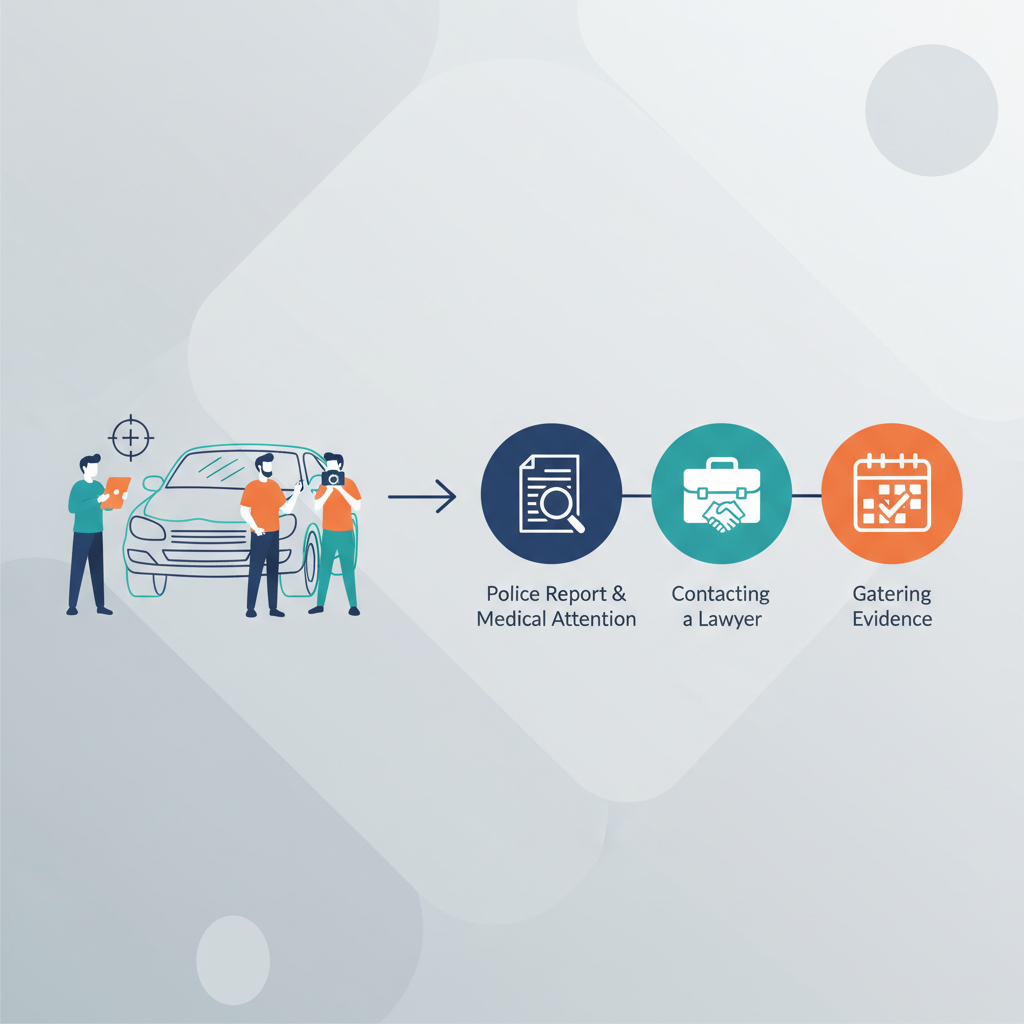
What you do in the first hours and days sets the foundation for your California personal injury timeline. Early action preserves evidence, clarifies liability, and can shorten the settlement timeline for personal injury claims.
- Call 911 and get a report. After a car crash, request police to document the scene; for a slip-and-fall or other premises incident, ask the property manager for an incident report. Note camera locations so footage can be requested quickly.
- Seek medical care within 24–48 hours. Even if symptoms seem minor, prompt evaluation links your injuries to the event and creates records insurers rely on. Follow treatment plans and keep all appointments.
- Document the scene. Take clear photos and video of vehicle positions, skid marks, debris, lighting conditions, weather, and any hazards (spills, broken steps, missing handrails). Preserve damaged items such as clothing, helmets, or car parts.
- Collect information. Exchange contact and insurance details, capture driver’s license plates, and get witness names and statements. For commercial locations, get the store manager’s name and report number.
- Notify insurers carefully. Report the incident promptly, but avoid recorded statements or broad medical authorizations until you’ve spoken with counsel. In California, claims against government entities typically require an administrative claim within 6 months.
- Track losses. Save medical bills, diagnostic reports, repair estimates, and receipts. Keep a daily journal of pain levels, mobility limits, and missed work to support non-economic damages and lost earnings.
- Limit social media. Posts and photos can be used to challenge your injuries or activities.
- Consult an attorney early. Counsel can send preservation letters for surveillance footage, coordinate medical records, identify all insurance coverages, and manage communications—often reducing delays that lengthen the average personal injury case length.
How these steps affect timing: In a clear-liability rear-end crash with completed treatment in 2–3 months, the car accident claim duration might allow for settlement within several months after records are gathered. By contrast, a disputed hazard in a grocery slip case can extend the premises liability case length, and if litigation is needed, personal injury lawsuit duration in California courts often runs 12–24 months or more. Early, thorough documentation keeps your case on the most efficient track.
Investigation and Evidence Collection
A strong record of facts drives both liability and damages and can meaningfully shape the California personal injury timeline. Early, methodical work in this phase often determines whether a claim resolves in months or stretches toward the average personal injury case length.
What typically happens in the first 30–90 days:
- Scene documentation: Photographs, measurements, and diagrams. For traffic collisions, this can include downloading vehicle “black box” (EDR) data and obtaining intersection or dash-cam video. Many businesses overwrite surveillance within 7–30 days, so preservation is urgent.
- Official reports: Requesting the CHP 555 collision report or city police reports (commonly available within 10–14 days), incident reports from stores or property managers, and Caltrans or city traffic-signal timing records if relevant.
- Witness statements: Contacting witnesses while memories are fresh—ideally within 72 hours—to lock in details about speed, visibility, hazards, or notice of a dangerous condition.
- Medical proof: Gathering EMS run sheets, ER records, imaging, and specialist notes; tracking diagnoses and treatment plans. Hospitals in the Sacramento area (e.g., UC Davis Medical Center, Sutter, Kaiser) may take 2–6 weeks to fulfill records requests.
- Employment and financials: Pay stubs, W-2s, employer verification of missed work, and out-of-pocket expense logs to substantiate wage loss and costs.
- Preservation letters: Sending litigation hold notices to at-fault parties, insurers, vehicle owners, and property operators to prevent spoliation of evidence.
- Expert involvement: Where needed, engaging accident reconstructionists, human factors specialists, biomechanical experts, or product engineers for early inspections and testing.
Examples by case type:
- Car and motorcycle collisions: The car accident claim duration can hinge on rapid EDR downloads, brake/airbag module data, and retrieval of nearby business or traffic camera footage before it’s deleted.
- Premises liability: The premises liability case length often depends on maintenance logs, sweep sheets, repair work orders, and prior incident histories that show notice of the hazard.
- Product liability: Investigations may require preserving the product, securing exemplars, and reviewing design files, warnings, and recall records—steps that add time but are critical to liability.
Thorough evidence collection supports a persuasive demand package once you reach maximum medical improvement, shortening the settlement timeline personal injury and, in some cases, the personal injury lawsuit duration. Weinberger Law Firm prioritizes early preservation, targeted records requests, and expert coordination to keep your claim moving while building the strongest possible foundation for negotiation or trial.
Negotiating with Insurance Companies
This phase sits at the center of the California personal injury timeline. Once your medical treatment stabilizes or you reach maximum medical improvement (MMI), your attorney compiles a demand package—medical records and bills, wage loss documentation, photos, expert opinions, and a liability analysis—and opens negotiations.
In California, insurers must:
- Acknowledge your claim and communications within about 15 calendar days.
- Accept or deny liability within about 40 days of receiving sufficient proof of claim, or explain what’s still needed.
- Issue payment within about 30 days after a signed settlement.
These rules don’t guarantee quick agreement, but they do set response benchmarks. The settlement timeline personal injury claims follow depends on how quickly the insurer receives complete documentation and whether liability and damages are clear.
What speeds things up:
- Clear fault (e.g., rear-end collision with police report and admissions).
- Objective injuries with defined treatment and no lingering symptoms.
- Low policy limits relative to damages (early “policy limits” tenders are possible).
- Prompt delivery of full records, liens, and wage verification.
What slows things down:
- Disputed liability or comparative fault arguments.
- Gaps in treatment, preexisting conditions, or complex causation.
- Ongoing medical care with unknown future costs.
- High-value claims that require expert reports or future care analyses.
- Medicare/Medi-Cal, ERISA, or hospital liens that must be verified and negotiated.
Example timelines:
- Car accident claim duration: For a soft-tissue rear-end crash with $12,000 in medical bills, negotiation might resolve 30–90 days after MMI if the policy limit is $25,000 and liability is uncontested.
- Premises liability case length: A slip-and-fall with disputed notice and surveillance footage review may require multiple rounds of discovery requests pre-suit; negotiations can stretch 6–12 months, and an impasse often pushes the personal injury lawsuit duration to 12–24+ months.
Strategic steps Weinberger Law Firm takes to shorten the average personal injury case length include: front-loading a thorough demand; quantifying future care and lost earning capacity; leveraging policy-limit disclosures and time-limited demands; and signaling litigation readiness. We also protect clients from tactics like low initial offers, broad medical record fishing, recorded statement requests, and insurer medical exams, helping keep negotiations focused and efficient.
Filing a Lawsuit Considerations
Deciding whether to file suit is a strategic step in the California personal injury timeline. Filing preserves your rights, compels a formal response, and unlocks tools like subpoenas and depositions. It can also move stubborn insurers toward serious negotiations. But it introduces court deadlines and costs, so timing matters.
Key timing rules that affect the average personal injury case length:
- Statute of limitations (most PI cases): 2 years from the date of injury. Waiting for maximum medical improvement is wise, but don’t miss this deadline.
- Government entities: You must file an administrative claim within 6 months. If it’s rejected, you generally have 6 months from the rejection to sue; if there’s no written rejection, up to 2 years from injury.
- Medical malpractice: 1 year from discovery or 3 years from the injury (whichever occurs first). For minors under 6, by age 8 or within 3 years—whichever provides more time.
- Minors (non–medical malpractice): Time usually pauses until age 18.
What happens after filing, and how it affects personal injury lawsuit duration:
- Service and response: After you file, defendants must be served (typically within 60 days). They have 30 days to respond. Demurrers or motions can add 1–3 months.
- Case management: Courts set a case management conference around 4–6 months after filing to map deadlines and ADR.
- Discovery: Begins after service and often drives the settlement timeline in personal injury cases. Expert workups, depositions, and independent medical exams can extend the schedule.
- Summary judgment: Requires 75 days’ notice before a hearing and can shift timelines significantly.
- Trial setting: Many California courts set trials 12–18 months from filing; complex product liability or disputed premises claims can take longer. In contrast, a straightforward car accident claim duration may be closer to 6–12 months if liability and injuries are clear.
Practical filing considerations:
- Evidence leverage: A filed case allows subpoenas and formal preservation demands, reducing spoliation risk (e.g., store surveillance in a premises claim).
- Costs and returns: Filing fees and expert costs should be weighed against policy limits and assets. If the at-fault driver has minimum limits, suit may still be needed to pursue underinsured motorist benefits.
- ADR impact: Courts often order mediation or judicial arbitration (for smaller cases). This may add a few weeks but can shorten the overall timeline by prompting settlement.
Bottom line: Filing sooner can firm up the schedule and increase leverage, but it should be timed to protect deadlines and present a well-supported damages picture.
Discovery Process Overview
In the California personal injury timeline, discovery starts after the defendant files an answer and runs until the court’s discovery cutoff (often 30 days before the initial trial date). This phase drives much of the personal injury lawsuit duration because both sides gather and test the evidence that will be used to prove liability and damages.
Common discovery tools and what to expect:
- Interrogatories: Written questions about how the incident happened, your medical history, and damages. Responses are due about 30 days after service, and answers must be verified under oath.
- Requests for Production: Demands for documents such as medical records, bills, photographs, repair estimates, wage loss proof, and insurance information. These also carry a 30-day response period.
- Requests for Admission: Short statements to admit or deny (for example, fault for a car accident or authenticity of a record). These streamline what must be proven at trial.
- Depositions: Sworn, in-person or remote testimony. A plaintiff’s deposition typically lasts one day and often becomes a key inflection point in the settlement timeline personal injury cases follow.
- Subpoenas: Used to obtain third-party records (medical providers, employers, or surveillance footage custodians).
- Independent Medical Examination (IME): The defense may request an exam by their physician to evaluate claimed injuries. Scheduling depends on specialist availability; reports usually follow within weeks.
- Expert Witnesses: In more complex matters (premises liability, product defects), experts in accident reconstruction, human factors, or medicine are retained. Expert disclosures and depositions typically occur close to the trial date and can extend the average personal injury case length.
Typical timeframes:
- Straightforward car accident claim duration in discovery: roughly 4–8 months, assuming prompt medical documentation and limited disputes.
- Premises liability case length: often 9–12+ months, especially if multiple witnesses, code compliance issues, or prior incident data are involved.
- Product liability and severe-injury cases: 12–18+ months, driven by expert testing and complex records.
Discovery often prompts serious settlement talks after pivotal events—such as the plaintiff’s deposition, completion of the defense IME, or key liability witness testimony. Moving efficiently through discovery with complete, organized records can significantly shorten the settlement timeline personal injury plaintiffs experience while strengthening negotiation leverage.
Mediation and Settlement Attempts
Most California personal injury cases include one or more settlement efforts before trial. Early negotiations typically start once you finish active treatment or reach maximum medical improvement, when your attorney can quantify medical bills, wage loss, and future care. After a detailed demand package is submitted, insurers often take 30–40 days to evaluate under California’s Fair Claims Settlement Practices Regulations. If liability or damages are disputed, the parties may agree to private mediation to shorten the overall personal injury lawsuit duration.
Mediation is a confidential, non-binding conference led by a neutral mediator. Sessions are usually scheduled 4–10 weeks out, depending on calendars and whether key discovery (medical depositions, accident reconstruction, or premises inspections) must occur first. A typical session lasts a half day to a full day, with the mediator shuttling offers between rooms and stress-testing each side’s risks.
Preparation drives results. A strong mediation brief includes:
- Verified medical specials, treatment chronology, and prognosis
- Evidence of wage loss and vocational impacts
- Liability proof (photos, video, incident reports, witness statements)
- Expert input for future medical needs or product/premises defects
- Lien summaries (health insurance, Medicare/Medi-Cal, ERISA)
If settlement is reached, parties sign a term sheet the same day. The defense then issues a formal release. Most agreements provide for payment within 20–30 days after the signed release and lien information are returned. Lien resolution can add time: Medicare and ERISA plans may take several weeks to months to finalize, even after the insurer cuts the settlement check.
A practical settlement timeline personal injury cases often follow:
- Pre-suit demand and negotiation: 6–12 weeks
- Mediation scheduling and session: 1–3 months
- Paperwork, release, and payment: 3–6 weeks (longer if liens)
Case type affects the average personal injury case length. For a clear-liability car crash with completed treatment, mediation can shrink the car accident claim duration to roughly 4–8 months from medical recovery to payment. A contested premises liability case length is often longer; disputes about notice and safety standards may require depositions and expert evaluations before productive mediation, extending the California personal injury timeline by several months.

If mediation does not resolve the case, offers often continue, and a second session may occur after key rulings. Effective negotiation can still significantly reduce the overall personal injury lawsuit duration.
Trial Preparation and Litigation
If a case does not resolve pre-suit or early in negotiations, the California personal injury timeline moves into full trial preparation and litigation. From this point, personal injury lawsuit duration depends on court congestion, case complexity, the number of experts, and how aggressively each side pursues discovery and motions.
What to expect after filing
- Complaint and service: After filing, defendants are served and must respond within 30 days of service. Early motions (demurrers or motions to strike) can add weeks to months.
- Case Management Conference (CMC): Typically set 4–6 months after filing. The court sets discovery deadlines, mediation windows, and a trial target.
- Fact discovery: Written discovery and depositions often span 6–10 months. Fact discovery generally closes 30 days before the initial trial date.
- Expert phase: Parties exchange expert lists and reports roughly 50 days before trial, followed by expert depositions. Complex medical or engineering issues can expand this window.
- Law and motion: Summary judgment motions must be heard at least 30 days before trial and require substantial advance notice. Rulings here can narrow issues or resolve the case.
- Settlement efforts: Mediation and a Mandatory Settlement Conference are commonly scheduled close to trial. The settlement timeline personal injury cases follow often culminates here.
- Trial readiness and trial: Pretrial filings (exhibit lists, motions in limine) precede a multi-day jury trial. Continuances are common if the court’s calendar is full.
Timing benchmarks
- Average personal injury case length after filing is often 12–24 months, varying by county.
- A straightforward rear-end collision with admitted fault may reach trial in about a year; car accident claim duration can be shorter if injuries are limited and experts are fewer.
- Premises liability case length is commonly longer due to disputes over notice, surveillance footage, and medical causation.
- Product liability matters, with multiple experts and corporate defendants, can exceed two years.
Concrete examples
- Car crash with disputed causation: Biomechanical and orthopedic experts may be needed, extending discovery and trial length.
- Slip-and-fall at a grocery store: Litigation centers on store inspection logs and video; motions over evidence spoliation can add months.
Weinberger Law Firm prepares every case as if it will be tried—developing evidence early, retaining the right experts, and pressing insurers throughout—to keep your case on track and maximize your result within the realities of California courts.
Statute of Limitations Explained
The statute of limitations sets the outer boundary for your California personal injury timeline. Miss it, and the court will likely dismiss your claim, regardless of how strong your evidence is. Negotiations with an insurer do not pause the clock; only filing a lawsuit preserves your rights.
Key filing deadlines in California:
- General personal injury and wrongful death: 2 years from the date of injury or death.
- Medical malpractice: The earlier of 3 years from the injury or 1 year from when you discovered (or reasonably should have discovered) it. For children under 6, file by the 8th birthday or within 3 years—whichever is later. Limited exceptions apply for fraud, concealment, or a retained foreign object.
- Claims against government entities (e.g., city vehicles, public hospitals, dangerous public property): An administrative claim must be filed within 6 months of the injury. If the agency denies your claim, you typically have 6 months from the denial to file a lawsuit.
- Product liability, car, motorcycle, and premises liability injury claims: Usually 2 years from the injury date.
- Property damage only (for context): 3 years.
Important nuances:
- Discovery rule: If you reasonably could not have known you were injured or that negligence caused it, the clock may start when you discover (or should have discovered) the injury.
- Minors: Time limits are generally tolled until age 18, with special rules for medical malpractice.
- Absent defendants and bankruptcy: Certain events can pause or extend deadlines, but these situations are fact-specific.
How deadlines affect case pacing:
- Insurers may slow-walk negotiations. To protect your settlement timeline personal injury practitioners file suit before the deadline if talks stall.
- Filing stops the statute and can reset expectations for personal injury lawsuit duration by moving the matter into litigation.
- While the average personal injury case length varies, the statute defines the latest possible window to resolve or file.
Examples:
- Car accident claim duration: Against a private driver, you generally have 2 years. Against a city bus, you must file a government claim within 6 months.
- Premises liability case length: Same 2-year window, but if the property is publicly owned, the 6-month government claim rule applies.
The Role of Legal Counsel
Retaining an experienced attorney early can meaningfully shape your California personal injury timeline. Counsel can move fast where speed helps (preserving evidence, opening claims) and slow down where patience increases value (waiting for full medical diagnosis before negotiating).
Here’s how legal counsel influences the average personal injury case length at each stage:
- Early investigation (first 7–30 days): Your lawyer secures police reports, contacts witnesses, and sends spoliation letters to preserve surveillance video, vehicle “black box” data, or product samples. In a car crash, downloading event data recorders quickly can shorten disputes. In premises cases, requesting prior incident logs from the property owner early can prevent months of delay later.
- Medical documentation and case valuation: Attorneys coordinate records and expert opinions and typically wait until you reach maximum medical improvement to send a demand. For straightforward soft-tissue injuries, this may take 30–90 days; for fractures or surgery, six months or more. This timing directly affects the settlement timeline personal injury claims follow, because complete documentation drives better offers.
- Demand strategy and insurer deadlines: Counsel prepares a comprehensive demand within 30–60 days of having complete records. In motor vehicle cases, time-limited policy limits demands compliant with California’s 2023 statutes can require a response window of about 30–33 days, prompting timely decisions. Lawyers also leverage California Fair Claims Settlement Practices Regulations to push for determinations within 40 days of proof of claim and keep communications on a set cadence.
- Negotiation versus filing suit: If the insurer disputes liability or damages, attorneys pivot to litigation quickly to avoid stagnation. In California, the personal injury lawsuit duration often ranges 12–24 months depending on court congestion, with pleadings in the first 60 days, discovery over 6–12 months, expert discovery near the end, and mediation typically scheduled 6–12 months after filing. Complex premises liability case length can extend due to fights over notice, maintenance records, or expert inspections.
- Special timelines: Claims against government entities require an administrative claim within six months, adding an extra 45-day response period and specific filing windows. Uninsured/underinsured motorist claims proceed to arbitration after exhausting the at-fault policy and can resolve in 6–12 months.
A skilled lawyer balances speed and leverage—preventing premature low settlements in a car accident claim duration while keeping pressure on insurers and preserving your right to full compensation.
Call to Action
Contact us today for a Free Case Consultation!