Understanding Lost Income After an Accident
After a crash or fall, “lost income” covers more than missed paychecks. In California, you can seek economic damages for wages, salary, overtime, shift differentials, tips, commissions, bonuses, gig earnings, and even PTO or sick time you had to use while you recovered or attended medical appointments.
Past loss is usually calculated using your pre-injury average earnings and the exact time you missed. For hourly workers, multiply your rate by hours lost and include typical overtime. Salaried employees can use a daily rate. Self-employed and contractors can rely on 1099s, invoices, bank deposits, and tax returns to show average earnings and lost contracts.
Example: A warehouse employee earning $28/hour who typically works 40 hours plus 5 hours of overtime weekly misses six weeks. Lost income includes 240 regular hours and 30 overtime hours at the time-and-a-half rate. If they burned 40 hours of PTO, those hours are compensable too.
You may also seek future lost earnings or diminished earning capacity if your injuries limit the kind or amount of work you can do. This analysis often uses vocational experts and economists who consider your age, work history, medical restrictions, and likely career trajectory.
Proving lost wages after injury typically requires:
- Recent pay stubs and W-2s/1099s
- An employer letter confirming your position, pay rate, schedule, and dates missed
- Medical records or doctor notes placing you off work or on restrictions
- Timesheets, schedules, or calendars showing absences
- For self-employed: tax returns, profit-and-loss statements, invoices, contracts, and client correspondence
- For gig workers: app earnings reports and ride/delivery logs
To claim lost income personal injury in California, you must show the accident caused the work loss and that you reasonably mitigated damages by following medical advice and accepting safe light duty when available. Insurers often dispute overtime, bonuses, or seasonal fluctuations, so thorough documentation strengthens your accident lost income claim and maximizes compensation for lost income today and any future lost earnings.
Types of Lost Income You Can Claim
In California, you can claim lost income personal injury damages for more than just your base hourly pay. Courts recognize both past lost wages and loss of future earning capacity when injuries impact your ability to work.
Common categories include:
- Past lost wages: Pay for days or weeks you could not work due to treatment, hospitalization, or recovery. Example: a retail employee missing 14 shifts for surgery and follow-ups.
- Overtime and shift differentials: If you regularly earned time-and-a-half, double time, night differentials, or weekend premiums, you can seek those amounts based on your historical patterns. Example: a nurse who typically logs 8 overtime hours per week.
- Bonuses and commissions: Earned but unpaid incentives or reasonably expected amounts based on your pipeline and prior averages. Example: a sales rep who missed a quarterly bonus after being sidelined during the final push.
- Tips and gratuities: Customary tips are part of lost wages personal injury claims. POS reports and tip logs help show typical earnings for servers and rideshare drivers.
- Gig work, second jobs, and side income: Income from rideshare platforms, delivery apps, or freelance projects can be included with 1099s, app statements, and invoices.
- Self-employment and business profits: Recover the net profit you would have earned, not gross revenue. Tax returns, profit-and-loss statements, and canceled contracts support this part of an accident lost income claim.
- Partial wage loss/light duty: If you returned to modified duty or fewer hours, you can claim the difference between pre- and post-injury earnings.
- PTO and sick leave used: You can seek compensation for paid time off you were forced to use because of the injury.
- Fringe compensation tied to work: Lost employer 401(k) matching caused by reduced contributions, on-call stipends, per diems, and car or tool allowances tied to hours worked.
- Future lost earnings/loss of earning capacity: When lasting limitations reduce what you can earn going forward. Example: a warehouse worker who must move to lower-paying, part-time desk work.
Each category requires tailored proof. Pay stubs, W-2s/1099s, tax returns, employer letters, scheduling records, and medical notes are key to proving lost wages after injury and maximizing compensation for lost income. Weinberger Law Firm can evaluate your records and quantify both past and future lost earnings.
Eligibility for Lost Wage Compensation
Eligibility to recover lost wages in a California personal injury case turns on whether another party’s negligence caused injuries that kept you from working and led to real, measurable income loss. To claim lost income personal injury damages, you must show both causation and the amount with reasonable certainty.
You’re generally eligible if:
- You missed work because of accident-related injuries or medical appointments.
- Your hours, shifts, or earning capacity were reduced due to restrictions.
- You used PTO, sick leave, or vacation to cover missed time.
- You reasonably expected overtime, tips, commissions, or bonuses you didn’t receive.
- You are self-employed or a gig worker and can show a decline in revenue tied to the injury.
Proving lost wages after injury typically requires:
- Medical documentation linking your work limitations to the accident.
- Employer verification of missed dates, rate of pay, average hours, and lost opportunities (overtime, bonuses).
- Pay stubs, W-2s/1099s, schedules, or timesheets.
- For self-employed: tax returns, invoices, contracts, P&L statements, and client correspondence.
- For gig workers: platform earnings history and pre-injury averages.
Compensation for lost income can include:
- Hourly or salaried pay for missed days.
- Overtime and shift differentials you would have worked.
- Tips, commissions, and performance bonuses that were reasonably likely.
- The value of PTO or sick time used because of the injury.
- Missed freelance bookings or contracts.
Future lost earnings and diminished earning capacity may be available if your injuries impact long-term work ability. This often requires a physician’s prognosis and opinions from vocational and economic experts to quantify losses.
Special situations:
- If you were between jobs but had a firm offer or a consistent earnings history, you may still have an accident lost income claim.
- Immigration status does not bar recovery of lost wages in California.
- California’s collateral source rule generally allows recovery even if wages were partially covered by PTO or disability benefits.
Deadlines matter: most claims must be filed within two years, and claims involving government entities typically require a claim within six months.
Gathering Evidence to Prove Lost Income
To claim lost income personal injury damages in California, build a clear paper trail that shows what you earned before the accident, why you couldn’t work, and how much pay you missed. Insurers look for objective, consistent records; align dates across employment and medical documents.
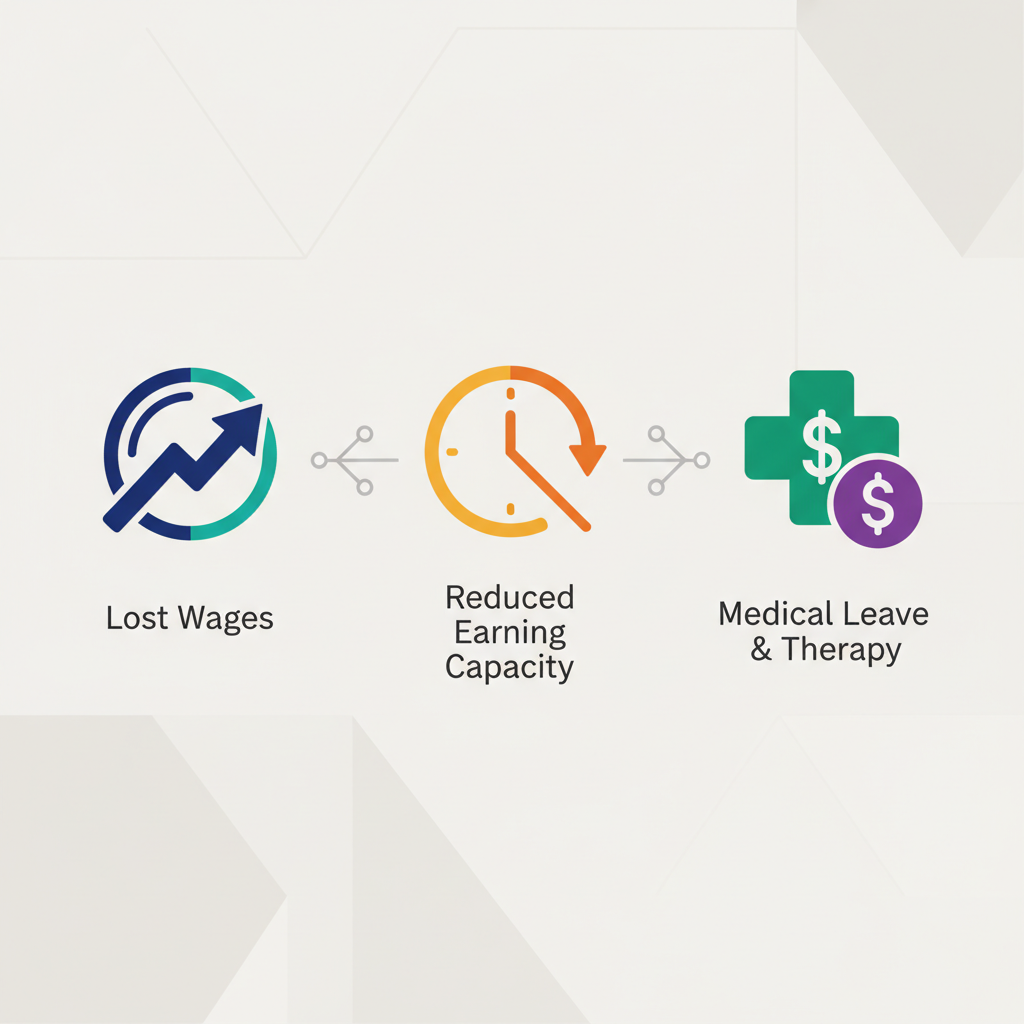
Collect core earnings proof:
- Recent pay stubs (at least 3–6 months pre-accident)
- W-2s/1099s and the last two years of tax returns
- Timesheets and schedules showing missed shifts
- Employer letter confirming your position, pay rate, average hours, overtime history, commissions/bonuses, and dates you were off
- Documentation of tipped income (tip reports), bonuses, and commission statements
- Records of PTO or sick leave used; the value can be part of a lost wages personal injury claim
- Proof of fringe benefits lost (employer 401(k) match, shift differentials)
Tie work loss to the injury with medical evidence:
- Doctor’s notes removing you from work or limiting duties
- Treatment schedules that conflicted with work hours
- Functional capacity evaluations and work restrictions
- Prognosis supporting future lost earnings or reduced capacity
If you’re self-employed or a gig worker, organize:
- Invoices, contracts, booking calendars, and client communications
- Platform earnings dashboards (e.g., rideshare weekly summaries)
- Bank statements and profit-and-loss reports
- CPA declarations comparing pre- and post-injury net income
- Seasonal trends to show expected earnings during the period you missed
Examples help quantify an accident lost income claim:
- A construction worker earning $28/hour with 10 hours overtime weekly who missed 8 weeks can document base wages, typical overtime, and lost employer 401(k) contributions.
- A rideshare driver averaging $1,100 net per week can use 12 weeks of platform summaries and cancellation logs to show the drop after the crash.
Strengthen your case by:
- Keeping a contemporaneous log of missed days and reduced hours
- Documenting attempts to return to light duty (mitigation)
- Preserving emails about lost projects or canceled shifts
Thorough documentation makes proving lost wages after injury more straightforward and supports compensation for lost income now and into the future. An attorney can coordinate employer verification, obtain medical opinions, and retain vocational or economic experts to quantify future lost earnings.
Calculating Past and Future Lost Earnings
Accurately valuing past and future earnings is central to any accident lost income claim in California. Past losses are typically calculated using a simple formula: your regular hourly or salary rate multiplied by the work you missed, plus typical overtime, shift differentials, tips, commissions, and bonuses you would have earned. If you used sick leave or PTO because of the injury, the value of that time is recoverable. Don’t overlook employer-paid benefits (health insurance contributions, retirement match) if you lost them while out.
Proving lost wages after injury requires clear documentation. Helpful proof includes:
- Recent pay stubs, W‑2s, and tax returns
- Timesheets and schedules showing missed shifts or overtime patterns
- An employer letter confirming your position, pay rate, typical hours/overtime, and dates missed
- Tip logs or commission statements
- Medical notes documenting work restrictions and the period of disability
Self‑employed or gig workers can claim compensation for lost income, too. Use 1099s, invoices, profit‑and‑loss statements, bank deposits, and client contracts to show pre‑injury earnings and trends. When income is seasonal or variable, an average of prior months or years adjusted for booked work can demonstrate losses.
Calculating future lost earnings and loss of earning capacity is more complex. Evidence often includes physician opinions on permanent restrictions, a vocational expert’s analysis of suitable jobs and wages, and an economist’s projections. Key factors:
- Age, education, and career trajectory before the crash
- Pre‑injury earnings and expected raises/promotions
- Work restrictions and whether modified duty is realistic
- Reduced hours or job changes that lower long‑term income
- Present value discounting of future losses
Example: A 35‑year‑old electrician earning $38/hour with regular overtime is restricted to light duty at $24/hour with no overtime. The annual income gap, multiplied over expected work life and adjusted for raises and present value, forms the basis of future damages.
To claim lost income personal injury compensation, you must also mitigate damages—attempting safe return to work, modified duty, or part‑time when medically cleared. Detailed records and expert support strengthen a lost wages personal injury claim.
Impact of California Law on Your Claim
California treats lost income as economic damages, meaning you can recover both past lost wages and future losses caused by your injury. Because the state follows pure comparative negligence, your compensation for lost income is reduced by your percentage of fault. Importantly, under Proposition 51, defendants are jointly and severally liable for economic damages—so any at‑fault defendant can be held responsible for the full amount of your lost wages personal injury claim, even if they were only partially at fault.
Timing matters. Most accident lost income claims must be filed within two years of the injury; if a government entity is involved, you generally must file an administrative claim within six months before you can sue.
Proving lost wages after injury requires credible, consistent documentation. Useful evidence includes:
- Recent pay stubs, W‑2s, and tax returns (for self‑employed, 1099s, invoices, P&Ls)
- Employer letter verifying position, rate, average hours, overtime, bonuses/commissions, and time missed
- Medical records and doctor’s work restrictions tying missed work to the accident
- Calendar or timesheets showing shifts missed and reduced hours
- Evidence of lost gigs, contracts, or tips where applicable
For future lost earnings and loss of earning capacity, California requires “reasonable certainty” (see CACI 3903C/3903E). You may need a vocational expert and economist to show how your injury limits your career path and to calculate losses reduced to present value. Example: a union electrician who can no longer perform overhead work may face reduced hourly rates or fewer available jobs, supporting compensation for lost income beyond immediate time off.
Other California rules can impact a claim lost income personal injury recovery:

- You must mitigate damages by attempting suitable light duty or alternative work when medically cleared
- Using PTO or sick leave does not bar compensation for lost income
- Workers’ compensation benefits may create liens or credits in third‑party cases, affecting net recovery
Insurers often challenge causation and the amount of loss. Detailed records and expert support strengthen your compensation for lost income.
Common Challenges in Lost Income Cases
Securing full compensation for lost income often hinges on documentation and clear causation. Insurers scrutinize every gap, which can make a claim lost income personal injury case more complex than expected.
Common hurdles include:
- Variable or irregular pay: Gig workers, servers with tips, and sales reps with commissions face challenges proving a consistent earnings pattern. Insurers may cherry‑pick low-earning weeks. Using 6–12 months of pay stubs, 1099s, bank deposits, and employer letters helps establish averages and seasonality.
- Self-employment and small business income: Adjusting gross receipts to reflect your personal labor—not overall business profit—is critical. Tax returns, profit-and-loss statements, invoices, and canceled contracts can show what work you had to decline after the accident.
- Multiple jobs and overtime: People with second jobs or routine overtime must prove both streams. Timesheets, schedules, and historical OT reports demonstrate what you regularly earned, not just base pay.
- Bonuses and commissions: Year-to-date reports and prior-year payout histories help show missed quota opportunities or delayed deal closings tied to your injuries.
- Using PTO or sick leave: In California, you can claim the value of vacation or sick time you had to use while recovering because it’s a lost employment benefit.
- Proving lost wages after injury with medical support: Doctor’s notes specifying work restrictions (e.g., no lifting, no driving) or temporary total disability are essential to link time off directly to the accident.
- Disputes about mitigation: Insurers argue you could have done light duty or remote work. Vocational assessments can document why alternative roles weren’t feasible or would reduce earnings.
- Future lost earnings and earning capacity: When injuries cause lasting limitations, economists project wage loss using work-life expectancy, disability rating, and realistic career trajectories, discounted to present value.
- Privacy and broad record requests: Carriers often demand sweeping employment records. Narrowing requests protects privacy while supplying what’s necessary for an accident lost income claim.
- Deadlines: California’s statute of limitations for most personal injury claims is two years (six months for government entities), making early evidence collection vital.
A thorough strategy improves the odds of fair compensation for lost income, especially in complex lost wages personal injury cases.
How an Attorney Maximizes Your Compensation
Insurers often minimize time off work and ignore non-salary pay. An attorney builds a complete, defensible record so you can claim lost income personal injury damages with confidence and avoid gaps that invite low offers.
For past wage loss, your lawyer gathers and aligns documents to make proving lost wages after injury straightforward:
- Pay stubs, W-2s/1099s, tax returns, and timecards
- Employer verification of dates missed, hourly rate/salary, typical hours, overtime, bonuses, commissions, shift differentials, and tips
- PTO and sick time used (recoverable as part of compensation for lost income)
- Medical work notes and restrictions that link time off to the accident
- For self-employed or gig workers: invoices, contracts, bank deposits, bookkeeping reports, profit-and-loss statements, and client attestations
Example: A Sacramento nurse who missed six weeks may recover base pay plus typical overtime and weekend differentials, along with the value of PTO used to cover missed shifts. For a rideshare driver, counsel uses app earnings history and bank records to show pre-injury averages and seasonal trends.
Maximizing future lost earnings and loss of earning capacity requires expert support. Attorneys work with treating doctors, vocational rehabilitation specialists, and economists to:
- Translate permanent restrictions into realistic job options and earnings
- Model career trajectory disruptions (missed promotions, retraining periods)
- Calculate present value using accepted methodologies and California jury standards
Example: A carpenter with a permanent lifting limit may need to transition to lower-paying estimator work; your lawyer quantifies the long-term gap.
Counsel also protects your net recovery. They document reasonable mitigation efforts (light duty, job searches) to blunt defense arguments, coordinate offsets and liens (for example, California State Disability Insurance), and prevent double counting when workers’ comp overlaps. If an insurer disputes an accident lost income claim, litigation-ready exhibits—chronologies, wage charts, and expert reports—put pressure on the carrier and position your lost wages personal injury case for full value.
Next Steps for Your Personal Injury Claim
Start by protecting your health and your record. See a doctor immediately and get written work restrictions. Tell your employer about the injury and missed time, and keep a daily log of symptoms, appointments, and hours you could not work. To claim lost income personal injury after a crash in California, you’ll need documentation ready early.
Collect proof for proving lost wages after injury:
- Pay stubs for the 3–6 months before the accident
- W-2s/1099s and tax returns (2–3 years)
- Employer letter on company letterhead confirming job title, pay rate, average hours, overtime, bonuses/commissions, tips, shift differentials, dates missed, and PTO used
- Doctor’s notes placing you off work or on light duty; appointment records
- Timekeeping records and schedules showing missed shifts
- For self-employed/gig workers: invoices, contracts, platform earnings reports, bank deposits, profit-and-loss statements, and a calendar of canceled jobs
Calculate your lost wages personal injury damages comprehensively. Include hourly/salary, average overtime, differentials, tips, and bonuses. Example: $28/hour x 40 hours/week x 6 weeks = $6,720. If you averaged 5 hours/week of overtime, time-and-a-half is $42/hour, so $42 x 5 x 6 = $1,260. Add any paid time off you had to use, because PTO is compensable.
File your accident lost income claim with the at-fault insurer as part of a demand package. Attach your evidence and a clear calculation. Avoid recorded statements or broad medical authorizations without legal guidance. Note deadlines: generally two years to file a personal injury lawsuit in California, and only six months to present a government claim if a public entity is involved.
If injuries limit your career long-term, document future lost earnings. Your doctor should outline permanent restrictions; a vocational expert and economist can estimate diminished earning capacity based on your education, job skills, and the labor market.
Mitigate damages by following treatment plans and accepting safe light duty. If you can work part-time or in a modified role, track those hours to show you’re seeking fair compensation for lost income, not more. If you need interim help, consider California State Disability Insurance; keep records of any benefits received when pursuing compensation for lost income.
Call to Action
Contact us today for a Free Case Consultation!