Understanding Personal Injury Claims
A personal injury claim is the formal process of proving another party’s negligence, documenting your losses, and pursuing the insurance coverage available. Understanding the moving parts helps you maximize personal injury compensation and avoid missteps that can shrink your recovery.
What drives accident claim value in California:
- Liability and fault: California uses pure comparative negligence. If you’re found 20% at fault, your award is reduced by 20%. Clear evidence of the other party’s fault increases value.
- Damages proof: Economic losses (ER visits, physical therapy, future care, lost wages/earning capacity) and non-economic harm (pain, emotional distress). Detailed records and consistent treatment matter.
- Causation and medical evidence: Prompt care, specialist evaluations, and clear diagnostic findings (e.g., MRI-confirmed disc herniation) connect injuries to the crash.
- Insurance and defendants: Policy limits cap recovery unless there’s additional coverage (UM/UIM, MedPay) or other liable parties (e.g., employer of at-fault driver, product manufacturer).
- Venue and timing: Most injury claims have a two-year statute of limitations; claims against government entities often require action within six months.
Practical injury settlement tips:
- Seek immediate medical evaluation and follow prescribed treatment; avoid gaps.
- Photograph injuries and damage; secure the police report and witness contacts.
- Keep a symptom and impact journal to capture pain and activity limitations.
- Track all expenses and lost income; save EOBs, bills, and repair estimates.
- Avoid recorded statements or broad medical authorizations without counsel.
- Limit social media; posts can be used to challenge your claim.
- Address liens early; negotiating health insurance and provider liens increases your net recovery.
How personal injury lawyer help improves outcomes:
- Builds liability with expert analysis and preserves evidence.
- Calculates full damages, including future care and earnings.
- Identifies all coverage and defendants to expand recovery sources.
- Negotiates from a litigation-ready posture to pursue fair compensation California law allows.
- Executes damage recovery strategies such as stacking coverages and reducing liens.
Example: After a rear-end crash with a $50,000 policy, uncovering employer liability and UM/UIM coverage, plus reducing medical liens, can substantially increase the total and net recovery.
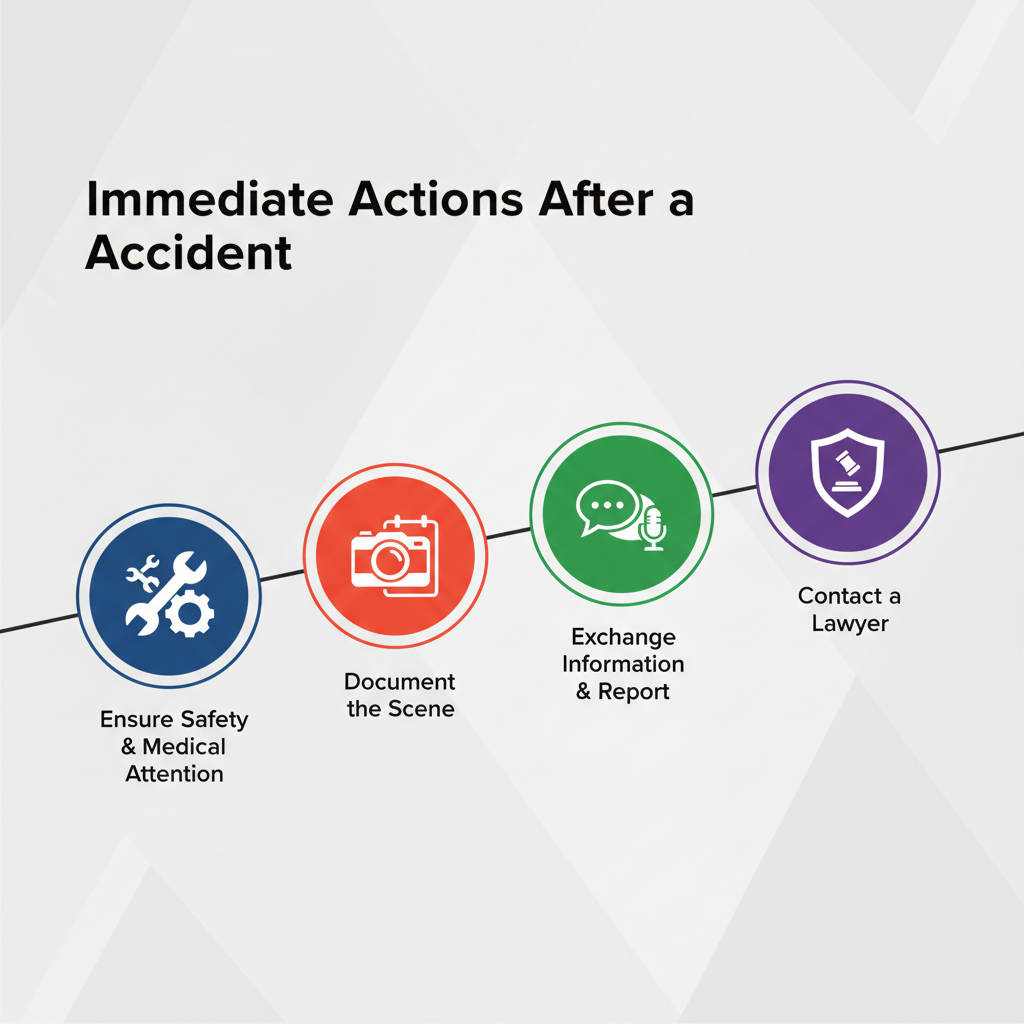
Immediate Actions After an Accident
Prioritize safety and call 911. Seek medical evaluation immediately—even if you feel “fine.” Many injuries (concussions, soft-tissue damage, internal injuries) surface hours or days later. Early diagnosis creates the medical record you’ll need to maximize personal injury compensation.
Document the scene before it changes:
- Take wide and close-up photos of vehicles, road scars, debris, license plates, and your visible injuries; note weather, lighting, and traffic controls.
- Capture the hazard in premises cases (wet floor with no sign, broken handrail, uneven pavement).
- Collect names, phone numbers, and statements from witnesses.
- Exchange driver’s license, insurance, and VIN information at crash sites.
- Ask businesses to preserve surveillance video; many systems overwrite within days.
Preserve evidence. Do not repair or dispose of your vehicle, damaged gear, footwear, or the product that failed. Store items in their current condition. In California, report traffic collisions causing injury or property damage over $1,000 to the DMV with Form SR‑1 within 10 days. Obtain the police or incident report number right away.
Build your damages file from day one:
- Follow all treatment plans and attend every appointment to avoid disputes about “failure to mitigate.”
- Keep a pain journal detailing symptoms, sleep disruption, and activity limits.
- Track lost wages, missed shifts, and reduced hours; save employer letters and pay stubs.
- Save receipts for out-of-pocket costs (co-pays, prescriptions, medical devices, rideshare to therapy) and mileage to medical visits.
Be careful with insurers. Promptly notify your carrier, but avoid recorded statements to the at-fault insurer and don’t sign blanket medical releases. Limit social media; posts can be used to challenge your accident claim value.
Deadlines matter. Most California personal injury claims have a two-year statute of limitations; claims against government entities often require a claim within six months. Early personal injury lawyer help can secure evidence, send preservation letters, and develop damage recovery strategies that support fair compensation in California and practical injury settlement tips tailored to your case.
Gathering Comprehensive Evidence
Strong, well-documented proof is the backbone of any effort to maximize personal injury compensation. The sooner you start gathering evidence, the more complete and persuasive your accident claim value will be.
Prioritize scene evidence
- Photograph the scene from multiple angles, including hazards, skid marks, debris, vehicle positions, airbag deployment, and weather/lighting conditions.
- Collect witness names, phone numbers, and brief statements while memories are fresh.
- Call 911; obtain the police/CHP report number and later request the full report and any supplemental diagrams.
- Preserve video: ask nearby businesses or homeowners for camera footage; send preservation letters quickly because many systems overwrite in days.
- For motor vehicle cases, secure dashcam files and request vehicle Event Data Recorder (EDR) downloads.
- In premises claims, save incident reports, photograph spills or defects, your footwear, warning signs (or lack thereof), and request maintenance logs and prior complaint records.
- In product cases, keep the product and packaging unaltered; document serial numbers and storage conditions to preserve chain of custody.
Build medical proof and causation
- Seek prompt medical care; gaps in treatment can reduce injury settlement tips effectiveness.
- Keep complete records: ER notes, diagnostic imaging, specialist consultations, therapy progress notes, and physician opinions linking injuries to the incident.
- Maintain a pain and activity journal documenting sleep issues, missed events, and daily limitations to support general damages.
Document financial losses
- Save pay stubs, W-2/1099s, timesheets, and an employer letter verifying missed work and duties; self-employed victims should compile invoices and profit-and-loss statements.
- Track all out-of-pocket costs: co-pays, prescriptions, medical devices, transportation/mileage to appointments, home care, and household services you can no longer perform.
- Estimate future costs with treating providers and, when appropriate, life-care planners to substantiate ongoing care and loss of earning capacity.
Leverage legal tools
- A California personal injury lawyer can issue preservation letters, subpoena records, work with reconstruction and medical experts, and negotiate with insurers to pursue fair compensation in California.
- Act fast if a public entity is involved; California government claims often require action within six months.
These damage recovery strategies create a credible record that strengthens liability, proves causation, and quantifies losses—key steps to maximize personal injury compensation.
Assessing All Damages Thoroughly
A full damages inventory is essential to maximize personal injury compensation. In California, you can recover both economic and non-economic losses, and in most personal injury cases there’s no cap on non-economic damages. Pure comparative negligence may reduce the award by your percentage of fault, but it doesn’t prevent you from pursuing fair compensation California law allows.
Don’t overlook these categories when assessing accident claim value:
- Medical expenses: ER visits, imaging, surgery, hospital stays, prescriptions, physical therapy, medical devices, and the amounts reasonably paid or owed for care. Plan for future needs like revision surgery, injections, or counseling.
- Lost income: Wages, overtime, bonuses, tips, sick/PTO use, and gig income. For long-term impacts, consider diminished earning capacity with vocational and economic expert input.
- Out-of-pocket costs: Co-pays, deductibles, mileage to appointments, home or vehicle modifications, childcare, and replacement services (cleaning, lawn care) you can’t perform due to injury.
- Property damage: Vehicle repair or total loss, diminished value, and personal items (phone, helmet, clothing).
- Non-economic harms: Pain, emotional distress, PTSD, sleep disturbance, scarring, loss of enjoyment of life, and impact on relationships/household services.
- Future care: Life-care planning for ongoing therapies, medications, and attendant care. Use present value calculations for long horizons.
- Lien and reimbursement exposure: Health insurance, Medi-Cal/Medicare, and provider liens affect net recovery and should be negotiated.
Evidence drives injury settlement tips that work. Keep treatment consistent, follow medical advice, and document everything: detailed medical records, photographs of injuries, a daily pain and activity journal, employer letters on missed work and lost opportunities, tax returns, and receipts. In California, recoverable past medical specials typically reflect amounts paid or owed rather than the full billed amounts, so accurate billing records matter.
Example: After a motorcycle crash with a wrist fracture requiring ORIF, the claim should include future hardware removal, lost overtime, missed promotion, rides to therapy, and help with childcare, plus non-economic impacts like loss of hobbies and sleep disruption. Pre-existing conditions aggravated by the crash are compensable; your duty is to mitigate by seeking timely care.
Experienced personal injury lawyer help includes building this proof, coordinating experts, addressing liens, and deploying damage recovery strategies that maximize personal injury compensation during negotiation or trial.
Negotiating With Insurance Adjusters
Insurance adjusters are trained to minimize payouts. To maximize personal injury compensation, treat every interaction as part of your evidence-driven negotiation.
Start by proving the full scope of loss. Gather complete medical records (not just bills), radiology reports, treatment plans, and provider notes that link each injury to the collision. Add wage documentation: pay stubs, employer verification of missed hours, and a doctor’s work restrictions. Include repair estimates, photos of vehicle damage, scene photos, and witness statements. A pain-and-limitation journal helps capture daily impacts and supports non-economic damages.
Injury settlement tips to strengthen accident claim value:
- Control communications: decline recorded statements and broad medical authorizations. Provide a tailored, time-limited, written summary with supporting documents.
- Don’t rush the demand: wait until you understand diagnosis, prognosis, and future care. Premature demands leave out costly follow-up treatment.
- Price future losses: obtain provider opinions on future procedures, therapy, medications, and work limitations. Document diminished earning capacity, not just current wage loss.
- Anticipate comparative fault arguments: counter with photos, skid marks, ECM data, and collision repair reports that show force and direction of impact.
- Address preexisting conditions: use records and physician statements to show aggravation, not unrelated symptoms.
- Manage liens: track health insurer, Medicare/Medi-Cal, or provider liens and negotiate reductions to improve net recovery.
- Use a time-limited policy-limits demand: in California, a clear, written offer with supporting evidence and a reasonable acceptance window can create pressure to settle within limits.
- Ask for coverage details: request disclosure of policy limits and any umbrella or excess coverage to inform damage recovery strategies.
Example: After a Sacramento rear-end crash with $22,000 in medical bills and $9,000 in lost wages, the initial offer was $18,500. A comprehensive, time-limited demand with surgeon’s notes on future injections and a vocational letter on work restrictions led to a policy-limits tender of $50,000 and opened a UIM claim.
Experienced personal injury lawyer help can keep negotiations focused, rebut valuation software outputs, and position your case for fair compensation in California if litigation becomes necessary.
The Strategic Role of Legal Counsel
Experienced counsel does more than file paperwork. The right strategy can materially increase accident claim value by shaping evidence, timing, and negotiation to maximize personal injury compensation under California law.
From day one, attorneys preserve and build proof. That includes rapid preservation letters for vehicle event data recorders, store surveillance, and maintenance logs; scene photos and witness statements; and thorough medical documentation that ties every diagnosis to the incident. Counsel tracks crucial deadlines—the general two-year statute of limitations and the six‑month Government Claims Act notice for public entity cases—so leverage isn’t lost.
Effective damage recovery strategies start with a complete valuation. Lawyers quantify economic losses (medical bills, future care, lost income and earning capacity) and non‑economic harms (pain, emotional distress, loss of enjoyment). In California, recoverable medical expenses often turn on amounts paid or owed, not sticker‑price bills; a seasoned team presents the right records and, when appropriate, uses treating physicians, life‑care planners, and economists to support future needs. They also negotiate down medical liens (Medicare, Medi‑Cal, ERISA plans), directly increasing your net recovery.
Targeted legal tactics can move insurers toward fair compensation California accident victims deserve:
- Countering comparative negligence claims with reconstruction and human‑factors experts to minimize fault arguments.
- Issuing time‑limited policy‑limits demands compliant with CCP §999, creating accountability for prompt, full‑value resolutions and preserving bad‑faith leverage when warranted.
- Deploying CCP §998 offers to shift costs and pressure unreasonable defendants as trial approaches.
- Coordinating UM/UIM claims and MedPay to fill coverage gaps without undermining the third‑party case.
- Addressing special rules, such as Proposition 213 limits on non‑economic damages for uninsured drivers, and tailoring injury settlement tips accordingly.
At Weinberger Law Firm, clear communication keeps you informed while disciplined negotiation and litigation readiness signal to insurers that low offers won’t succeed. The result: a stronger record, smarter timing, and a settlement or verdict aligned with the true impact of your injuries.
Preparing for Potential Litigation
Litigation readiness is one of the most effective ways to maximize personal injury compensation. When insurers see you are prepared to prove fault and damages at trial, they take your case—and your demand—more seriously.
Start by preserving every piece of evidence. Send spoliation letters to drivers, businesses, and insurers asking them to retain vehicle event data recorders, dashcam footage, and store surveillance. In a Sacramento slip-and-fall, for example, promptly request the store’s incident report, cleaning logs, and camera footage before it is overwritten. Photograph the scene, your injuries, and all property damage; save damaged clothing and safety gear.

Build a complete medical record. Follow through with treatment consistently and keep a symptom journal to document pain, sleep disruption, and activity limits. Ask providers for narrative reports that tie diagnoses to the accident and outline future care needs and costs. This helps establish both current losses and future damages, increasing accident claim value.
Document wage loss and loss of earning capacity. Collect pay stubs, W-2s, contracts, and a supervisor letter describing missed work and restrictions. For self-employed clients, secure profit-and-loss statements and tax returns.
Anticipate defenses and discovery. California’s pure comparative negligence can reduce your award, so gather witness statements, 911 audio, and expert opinions (e.g., accident reconstruction) to minimize any alleged fault. Be mindful of social media—posts can be used to challenge claimed limitations.
Meet all deadlines. Most California injury claims have a two-year statute of limitations; claims against government entities generally require a government claim within six months. Filing on time preserves leverage for fair compensation California.
Strengthen your pre-litigation demand. Include medical bills and records, photographs, expert reports, and a clear damages analysis (economic and non-economic). Address liens and subrogation so net recovery is clear—an often-overlooked injury settlement tip.
Consider strategic steps:
- Mediation or a voluntary settlement conference to test valuation
- Day-in-the-life video to humanize non-economic loss
- Life care plan for serious injuries to project future costs
With personal injury lawyer help from Weinberger Law Firm, you gain damage recovery strategies that signal trial readiness, elevate credibility, and position your case for the best possible settlement—or a strong verdict if litigation proceeds.
Common Pitfalls to Avoid
To maximize personal injury compensation and protect your accident claim value, steer clear of these costly mistakes from day one.
- Delaying medical care or letting gaps in treatment occur. Insurers argue your injuries aren’t serious or weren’t caused by the crash if you wait or miss appointments.
- Giving recorded statements or signing broad medical authorizations for insurers. Limit releases to date-of-injury records and avoid statements before legal counsel reviews them.
- Posting on social media. Photos, check-ins, or comments can be used to minimize pain, limitations, or credibility.
- Accepting the first offer. Early settlements rarely account for future medical needs, reduced earning capacity, or non-economic damages like pain and suffering.
- Missing deadlines. In California, most personal injury claims have a two-year statute of limitations; claims against government entities generally require a claim within six months. UM/UIM claims also have policy-driven notice and arbitration deadlines.
- Failing to preserve evidence. Photograph the scene and injuries, secure witness contacts, keep damaged items, and preserve vehicle data (EDR/“black box”) before repairs.
- Overlooking comparative fault issues. California’s pure comparative negligence reduces recovery by your percentage of fault; avoid speculative or apologetic statements and keep accounts consistent.
- Not documenting all economic losses. Track mileage to treatment, co-pays, prescriptions, home modifications, medical devices, and replacement services like childcare or housekeeping.
- Ignoring medical billing and liens. Coordinate health insurance, Med-Pay, and provider liens; Medicare, Medi-Cal, and hospitals may assert reimbursement rights that require careful negotiation.
- Rushing property repairs. Thoroughly document damage and obtain independent estimates; vehicle damage often corroborates injury severity.
- Waiting to get personal injury lawyer help. Early counsel can execute damage recovery strategies, manage insurers, and build the record needed for fair compensation California accident victims deserve.
Use these injury settlement tips to strengthen your file, avoid avoidable setbacks, and position your claim for full and timely recovery.
Securing Your Maximum Recovery
Start by building the proof you’ll need. Get prompt medical care, follow all treatment, and keep every bill, explanation of benefits, and pharmacy receipt. In California, recoverable medical costs are generally limited to amounts actually paid or owed, not the full sticker price (Howell), so itemized records matter. A daily journal describing pain, sleep disruption, and activity limits helps quantify non-economic losses, which are not capped in most negligence cases (medical malpractice is an exception).
Preserve evidence immediately. Photograph vehicles, skid marks, hazards, and visible injuries. Ask nearby businesses for surveillance video and send preservation (spoliation) letters when fault is disputed. For auto crashes, request the police report and consider downloading event data recorder (EDR) information. Avoid recorded statements to insurers without personal injury lawyer help.
Use all available insurance and liable parties to maximize personal injury compensation:
- At-fault driver’s liability policy; request policy limits early.
- Your MedPay for immediate medical bills, regardless of fault.
- Uninsured/underinsured motorist (UM/UIM) for shortfalls; California offsets apply, so document all payments.
- Additional defendants: employers (vicarious liability), property owners (premises), or product manufacturers.
Value every damage category with support:
- Past/future medical care: treatment plans, surgeon notes, life-care planner reports.
- Lost wages and earning capacity: employer verification, tax returns, vocational assessments.
- Non-economic harm: consistent symptom journals, testimony from family, mental health records where appropriate.
- Property damage and incidental costs: rentals, mileage, home-care aids.
Mind California-specific rules that affect accident claim value. The statute of limitations is generally two years (six months to file a government claim). California uses pure comparative negligence—your recovery is reduced by your percentage of fault, not barred entirely. Proposition 213 can limit non-economic damages if you were an uninsured driver operating your own vehicle, with limited exceptions.
Tactical injury settlement tips:
- Be treatment-compliant; gaps lower credibility.
- Don’t rush to settle before reaching maximum medical improvement.
- Research venue verdicts to anchor negotiations.
- Prepare as if for trial—litigation readiness increases fair compensation California.
- Negotiate health-plan and provider liens to improve net recovery.
Strategic, early attorney involvement provides the damage recovery strategies and documentation insurers respect, often increasing settlement leverage.
Call to Action
Contact us today for a Free Case Consultation!