Understanding Your Personal Injury Claim
A personal injury claim in California seeks to hold the at‑fault party financially responsible for the harm their negligence caused. For most cases—car and motorcycle collisions, slip and falls, or unsafe property conditions—you must prove duty, breach, causation, and damages. Product defects may proceed under strict liability, meaning you don’t have to prove negligence, only that a defective product caused your injuries. Understanding these rules is the foundation for maximizing personal injury claim outcomes.
In practice, liability depends on specific facts. A rear‑end crash often establishes breach through following too closely. A premises case may turn on whether the property owner knew or should have known about a spill and failed to clean it. In a defective tire blowout, liability can stem from a manufacturing defect supported by expert analysis.
Key factors that drive claim value:
- Damages: Economic (medical bills, rehabilitation, lost income, future care) and non‑economic (pain, suffering, loss of enjoyment). Serious, well‑documented injuries typically increase value.
- Liability strength: Clear fault supports higher settlements; contested fault can reduce offers.
- Comparative negligence: California’s pure comparative fault reduces recovery by your percentage of fault.
- Insurance coverage: At‑fault policy limits and your UM/UIM coverage affect injury compensation in California.
- Medical causation and consistency: Prompt, continuous treatment and specialist opinions link injuries to the incident.
- Future losses: Life‑care plans and vocational reports quantify long‑term impacts.
- Aggravating conduct: DUI or reckless behavior can justify punitive damages in rare cases.
Practical steps to protect accident victim rights:
- Get immediate medical care and follow treatment plans.
- Preserve evidence: photos, witness contacts, dashcam footage, vehicle data.
- Keep a pain and limitations journal and all receipts.
- Avoid recorded insurer statements and limit social media about the incident.
- Track all time missed from work and doctor‑ordered restrictions.
- Watch deadlines: generally 2 years from the incident, and 6 months to file a government claim if a public entity is involved.
A personal injury lawyer can investigate fault, retain the right experts, calculate full damages, and negotiate assertively with insurers—backed by litigation readiness if needed. Weinberger Law Firm provides clear communication and legal support injured Californians rely on, from evaluating a negligence accident claim to resolving liens and pursuing every avenue for fair compensation.
Immediate Steps After an Accident
What you do in the first hours after a crash or fall can directly influence the value and strength of your case. For maximizing personal injury claim results in California, take these steps:
- Prioritize safety and call 911. Accept medical evaluation at the scene. Concussion, whiplash, and internal injuries often present delayed symptoms—early documentation ties them to the event.
- Capture evidence immediately. Take wide and close-up photos/video of vehicle positions, skid marks, deployed airbags, debris, weather, and lighting. In a premises case, photograph the spill, broken handrail, or uneven surface plus any warning signs (or lack thereof). For product defects, secure the product and packaging; note model/serial numbers and where you bought it.
- Identify witnesses. Collect names, phone numbers, and emails. Ask nearby businesses or homes about cameras and request that footage be preserved. An attorney can send a spoliation letter to ensure evidence isn’t destroyed.
- Report the incident. For motor vehicle collisions in California, file an SR-1 with the DMV within 10 days if anyone was injured, killed, or if property damage exceeded $1,000. Obtain the police report number and the responding agency.
- Avoid admissions and recorded statements. Provide only basic facts at the scene. Do not admit fault or guess about causes. Decline insurer-recorded statements until you speak with a personal injury lawyer.
- Seek prompt, consistent medical care. Follow treatment plans, fill prescriptions, and avoid gaps in care. Keep a pain and symptom journal, save receipts, and track mileage to appointments. Ask your employer for a letter confirming missed work and wage rate.
- Preserve key items. Do not repair or dispose of your vehicle, clothing, footwear, or damaged personal items until documented. Event data recorder (black box) and telematics downloads can be critical in a negligence accident claim.
- Limit social media. Posts and photos can be used to downplay injuries.
- Know deadlines. In California, most personal injury cases have a two-year statute of limitations; claims against government entities require a claim within six months. Acting promptly protects accident victim rights and injury compensation California.
Contact Weinberger Law Firm early. Our team handles insurer communications, calculates full damages (medical bills, lost income, pain and suffering, and future care), and builds litigation-ready cases—the legal support injured Californians need for maximizing personal injury claim outcomes.
Thorough Case Evaluation and Strategy
A rigorous case evaluation is the foundation for maximizing a personal injury claim. From day one, the Weinberger Law Firm builds a fact-driven strategy that aligns liability proof with documented damages, so insurers see clear exposure and juries would, too.
The investigation starts immediately to preserve evidence and protect accident victim rights. Key early steps often include:
- Securing scene photos, vehicle “black box” (EDR) data, dashcam or nearby business surveillance, and 911/audio.
- Interviewing witnesses and obtaining police reports, traffic signal timing records, and body cam footage when available.
- Creating a medical chronology with treating providers to link each diagnosis and limitation to the incident.
- Analyzing liability theories under California law, including negligence per se (e.g., traffic violations), premises notice requirements, and product defect frameworks.
Comprehensive damages documentation is equally critical for injury compensation in California. The firm quantifies:
- Past and future medical care, therapy, and life-care planning.
- Lost wages, reduced earning capacity, and job retraining needs.
- Non-economic harm such as pain, suffering, and loss of enjoyment.
- Property loss and out-of-pocket expenses.
- Lien and subrogation issues, with active negotiation to preserve your net recovery.
Insurance strategy is tailored to every negligence accident claim. Attorneys identify all coverage—at-fault policies, UM/UIM, Med-Pay—and develop a demand backed by expert opinions (accident reconstruction, biomechanical, vocational, and economic). If the carrier undervalues the claim, the team prepares for litigation, leveraging California tools like Code of Civil Procedure section 998 offers to shift cost risk and encourage fair settlement.
Concrete outcomes come from detail:
- In a disputed rear-end collision, a client with prior back issues faced a low offer. By comparing pre-injury baselines with post-crash imaging and a biomechanical analysis, the firm proved aggravation and triggered policy limits.
- In a grocery slip-and-fall, sweep logs and surveillance showed the spill was unattended for over 30 minutes, establishing constructive notice and unlocking full premises liability recovery.
- In a left-turn motorcycle crash with comparative fault allegations, sightline mapping and timing studies reduced the rider’s fault percentage, significantly increasing the net settlement.
Throughout, clients receive clear communication and legal support for the injured, including deadline tracking (e.g., California’s two-year statute, shorter timelines for government claims). As your personal injury lawyer, the firm’s strategy is simple: build the strongest proof early, negotiate from strength, and be trial-ready if needed.
Dealing with Insurance Companies
Insurance carriers move quickly after a crash to protect their bottom line. They may request a recorded statement, push broad medical authorizations, or make a low early offer before your injuries are fully understood. Weinberger Law Firm steps in immediately to control communications, preserve evidence, and keep the focus on maximizing personal injury claim value—not the insurer’s cost-containment goals.
Common insurer tactics and how we counter them:
- Early lowball offers: We wait for a full medical picture and compile a comprehensive demand that includes treatment records, physician opinions on future care, diagnostic imaging, and wage loss verification.
- Overbroad medical releases: We provide tailored records to prove causation and damages without exposing unrelated history.
- Fault shifting: California’s pure comparative negligence rules can reduce recovery. We push back with accident reconstruction, scene photos, vehicle data, and witness statements to protect accident victim rights.
- “Gaps” and “preexisting” arguments: We document timely care, explain treatment delays, and obtain provider opinions linking aggravation of prior conditions to the incident.
- Surveillance and social media: We advise clients on conduct and context to prevent mischaracterization of normal activity.
Identifying coverage is critical in an injury compensation California case. Beyond the at-fault driver’s policy, we look for:
- Uninsured/Underinsured Motorist coverage on your own policy
- Medical payments (med-pay) benefits
- Additional insureds (employer vehicles, permissive users)
- Business or homeowner policies in a premises or product negligence accident claim
We prepare time-limited policy-limits demands with clear terms and admissible proof, creating pressure for fair payment within coverage. When appropriate, we include life care plans and vocational analyses to substantiate future losses. If an insurer delays or undervalues, we are ready to litigate and use discovery to obtain policy information and lock in testimony.
Medical billing in California is nuanced. Under Howell, recoverable past medical damages generally reflect amounts paid or owed, not full billed charges. We present the correct figures—and negotiate health insurance, Medi-Cal/Medicare, and provider liens—so your net recovery is maximized.
Example: After a Sacramento rear-end collision, an adjuster offered $6,000 within days. Our personal injury lawyer team documented MRI-confirmed disc injury, six weeks off work with employer verification, and ongoing therapy, identified $10,000 med-pay and $50,000 UM/UIM, and issued a time-limited demand. Result: policy-limit settlement and lien reductions that increased the client’s take-home recovery.
This is the legal support injured Californians need: precise documentation, strategic negotiation, and clear communication at every step.
Maximizing Your Potential Compensation
Maximizing a personal injury claim starts with proving the full scope of your losses and identifying every source of recovery. Weinberger Law Firm builds comprehensive, evidence-backed demands that reflect both the immediate and long-term impact of an injury, helping protect accident victim rights under California law.
We document all compensable categories of damages. That includes past and future medical expenses, lost income and diminished earning capacity, property damage, and non-economic harms like pain, suffering, and loss of enjoyment of life. When the facts support it, we also evaluate punitive exposure in egregious cases. In injury compensation California cases, there’s no universal cap on non-economic damages in standard negligence accident claims, though specific categories like medical malpractice have limits.
Our team moves early to secure critical proof. For a car or motorcycle crash, that can mean preserving vehicle “black box” data, traffic camera footage, and cell phone records; working with accident reconstruction experts; and interviewing witnesses while memories are fresh. In premises liability matters, we obtain incident reports, maintenance logs, and code compliance records to establish notice and hazard history. In product cases, we coordinate engineering analyses and recall research to pinpoint defect and causation.
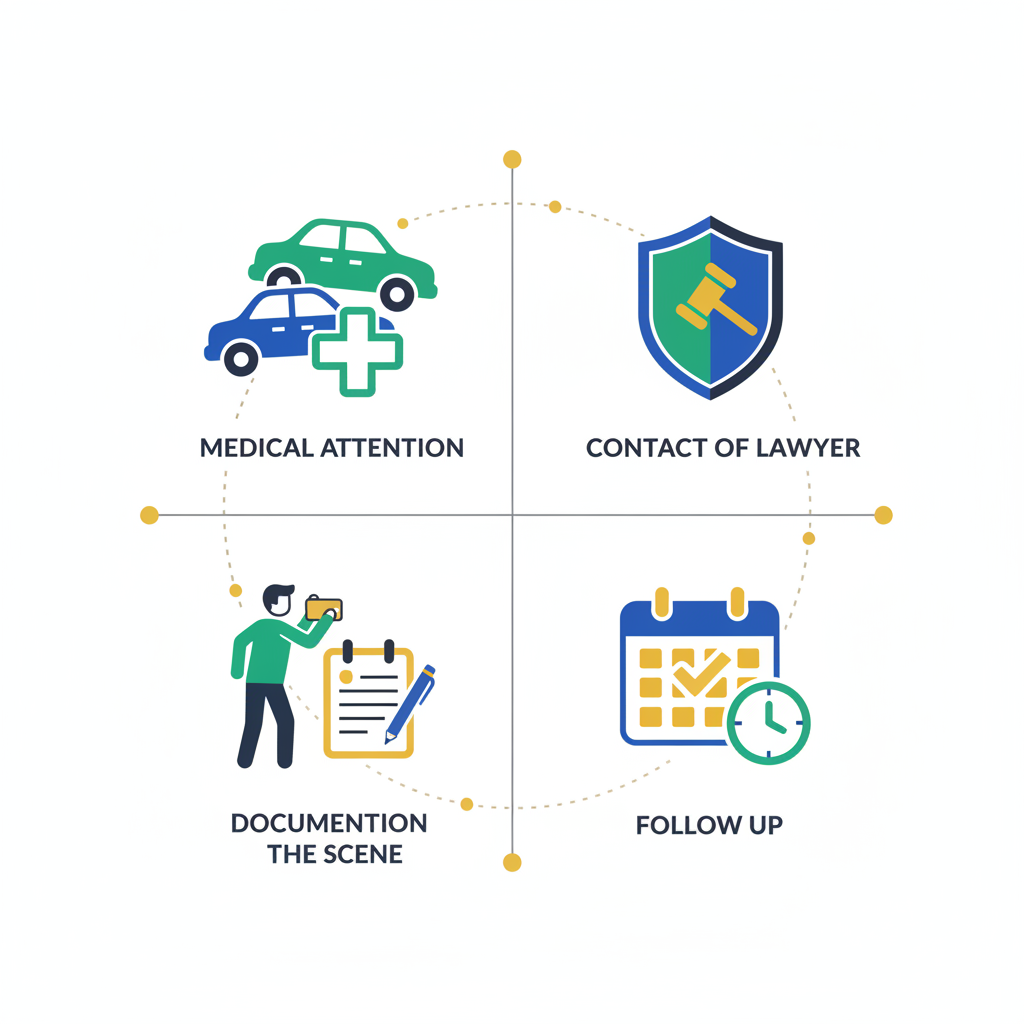
We also expand the pool of available insurance and liable parties to maximize recovery:
- At-fault liability policies, plus any employer or commercial coverage
- Uninsured/underinsured motorist and MedPay benefits on your own policy
- Potential public entity responsibility for dangerous road conditions (with California’s six-month Government Claims Act deadline)
- Third-party contractors or manufacturers whose negligence contributed
Insurance carriers commonly undervalue future care and wage losses. We counter with treating physician opinions, life care plans, and vocational assessments that tie future costs and work limitations to medical evidence. We prepare each file as if it will be tried, which strengthens negotiation leverage and preserves your options.
California’s pure comparative negligence rules reduce recovery by your percentage of fault. As your personal injury lawyer, we proactively challenge fault arguments with objective evidence to protect the value of your claim.
Finally, we handle subrogation and lien issues—health insurer, Medicare/Medi-Cal, and provider liens—to reduce paybacks and increase your net recovery. From first notice to settlement or verdict, we provide clear legal support for the injured and keep you informed at every step.
Types of Damages You Can Claim
Understanding the full scope of recoverable damages is central to maximizing personal injury claim value in California. Weinberger Law Firm builds every negligence accident claim around a complete picture of your losses, ensuring insurers and juries see the real impact of the injury on your life.
You may be able to recover:
- Economic damages
– Medical bills: ER care, surgery, hospitalization, medications, imaging, physical therapy, and durable medical equipment. Example: After a rideshare crash, a shoulder surgery and six months of rehab are compensable, as are future injections your doctor anticipates.
– Future medical needs: Life-care plans for long-term treatment, revision surgeries, and home modifications if mobility is affected.
– Lost wages and earning capacity: Pay you missed during recovery and diminished future earnings if you can’t return to your prior role or hours.
– Property damage: Vehicle repairs or replacement, phones, helmets, or other personal items damaged in the incident.
– Out-of-pocket costs: Transportation to appointments, over-the-counter supplies, and hired help for tasks your injury prevents.
– Household services: The value of chores and caregiving you can no longer perform.
- Non-economic damages
– Pain and suffering, emotional distress, inconvenience, loss of enjoyment of life, disfigurement, and, where applicable, loss of consortium. Example: A severe ankle fracture from a premises fall that ends recreational hiking supports loss-of-enjoyment damages. These are proven with consistent treatment records, pain journals, and expert testimony.
- Punitive damages
– Available in rare cases involving malice, oppression, or fraud (e.g., an intoxicated driver with egregious conduct). These are designed to punish and deter, not to compensate.
- Wrongful death and survival claims
– For fatal incidents, families may seek funeral costs and loss of financial support; the estate may recover the decedent’s medical bills and pain prior to death.
Key California considerations:
- No general cap on pain and suffering in most cases; medical malpractice non-economic damages are capped by statute.
- Pure comparative negligence reduces recovery by your percentage of fault.
- Uninsured drivers injured while driving may be limited to economic damages under Prop 213.
A personal injury lawyer helps quantify and document every category—through medical opinions, vocational and economic experts, and meticulous records—to protect accident victim rights and pursue full injury compensation California law allows. Weinberger Law Firm provides legal support for the injured, presents compelling evidence, and negotiates strategically to capture both present and future losses.
Litigation: When a Lawsuit is Necessary
Not every case goes to court, but litigation becomes necessary when it’s the most effective path to maximizing personal injury claim value. Filing a lawsuit moves your case into a formal process where evidence can be compelled, experts can weigh in, and insurers must take your demands seriously.
Situations that commonly warrant filing suit include:
- The insurer denies liability or blames you under California’s comparative negligence rules.
- A low settlement offer ignores medical evidence, wage loss, or future care.
- Key evidence (store video, vehicle data, maintenance logs) is withheld pre-suit.
- Multiple parties or a government entity are involved, complicating fault and coverage.
- Serious injuries, disputed causation, or preexisting conditions require expert proof.
- The statute of limitations is approaching and your negligence accident claim may be time-barred without filing.
Once litigation begins, Weinberger Law Firm prepares your case for trial from day one, often prompting better settlement outcomes. In Sacramento County or the proper venue, we file a detailed complaint, serve all defendants, and immediately secure and analyze evidence through discovery—subpoenas, depositions, and independent medical and vocational evaluations.
Our team builds a comprehensive damages record:
- Medical proof: treating and independent specialists to link injuries and future care.
- Economic analysis: wage loss, diminished earning capacity, and life-care plans.
- Liability experts: accident reconstruction, human factors, or engineering in product and premises cases.
Concrete examples:
- A supermarket slip-and-fall where video is “unavailable” pre-suit—litigation compels production, revealing a known spill with no timely cleanup.
- A multi-vehicle freeway crash with disputed fault—accident reconstruction and ECM downloads clarify speed, braking, and impact angles.
- A defective product case—engineering discovery uncovers design changes and prior incidents supporting punitive exposure.
California specifics matter. Most injury claims have a two-year filing deadline; claims against public entities require an administrative claim within six months. Strategic tools like Code of Civil Procedure section 998 offers can shift costs, and court-ordered mediation often occurs before trial. Even in litigation, most cases resolve without a jury verdict—but trial readiness enforces accident victim rights and increases leverage for fair injury compensation California allows.

As your personal injury lawyer, Weinberger Law Firm provides the legal support injured clients need—clear communication, meticulous preparation, and relentless advocacy focused on results.
Client Support and Communication
Clear, consistent communication is central to maximizing personal injury claim outcomes. At Weinberger Law Firm, clients know what’s happening and why at every stage—from intake through settlement or trial. The team explains accident victim rights in plain language, outlines the case roadmap, and identifies deadlines that affect injury compensation California, including the general two-year statute of limitations and the shorter government-claim notice rules when a public entity is involved.
Early guidance matters. Your personal injury lawyer handles all insurer contact, so you’re not pressured into recorded statements or quick, undervalued offers. Clients receive practical steps to preserve evidence: photograph injuries and hazards, keep damaged items, obtain the police or incident report, and get prompt medical evaluation. You’ll also get coaching on avoiding common pitfalls that shrink a negligence accident claim, such as gaps in treatment or revealing social media posts.
Strong documentation is built together. Weinberger Law Firm provides checklists and templates so clients can supply the details that insurers and juries find persuasive. For example, a client with a fractured wrist received help gathering an employer letter verifying missed work hours and wage rate, therapy attendance records, and a pain and activity journal; those records substantiated both economic and non-economic losses and supported a higher demand.
What to track to strengthen your case:
- Medical records, bills, and treatment plans (including referrals and home-care instructions)
- Out-of-pocket costs: co-pays, medications, medical devices, and travel to appointments
- Property damage estimates and repair receipts
- Wage documentation: pay stubs, schedules, employer verification, and disability notes
- A pain and limitations journal connecting daily impact to medical findings
- Names of all providers to streamline lien and billing issues
You’ll receive timely updates at key milestones—claim setup, liability findings, medical maximum improvement, demand submission, negotiation rounds, and litigation events if filing suit becomes necessary. Before any decision, your attorney explains options, ranges of likely outcomes, and risks. Preparation for depositions or medical exams includes mock questions and expectations so testimony is clear and consistent.
This client-centered approach provides the legal support injured Californians need while reinforcing case credibility, improving negotiation leverage, and ultimately maximizing personal injury claim value.
Why Legal Expertise Matters
Insurance companies are skilled at minimizing payouts. Legal expertise levels the playing field by building the facts, framing the law, and timing negotiations to create leverage. At Weinberger Law Firm, every step is designed around maximizing your personal injury claim while protecting your health, finances, and future.
Early case work is critical. Our team moves fast to preserve surveillance footage before it’s overwritten, download vehicle event data recorders, inspect crash scenes, and secure witness statements. In premises liability matters, we seek cleaning logs and incident histories to prove notice of a dangerous condition. In product cases, we involve engineering experts to document defects before evidence is altered.
Medical documentation drives value. We help you avoid “gaps in treatment,” obtain treating-physician narratives, and capture future care needs. In California, past medical damages are limited to amounts paid or owed, not the full billed charges. We structure records and expert opinions to present the true cost of injury, including future surgeries, therapy, vocational retraining, and life-care plans.
Knowing the rules that shape injury compensation in California safeguards accident victim rights:
- Strict deadlines: generally two years to file a negligence accident claim; claims involving government entities require an administrative filing within six months.
- Pure comparative negligence: even if you are partly at fault, you can still recover damages, reduced by your percentage of fault—making liability evidence crucial.
- Vehicle and motorcycle specifics: lane splitting is legal in California; we counter bias with traffic analysis and rider-safety evidence.
Strategic negotiation matters. We shield you from recorded-statement traps and overbroad medical authorizations. When appropriate, we issue time-limited policy-limits demands that comply with California’s requirements, creating bad-faith exposure if an insurer unreasonably refuses to settle. We also handle health insurance, Medicare, and Medi-Cal lien resolution so more of the recovery reaches you.
Litigation readiness increases settlement value. From depositions to expert disclosures and trial exhibits, we prepare as if your case will be tried. That preparation often compels fair offers—whether for a rear-end collision with disputed soft-tissue injuries or a slip-and-fall where timely preservation secured critical video.
For the legal support injured clients need, Weinberger Law Firm combines precise case building with assertive advocacy—key to maximizing personal injury claim outcomes.
Securing Your Rightful Settlement
Securing a fair settlement starts with a precise case valuation. For maximizing personal injury claim results in California, Weinberger Law Firm builds a complete picture of your losses—economic and non-economic—so the insurer can’t minimize what you’ve endured.
We identify every compensable category recognized for injury compensation in California, including:
- Medical care (ER visits, specialist care, surgery, rehab)
- Future treatment and life-care planning
- Lost wages and diminished earning capacity
- Pain, suffering, and loss of enjoyment of life
- Property damage and out-of-pocket expenses
- Support for household services you can’t perform
Evidence drives leverage. Our team gathers crash reports and vehicle telematics, preserves store surveillance in premises cases, secures product design and recall data for defective products, and obtains treating physician narratives. When needed, we use accident reconstructionists, biomechanical experts, and vocational economists to prove causation and the true value of a negligence accident claim.
Insurance companies often downplay injuries, suggest “preexisting conditions,” or push quick, low offers. We counter with time-limited policy-limit demands backed by medical documentation, objective imaging, and expert opinion. If the at-fault driver is underinsured, we coordinate uninsured/underinsured motorist claims and pursue all available coverages to protect your recovery.
Client guidance is central to asserting accident victim rights. We advise you to:
- Avoid recorded statements without a personal injury lawyer present
- Follow prescribed medical care and document symptoms consistently
- Refrain from posting about the incident or injuries on social media
- Track mileage, co-pays, and home-care costs to preserve every dollar
We also maximize your net recovery by negotiating medical liens and reimbursement claims (private insurance, Medicare, Medi-Cal) and using billing audits to reduce unreasonable charges.
Litigation readiness moves offers. If negotiations stall, Weinberger Law Firm files suit, conducts targeted depositions, and prepares trial exhibits early—often prompting meaningful increases. Example: in a disputed back-injury rear-end crash, early retention of a spine specialist and a vocational expert converted a minimal offer into a policy-limits settlement when we proved future surgery and lost earning capacity.
Deadlines matter. California’s general statute of limitations is two years, and injury claims against government entities require prompt administrative filings. From day one, Weinberger Law Firm provides legal support injured clients can rely on, positioning your case for the strongest settlement or verdict.
Call to Action
Contact us today for a Free Case Consultation!