
Table of Contents
- Why Pedestrian Accidents Demand Immediate Legal Action
- Understanding Your Rights After a Pedestrian Collision
- How Insurance Companies Evaluate Pedestrian Claims
- Gathering and Preserving Critical Evidence
- Calculating Your Full Compensation Package
- Negotiating with Insurance Companies Effectively
- Common Settlement Mistakes to Avoid
- Timeline and Statute of Limitations for Filing
- How We Maximize Your Settlement Recovery
- When Litigation Becomes Necessary
- Frequently Asked Questions (FAQ)
Why Pedestrian Accidents Demand Immediate Legal Action
Pedestrian accidents carry unique challenges. Unlike vehicle-to-vehicle collisions, pedestrians typically have no protective frame, meaning injuries tend to be severe. Insurance companies know this. They also know that many injured pedestrians don’t understand their legal options, which puts you at a disadvantage during settlement discussions.
Acting quickly protects your rights in concrete ways. Evidence deteriorates: traffic cameras record over footage, witnesses relocate or forget details, and vehicle damage is repaired. Medical documentation linked to the accident becomes harder to establish if you delay seeking treatment. The statute of limitations—the filing deadline to pursue your claim—also begins counting from the date of injury, and in California, you typically have two years. Time is limited. Act now.
We recommend documenting everything from day one. Take photos of your injuries, the accident scene, vehicle damage, and any visible hazards. Collect contact information from witnesses. Get medical care immediately, even if you feel “okay.” Some injuries surface days or weeks later. This foundation protects your claim and preserves your legal options when evidence is still fresh.
Understanding Your Rights After a Pedestrian Collision
California law holds drivers to a duty of care. If a driver’s negligence caused your injuries, you have the right to recover damages for medical expenses, lost income, pain and suffering, and other losses. This applies whether the driver was speeding, distracted, ran a red light, or failed to yield.
Your rights extend to holding the at-fault driver’s insurance company accountable. That company has a legal obligation to handle your claim fairly and honestly. In practice, many insurers undervalue pedestrian claims or pressure victims to settle quickly for less than they deserve. Knowing your rights means understanding that you can reject low offers, demand a thorough investigation, and pursue full and fair compensation.
One critical right is the ability to consult with an attorney before accepting any settlement. Anything you say to the insurance company can be used against you, and early statements often hurt your claim. We pursue full and fair compensation, and that starts with protecting your legal position from the first conversation with the insurer. Never communicate settlement discussions directly without legal guidance.
How Insurance Companies Evaluate Pedestrian Claims
Insurance adjusters follow a predictable formula: they assess liability, calculate damages, and offer a settlement designed to close the file quickly. Your job is understanding how each piece factors into their calculation so you can identify undervaluation.
Liability assessment focuses on whether the driver was legally at fault. Traffic violations strengthen liability: running a red light, failing to yield, speeding, or distracted driving are clear evidence. However, adjusters sometimes argue partial fault—claiming you stepped into traffic without looking, for example. California’s comparative negligence rule allows recovery even if you were partly at fault, but any assigned percentage reduces your award. We will investigate all available evidence to counter liability disputes and establish clear fault.
Damages calculation includes economic losses (medical bills, lost wages, future medical care) and non-economic damages (pain and suffering, emotional distress, loss of enjoyment). Adjusters often minimize non-economic damages using arbitrary multipliers rather than actual impact. A severe fracture requiring surgery and months of physical therapy merits substantial pain-and-suffering compensation, not a flat formula. Recognize that the adjuster’s opening offer is rarely their final position. It’s an anchor designed to start negotiations low. Understanding this prevents you from accepting the first number out of frustration or financial pressure.
Gathering and Preserving Critical Evidence

Evidence transforms pedestrian claims from he-said-she-said disputes into documented fact. The strongest evidence chains liability directly to the driver and documents your injuries comprehensively.
Start with the accident scene. Traffic camera footage is decisive if available. Contact the city or traffic department; footage may be preserved for 30 days or longer. Photographs of skid marks, vehicle damage, intersection conditions, and traffic signals support your account. Witness statements corroborate your version, especially from people with no stake in the outcome. Request written or recorded statements immediately while memory is sharp.
Medical records form the backbone of your damages claim. Your initial emergency report, imaging studies, treatment notes, and follow-up care all establish injury severity and recovery timeline. Request complete records from every provider you’ve seen. Gather invoices and bills, not just insurance explanations of benefits. Payroll stubs and employer letters verify lost wages. Document ongoing expenses: transportation to therapy, prescription costs, home care assistance.
Preserve your phone, clothing, and any physical items from the accident. Some evidence should be photographed in place before cleaning or repair. We will investigate all available evidence to build the strongest possible case. Your role is capturing and organizing everything; let your legal team analyze and present it strategically.
Calculating Your Full Compensation Package
Many injured pedestrians underestimate their claim value by focusing only on current medical bills. True compensation covers past and future losses, tangible and intangible.
Economic damages include:
- Medical expenses: emergency care, hospitalization, surgery, physical therapy, future treatment
- Lost wages: income missed during recovery, potential reduced earning capacity if injury causes permanent limitations
- Out-of-pocket costs: transportation, home modifications, assistive devices, prescriptions
Non-economic damages recognize your suffering:
- Pain and suffering: proportional to injury severity and recovery duration
- Emotional distress and anxiety triggered by trauma
- Loss of enjoyment in activities you previously performed (sports, hobbies, social life)
- Scarring or disfigurement affecting appearance or self-image
A broken leg with three months of recovery, resulting in $40,000 in medical bills and $15,000 in lost wages, might justify $100,000 to $150,000 in total compensation when pain and suffering are properly valued. A pedestrian struck at high speed with permanent nerve damage could justify far more. Calculating fairly requires experience and detailed analysis, not online calculators. Don’t shortchange yourself by underestimating non-economic losses.
Negotiating with Insurance Companies Effectively
Negotiation succeeds when you enter prepared and informed. The insurance company has already calculated what they’ll pay. Your goal is shifting that number upward through evidence and pressure.
Never accept the first offer. Counter it with a detailed demand letter explaining liability, summarizing medical evidence, and setting forth your damages calculation with supporting documentation. Adjusters expect negotiation. Starting high gives you room to settle reasonably. If they refuse reasonable movement, that signals litigation may be necessary.
Avoid discussing settlement value before the adjuster has reviewed complete medical records. Early estimates carry no weight. Once they’ve seen everything, request a written explanation for any disputed damages or liability positions. Challenge weak arguments. Demand they justify low valuations with evidence, not assumptions. Stay professional and factual in all communications. Threats, anger, or unreasonable demands weaken your position. Detailed, calm, evidence-based arguments carry weight.
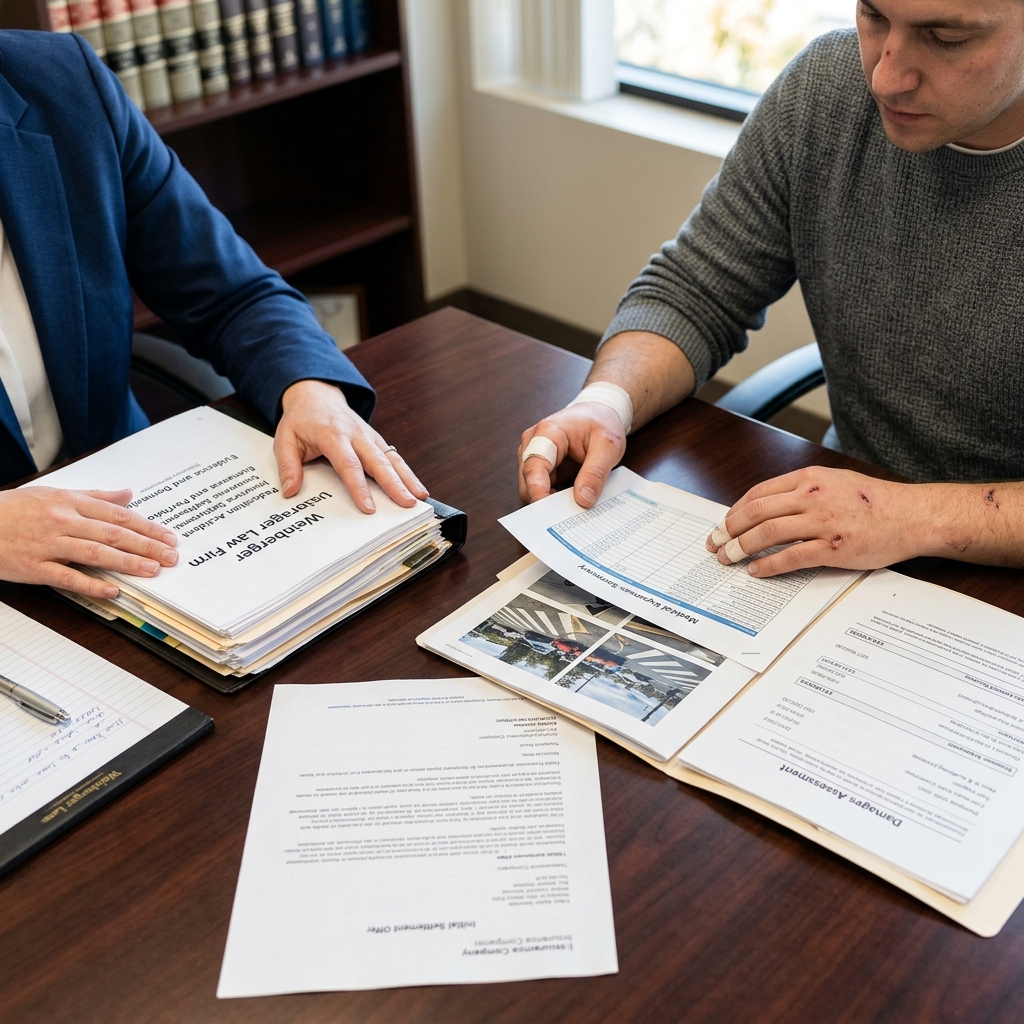
Document every conversation. Send follow-up emails summarizing what was discussed and agreed. This creates a record protecting you later. Consider engaging a pedestrian accident lawyer before formal negotiation. An attorney’s involvement signals serious intent and typically accelerates settlement discussions while protecting you from costly mistakes.
Common Settlement Mistakes to Avoid
Desperation and pressure lead many injured pedestrians to accept settlements they later regret. These mistakes are preventable and often irreversible.
Signing releases before understanding your full injury scope is catastrophic. Some injuries—chronic pain, psychological effects, future surgery—take months to manifest. Once you sign a release, you surrender all future claims. Never sign without explicit clarity that all injuries are resolved. Ask your attorney to review every document before you execute it.
Accepting settlement in lump cash payments without legal review invites tax complications and disqualification from benefits. Structured settlements, which distribute payment over time, offer tax advantages and protect income-replacement portions from benefit clawback. We guide you through these nuances.
Undervaluing non-economic damages through guilt or false modesty costs you substantially. Judges and juries award pain and suffering regularly. You don’t owe the at-fault driver an apology through a discounted claim. Speaking with the insurance company alone, especially before consulting an attorney, often results in recorded statements used against you later. The adjuster is not your advocate. Anything you say can reduce your claim value.
Timeline and Statute of Limitations for Filing
In California, the statute of limitations for pedestrian accident claims is generally two years from the date of injury. This is your hard deadline. Missing it eliminates your right to recover, regardless of claim merit. For claims against government entities (city buses, municipal vehicles), the deadline is shorter—often six months for a claim notice, then two years for litigation.
The timeline also matters strategically. Insurance companies know your deadline. As it approaches, they may reduce settlement offers, betting you’ll accept rather than litigate. Starting negotiations early, with months remaining before the deadline, gives you leverage and time to pursue litigation if necessary.
Your recovery timeline also affects claim value. Settling before maximum medical improvement (when your condition stabilizes) risks undervaluation. However, waiting too long signals you’re comfortable with your condition, potentially reducing pain-and-suffering awards. Balance is essential. Work with legal counsel to time settlement optimally, understanding both your medical status and legal deadlines.
How We Maximize Your Settlement Recovery
We maximize your recovery through comprehensive investigation, detailed damages documentation, and strategic negotiation backed by litigation readiness. When you retain us, the burden shifts from your shoulders to ours.
We immediately preserve evidence: obtaining traffic camera footage, photographing the scene, interviewing witnesses, and accessing police reports. We conduct a thorough case evaluation, analyzing accident facts, liability strength, and injury impact with clarity about case value and realistic settlement range. This prevents you from anchoring to inflated expectations or accepting unfairly low offers.
Our team coordinates medical documentation, ensuring all treatment providers submit complete records and bills. We track lost wages, calculate future medical needs, and quantify non-economic damages based on injury severity and comparable cases. This transforms scattered receipts into a cohesive, persuasive damages narrative.
During negotiation, we leverage these facts. Insurance companies respect detailed, evidence-backed demands. They know we’re prepared to litigate if necessary, which shifts their motivation toward reasonable settlement. We pursue full and fair compensation through confident, informed negotiation. No fee unless we recover for you. Our contingency model means we invest in your case because we believe in its merit. We share your success.

When Litigation Becomes Necessary
Most pedestrian claims settle without trial. But when insurance companies refuse reasonable offers or dispute liability without factual basis, litigation becomes the path to full compensation.
We litigate strategically. Pre-trial discovery compels the insurance company and at-fault driver to produce evidence under oath. Depositions lock testimony into the record. Expert witnesses—accident reconstructionists, medical specialists, economists—strengthen complex claims. The threat of trial often motivates settlement more effectively than demand letters.
If trial proceeds, we present evidence to a judge or jury. Pedestrian cases resonate in court. Juries sympathize with vulnerable victims and hold drivers accountable for careless conduct. Detailed, organized evidence presentation builds compelling narratives judges and juries understand and reward.
Litigation costs more and takes longer than settlement, but it secures substantially larger awards when insurers undervalue claims or refuse fair offers. Our litigation readiness—files organized, evidence preserved, experts retained—ensures you’re protected at every stage. We stand ready to escalate your case aggressively if negotiation reaches an impasse.
When to Contact an Attorney
You have rights after an accident. We’re ready to protect them. Contact us for a free consultation to review your case, discuss liability and damages, and explore your path to recovery. We’ll answer your questions clearly, explain your options without pressure, and advise whether negotiation or litigation best serves your interests. Time is limited. Act now. Reach out to Weinberger Law Firm today and let us pursue the compensation you deserve.
For further reading: Pedestrian accident lawyer.
Contact us today for a Free Case Consultation!
Frequently Asked Questions (FAQ)
What should I do immediately after a pedestrian accident?
First, prioritize your health and get medical care right away, even if your injuries seem minor. Preserve any evidence at the scene by taking photos of the accident location, vehicle damage, traffic signals, and your injuries if possible. Document the driver’s information, get witness contact details, and report the incident to police. Then contact us for a free consultation so we can guide you through the next steps and protect your rights before the statute of limitations expires.
How do we help maximize my pedestrian accident settlement?
We thoroughly investigate all available evidence, including medical records, police reports, witness statements, and accident reconstruction when needed. Our team negotiates aggressively with insurance companies to ensure they account for your medical bills, lost wages, pain and suffering, and future damages. We’re prepared to pursue litigation if the insurance company refuses fair compensation, and you pay nothing unless we recover for you.
What is the time limit for filing a pedestrian injury claim in California?
California’s statute of limitations gives you two years from the date of your accident to file a lawsuit, but we strongly recommend acting much sooner. The longer you wait, the harder it becomes to gather fresh evidence and locate witnesses. Contact us immediately so we can preserve critical information and build the strongest case for your recovery.