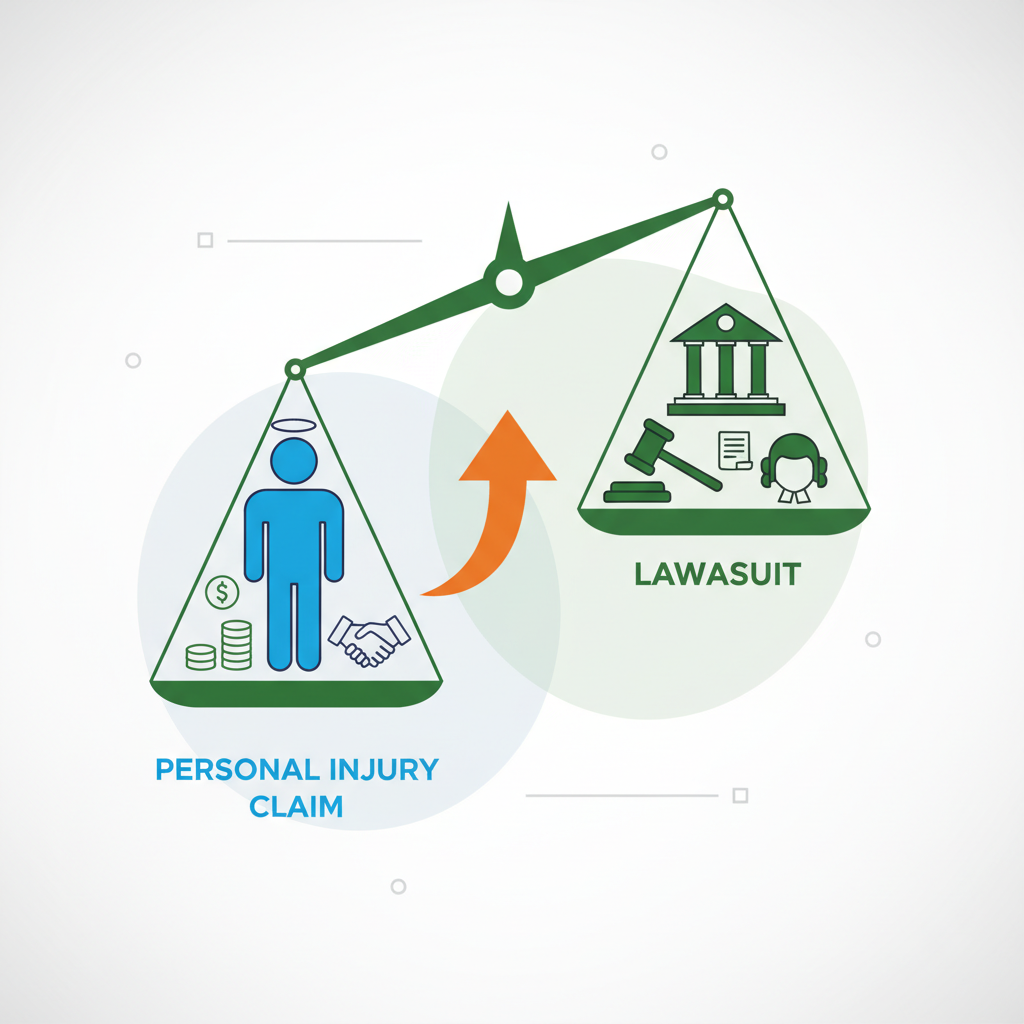
Introduction to Personal Injury
After an accident, you’ll face a key decision: pursue an insurance claim or file a lawsuit. Understanding the personal injury claim lawsuit difference helps you choose the path that best protects your rights and timeline.
A personal injury claim is usually the first step. You notify the at-fault party’s insurer, present evidence, and negotiate a settlement. This route is often faster and less costly, making it a common choice for clear-liability crashes or moderate injuries—for example, a Sacramento rear-end collision with soft-tissue injuries and a few weeks off work.
A lawsuit begins when you file a complaint in civil court because negotiations stalled, liability is disputed, or your losses are significant. Filing puts formal deadlines in place (discovery, motions) and, if needed, leads to trial. Lawsuits can add leverage in settlement negotiations, but they demand more time and litigation readiness.
Injury claim lawsuit comparison at a glance:
- Process: Claim = adjuster review and settlement talks; Lawsuit = pleadings, discovery, potential trial in personal injury court.
- Timeline: Claims can resolve in months; lawsuits may take a year or longer.
- Proof: Both require evidence; lawsuits involve depositions and expert testimony.
- Outcome: Settlement versus trial—most cases still settle, but trial may be needed to obtain fair value.
Common California specifics:
- Statute of limitations: Generally 2 years from the injury; 6 months to file a government claim for public entity cases.
- Comparative negligence: California is pure comparative negligence—your recovery is reduced by your percentage of fault.
- Examples: Grocery store slip-and-fall with disputed notice may require suit; a defective product causing burns often needs litigation to uncover design records.
Key evidence to preserve for either path includes medical records, photos, witness statements, repair estimates, and wage documentation. Your accident legal options should be guided by injury severity, liability clarity, insurance limits, and how prepared you are for filing injury claim paperwork versus litigating in court.
Understanding a Personal Injury Claim
A personal injury claim is a pre-lawsuit request for compensation made to an insurance company after you’re hurt by someone else’s negligence. In California, this usually means a third-party claim against the at-fault driver’s liability insurer; it can also involve first-party coverages like MedPay or uninsured/underinsured motorist (UM/UIM). Understanding the personal injury claim lawsuit difference helps you decide which path protects your recovery.
A claim seeks settlement without going to court and covers economic and non-economic losses, including medical bills, future treatment, lost wages, loss of earning capacity, and pain and suffering. California’s pure comparative negligence reduces recovery by your percentage of fault, so evidence that clarifies liability can significantly affect value.
Key steps in filing an injury claim:
- Get prompt medical care and follow treatment plans.
- Notify applicable insurers; avoid recorded statements to the other driver’s insurer.
- Preserve evidence: photos, witness names, vehicle data, and scene measurements.
- Track damages: medical records/bills, mileage, and employer wage verification.
- Send a demand letter detailing liability, injuries, and damages with supporting documentation.
- Negotiate and confirm any healthcare liens and policy limits before accepting payment.
- Watch deadlines: generally two years to file in California; only six months to present a government claim.
Useful evidence includes the police report, traffic camera footage, repair estimates, expert opinions on causation, and day-in-the-life notes documenting pain and limitations.
In an injury claim lawsuit comparison, claims are faster, less expensive, and private, but insurers control access to information and may undervalue serious injuries. When negotiations stall, liability is disputed, policy limits are inadequate, or the statute of limitations approaches, filing a lawsuit in personal injury court (California Superior Court) preserves your rights and opens formal discovery. That’s the practical line between settlement versus trial: claims aim to resolve informally; lawsuits position your case for court while still leaving room to settle before verdict.
The Claim Process: Negotiation Phase
Once your injuries stabilize and the evidence is assembled, negotiations with the at‑fault insurer begin. This is where the personal injury claim lawsuit difference becomes clear: you’re seeking a pre‑litigation settlement rather than asking a court to decide. In this injury claim lawsuit comparison stage, leverage comes from strong facts, complete documentation, and a credible readiness to litigate if needed.
A persuasive demand package typically includes:
- A clear liability summary (police report, witness statements, photos, video)
- Medical records and bills, with physician opinions linking injuries to the accident
- Proof of lost wages and reduced earning capacity
- Evidence of pain, suffering, and daily life impact (journals, family statements)
- Repair or replacement costs and other out‑of‑pocket losses
Example: After a rear‑end crash on I‑80, records show a herniated disc, 16 weeks off work, and ongoing therapy. Your attorney presents a time‑limited demand reflecting medical expenses, wage loss, and non‑economic damages, calibrated to policy limits and venue.
Insurers commonly respond with a reservation of rights and counteroffers. They may dispute fault (pure comparative negligence in California), causation (pre‑existing conditions), or the necessity of care. Your lawyer manages adjuster communications, refuses unfair recorded statements, and uses medical opinions and accident reconstruction to rebut pushback. If negotiations stall or offers remain below fair value, filing injury claim paperwork in court becomes the next step—often increasing pressure to settle.
Key drivers of settlement value:
- Past and future medical costs, including surgery or rehab
- Lost wages and diminished earning capacity
- Pain, suffering, and loss of enjoyment
- Policy limits and number of claimants
- Liability strength and venue (e.g., Sacramento juries)
- Lien resolution (Medicare, Medi‑Cal, private insurance, hospital liens)
Deadlines matter. In California, most injury claims have a two‑year statute of limitations; claims against government entities require an administrative claim within six months. Contractual deadlines can apply to UM/UIM claims. Negotiation is one of your core accident legal options, but being ready for personal injury court shapes settlement versus trial outcomes and protects your rights.
What Leads to a Personal Injury Lawsuit?
Most cases start with an insurance claim. When negotiations stall or your rights are at risk, filing a lawsuit becomes the next step. Understanding the personal injury claim lawsuit difference helps you evaluate your accident legal options and protect your recovery.
Common reasons a claim turns into a lawsuit:
- Fault is disputed. Insurers may blame you or another party to reduce liability. In California’s pure comparative negligence system, even partial fault arguments can slash your settlement.
- Causation is challenged. Adjusters often claim your injuries are “preexisting” or not accident-related, especially with soft-tissue injuries or delayed symptoms.
- Inadequate offers. When an insurer won’t cover medical care, future treatment, lost wages, or pain and suffering, a suit may be needed to seek full damages.
- Policy limits issues. Catastrophic injuries can exceed the at-fault driver’s limits; litigation may be required to pursue personal assets, umbrella coverage, or bad-faith exposure.
- Evidence disputes. If a store won’t release surveillance after a slip-and-fall, or a trucking company withholds maintenance logs, subpoena power in litigation helps secure proof.
- Multiple parties or complex defects. Product liability, rideshare crashes, or chain-reaction collisions often need court-supervised discovery to sort out responsibility.
- Coverage denials. When insurers deny coverage or delay unreasonably, a lawsuit can compel action and preserve rights.
- Deadline pressure. In California, most personal injury claims have a two-year statute of limitations from the date of injury. Claims against government entities require a government claim within six months; if rejected, you must sue within strict timeframes.
Examples:
- A rear-end crash with a “low impact” argument and a minimal offer.
- A premises liability case where hazard logs and video are withheld.
- A drunk driving collision where punitive damages may be appropriate.
Even after filing, most cases resolve before trial. But moving into personal injury court unlocks discovery, depositions, expert testimony, and motions that can shift leverage in the settlement versus trial decision. For a clear injury claim lawsuit comparison and guidance on filing injury claim paperwork versus filing suit, an experienced California attorney can evaluate your facts and timing.
Defining a Personal Injury Lawsuit
A personal injury lawsuit is a formal civil action filed in court to seek compensation when you’ve been harmed by another’s negligence. It is different from an insurance claim, which is an out-of-court request for payment. Understanding the personal injury claim lawsuit difference helps you choose the right accident legal options for your situation.
How a lawsuit differs from an insurance claim (injury claim lawsuit comparison):
- Forum: Claims are handled by insurance adjusters; lawsuits are litigated before a judge or jury in the civil division of the California Superior Court (often referred to as personal injury court).
- Process: A claim involves correspondence and negotiation; a lawsuit requires a filed Complaint, service on the defendant, formal discovery, motions, and potential trial.
- Rules and evidence: Claims rely on submitted records; lawsuits follow strict rules of evidence and civil procedure, allowing subpoenas, depositions, and expert testimony.
- Decision-maker: Claims settle by agreement; in court, a judge or jury decides fault and damages if no settlement is reached.
- Timeline and leverage: Lawsuits typically take longer but can increase leverage through disclosure of evidence and trial risk.
In California, most personal injury suits must be filed within two years of the injury. If a government entity is involved, you generally must first file a government claim within six months before suing. Filing injury claim with the at-fault party’s insurer is common, but if liability is denied or offers are inadequate, a lawsuit preserves your rights. After filing, the case moves through pleadings, discovery, possible mediation, and—if necessary—trial. The burden of proof is a preponderance of the evidence. Settlement versus trial remains an option at every stage.
Examples:
- A rear-end crash where the insurer blames you: litigation can compel cell phone records and vehicle data to prove distraction and speed.
- A slip and fall at a grocery store: discovery can obtain maintenance logs and surveillance video to establish notice.
- A defective product injury: experts can test the product and link the defect to your harm.
The Lawsuit Process: Court and Trial
When settlement talks stall, the personal injury claim lawsuit difference becomes clear: a claim is an insurance negotiation, while a lawsuit invokes the court’s authority to resolve disputes. If an insurer denies liability or undervalues damages, your accident legal options shift toward filing suit to preserve evidence, compel answers under oath, and put your case before a jury if needed.
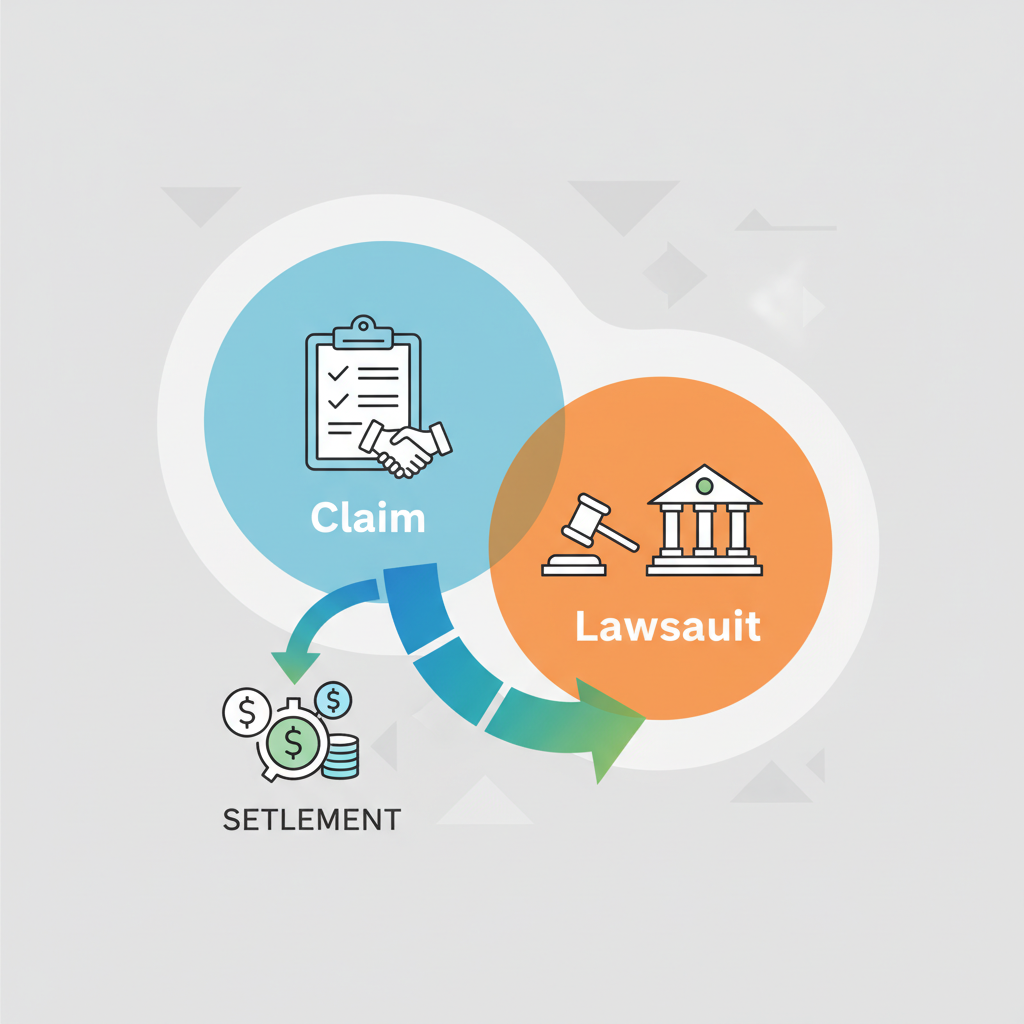
The lawsuit begins by filing a Complaint in California Superior Court (for Sacramento cases, typically the Sacramento County Superior Court). The defendant is served and files an Answer. The court sets deadlines at a Case Management Conference. Most California personal injury lawsuits resolve before trial, but litigation positions your case for a stronger settlement versus trial decision.
Key stages you can expect:
- Discovery: Written questions (interrogatories), document requests (e.g., medical records, photos, vehicle data), and depositions of parties, eyewitnesses, doctors, and company reps.
- Expert work: Disclosure and depositions of experts in medicine, accident reconstruction, economics, or vocational loss.
- Motions: Requests to narrow issues or exclude improper evidence (motions in limine) before entering personal injury court.
- Settlement efforts: Mediation and a Mandatory Settlement Conference test both sides’ risk and value assessments.
If a case proceeds to trial, the process includes jury selection, opening statements, witness testimony, exhibits, and closing arguments. The plaintiff must prove negligence and damages by a preponderance of the evidence. California’s pure comparative negligence may reduce recovery by your percentage of fault. In civil trials, 9 of 12 jurors can reach a verdict. Damages can include medical expenses, lost income, pain and suffering, and future losses.
Example: After a rear-end crash with disputed texting, an insurer offers far below medical costs. Suit is filed; discovery uncovers the driver’s phone use via subpoenaed records. Faced with this evidence on the eve of trial, the carrier increases its offer substantially. If not, Weinberger Law Firm is prepared to try the case and protect your rights. This injury claim lawsuit comparison shows why litigation readiness often maximizes results after filing injury claim negotiations fail.
Key Distinctions Between Claim and Lawsuit
A personal injury claim is an insurance process; a lawsuit is a court process. Understanding the personal injury claim lawsuit difference helps you choose the most effective path after an accident.
In a claim, you (or your attorney) present evidence of fault and damages to an insurer—either the at-fault party’s carrier (third-party) or your own policy (first-party, such as MedPay or UM/UIM). Most claims aim for a negotiated settlement without filing in court.
A lawsuit begins by filing a complaint in California Superior Court and formally serving the defendant. The case then moves through discovery, motions, settlement talks, and, if unresolved, trial.
Key injury claim lawsuit comparison:
- Decision-maker:
– Claim: Insurance adjuster controls settlement authority.
– Lawsuit: Judge or jury decides liability and damages.
- Process and tools:
– Claim: Medical records, bills, photos, and statements exchanged informally.
– Lawsuit: Formal discovery, depositions, subpoenas, and expert testimony.
- Timeline:
– Claim: Often resolved in weeks to several months.
– Lawsuit: Commonly 12–24+ months, depending on court calendar and complexity.
- Costs:
– Claim: Minimal out-of-pocket; fewer expert costs.
– Lawsuit: Court filing fees, expert/medical expert costs; attorneys typically advance costs and recover from settlement or verdict.
- Confidentiality:
– Claim: Settlements often private.
– Lawsuit: Filings and trials are public record.
- Control and risk:
– Claim: More control over settlement versus trial.
– Lawsuit: Potentially higher recovery, but with uncertainty at trial.
- Damages:
– Both seek medical expenses, lost wages, pain and suffering, property damage; punitive damages are rarely paid in claims and more often pursued in court.
Deadlines matter. In California, most personal injury cases must be filed within two years of the injury. Claims against a public entity require a government claim within six months before suit. UM/UIM disputes typically proceed to binding arbitration rather than personal injury court.
Example: A clear-liability rear-end crash with straightforward treatment may settle through a claim. A disputed slip-and-fall where the store denies notice of a hazard may require filing injury claim paperwork, then litigation to obtain surveillance footage and witness testimony.
Factors for Deciding Your Path
Deciding between an insurance claim and a lawsuit hinges on practical, legal, and strategic factors. Understanding the personal injury claim lawsuit difference can clarify your accident legal options and help protect your rights under California law.
Key considerations in an injury claim lawsuit comparison:

- Liability and evidence: Clear fault with strong evidence (police report, eyewitnesses, video, vehicle black box data) often supports filing an injury claim and negotiating a settlement. Disputed liability or missing evidence may favor a lawsuit to use discovery and subpoenas.
- Injury severity and timing: Wait until you reach maximum medical improvement so damages are fully known. Catastrophic injuries, future care, and lost earning capacity typically increase the need for litigation and expert testimony.
- Insurance limits and coverage: If your losses exceed the at-fault driver’s policy limits, a lawsuit may be needed to pursue additional assets or umbrella coverage. Uninsured/underinsured motorist claims follow different procedures and timelines.
- Insurer conduct: Unreasonable delays, low offers, or liability denials can make filing suit the most effective step. A lawsuit also preserves bad-faith remedies where applicable.
- Comparative fault: California’s pure comparative negligence reduces recovery by your percentage of fault. If the insurer is over-allocating fault, a lawsuit may be necessary to contest it.
- Deadlines: In California, most personal injury cases have a two-year statute of limitations; claims involving public entities require an administrative claim within six months before court filings.
- Process, cost, and privacy: Claims are typically faster and confidential; litigation in civil court (personal injury court) is public, can take 12–24+ months, and involves added costs (experts, depositions). However, filing can increase leverage.
Examples:
- Rear-end crash with clear fault, moderate injuries, and adequate policy limits: settle via claim after full medical documentation.
- Slip-and-fall with disputed notice and severe injuries exceeding limits: file suit to obtain surveillance, maintenance records, and expert support.
Remember, settlement versus trial is not either/or—negotiations often continue after filing a lawsuit. At Weinberger Law Firm, we evaluate evidence, damages, insurance, and deadlines to chart the best path for filing injury claim paperwork or proceeding in court.
Pros and Cons of Settling
Settlements resolve most personal injury cases, but deciding to accept one requires a clear view of the personal injury claim lawsuit difference. In an injury claim lawsuit comparison, settlement versus trial involves tradeoffs in time, cost, risk, and potential recovery.
Benefits of settling:
- Certainty and speed: Many claims resolve in months, avoiding the long timelines of personal injury court.
- Lower costs: You avoid many litigation expenses (expert fees, depositions, trial exhibits) that reduce your net recovery.
- Privacy and control: Settlements can be confidential and allow you to help shape terms (payment timing, structured payouts).
- Cash flow and medical lien management: Insurer payments can be timed to address ongoing care, and your attorney can often negotiate down medical liens.
- Tax advantages: In many cases, compensatory damages for physical injuries are not taxable; by contrast, interest on a judgment and punitive damages (rare in settlements) can be taxable.
Drawbacks of settling:
- Potential undervaluation: Insurers may discount pain and suffering, future care, or disputed injuries.
- Finality: You sign a release; there’s no appeal if later complications arise.
- Leverage limits: Without filing injury claim litigation, some carriers won’t offer full value, especially in high-damages cases.
- Policy limits constraints: Available insurance may cap recovery despite severe losses.
When settlement makes sense:
- Clear liability with moderate, well-documented injuries (e.g., rear-end collision causing soft-tissue injuries and short-term wage loss) where a prompt, fair offer covers medicals, lost income, and pain and suffering.
- Cases where timely funds for treatment are critical and trial delay would harm recovery.
When trial may be better:
- Catastrophic injuries or long-term disabilities with lowball offers.
- Disputed liability where discovery and expert testimony can strengthen proof.
- Cases with potential punitive damages or where public accountability matters.
Weinberger Law Firm evaluates medical records, future damages, and insurance coverage to maximize compensation, pressing for fair settlements and staying fully prepared for trial when that best aligns with your accident legal options.
Advantages and Risks of Litigation
Litigation changes leverage in ways a simple insurance claim cannot. The personal injury claim lawsuit difference often comes down to access to evidence, enforceable timelines, and who decides the value of your case.
Key advantages of going to court:
- Discovery power: Subpoenas and depositions can secure surveillance video, driver phone records, maintenance logs, and witness testimony that insurers might ignore in a pre-suit claim. Example: In a grocery slip-and-fall, litigation can force production of cleaning schedules and camera footage that establish notice of a hazard.
- Court oversight: Judges can compel stalled defendants to respond and set firm deadlines, reducing insurer delay tactics.
- Potentially higher recovery: Juries may award full pain and suffering, future medical care, and lost earning capacity. In egregious conduct, punitive damages may be available.
- Settlement leverage: Trial readiness, expert disclosures, and California CCP 998 offers can pressure insurers to pay fair value; cost-shifting and potential interest can increase their risk.
Risks to weigh in an injury claim lawsuit comparison:
- Time and stress: A case can take 12–24+ months with depositions, medical exams, hearings, and a public trial in personal injury court.
- Costs: Expert witnesses and trial preparation are expensive. Many firms advance these costs, but they are typically reimbursed from any recovery. If you don’t beat a defense CCP 998 offer, you could owe the other side’s post-offer expert costs.
- Uncertainty: Juries are unpredictable. Comparative negligence can reduce damages, and a defense verdict means no recovery.
- Privacy and scrutiny: Your medical history, prior injuries, and social media may be examined. Court filings become part of the public record.
- Collectability: Insurance limits can cap real-world recovery even after a favorable verdict.
When litigation makes sense:
- Severe injuries or permanent impairment
- Disputed liability or causation
- Lowball offers despite clear damages
- Bad-faith delay or denial
- Government defendants with strict claim deadlines (often six months) or a two-year statute for most California cases
Strategic counsel can map your accident legal options, weigh settlement versus trial, and decide whether filing injury claim paperwork is enough or a lawsuit is needed to maximize compensation.
How a Lawyer Guides Your Case
From day one, your attorney explains the personal injury claim lawsuit difference and maps your accident legal options. In the claim phase, the goal is to resolve your case with the insurer through evidence-backed negotiation. If the carrier won’t offer fair value, your lawyer prepares to litigate so a jury can decide damages.
Early steps typically include:
- Investigating liability: police reports, scene photos, video, witness statements
- Preserving evidence: vehicle downloads, incident reports, store surveillance
- Documenting injuries: medical records, treatment plans, prognosis
- Calculating damages: medical bills, lost income, future care, pain and suffering
- Identifying all at‑fault parties and insurance policies (including UM/UIM)
In the insurance stage, your lawyer handles filing injury claim paperwork, coordinates your medical documentation, and sends a detailed demand package. For example, after a rear-end crash, counsel may use biomechanics data and MRI findings to challenge a “minor impact” argument and push back against a low offer, positioning your case for a stronger settlement versus trial outcome.
If negotiations stall or the statute of limitations is approaching (generally two years in California; much shorter for claims against public entities), your lawyer files a lawsuit in the appropriate personal injury court, such as Sacramento County Superior Court. For government defendants, a Government Claim must usually be filed within six months before suit.
Litigation steps your attorney manages:
- Filing and serving the complaint; responding to defenses
- Discovery: written requests, depositions, subpoenas for records
- Expert strategy: accident reconstruction, medical, life‑care planning, economics
- Law and motion practice (e.g., summary judgment, evidentiary issues)
- Mediation or judicial settlement conferences
- Trial preparation and presentation if settlement isn’t reached
Throughout, your lawyer offers clear injury claim lawsuit comparison guidance, advising when to accept a settlement or proceed to trial based on evidence, risk, and net recovery. They also address liens and subrogation (health insurance, Medicare), helping maximize your final compensation.
Navigating Your Legal Options
After a crash or fall, your accident legal options generally start with an insurance claim and may progress to a civil lawsuit if needed. Understanding the personal injury claim lawsuit difference helps you protect your rights and maximize compensation.
Here’s a brief injury claim lawsuit comparison:
- Where it happens: A claim is handled by the at-fault party’s insurer; a lawsuit is filed in personal injury court.
- Decision-maker: Claims are decided by insurance adjusters; lawsuits are decided by a judge or jury.
- Process and proof: Claims rely on medical records, bills, and negotiations; lawsuits involve discovery, depositions, expert testimony, and rules of evidence.
- Timeline and leverage: Claims can resolve faster but may result in low offers; lawsuits increase leverage through the threat of verdict.
- Outcome: Claims end in a settlement; lawsuits can end in settlement versus trial, with a verdict if no agreement is reached.
- Costs: Claims are less costly; litigation adds filing fees, expert costs, and time, though many attorneys advance costs.
When a claim may suffice:
- Liability is clear (e.g., rear-end collision with police report).
- Injuries are moderate and recovery is documented.
- Insurance limits are adequate to cover losses.
When a lawsuit is prudent:
- The insurer disputes fault or your medical causation.
- Offers don’t cover medical bills, lost wages, or future care.
- Serious injuries, permanent impairment, or wrongful death.
- Deadlines are near. In California, most personal injury cases have a two-year statute of limitations from the injury date. Claims against government entities require an administrative claim within six months, and filing an insurance claim does not pause these deadlines.
Steps to filing injury claim:
- Seek medical care and follow treatment plans.
- Preserve evidence (photos, witness info, police report).
- Notify insurers; avoid recorded statements without counsel.
- Submit a demand package outlining liability, damages, and policy limits.
If a fair settlement isn’t reached, your attorney can file a complaint, conduct discovery, pursue mediation, and prepare for trial while continuing to negotiate. California’s pure comparative negligence rules may reduce recovery by your percentage of fault, so clear evidence and sound strategy are critical.
Call to Action
Contact us today for a Free Case Consultation!