
Table of Contents
- Why Slip and Fall Accidents Demand Immediate Legal Action
- Understanding Your Rights After a Slip and Fall in Sacramento
- How Property Owner Negligence Determines Your Case Value
- Preserving Evidence to Strengthen Your Settlement Claim
- Medical Documentation and Its Role in Maximizing Compensation
- Insurance Company Tactics and How We Counter Them
- Our Approach to Negotiating Full and Fair Settlements
- Timeline and Statute of Limitations for Filing Your Claim
- What You Can Recover: Medical Bills, Lost Wages, and Beyond
- Why You Need Experienced Legal Representation for Your Case
- Contact Weinberger Law Firm for Your Free Consultation
- Frequently Asked Questions (FAQ)
Why Slip and Fall Accidents Demand Immediate Legal Action
If you’ve slipped and fallen on someone else’s property in Sacramento, time is working against you. The moment after an accident is when evidence is freshest, witness memories are clearest, and the property owner’s maintenance records are easiest to obtain. We understand that recovering from a slip and fall injury is physically and emotionally demanding, but acting quickly can mean the difference between a fair settlement and a missed opportunity for compensation.
Property owners and their insurance companies know that delays work in their favor. The longer you wait, the harder it becomes to reconstruct what happened. Security camera footage gets overwritten or deleted, witnesses become harder to locate, and the scene itself may change. You have rights after an accident, and preserving them requires prompt action.
The statute of limitations in California gives you a limited window to file a premises liability claim. For most personal injury cases, you have two years from the date of injury to file suit. That deadline may sound distant, but investigations, negotiations, and settlement discussions take time. Waiting even a few months can complicate your case unnecessarily.
Your immediate action items are straightforward: seek medical care if you haven’t already, document the scene and your injuries with photos, collect contact information from any witnesses, and report the incident to the property owner or manager. Then contact us for a free consultation.
Understanding Your Rights After a Slip and Fall in Sacramento
You have rights after an accident. California law holds property owners and managers responsible when they fail to maintain safe conditions or warn visitors of known hazards. This is called premises liability, and it applies whether you were injured in a grocery store, apartment building, restaurant, or other commercial space.
The core principle is straightforward: property owners owe visitors a duty of care. They must either fix hazardous conditions, warn people about them, or restrict access to dangerous areas. If they breach that duty and you’re injured as a result of their negligence, they’re liable for your damages.
Your status on the property matters. If you were a customer, employee, or invited guest, the owner owes you a higher standard of care than they would owe to a trespasser. Sacramento courts generally expect property owners to inspect their premises regularly, respond to reported hazards promptly, and take reasonable steps to prevent foreseeable accidents.
Understanding these legal principles helps you recognize whether you have a valid claim. If the property owner knew about the hazard (or should have known through reasonable inspection), and failed to address it while you were injured, you likely have grounds for compensation.
How Property Owner Negligence Determines Your Case Value
Your settlement value hinges on proving negligence. We will investigate all available evidence to establish four critical elements: the owner’s duty to maintain the property, their breach of that duty, your injury directly caused by that breach, and the damages you’ve suffered.
Consider a practical example. A supermarket manager notices water pooling near the deli counter but doesn’t place warning signs or mop it up for hours. A customer slips, fractures their ankle, and requires surgery. The manager’s failure to act creates clear negligence. The store’s liability is strong, and your settlement reflects the full scope of damages.
Property owner negligence can stem from several scenarios:
- Allowing spills to remain unattended for an unreasonable period
- Failing to maintain flooring, stairs, or handrails
- Not warning visitors of known hazards with clear signage
- Inadequate lighting in parking lots, hallways, or stairwells
- Negligent property maintenance or delayed repairs
The stronger the evidence of negligence, the higher your potential settlement. We examine the property owner’s maintenance logs, employee policies, prior complaints, and inspection records to build a comprehensive picture of how their negligence allowed the accident to occur.
Preserving Evidence to Strengthen Your Settlement Claim
Evidence is your foundation. The sooner you preserve it, the stronger your claim becomes. Here’s what matters most after a slip and fall:

At the scene: Take photos and videos from multiple angles. Capture the hazardous condition that caused your fall, the surrounding area, lighting conditions, and any warning signs (or lack thereof). Include wide shots showing the property layout and close-ups of the specific hazard.
Witness information: Get the full names, phone numbers, and email addresses of anyone who saw you fall or observed the hazardous condition. Eyewitness testimony is powerful in settlement negotiations.
Property records: Request an incident report from the property owner or manager. Ask for maintenance records, inspection logs, and any prior complaints about similar hazards. Document everything in writing.
Medical evidence: Preserve all records related to your injury, including emergency room visit documentation, diagnostic imaging, surgical reports, and ongoing treatment notes. We will investigate all available evidence, including medical records, to establish the full extent of your injury.
Security footage: Ask immediately whether the property has surveillance cameras. If so, request preservation of footage from the incident. This evidence often becomes unavailable after 30 to 60 days, as systems overwrite older recordings.
Your own documentation: Keep a detailed journal of your symptoms, pain levels, medical appointments, and how the injury affects your daily activities. This personal record helps quantify non-economic damages like pain and suffering.
Preserve any evidence and get medical care. Acting on these steps immediately strengthens your case substantially.
Medical Documentation and Its Role in Maximizing Compensation
Medical bills and lost wages form the foundation of economic damages, but the documentation supporting them is equally important. Insurance adjusters scrutinize medical records carefully, so comprehensive, timely treatment is your best ally.
Seek medical attention as soon as possible after your fall, even if you think your injury is minor. Some serious injuries like internal bleeding or head trauma don’t show symptoms immediately. A prompt medical evaluation protects your health and creates an official record linking your injuries directly to the accident.
Your medical documentation should include:
- Initial emergency room or urgent care visit records
- Imaging reports (X-rays, MRIs, CT scans)
- Physician diagnoses and treatment plans
- Physical therapy or rehabilitation notes
- Surgical reports if applicable
- Prescription records and pharmacy documentation
- Follow-up appointment notes tracking your recovery
Each document strengthens your claim by establishing the severity of your injury and the extent of treatment required. If you later develop complications or experience slower-than-expected recovery, updated medical records demonstrate that the original accident caused ongoing harm.
We pursue full and fair compensation by presenting a detailed medical narrative to the insurance company. We work with your healthcare providers to obtain complete records, and we may consult medical experts to establish the full cost of your injuries, including long-term care if necessary.
Insurance Company Tactics and How We Counter Them
Insurance companies employ standard strategies to minimize settlement payouts. Recognizing these tactics helps you understand why professional legal representation matters.
The low initial offer: Adjusters frequently propose settlements far below actual claim value, hoping you’ll accept quickly due to financial pressure or frustration. This isn’t a genuine offer; it’s a negotiating starting point designed to save the insurer money.
Seeking recorded statements: Adjusters may request a recorded call shortly after your accident. They use recorded statements to identify inconsistencies or phrases they can later use to undermine your credibility. We advise clients to decline recorded statements and direct all communication through our office.
Downplaying injury severity: Insurers question treatment necessity, suggest your injuries weren’t as serious as your medical records indicate, or imply you’re exaggerating symptoms. They may compare your case to lower-value settlements rather than similar, higher-value cases.
Delaying response: Insurance companies sometimes respond slowly to evidence requests, medical record inquiries, or settlement proposals. Delay tactics pressure you into accepting unfavorable offers due to financial hardship.

Comparative fault arguments: If the insurer can assign even partial fault to you, they reduce their settlement obligation. They may argue you were inattentive or failed to notice the hazard.
We counter these tactics by maintaining organized communication, presenting comprehensive evidence upfront, and pursuing settlement negotiation for fall injuries strategically. We know the playbook, and we negotiate from strength rather than desperation.
Our Approach to Negotiating Full and Fair Settlements
We pursue full and fair compensation through a disciplined negotiation process. Rather than accepting the first offer or trading demands back and forth, we build a comprehensive case that justifies a specific, well-supported settlement figure.
Our approach begins with thorough case evaluation. We investigate all available evidence, including photographs, witness statements, property maintenance records, and your complete medical history. We calculate economic damages precisely: medical bills, lost wages, transportation costs, and anticipated future care. We also assess non-economic damages like pain, suffering, and diminished quality of life.
Once we’ve documented your case comprehensively, we present a detailed settlement demand to the insurance company. This demand includes organized evidence, medical records, expert opinions if relevant, and clear explanations of why the proposed figure is reasonable and justified.
Insurance companies take well-documented demands seriously. They recognize that inadequate settlement offers lead to litigation, which costs them more in attorney fees and court expenses. A strong written demand often motivates insurers to propose reasonable settlements rather than risk a trial.
If settlement negotiations stall, we’re prepared to litigate. That willingness to pursue litigation in court strengthens our negotiating position. Insurance companies know we don’t accept unreasonable offers, so they negotiate more fairly from the start.
Timeline and Statute of Limitations for Filing Your Claim
California law sets strict deadlines for filing slip and fall claims. The statute of limitations, or the filing deadline, is two years from the date of your injury for most personal injury cases. This may sound like plenty of time, but it passes quickly.
Here’s why the timeline matters: investigations take weeks or months. Obtaining property records, medical documentation, and witness statements requires time and coordination. Settlement negotiations can span several months or longer. If you wait until month 20 of the two-year window before contacting an attorney, you’ll have very little time to investigate and negotiate before the deadline approaches.
Additionally, some circumstances may shorten the deadline. If the property owner is a government agency (a city, county, or state entity), you may be required to file a claim notice within 6 months of your injury, before you can pursue a lawsuit. Missing this deadline typically bars your claim entirely.
Contact us for a free consultation as soon as possible after your injury. We can clarify applicable deadlines, begin investigation promptly, and ensure you meet all filing requirements. Waiting months to reach out puts your claim at risk.
What You Can Recover: Medical Bills, Lost Wages, and Beyond
Your settlement or judgment can include several categories of damages. Understanding what you’re entitled to helps you recognize whether an offer is fair.
Economic damages are concrete, measurable costs directly caused by your injury:
- All medical bills, including emergency care, surgery, imaging, physical therapy, and future treatment
- Lost wages from time away from work during recovery
- Lost earning capacity if your injury prevents you from returning to your previous job
- Transportation costs for medical appointments
- Home care assistance if you can’t perform daily tasks during recovery
- Modification costs for your home if you require accessibility changes
Non-economic damages compensate for intangible suffering:
- Pain and suffering throughout your recovery period
- Emotional distress and anxiety related to the accident and recovery
- Loss of enjoyment of life and recreational activities
- Disfigurement or permanent scarring
- Reduced quality of life if you experience lasting limitations
California law also allows recovery of attorney fees in certain premises liability cases, though fee arrangements vary. We can explain whether fees are recoverable in your specific situation during your consultation.
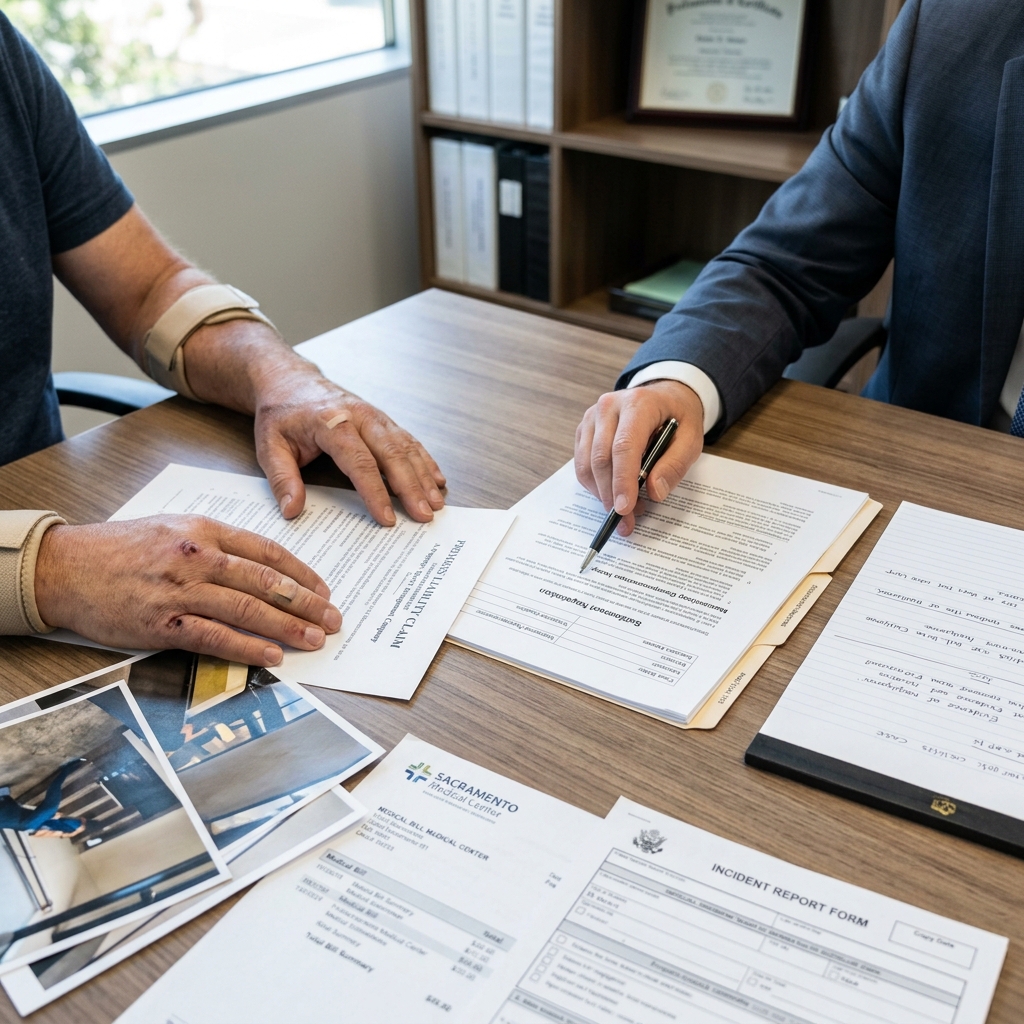
Fair settlements account for both categories fully. If an adjuster proposes a figure without adequately addressing non-economic damages, that’s a sign their offer is incomplete.
Why You Need Experienced Legal Representation for Your Case
Handling a slip and fall claim alone puts you at a significant disadvantage. Insurance companies employ adjusters and attorneys trained to minimize payouts, while injured individuals typically negotiate settlements only once in their lifetime.
Insurance adjusters know that unrepresented claimants often:
- Accept settlements well below actual case value
- Provide recorded statements that hurt their credibility later
- Fail to obtain complete medical documentation
- Miss legal deadlines and statute of limitations
- Struggle to value their own claims accurately
- Feel pressured by medical bills and financial hardship into accepting unfair offers
Our experience levels the playing field. We’ve negotiated hundreds of Sacramento premises liability claims. We understand how local adjusters evaluate cases, what evidence they find persuasive, and what settlement figures are realistic for different injury types. We know which judges handle slip and fall cases and how they tend to rule.
We also handle all communication with the insurance company, removing emotional pressure and ensuring every statement protects your interests. We document and preserve evidence methodically, obtain medical records systematically, and calculate damages thoroughly. Most importantly, we negotiate from strength, prepared to litigate if the insurance company refuses to offer fair compensation.
No fee unless we recover for you. That means our financial interests align with yours: we only profit when you receive compensation.
Contact Weinberger Law Firm for Your Free Consultation
Your slip and fall injury doesn’t have to derail your recovery or leave you struggling financially. We’re here to guide you through every step, from initial investigation through settlement or litigation.
At Weinberger Law Firm in Sacramento, we’ve dedicated ourselves to helping injured individuals understand their rights and secure rightful compensation. We work on contingency, meaning you pay nothing unless we recover for you. Contact us today for a free, no-obligation consultation.
During your consultation, we’ll evaluate your case, answer your legal questions, and explain how we can help you maximize compensation. We’ll discuss the strength of your claim, realistic settlement expectations, and the timeline for your case.
You have rights after an accident. Let us protect them. Reach out to Weinberger Law Firm now to start your path to recovery and fair compensation.
Contact us today for a Free Case Consultation!
Frequently Asked Questions (FAQ)
What should I do immediately after a slip and fall accident?
First, preserve any evidence and get medical care right away. Document the accident scene with photos if you’re able, note the conditions that caused your fall, and collect contact information from any witnesses. Report the incident to the property owner or manager and request a copy of any incident report. Then contact us for a free consultation so we can begin investigating your case and protecting your rights before the statute of limitations passes.
How much compensation can we help you recover?
We pursue full and fair compensation for your medical bills, lost wages, pain and suffering, and other damages related to your injury. The settlement value depends on factors like the severity of your injuries, the property owner’s degree of negligence, and the impact on your daily life. We will investigate all available evidence and negotiate aggressively with insurance companies to maximize what you receive for your specific situation.
Do I have to pay you if we don’t win my case?
No. We work on a contingency fee basis, which means you pay no fee unless we recover compensation for you. Our goal is to remove the financial burden from your shoulders so you can focus on healing while we handle the legal work and negotiate your settlement.