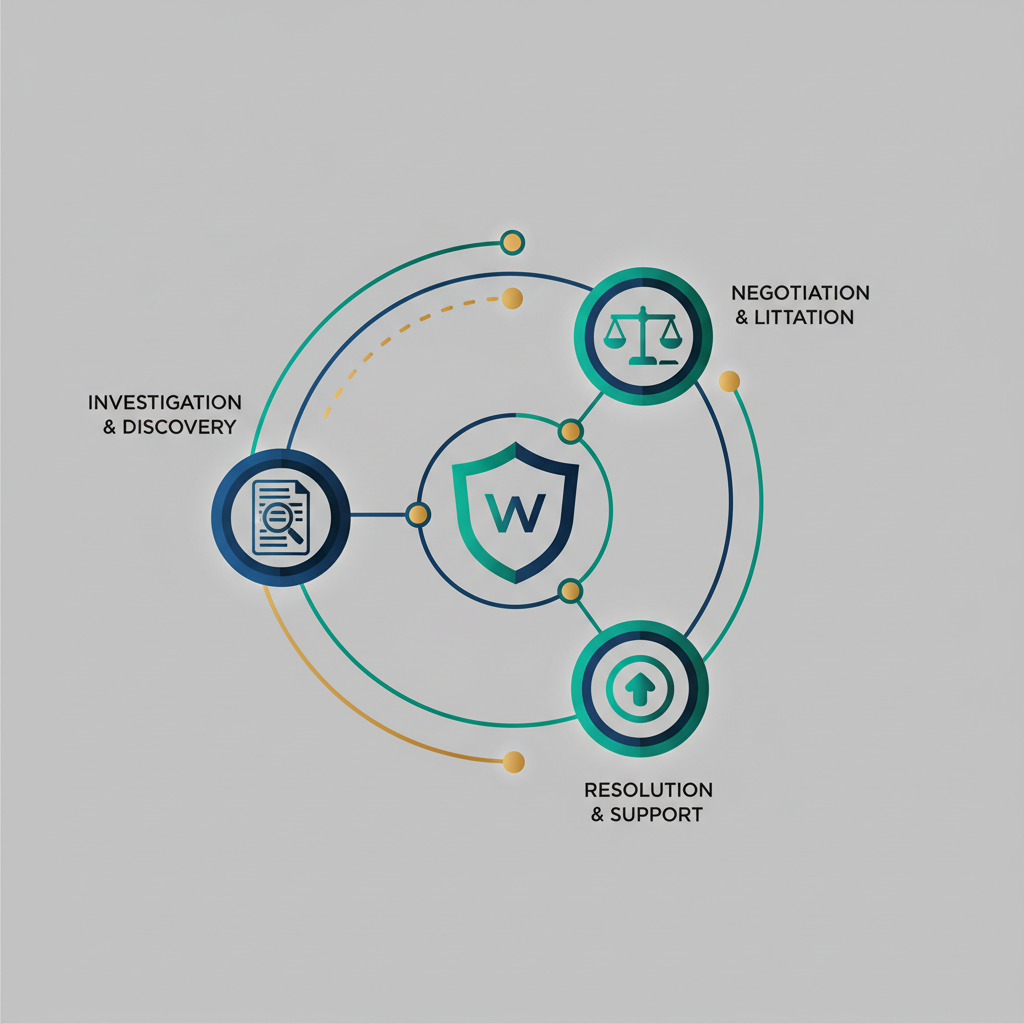
Understanding Weinberger Law’s Approach
Weinberger Law thoroughness begins the moment a client calls. The team maps out the personal injury legal process with clear milestones, deadlines, and evidence needs, so nothing is left to chance under California’s statutes and pure comparative fault rules.
Their comprehensive case evaluation looks at liability, damages, and insurance coverage from multiple angles. Attorneys identify all coverages that may apply—bodily injury, UM/UIM, MedPay, homeowner or commercial policies—and verify policy limits early. They assess fault allocation, potential third-party liability, and venue-specific factors that can affect outcomes.
Accident claim investigation is methodical and fast. The firm:
- Sends preservation letters to secure video, black box data, and maintenance logs
- Retrieves 911 audio, police bodycam, and traffic-cam footage
- Inspects vehicles and scenes; in premises cases, obtains sweep sheets and incident reports
- Interviews witnesses while memories are fresh
- Engages experts when needed—accident reconstructionists, biomechanical engineers, or human factors specialists
Medical evidence is built with the same rigor. The team gathers complete records and billing, coordinates with treating providers, and uses specialists to clarify causation, aggravation of preexisting conditions, and future care. When appropriate, they develop life care plans and consult vocational experts to quantify lost earning capacity.
To support maximizing injury compensation, damages are modeled with precision:
- Economic: past/future medicals, wage loss (W-2/1099, employer verification), diminished earning capacity
- Non-economic: pain, suffering, and loss of enjoyment under California standards
- Property damage and out-of-pocket costs
- Potential punitive exposure in egregious misconduct cases
Negotiation is backed by litigation readiness. Demand packages integrate liability analysis, expert opinions, and comparables from verdicts and settlements. If insurers stall or undervalue, the firm files promptly, manages discovery, challenges defense IMEs, and prepares for mediation and trial.
Throughout, dedicated client representation means regular updates, plain-language explanations of options, and timely responses. Example: in a disputed Sacramento intersection crash, EDR data and signal-timing analysis shifted fault; in a slip-and-fall, custodial logs proved notice—both turning points that improved recovery.
Initial Consultation and Case Assessment
Your first meeting sets the foundation for everything that follows. The team starts by listening—how the incident happened, the timeline of symptoms and treatment, and what has changed in your daily life. They map these facts against California negligence law, assessing duty, breach, causation, and damages, and flag any statute of limitations issues early (generally two years in California, or six months for government entity claims).
Weinberger Law thoroughness shows in the questions they ask and the evidence they move to secure. Expect a comprehensive case evaluation that includes:
- Collecting police or incident reports, scene photos, and 911 audio
- Interviewing witnesses and locating CCTV or dashcam footage
- Preserving vehicle data, store maintenance logs, or product design records
- Ordering medical records and billing, and coordinating clear documentation of prognosis and future care needs
- Verifying insurance layers: at-fault liability limits, UM/UIM, MedPay, and applicable umbrella coverage
In a rear-end collision on I‑5, for example, they may send preservation letters to prevent spoliation of a trucking company’s electronic logging and telematics. In a grocery store fall, they’ll examine sweep logs and surveillance to establish notice and timing—crucial in premises liability.
The firm also evaluates damages with precision to support maximizing injury compensation: past and future medical costs, wage loss and reduced earning capacity, pain and suffering, and home or vehicle modifications. They address liens (health insurers, Medicare, Medi-Cal) and explain how lien resolution affects net recovery.
Because California applies pure comparative negligence, the team analyzes potential fault allocation and builds counterarguments early. Where needed, they consult experts—accident reconstructionists, biomechanical engineers, or life-care planners—so the case is litigation-ready from day one.
Clear, upfront communication is part of their dedicated client representation. The fee structure and timelines in the personal injury legal process are explained plainly, and you’ll leave the consultation with a tailored plan for accident claim investigation and next steps.
Thorough Investigation and Evidence Collection
Weinberger Law thoroughness starts with fast, disciplined accident claim investigation. Within days, the team issues preservation letters to at‑fault parties, insurers, property owners, and carriers to stop routine deletion of critical data. They secure official police collision reports, 911 audio, CAD logs, and any available officer body‑cam or dash‑cam footage, then dispatch investigators to photograph the scene, document skid marks and sight lines, take measurements, and canvass for nearby surveillance and doorbell cameras before footage is overwritten.
For motor vehicle cases, the firm moves quickly to access and download vehicle event data recorder (EDR) information, inspect damage patterns, and, in commercial crashes, demand hours‑of‑service logs, ELD data, maintenance records, and driver qualification files. Where distraction is suspected, they use subpoenas and expert analysis to obtain and interpret cell phone usage records and app data. Rideshare or delivery collisions trigger requests for trip data, GPS breadcrumbs, and in‑app communications.
Premises liability investigations focus on the facts property owners often control: incident reports, sweep/inspection logs, maintenance and repair history, lighting levels, spill‑cleanup timing, and prior complaints. The firm requests surveillance video immediately and examines code compliance. In product liability matters, they preserve the product with a strict chain of custody, check recall databases, and coordinate expert testing to identify design or manufacturing defects.
Medical evidence is developed deliberately to support causation and damages. The team obtains complete records and itemized billing, imaging, and treating‑physician opinions; tracks liens; and documents wage loss through employer statements and tax records. When needed, they retain specialists in accident reconstruction, biomechanics, life‑care planning, and vocational economics to quantify future care and earning capacity losses.
This comprehensive case evaluation strengthens negotiation leverage and litigation readiness—core to the personal injury legal process. By pairing meticulous evidence work with dedicated client representation, Weinberger Law Firm positions each claim to withstand insurer scrutiny, directly maximizing injury compensation under California law, including timely action for public‑entity claims when applicable.

Expert Negotiation with Insurance Companies
Insurance carriers move quickly to control the narrative and minimize payouts. Our team steps in early to handle all communications, preserving your claim value and protecting you from tactics like recorded statements taken out of context or broad medical authorizations. This is where Weinberger Law thoroughness shows: we pair a comprehensive case evaluation with targeted accident claim investigation to enter negotiations from a position of strength.
Before opening settlement talks, we build a demand package that leaves little room for dispute. Typical components include:
- Liability proof: police reports, scene photos, witness statements, and, when needed, vehicle EDR data or premises incident logs
- Medical documentation: diagnosis and treatment records, imaging, treating-physician opinions on causation and long-term effects, and MMI status
- Economic losses: wage verification, missed work calendars, vocational analyses, and receipts for out-of-pocket expenses
- Future care and impacts: life-care plans, therapy projections, and how injuries affect daily activities
- Damages narrative: a concise, evidence-backed account of pain, limitations, and loss of enjoyment
- Lien and subrogation summary: health insurer, provider, and public benefit liens identified and tracked
In practice, this detail helps counter common insurer arguments. For example, if an adjuster claims you were partly at fault under California’s comparative negligence rules, we may use signal timing data or nearby video to apportion fault accurately. When soft-tissue injuries are downplayed, we highlight contemporaneous treatment, imaging where available, and specialist notes to validate symptoms and duration.
We time negotiations to your medical trajectory, often after MMI or upon receiving reliable prognoses, and we anchor discussions with verdict and settlement data from similar jurisdictions. Where policy limits constrain payment, we issue clear, time-limited demands with complete support, preserving bad-faith leverage if warranted under California law.
Throughout, our dedicated client representation includes negotiating medical lien reductions to maximize net recovery, explaining each step of the personal injury legal process, and, if talks stall, pivoting seamlessly to litigation. This disciplined approach focuses on maximizing injury compensation without sacrificing accuracy or momentum.
Preparing for Litigation if Necessary
From the outset, our team treats every claim as if it may go to trial. That mindset drives Weinberger Law thoroughness and ensures leverage at the negotiation table while protecting your case if litigation becomes necessary.
Here’s how we prepare:
- Comprehensive case evaluation: We analyze liability theories, identify all at-fault parties, verify insurance coverage, and confirm deadlines under California’s statute of limitations. Venue, jury tendencies, and damages caps (where applicable) inform strategy within the personal injury legal process.
- Accident claim investigation: We secure police reports, 911 audio, and surveillance; dispatch spoliation letters; download vehicle event data; and inspect scenes with forensic precision. In a disputed red-light crash, for example, we may obtain timing records for the intersection signals and cell phone records to assess distraction.
- Expert team assembly: Depending on the matter—car, motorcycle, premises, or product liability—we engage accident reconstructionists, biomechanical engineers, human factors experts, treating physicians, life care planners, and economists to establish causation and quantify losses.
- Damages modeling: We build a documented picture of medical needs, lost wages, diminished earning capacity, and non-economic harm. A life care plan and present-value economic analysis support maximizing injury compensation.
- Pleadings and discovery: We draft precise complaints (negligence, premises liability, product defect) and execute a discovery plan—interrogatories, requests for production and admission, third-party subpoenas, and targeted depositions (store managers in a grocery slip-and-fall; quality engineers in a defective part case).
- Strategic leverage: We time policy-limits demands, serve CCP 998 offers, and prepare dispositive and evidentiary motions. Mediation and settlement conferences are approached with full trial exhibits and demonstratives to show insurer risk.
- Trial readiness: We prepare witnesses, curate exhibits, develop jury themes, and draft CACI jury instructions, so the courtroom presentation is clear and compelling.
This dedicated client representation—rooted in evidence, experts, and meticulous litigation planning—advances settlement and ensures your case is ready for verdict if needed.
Client Communication and Support
Clear, consistent communication is central to Weinberger Law thoroughness. From the first call, clients receive a plain-language roadmap of the personal injury legal process, what evidence matters, and how California deadlines affect strategy, including the two-year statute of limitations for most injury claims and shorter timelines for government entities.
What clients can expect:
- Early orientation: The team explains liability, insurance coverages (bodily injury, UM/UIM, MedPay), and next steps. Clients learn how to document pain levels, missed work, and out-of-pocket costs to support maximizing injury compensation.
- Transparent accident claim investigation: Clients are updated as the firm secures police reports, scene photos, black box data, surveillance (when available), and witness statements. For example, in a disputed intersection collision, they may cross-check skid marks, traffic signal timing, and 911 audio to clarify fault.
- Medical coordination: The firm helps collect medical records and bills, clarifies recommended treatment plans, and tracks liens from providers or health insurers so settlement proceeds aren’t surprised by unpaid claims.
- Insurance shielding: Attorneys handle adjuster calls and recorded statements, ensuring clients don’t inadvertently harm their case. Property damage claims are addressed alongside injury claims to reduce disruption.
- Evidence-backed demands: Before negotiation, clients review a detailed demand package summarizing liability proof, injury diagnoses, treatment timelines, wage-loss verification, and future care estimates. The team explains valuation ranges and likely insurer tactics so clients make informed decisions.
- Litigation readiness: If suit is necessary, clients receive a clear schedule for discovery, depositions, expert evaluations, mediation, and trial. Attorneys prepare clients for testimony with mock questions and factual themes grounded in the comprehensive case evaluation.
Throughout, communication is proactive and responsive. Clients know who to contact, when to expect updates, and why each step matters—hallmarks of dedicated client representation that keeps cases moving and strengthens outcomes.
Achieving Maximum Compensation
Maximizing injury compensation starts with evidence. The Weinberger Law thoroughness shows in how quickly the team launches an accident claim investigation—securing police bodycam and 911 audio, sending spoliation letters for dashcam and surveillance footage, photographing vehicle damage and scene markings, and interviewing witnesses before memories fade. In a premises case, for example, they move fast to obtain incident reports, maintenance logs, and video before routine overwrites erase them.
A comprehensive case evaluation follows. Attorneys map all responsible parties and insurance layers—at‑fault drivers, employers, product manufacturers, property owners, and UM/UIM coverage—and analyze policy limits, exclusions, and bad‑faith exposure. They build medical chronologies, track out‑of‑pocket expenses, and project future care with treating physicians, life‑care planners, and vocational experts to quantify both economic and non‑economic losses under California law’s pure comparative negligence framework.
Their demand packages are meticulous: organized records, imaging, and test results; biomechanical or reconstruction opinions where liability is contested; wage loss calculations supported by employer records and economist reports; and day‑in‑the‑life narratives, photos, and witness statements to substantiate pain, suffering, and loss of enjoyment. This level of dedicated client representation preempts common insurer tactics and anchors negotiations to documented value.
Key strategies the firm employs to maximize recovery:
- Investigate all theories of liability, including negligent entrustment, roadway design, or defective products.
- Identify every coverage source, including med‑pay and excess/umbrella policies.
- Use time‑limited policy‑limits demands compliant with California statutes and case law.
- Resolve medical and ERISA liens to increase net recovery and manage subrogation.
- Prepare for trial from day one—early expert retention, Rule 26‑like disclosures, and targeted discovery—so negotiations are backed by litigation readiness.
Example: In a multi‑vehicle collision with disputed fault, the firm may combine EDR (“black box”) downloads, cell‑site records, and lane‑change timing analyses to secure liability, then present a future cost‑of‑care plan and vocational assessment to elevate a settlement beyond initial offers. This disciplined personal injury legal process reflects Weinberger Law thoroughness at every step.
Why Thoroughness Matters for Victims
Detail is what turns an injury story into a persuasive claim. Weinberger Law thoroughness ensures no fact, document, or legal angle is missed—crucial in California where liability, damages, and insurance coverage are often contested and deadlines apply.

From day one, a rigorous accident claim investigation preserves key proof before it disappears. In a Sacramento car or motorcycle crash, that can mean pulling the police report, downloading vehicle “black box” data, canvassing for traffic camera footage, and photographing roadway skid marks. In a premises or product case, it can mean sending spoliation letters to secure incident reports, cleaning logs, surveillance video, or the defective item for expert testing.
A comprehensive case evaluation goes beyond fault to quantify full loss:
- Liability: identify negligent parties, assess comparative fault, and apply California standards.
- Coverage: stack policies, explore UM/UIM, medical payments, employer or product liability coverage.
- Damages: compile medical bills and records, project future care, document wage loss with employer verification and tax returns, and capture pain, suffering, and loss of enjoyment.
- Causation: address pre-existing conditions with treating physician opinions and independent experts.
In the personal injury legal process, meticulous documentation strengthens negotiation. Detailed demand packages may include CPT-coded bill audits, differential diagnoses tying injuries to the event, life-care plans for ongoing therapy, and vocational assessments when injuries limit work. This level of proof gives insurers fewer reasons to discount a claim and supports maximizing injury compensation.
Dedicated client representation also means proactive communication and problem-solving: coordinating care, explaining timelines (including California’s general two-year statute of limitations), managing medical liens (hospital, Medicare/Medi-Cal), and pursuing lien reductions so more of the recovery goes to the client.
Litigation readiness—drafted complaints, prepared witnesses, preserved evidence, and expert retention—signals that the firm can try the case if needed. That leverage often drives fair settlements; if not, it positions the claim for a strong result in court.
Experience in Diverse Injury Cases
Weinberger Law thoroughness shows in how the firm handles very different fact patterns with the same disciplined approach. Whether the injury stems from a freeway pileup or a defective household product, the team applies a consistent personal injury legal process to surface liability, document damages, and position your claim for resolution.
In motor vehicle and motorcycle cases, the firm secures crash reports, event data recorder downloads when available, and traffic camera footage. They address California-specific issues such as lane-splitting dynamics, comparative fault, and uninsured/underinsured motorist coverage. For riders, they counter bias with helmet standards evidence, visibility studies, and biomechanical analysis to prove causation and extent of harm.
In premises liability matters—slip and falls, trip hazards, or negligent security—they move quickly to preserve surveillance video and maintenance logs, inspect lighting and flooring conditions, and compare the property’s practices to safety codes and industry standards. Prior incident histories and employee training records are pursued to establish notice and foreseeability.
In product liability claims, the team prioritizes preserving the product, documenting the chain of custody, and coordinating expert testing to identify design, manufacturing, or warning defects. They trace the chain of distribution and evaluate federal and California consumer safety regulations to bolster liability theories.
Across case types, the roadmap includes:
- Immediate intake and legal holds to prevent evidence loss
- Comprehensive case evaluation of liability, insurance, and damages
- Targeted accident claim investigation with experts and site inspections
- Medical record audits and future care projections
- Wage loss and vocational impact analysis
- Strategic negotiation with insurers and litigation readiness if needed
Concrete examples include building a rear-end collision claim with EDR speed/braking data and MRI findings to rebut “minor impact” defenses; proving a grocery store spill case through sweep logs and time-stamped video; or converting an e-scooter crash into a product defect claim after brake failure testing. This dedicated client representation is focused on clarity, timely updates, and maximizing injury compensation through evidence-driven advocacy.
Choosing Dedicated Legal Representation
Selecting an attorney after a serious accident is more than hiring someone to file paperwork. It’s choosing a partner whose method determines how strong your claim becomes. Weinberger Law thoroughness shows up from day one and carries through every stage of the personal injury legal process.
The firm begins with a comprehensive case evaluation that looks beyond obvious facts. Attorneys assess liability theories, comparative fault, available insurance (at‑fault BI, UM/UIM, med‑pay, homeowner, commercial policies), venue considerations, and the statute of limitations under California law (generally two years, or six months to present a government claim). They map damages early—past and future medical care, wage loss and reduced earning capacity, and non‑economic harm—so evidence collection is targeted from the start.
Rapid, methodical accident claim investigation preserves proof before it disappears. Typical early actions include:
- Scene inspection and photographs; roadway measurements and skid analysis
- Preservation letters to at‑fault parties for vehicle “black box” (EDR) data and cell phone records
- Canvassing for witnesses and nearby surveillance or traffic‑cam footage
- 911 audio and police report acquisition; corrections if reports are incomplete
- Vehicle downloads and expert inspections for car or motorcycle cases
- For premises liability: incident reports, maintenance logs, cleaning schedules, and prior-incident histories
- For product cases: recall checks, design/manufacturing review, and expert testing
Dedicated client representation means staying proactive on proof of damages. The team coordinates with treating providers to obtain complete records, verifies time off and job duties with employers, and, where appropriate, brings in specialists such as life‑care planners, vocational experts, or accident reconstructionists. Clients receive clear timelines, regular updates, and candid guidance on risks and options.
When negotiations begin, the firm packages liability and damages into a precise demand backed by records, expert opinions, and visuals. They deploy time‑limited, policy‑limits demands that comply with California Civil Code sections 999–999.5, and they are prepared to litigate—filing suit, conducting discovery, and presenting experts—if insurers stall or undervalue claims.
This disciplined approach is designed for maximizing injury compensation while keeping clients informed and in control.
Call to Action
Contact us today for a Free Case Consultation!