Introduction to Injury Rights
If you’ve been hurt in California, understanding your personal injury rights California can shape every decision you make in the days ahead. These rules determine who may be held responsible, what compensation you can pursue, and how quickly you must act.
Key accident victim rights include:
- Medical care of your choice: Get treated immediately. Your reasonable medical expenses, rehabilitation, and future care needs may be recoverable. Keep all records and receipts.
- Accident compensation rights: You can seek economic damages (medical bills, lost wages, property damage) and noneconomic damages (pain, suffering, loss of enjoyment). In rare cases, punitive damages may apply for egregious misconduct.
- Choice to involve counsel and control communications: You are not required to give a recorded statement to the other party’s insurer. You can direct all contact through an attorney and decline quick, low settlements.
- Multiple insurance paths: Beyond the at-fault party’s liability insurance, you may use your MedPay for immediate medical bills and uninsured/underinsured motorist coverage if the other driver lacks sufficient insurance.
- Legal rights after injury against various parties: Depending on the facts, you may have claims against drivers, property owners (slip and falls), manufacturers (defective products), or public entities (dangerous roadways), each with unique procedures.
Time limits matter:
- Two years from the date of injury for most personal injury claims.
- Six months to file an administrative claim against a government entity before suing.
- Three years for property damage claims.
Limited exceptions may extend these deadlines for minors or late-discovered injuries.
Fault is shared in California. Under pure comparative negligence, an injured person’s rights to recover are reduced by their percentage of responsibility. For example, if you’re 20% at fault in a rear-end crash, your recovery is reduced by 20%.
Practical steps to know your injury rights:
- Call 911 and document the scene (photos, witness contacts).
- Obtain the police report.
- Preserve damaged items (helmet, shoes, vehicle parts).
- Request insurance information; formal discovery can obtain policy limits if a lawsuit is filed.
Weinberger Law Firm guides clients through California law, evaluates liability and damages, and negotiates with insurers to protect injured person rights at every stage.
Types of Accidents Covered
In California, personal injury claims can arise from many everyday incidents. Understanding which events fall under personal injury rights California helps you act quickly to protect accident victim rights and preserve evidence.
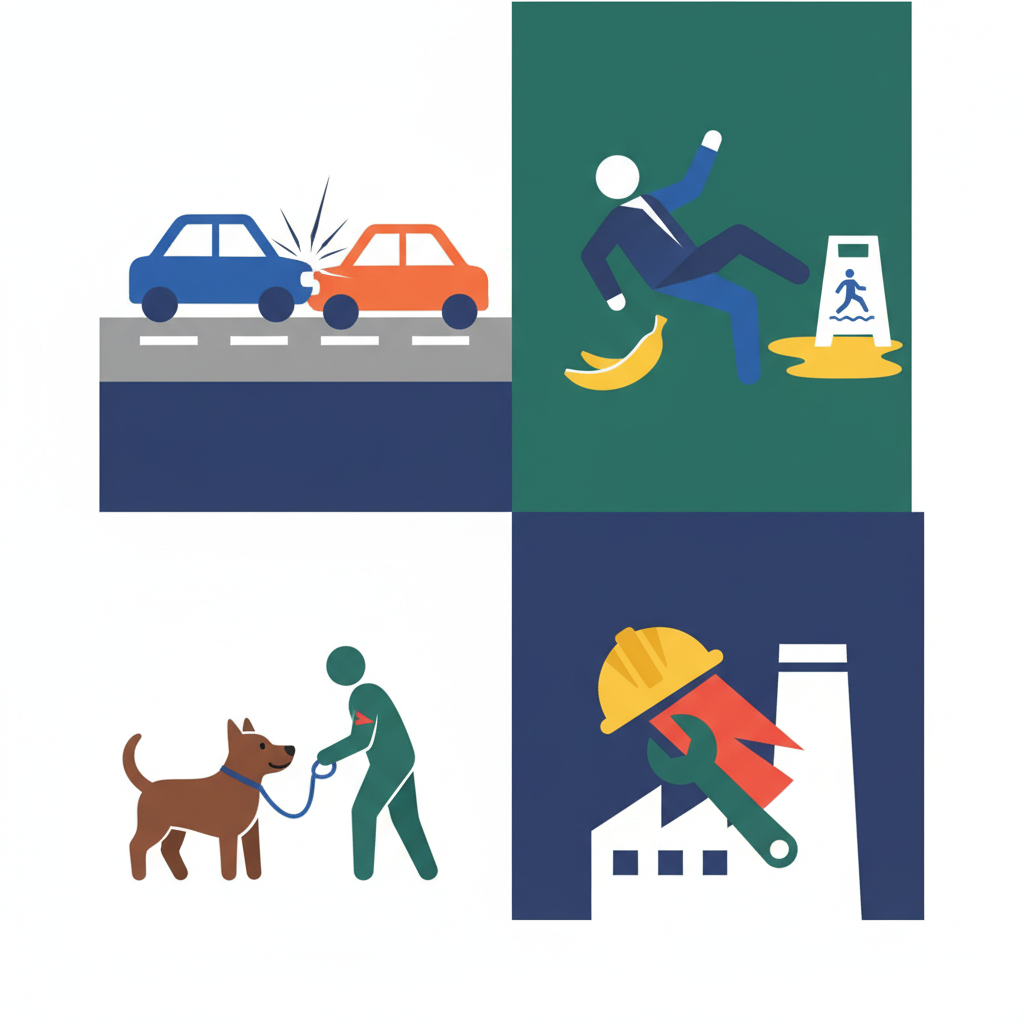
- Motor vehicle collisions: Car, motorcycle, truck, pedestrian, and bicycle crashes often involve driver negligence. Running a red light or speeding can support negligence per se. Injured person rights include claims against the at-fault driver and their insurer, plus uninsured/underinsured motorist claims if coverage is insufficient. Rideshare (Uber/Lyft) accidents involve layered insurance policies that may apply depending on the app status. DUI crashes can support punitive damages in addition to standard accident compensation rights.
- Premises liability: Property owners and managers must maintain safe conditions. Slip-and-fall on a spilled liquid in a grocery aisle, a trip on a broken apartment stair, or injuries from negligent security are common examples. If a public entity (city sidewalk, public building) is involved, a Government Claim typically must be filed within six months.
- Dog bites and animal attacks: California imposes strict liability on dog owners for bites in public places or when the victim is lawfully on private property, even without prior aggression. Know your injury rights include seeking medical costs, lost wages, and pain and suffering.
- Product liability: Defective design, manufacturing errors, or inadequate warnings can make manufacturers and sellers strictly liable. Examples include an airbag that fails to deploy, an e-bike battery fire, or a dangerous children’s toy. Preserve the product and packaging to support your case.
- Dangerous roads and public transportation: Claims can arise from unsafe roadway design, poor signage, or bus/light rail incidents. Special procedures and shorter deadlines apply to government defendants.
- Workplace and construction incidents: While workers’ compensation covers employer-related injuries, third-party claims may exist against subcontractors, property owners, or product makers.
Across these categories, legal rights after injury include pursuing medical expenses, lost income, property damage, and non-economic losses. Deadlines vary, but many claims have a two-year statute of limitations; some are shorter. Acting promptly helps protect evidence and maximizes compensation.
Crucial Steps Post-Accident
- Get medical help immediately. Call 911 if needed and visit an ER or urgent care within 24–48 hours, even if symptoms seem minor. Early records link your condition to the event and protect your personal injury rights California law provides.
- Report the incident. For vehicle crashes, request the Traffic Collision Report number from CHP or local police. File a DMV SR‑1 within 10 days if anyone was injured or property damage likely exceeds $1,000. In a store or property fall, ask for an incident report and request that any surveillance video be preserved.
- Document the scene and your injuries. Take photos or video of vehicle positions, debris, skid marks, airbag deployment, weather/lighting, and road or property hazards (spills, torn carpet, lack of warnings). Save damaged clothing, helmets, or the defective product. Do not repair or discard items; they may be crucial evidence.
- Identify witnesses and exchange information. Collect names, phone numbers, and emails of witnesses, and obtain the other party’s driver’s license, plate number, and insurance details.
- Communicate carefully with insurers. Notify your carrier to preserve coverage, but stick to basic facts. Do not give a recorded statement to the at‑fault insurer or sign broad medical authorizations without counsel. These steps safeguard accident victim rights and accident compensation rights.
- Follow all treatment. Attend appointments, fill prescriptions, and follow restrictions. Gaps in care can undermine injured person rights by allowing insurers to argue your condition isn’t serious or related.
- Track losses. Keep a file with medical bills, explanation of benefits, pharmacy receipts, mileage to appointments, repair estimates, photos of property damage, and wage loss proof (pay stubs, employer verification).
- Protect your case. Avoid social media posts about the accident or activities. Don’t admit fault or speculate; California’s pure comparative negligence can reduce recovery. If a public entity is involved, you generally must file a government claim within six months; most other claims have a two‑year deadline. Consult a personal injury attorney early to preserve evidence, send spoliation letters, evaluate MedPay and UM/UIM coverage, and help you know your injury rights and broader legal rights after injury.
Your Fundamental Legal Rights
As an injured person in California, you have clear protections designed to help you recover physically and financially. Understanding your personal injury rights California law provides can make the difference in your outcome.
You have the right to immediate medical care and to choose your doctors. Keep all records, bills, and instructions. Even if you don’t have insurance, you can seek treatment now and pursue reimbursement through a claim.
You have the right to pursue full accident compensation rights against every at-fault party. Recoverable damages include:
- Economic: past and future medical costs, lost wages, diminished earning capacity, rehabilitation, and property damage.
- Non-economic: pain, suffering, emotional distress, and loss of enjoyment of life.
- Punitive damages: available only in rare cases involving malice, oppression, or fraud (e.g., a company knowingly selling a dangerous product).
California follows pure comparative negligence. Even if you are partly at fault, you can still recover; your award is reduced by your percentage of responsibility. Example: If a driver is 70% at fault and you’re 30% at fault in a crash, you can still recover 70% of your damages.
Strict deadlines apply. Generally, you have two years from the date of injury to file a lawsuit (three years for property damage). Claims against government entities usually require an administrative claim within six months. Deadlines may be tolled for minors or undiscovered injuries.
You control insurer interactions. You are not required to give a recorded statement or sign broad medical releases to the other side. You may have an attorney handle all communications, negotiate strongly with insurers, and pursue your own policy benefits (e.g., Med-Pay, uninsured/underinsured motorist coverage).
If multiple parties share fault, you can sue them all. In California, defendants are jointly liable for economic damages but only severally liable for non-economic damages. This matters in multi-vehicle collisions or premises liability cases.
You also have rights to preserve evidence (request store video retention after a slip-and-fall), to a jury trial if settlement efforts fail, and to attorney–client confidentiality. Note: certain rules can limit non-economic damages for uninsured drivers in auto cases. Knowing your injury rights early helps protect your claim.
Types of Damages You Can Claim
After an accident in California, you can seek damages that make you “whole” for both financial losses and human impacts. Understanding the categories below helps you exercise your personal injury rights California and pursue full compensation.
Economic damages (financial losses)
- Medical care: ER visits, hospitalizations, surgery, diagnostics, prescriptions, medical devices, and future treatment or rehab supported by physician opinions.
- Therapy and support: Physical and occupational therapy, mental health counseling for anxiety/PTSD, in-home nursing, and attendant care.
- Lost income: Wages, overtime, bonuses, and benefits you missed while recovering.
- Loss of earning capacity: Reduced future income if injuries limit your career or hours; often proven with vocational and economic experts.
- Out-of-pocket costs: Transportation to appointments, parking, childcare during treatment, home or vehicle modifications, and replacement household services.
- Property damage: Vehicle repair or total loss, personal items (phone, helmet, clothing).
Non-economic damages (human losses)
- Pain and suffering: Physical pain, discomfort, and limitations.
- Emotional distress: Anxiety, depression, sleep issues, trauma.
- Loss of enjoyment of life: Missed hobbies, activities, and milestones.
- Disfigurement and physical impairment: Scarring, mobility limits.
- Loss of consortium: A spouse’s separate claim for harm to the relationship.
Punitive damages
- Available only if the defendant acted with malice, oppression, or fraud (e.g., intentional harm or egregious misconduct), proven by clear and convincing evidence.
Key limits and rules in California
- No general cap on non-economic damages, except in medical malpractice, where caps apply and adjust annually.
- Uninsured drivers injured while operating a vehicle usually cannot recover non-economic damages (limited exceptions, such as when the at-fault driver was DUI).
- Comparative fault reduces your recovery by your percentage of fault.
- Medical expense recovery is limited to the reasonable value of care actually paid or owed, not the full billed charges.
Knowing these accident victim rights and injured person rights helps you act quickly and document losses to protect your legal rights after injury. Keep detailed records, follow treatment plans, and seek guidance to maximize your accident compensation rights.
Navigating Insurance Company Claims
After a crash, insurers move fast. Knowing your personal injury rights California can keep you from saying or signing something that undercuts your claim for medical bills, lost wages, and pain and suffering.
When dealing with the at‑fault driver’s insurer, you have key accident victim rights:
- You can decline a recorded statement. Provide one only after consulting counsel. Your own policy may require limited cooperation, but the adverse carrier cannot force it.
- You do not have to sign blanket medical authorizations. Share only records relevant to the injuries at issue.
- You choose your doctors and repair shop.
- You can separate property damage from bodily injury claims so transportation is restored quickly without waiving injury claims.
- You may have an attorney handle all communications.
California claim handling rules set expectations. Insurers must acknowledge your claim promptly and, after receiving proof of claim, accept or deny within a reasonable period (often 40 days under California regulations). California’s pure comparative negligence reduces compensation by your share of fault, so be careful with statements that might be used to shift blame. This is central to injured person rights and legal rights after injury.
Use every applicable coverage:
- Medical Payments (MedPay) under your policy can cover treatment regardless of fault; your insurer may later seek reimbursement from the at‑fault party.
- Uninsured/Underinsured Motorist (UM/UIM) applies if the other driver lacks adequate coverage; these are claims with your insurer and often resolved through arbitration.
Example: You suffer a fracture in a hit‑and‑run. MedPay helps with immediate bills. A UM claim then pursues broader accident compensation rights for remaining losses.
Do not rush to settle before you reach maximum medical improvement. A thorough demand package should include medical documentation, wage loss proof, photos, and liability evidence. Time‑limited, policy‑limits demands must be carefully drafted under California law. Weinberger Law Firm builds strong demands, negotiates firmly with insurers, and—if needed—litigates to protect and maximize your recovery so you can confidently know your injury rights.
Importance of Legal Consultation
Speaking with a qualified attorney early helps you protect and use your personal injury rights California affords you. California law has strict timelines and rules that can significantly affect your claim, and a legal consultation ensures you make informed choices from day one.
Deadlines come fast. Most personal injury claims must be filed within two years, but claims involving government entities require a formal claim within six months. Evidence also fades quickly—store surveillance may be overwritten in 30 days, skid marks disappear, and vehicles are repaired. A lawyer can send preservation letters, secure photos and witness statements, and obtain black box or dashcam data before it’s lost.
Insurers move quickly to limit payouts. Adjusters often seek recorded statements or broad medical authorizations that can undercut accident victim rights. Counsel helps you avoid pitfalls, handle communications, and document injuries properly so you don’t accept a low offer before the full extent of your losses is known.
A consultation clarifies the full scope of accident compensation rights, including:
- Medical expenses now and in the future (surgery, rehab, assistive devices)
- Lost wages and diminished earning capacity
- Non-economic losses like pain and suffering
- Property damage and out-of-pocket costs
- Potential punitive damages in egregious misconduct cases
California’s pure comparative negligence rule can reduce recovery if you’re found partially at fault. An attorney analyzes crash reports, codes, and expert input to counter blame-shifting and protect injured person rights.
Complex issues—medical liens (Medicare/Medi-Cal), health insurer subrogation, rideshare or commercial policies, and uninsured/underinsured motorist coverage—require careful handling to maximize your net recovery. A firm experienced in negotiation and litigation readiness can identify all available insurance, value your claim accurately, and prepare to file suit if needed.
At Weinberger Law Firm in Sacramento, your consultation focuses on the facts, the evidence, and your legal rights after injury. You’ll know your injury rights, your options, and the steps to move your claim forward with clear communication and support.
Preparing for Your Injury Case
Knowing your personal injury rights California and acting deliberately in the days and weeks after an accident can significantly strengthen your claim and help protect your accident victim rights.

Start fast with essentials:
- Get prompt medical care and follow the treatment plan. Gaps in care let insurers argue your injuries aren’t related.
- Report the incident (police report for crashes; incident report for a store or property).
- Photograph the scene, vehicles, hazards, and visible injuries. Collect witness names and contact details.
Preserve key evidence:
- Do not repair or dispose of damaged items until documented. Save the defective product, your footwear from a slip-and-fall, and any broken parts.
- Request that video be preserved. For example, ask a store or apartment complex in writing to save surveillance footage; many systems overwrite in days.
- Secure digital data such as dashcam files, vehicle telematics, and phone photos.
- Keep a copy of all medical records, imaging, and discharge instructions.
Document your losses to maximize accident compensation rights:
- Track bills, prescriptions, and out-of-pocket costs (including mileage to appointments).
- Prove income loss with pay stubs, W-2s, or for self-employed, invoices and tax returns. Get an employer letter confirming time missed and your typical hours.
- Keep a daily journal noting pain levels, sleep issues, and activities you can’t perform; this supports non-economic damages.
Protect your injured person rights in communications:
- Give only basic facts to insurers. Decline recorded statements to the other driver’s carrier and avoid signing broad medical releases.
- Be cautious on social media; posts and photos can be used against you.
Mind California deadlines and rules:
- Most injury claims must be filed within two years; claims against government entities generally require a claim within six months.
- California’s pure comparative negligence means you may recover even if partially at fault; your award is reduced by your percentage of fault.
- Optional MedPay or UM/UIM coverage may provide interim benefits; coordinate benefits and address any health insurance liens.
If you want to fully know your injury rights and legal rights after injury, consult a California personal injury attorney early to send preservation letters, evaluate damages, negotiate with insurers, and prepare for litigation if needed.
California Statute of Limitations
Understanding personal injury rights California starts with knowing the deadlines that control your ability to file a claim. The statute of limitations is strict—miss it and you can lose your accident compensation rights, no matter how strong your case is.
Key timelines most injured people face:
- General personal injury (car, motorcycle, premises, product liability): 2 years from the date of injury.
- Wrongful death: 2 years from the date of death.
- Claims against a California public entity (city, county, state, school district): You must file a government claim within 6 months of the injury. If the claim is denied, you generally have 6 months from the denial to file a lawsuit.
- Medical malpractice: The earlier of 1 year from when you discovered (or should have discovered) the injury and its negligent cause, or 3 years from the date of injury. California also requires a 90‑day notice to the provider before filing suit; serving this notice near the deadline can extend the filing period by up to 90 days.
The “discovery rule” may delay when the clock starts if you didn’t and couldn’t reasonably have known your injury was caused by wrongdoing. For example, if a defective product causes a latent illness discovered months later, your time to sue may begin at discovery. This rule is fact-specific—don’t assume it applies without legal analysis.
Special rules for minors and others can toll, or pause, the clock. For most non-government injury claims, a minor’s deadline generally starts at age 18 (a 16‑year‑old injured in a crash typically has until age 20). However, government-claim deadlines and medical malpractice rules can be shorter even for minors.
Practical examples:
- Car crash on January 10, 2024: Sue by January 10, 2026.
- Slip-and-fall on a city sidewalk on March 1, 2024: File the government claim by August 30, 2024.
- Surgical error discovered in November 2024 from a January 2023 procedure: Med-mal deadline likely November 2025 at the latest, subject to the 3‑year outer limit.
Insurance policies also require prompt notice, which can affect your injured person rights even before litigation. To protect your legal rights after injury, act quickly and get a case-specific review so you know your injury rights and don’t miss a critical deadline.
Achieving Fair Compensation
Fair compensation starts with knowing every category of loss the law allows. For personal injury rights California law recognizes both economic and non‑economic damages, which can include:
- Medical costs: ER visits, imaging, surgery, prescriptions, rehab, and future care plans.
- Income losses: missed work, reduced hours, and diminished future earning capacity.
- Non‑economic harm: pain, emotional distress, disfigurement, and loss of enjoyment of life.
- Property damage and out‑of‑pocket expenses: transportation to appointments, home care items, and assistive devices.
- Loss of consortium for a spouse or registered domestic partner.
- Punitive damages in rare cases of egregious misconduct (e.g., DUI with extreme recklessness).
Your recovery is affected by fault. California uses pure comparative negligence: if you’re found 20% at fault in a $100,000 case, your award becomes $80,000. Thorough evidence helps minimize disputed fault—scene photos, video, vehicle data, and credible witness statements.
Deadlines matter. Most injury claims must be filed within two years from the accident; claims against government entities generally require a claim within six months. Uninsured/underinsured motorist claims follow policy‑specific timelines. Acting early protects accident victim rights and preserves evidence.
Documentation drives value. Keep consistent medical treatment, follow provider recommendations, and save bills, receipts, and pharmacy records. Use a pain journal to capture daily limitations. Verify lost income with employer letters, pay stubs, and, for self‑employed clients, tax returns and invoices. Expert opinions can establish future care costs and vocational impact.
Insurance strategy is key to accident compensation rights. Identifying policy limits, presenting a comprehensive, time‑limited demand, and preparing for litigation can motivate fair offers. Managing health insurance, Medicare/Medi‑Cal, or provider liens increases your net recovery.
As a Sacramento‑based advocate, Weinberger Law Firm conducts detailed case evaluations, negotiates firmly with insurers, and is ready for trial when needed. If you want to know your injury rights and understand your legal rights after injury, our team helps injured person rights translate into real‑world results across car, motorcycle, premises, and product liability cases.
Call to Action
Contact us today for a Free Case Consultation!