
Table of Contents
- 1. Seek Immediate Medical Attention and Document Everything
- 2. Preserve Evidence at the Accident Scene
- 3. Understand California’s Statute of Limitations
- 4. Know the Full Scope of Damages You Can Claim
- 5. Avoid Common Mistakes That Reduce Your Settlement
- 6. Navigate Insurance Company Negotiations Strategically
- 7. Partner With a Dedicated Sacramento Car Accident Attorney
- Frequently Asked Questions (FAQ)
1. Seek Immediate Medical Attention and Document Everything
If you were injured in a car accident, you’re facing real challenges: medical bills, lost wages, pain, and uncertainty about what comes next. You have rights after an accident, and understanding how to protect them is the first step toward securing fair compensation. At Weinberger Law Firm, we’ve helped Sacramento residents navigate these claims and recover the full compensation they deserve. This guide covers the seven critical steps that can make the difference between an inadequate settlement and one that truly covers your losses.
Your health comes first, and medical records are also your strongest evidence. Even if you feel “okay” after the crash, get evaluated by a doctor within hours or days. Some injuries like whiplash or concussions develop over time, and delays in treatment can weaken your claim later.
As you receive care, document everything:
- Medical visits, tests, and diagnoses
- Treatment dates and provider names
- Prescriptions and physical therapy sessions
- Any ongoing pain, limitations, or lifestyle changes
Request copies of all medical records and bills from your healthcare providers. Insurance adjusters and defense attorneys will scrutinize gaps in treatment, so continuity matters. If you had to miss work due to your injuries, collect pay stubs, employer statements, and a calculation of lost wages. These documents transform abstract pain into concrete, compensable damages.
Take photos of your injuries at different stages of healing. Visible bruises, scars, or bandages help jurors and adjusters understand the impact. Store everything digitally and in hard copy; redundancy protects against loss. The clearer your paper trail, the harder it is for the insurance company to minimize your claim.
2. Preserve Evidence at the Accident Scene
The moments and days after a crash are critical for evidence collection. If you can safely do so at the scene, photograph the vehicle damage, road conditions, traffic signals, street signs, and any visible hazards. Capture wide shots and close-ups; take multiple angles.
Note the weather, time of day, and how traffic was flowing. These details help establish fault and negligence. If witnesses are present, ask for their names, phone numbers, and insurance information. Witness statements are far more valuable when collected fresh, before memories fade or witnesses relocate.
Get the other driver’s information: name, address, phone, insurance details, vehicle make and model, and license plate. Request the police report number if officers responded; this official document is vital for your claim. We will investigate all available evidence, including traffic camera footage from nearby businesses or intersections, which can be decisive in establishing liability.

Once you leave the scene, contact the police department if no report was filed, and request a copy once it’s available. Many Sacramento locations have security cameras at intersections or nearby properties. Preserve any evidence and get medical care immediately; the sooner you act, the more evidence is available and the fresher details are in your mind.
3. Understand California’s Statute of Limitations
California law sets strict time limits on when you can file a personal injury lawsuit. For car accident claims, the statute of limitations is typically two years from the date of injury. Time is limited — act now if you want to protect your legal options.
This deadline applies to lawsuits, not settlement negotiations. However, waiting months or years before starting a claim weakens your position. Evidence disappears, witnesses move away, and memories blur. Insurance companies know when deadlines approach and may offer less, betting you’ll accept a lower amount rather than litigate.
We recommend beginning the claim process within weeks of your accident, not months. This urgency serves two purposes: it preserves evidence and shows the insurance company you’re serious about pursuing full compensation. If you’re unsure whether you’re within the deadline, contact us for a free consultation. Missing the filing deadline means forfeiting your right to recover anything through the courts.
4. Know the Full Scope of Damages You Can Claim
Many accident victims settle for far less than they deserve because they don’t understand what damages California law allows. Damages fall into two main categories: economic and non-economic.
Economic damages include:
- Medical bills and ongoing treatment costs
- Lost wages and reduced earning capacity
- Vehicle repair or replacement costs
- Travel and rehabilitation expenses
Non-economic damages cover:
- Pain and suffering (the physical and emotional impact)
- Loss of enjoyment of life (inability to participate in hobbies or activities)
- Emotional distress and anxiety
- Scarring or disfigurement
We pursue full and fair compensation by carefully documenting and valuing both categories. Many people focus only on medical bills and miss significant pain and suffering claims. If you’ll have lasting limitations, your claim can include future lost wages and future medical care. We’ll review damages compensation strategies specific to your situation to ensure nothing is overlooked.
The insurance company will initially offer low figures hoping you won’t push back. Our job is to build a detailed case showing why your claim is worth substantially more. The difference between a low settlement offer and our full evaluation can be tens of thousands of dollars.
5. Avoid Common Mistakes That Reduce Your Settlement
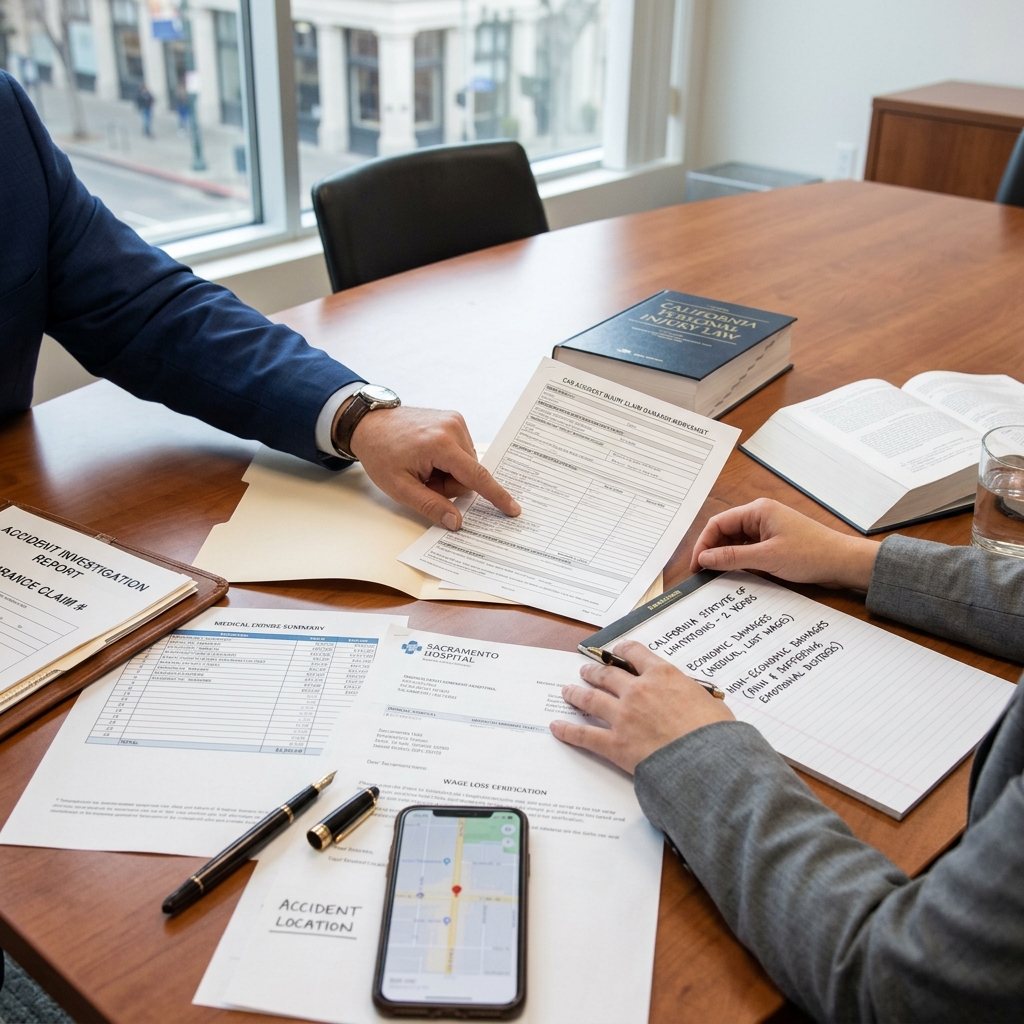
Even well-intentioned accident victims make decisions that harm their claims. Understanding these pitfalls helps you avoid them.
The most costly mistake is giving a recorded statement to the insurance company without legal guidance. Adjusters are skilled at asking questions designed to minimize liability or create contradictions. They may quote your own words back to you months later, undermining your credibility. Let us handle communication with the insurance company instead.
Another common error is accepting the first settlement offer. Insurance companies frontload low offers, betting you’ll take it quickly. Before you respond, we’ll evaluate whether it covers your medical bills, lost wages, and pain and suffering. Rushing to accept often leaves you short.
Social media posts and casual comments can also hurt your case. Posting photos of yourself at social events or saying “I’m feeling much better” gives the insurance company ammunition to argue your injuries are minor. Keep your online presence minimal and private during your claim.
Finally, don’t repair your vehicle or destroy evidence. Keep the damaged vehicle available for inspection and retain all physical evidence from the accident. Some details seem minor until your attorney needs to present them.
6. Navigate Insurance Company Negotiations Strategically
The insurance adjuster’s job is to minimize payouts. Their offer reflects their interests, not yours. Negotiation requires strategy, documentation, and patience.
Start by submitting a detailed demand letter that itemizes all damages with supporting documentation. Medical records, wage loss statements, repair estimates, and photos create a compelling case. We structure demands in a way that compels serious consideration rather than automatic rejection.
The insurance company will counter-offer. Don’t accept the first counter. Instead, respond with a reasoned explanation of why your original demand is justified. Reference specific medical evidence, wage documentation, and comparable settlements. This back-and-forth continues until both parties reach a settlement or you proceed to litigation.
Many claims settle through negotiation without trial. However, the insurance company knows whether you’re willing to litigate. If you have a strong case and are serious about court, they’re more likely to settle favorably. We prepare every case as if we’ll litigate, which signals credibility and often accelerates settlement.
Document all communication with the insurance company. Request written responses to your demands. Keep records of phone calls, including dates and names of adjusters. This documentation protects you and ensures consistency if a dispute arises later.
7. Partner With a Dedicated Sacramento Car Accident Attorney
Handling a car accident claim alone is possible but costly. Most accident victims without legal guidance recover significantly less than those with representation. The insurance company’s experience and resources are designed to work against injured people trying to navigate complex claims.

We bring several distinct advantages. First, we hire a personal injury attorney with deep knowledge of California personal injury law and Sacramento-specific court procedures. We know local adjusters’ tactics, insurance company patterns, and what juries expect. This insight translates directly into higher settlements.
Second, we handle all communication with insurance companies. This removes the stress of negotiating while you recover and protects you from inadvertently weakening your case through casual remarks or recorded statements.
Third, we investigate thoroughly. Traffic camera footage, weather reports, accident reconstruction analysis, medical expert opinions — we gather and present evidence that proves your case. We will investigate all available evidence to build an ironclad foundation for your claim.
Fourth, we manage timelines and deadlines. The statute of limitations won’t wait, and evidence degrades over time. We keep your claim moving forward strategically, preserving every advantage.
Finally, we work on contingency: no fee unless we recover for you. You pay nothing upfront, and we only earn a fee if we win. This aligns our interests with yours completely. If you don’t recover, you owe nothing.
The difference between going it alone and partnering with us is often the difference between covering only medical bills or securing compensation that truly reflects your losses, your pain, and your future. Contact us for a free consultation to discuss your case and learn how we can maximize your Sacramento car accident compensation. You deserve an advocate who understands your rights and fights relentlessly to enforce them.
Contact us today for a Free Case Consultation!
Frequently Asked Questions (FAQ)
What should I do immediately after a Sacramento car accident to protect my compensation claim?
Seek medical attention right away, even if you feel fine, because some injuries appear later. Document everything at the scene: take photos of vehicle damage, road conditions, and the accident location, then get contact information from witnesses and the other driver. Preserve any evidence like medical records, repair estimates, and communications with insurance companies. We recommend notifying your insurance company promptly, but avoid discussing fault or accepting initial settlement offers until we’ve evaluated your case.
How much time do I have to file a car accident lawsuit in California?
California’s statute of limitations gives you two years from your accident date to file a personal injury lawsuit. This deadline is strict, and missing it means losing your right to recover compensation entirely. We strongly encourage you to contact us well before this window closes so we can investigate your claim thoroughly and protect your legal rights.
What types of damages can we recover beyond vehicle repair costs?
You have the right to claim medical expenses, lost wages, pain and suffering, and future medical care related to your injuries. We also pursue compensation for emotional distress, reduced quality of life, and any permanent disability resulting from the accident. During your free consultation, we’ll evaluate the full scope of your damages and explain which ones apply to your specific situation.