
Table of Contents
- Why You Need to Understand Your California Personal Injury Case
- The Critical First Steps After Your Accident
- Investigation and Evidence Gathering: How We Build Your Case
- Demand Letter and Negotiation With Insurance Companies
- Filing Your Lawsuit When Settlement Negotiations Stall
- Discovery: Exchanging Information and Evidence
- Expert Witnesses and Case Strengthening Strategies
- Settlement Negotiations and Mediation
- Trial Preparation and Courtroom Representation
- Understanding Statute of Limitations and Deadlines
- How Weinberger Law Firm Guides You Through Every Phase
- Take Action Now: Your Free Consultation Awaits
- Frequently Asked Questions (FAQ)
Why You Need to Understand Your California Personal Injury Case
If you were injured due to someone else’s negligence, understanding the legal process ahead can reduce anxiety and help you make informed decisions about your claim. The path from accident to resolution involves multiple phases, each with specific deadlines and requirements. Without proper guidance, you risk missing critical timelines, losing valuable evidence, or accepting less compensation than you deserve.
You have rights after an accident. California law gives injured people the opportunity to recover damages for medical bills, lost wages, pain and suffering, and other losses. However, pursuing these rights requires knowing what steps come next and when they must happen. We help clients navigate this process with clear explanations and strategic action at every stage.
The Critical First Steps After Your Accident
The hours and days immediately following your accident are crucial. Your first priority should always be safety and medical care. Even if injuries seem minor, get evaluated by a healthcare provider and follow their recommendations. Medical documentation creates the foundation for your entire claim.
Next, preserve evidence. If you’re able, take photographs of the accident scene, vehicle damage, road conditions, and any visible injuries. Collect contact information from witnesses, get the at-fault party’s insurance details, and note the date, time, and location. Request a police report if law enforcement responded. Keep all medical records, prescriptions, receipts, and documentation of time away from work.
Avoid discussing the accident on social media or with anyone except your doctor and lawyer. Insurance companies monitor public statements and use them against claimants. Write down your own account of what happened while details are fresh, but share this only with your attorney. Report the accident to your own insurance company to protect your coverage, but defer detailed liability questions to us.
Contact us as soon as possible after your injury. The sooner we begin, the better we can preserve evidence, identify witnesses, and build a strong foundation for your case.
Investigation and Evidence Gathering: How We Build Your Case
Once you engage our firm, we will investigate all available evidence to establish liability and document the full extent of your damages. This phase is intensive and thorough. We pull police reports, obtain surveillance footage from nearby businesses or traffic cameras, and interview witnesses before their memories fade.
Medical records form the backbone of your damages claim. We work with your healthcare providers to gather treatment notes, diagnostic imaging, surgery reports, and rehabilitation records. We also review billing statements to quantify medical expenses. For lost income, we obtain pay stubs, tax returns, and employer verification of time missed from work.
Property damage evidence matters too. Repair estimates, vehicle photos, and inspection reports demonstrate the force of impact and support injury severity claims. We investigate the at-fault party’s conduct, driving history, and insurance limits. If a defective product caused your injury, we evaluate manufacturer records and design specifications. Traffic camera footage can be decisive in establishing fault and contradicting opposing narratives.
Our goal during investigation is to build an undeniable factual record. The stronger the evidence, the more leverage we have in negotiation and the better prepared we are for trial if needed.

Demand Letter and Negotiation With Insurance Companies
After investigation, we prepare a detailed demand letter to the at-fault party’s insurance company. This letter summarizes the accident, documents liability, itemizes damages, and requests a specific settlement amount. We pursue full and fair compensation that reflects your actual losses plus appropriate compensation for pain and suffering.
Insurance companies employ adjusters trained to minimize payouts. They may dispute injury severity, challenge medical necessity, or argue comparative fault. We negotiate on your behalf using evidence and legal arguments. Many cases settle during this phase without going to court. Settlement avoids the uncertainty and expense of trial while providing timely compensation for your recovery.
If the insurance company makes a lowball offer, we advise you on whether to counter or prepare for litigation. You maintain full control over settlement decisions, but we recommend rejecting offers that don’t reflect your case’s true value. Time is limited — act now to preserve your legal rights, but also give negotiations a fair chance before escalating to court.
Filing Your Lawsuit When Settlement Negotiations Stall
When negotiation doesn’t yield acceptable results, we file a complaint in California court. This formal document outlines your claims, the defendant’s liability, and the damages you’re seeking. Filing triggers the litigation process and demonstrates our commitment to pursuing justice at trial.
Once filed, the defendant has a limited time to respond. They may answer the complaint, file motions to dismiss, or assert defenses. Court procedures become more formal and structured. Court rules govern deadlines, filing requirements, and evidence presentation. We handle all procedural aspects while keeping you informed of developments and next steps.
Filing a lawsuit often motivates settlement discussions. Defendants face litigation costs, attorney fees, and trial risk. Insurance companies may increase settlement offers once a case is in the court system. Even so, litigation preparation becomes our focus. We’re ready for trial but always open to settlement if the terms are fair.
Discovery: Exchanging Information and Evidence
Discovery is the formal process where both sides exchange information and evidence relevant to your case. We obtain detailed written questions called interrogatories, requests for documents, and depositions where the opposing party answers questions under oath. Discovery typically lasts several months and reveals each side’s strengths and weaknesses.
During discovery, we request the defendant’s insurance policy limits, internal communications about the accident or injury, and any prior similar incidents. We also provide the opposing party our evidence: medical records, expert reports, photographs, and witness statements. Depositions allow us to question the defendant, their witnesses, and insurance adjusters. Their answers create sworn testimony that can be used at trial.
This phase feels lengthy and sometimes burdensome, but discovery is essential. It prevents surprises at trial and often leads to settlement because both sides understand the case’s true value. We manage document production, respond to opposing requests, and strategically advance depositions to support your position.
Expert Witnesses and Case Strengthening Strategies
Complex injuries often require expert testimony. We retain medical experts who review your treatment, confirm medical necessity, and project long-term impacts and future medical costs. In product liability cases, engineers evaluate design and manufacturing defects. Economists calculate lifetime lost earning capacity. Accident reconstruction specialists analyze vehicle dynamics and fault causation.
Expert reports carry substantial weight with judges and juries. They translate medical and technical complexity into clear, persuasive evidence. We select experts with strong credentials, previous trial experience, and the ability to explain specialized concepts accessibly. Their opinions strengthen settlement negotiation and trial presentation.
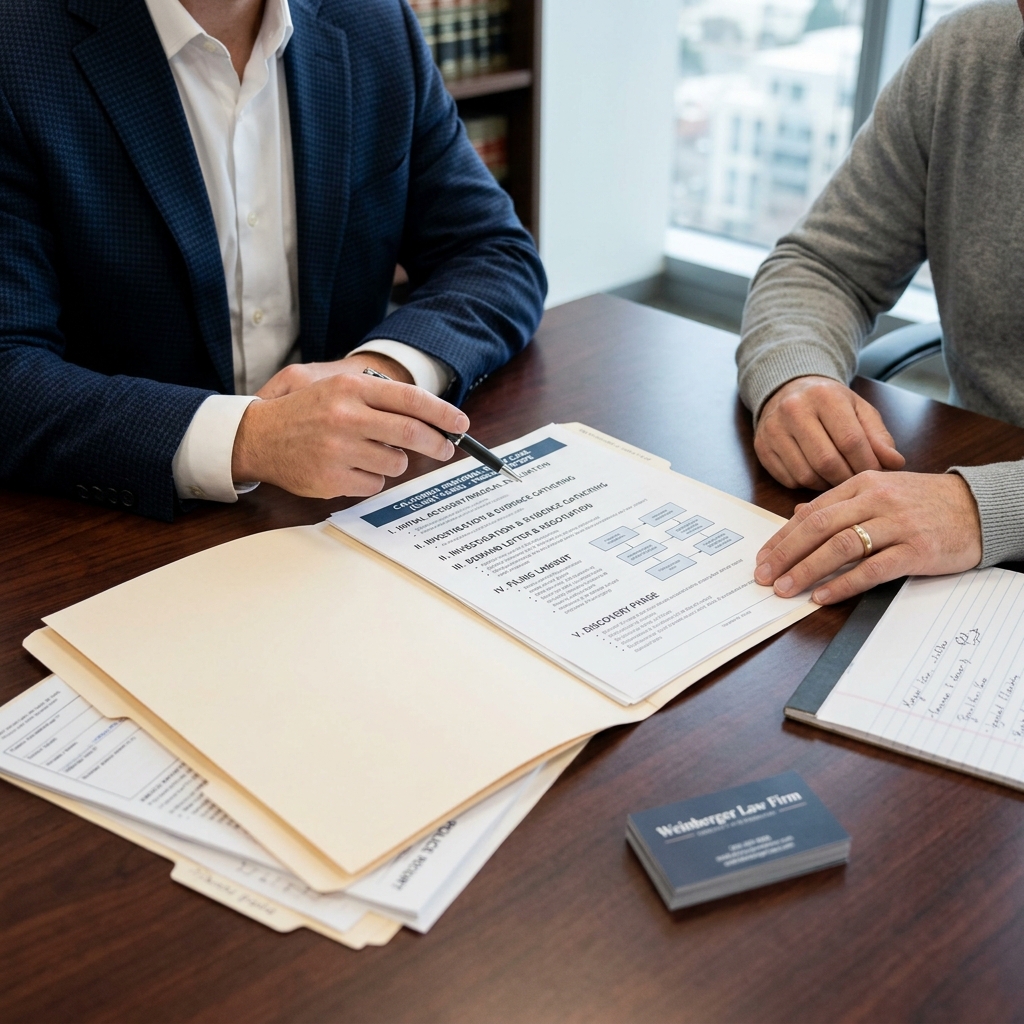
We also build your personal credibility as a witness. You’ll testify about the accident, your injuries, recovery challenges, and impact on daily life. We prepare you through mock cross-examination so you’re confident and composed. Jurors connect emotionally with injured plaintiffs who speak clearly and honestly about their experience.
Settlement Negotiations and Mediation
As discovery concludes and trial approaches, settlement momentum often increases. We continue negotiating directly with the insurance company or defense counsel. Many cases settle during final negotiation phases as both sides assess trial risk more realistically.
Mediation is another common pathway to resolution. We attend mediation with you and a neutral third party who facilitates settlement discussion. The mediator doesn’t decide the case but helps both sides understand the other’s position and find common ground. Mediation is often less expensive than trial and preserves privacy since settlement agreements are typically confidential.
Throughout settlement discussions, we advise you on settlement value relative to trial risk. We never pressure you to accept any offer. Your satisfaction with the settlement terms and the compensation amount determines our recommendation. No fee unless we recover for you ensures our interests align with yours — we’re motivated to maximize your recovery.
Trial Preparation and Courtroom Representation
If settlement discussions fail and your case proceeds to trial, we prepare meticulously. We organize evidence in chronological order, prepare witness examinations and cross-examinations, and develop a compelling trial narrative. We file motions in limine to exclude prejudicial evidence and shape what the jury sees and hears.
Jury selection is strategic. We identify jurors most likely to understand your injury and award fair compensation. During opening statement, we outline your case with clarity and empathy. Throughout trial, we examine your witnesses and experts, cross-examine the defendant and their experts, and present evidence persuasively. Our closing argument synthesizes facts into a coherent case for liability and damages.
Trial is public and uncertain. Juries are unpredictable, and appeals can extend resolution years further. This reality reinforces why many cases settle. However, we’re prepared to litigate to judgment if necessary and to appeal adverse decisions.
Understanding Statute of Limitations and Deadlines
California law imposes strict deadlines for filing personal injury lawsuits. The statute of limitations — the filing deadline — is generally two years from the injury date for personal injury claims and three years for property damage. Missing this deadline bars your claim permanently, regardless of merit. Time is limited — act now to preserve your legal rights.
Tolling rules may extend deadlines in limited situations, such as when the plaintiff is a minor or when the defendant was out of state. However, tolling is rare and fact-specific. You cannot rely on tolling. We file lawsuits well before the deadline to ensure compliance and avoid disputes about timely filing.
Other deadlines matter too. Settlement negotiations have implicit deadlines since cases progress toward trial. Insurance claims require prompt notice and cooperation. Medical treatment timelines affect case value. We track all critical dates and remind you when action is needed. See our guide on the California injury claim timeline for a detailed overview of how cases develop over time.
How Weinberger Law Firm Guides You Through Every Phase
We’ve guided hundreds of injured Californians from accident to recovery. Our approach combines compassionate support with authoritative legal strategy. We explain each phase in plain language, answer your questions thoroughly, and keep you updated regularly. You’re not navigating this alone — we’re with you at every step.
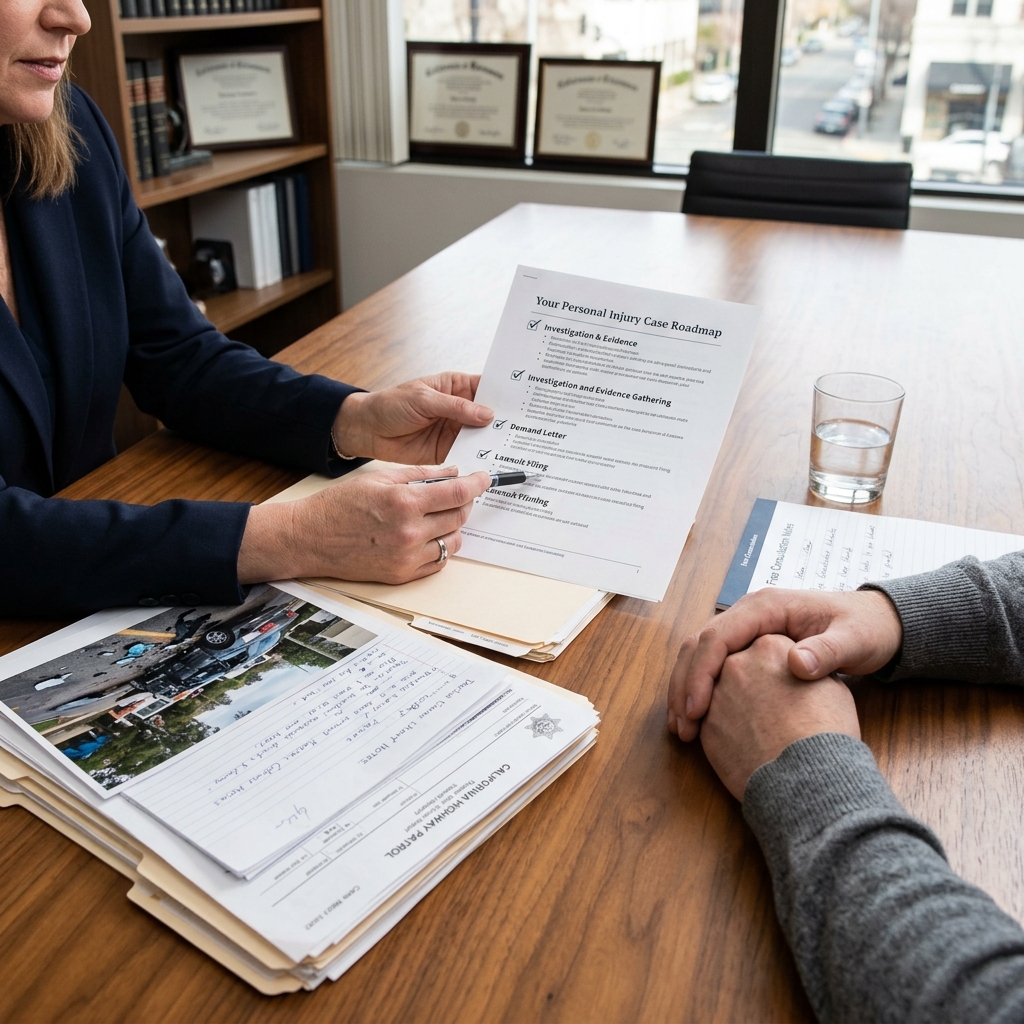
We handle all investigation, negotiation, and litigation details so you can focus on healing. We communicate clearly about realistic case value, timeline, and next steps. We’re responsive to your calls and emails. If you need a referral for medical treatment, rehabilitation, or other support, we provide recommendations based on experience.
Our fee structure protects you financially. We work on contingency, meaning you pay no attorney fees unless we recover compensation for you. You owe nothing upfront for investigation, negotiation, or litigation. Medical bills and lost wages are our priority — we maximize your recovery and discuss attorney fees and costs before settlement.
Take Action Now: Your Free Consultation Awaits
You’ve already taken an important step by reading this guide. The next step is direct action. Contact us for a free consultation to discuss your specific accident, injuries, and legal options. We’ll listen to your account, answer your questions, and explain how we can help. There’s no obligation, and your consultation is confidential.
Document, preserve, and present the facts — that’s our motto and your path to fair compensation. We investigate all available evidence, negotiate aggressively with insurance companies, and litigate when necessary. We pursue full and fair compensation reflecting your actual losses and legitimate pain and suffering.
Call Weinberger Law Firm today or visit https://weinbergerlaw.net to request your free consultation. Time is limited — act now. Let us help you understand your rights and secure the compensation you deserve.
For further reading: California injury claim timeline.).
Contact us today for a Free Case Consultation!
Frequently Asked Questions (FAQ)
How long do I have to file a personal injury lawsuit in California?
You have two years from the date of your injury to file a personal injury claim in California, which we call the statute of limitations. This deadline is critical, and we strongly recommend acting now because waiting until the last moment can jeopardize your case. Once this filing deadline passes, you lose your right to pursue compensation entirely, so we encourage you to contact us for a free consultation as soon as possible after your accident.
What happens if the insurance company won’t offer fair compensation?
If negotiations stall and we cannot reach a settlement that reflects the full value of your claim, we are prepared to file a lawsuit on your behalf and take your case to trial. We will investigate all available evidence, strengthen your case with expert witnesses if needed, and present the facts confidently in court. Our goal is to pursue full and fair compensation for your medical bills, lost wages, and other damages, whether through settlement or litigation.
Do I have to pay your fees upfront?
No, we work on a contingency fee basis, which means we charge no fee unless we recover compensation for you. You focus on your recovery while we handle the legal work, investigation, and negotiation with insurance companies. When we secure your settlement or court award, our fees come directly from that recovery, so there is no financial burden on you during the process.