
Table of Contents
- Understanding Your Premises Liability Case
- Why Evidence Determines Your Case Outcome
- Security Camera Footage and Video Documentation
- Witness Statements and Testimony
- Medical Records and Treatment Documentation
- Incident Scene Photos and Physical Evidence
- Property Maintenance Records and Inspection Reports
- Safety Violation Documentation and Code Compliance
- Insurance Policy and Coverage Information
- How We Preserve and Present Evidence for Maximum Compensation
- Your Path Forward: Why We Deliver Results
- Frequently Asked Questions (FAQ)
Understanding Your Premises Liability Case
If you were injured on someone else’s property, you likely have questions about what comes next and whether you have a valid claim. The answer depends almost entirely on evidence. Your path to fair compensation starts with understanding what evidence matters most and how to preserve it before it’s lost. We help clients throughout California gather and present the strongest possible case.
A premises liability claim holds a property owner or manager legally responsible for injuries caused by unsafe conditions on their property. This might be a slip and fall at a grocery store, a fall on a broken staircase in an apartment building, a dog bite, or an injury from defective equipment at a public venue. California law requires property owners to maintain reasonably safe premises and warn visitors of known hazards.
Your claim rests on proving three core elements: that the owner knew (or should have known) about the dangerous condition, that they failed to fix or warn about it, and that this failure directly caused your injury. Without solid evidence for each element, your case weakens significantly. That’s why gathering documentation immediately after your accident is crucial. Time is limited — act now to preserve evidence that might disappear.
Why Evidence Determines Your Case Outcome
Evidence transforms a story into a winning case. Insurance companies and juries respond to facts, not emotions. A strong evidence record proves liability, documents your damages (medical bills and lost wages), and demonstrates the property owner’s negligence. Weak or missing evidence gives insurers an easy excuse to deny or minimize your claim.
We investigate all available evidence to build your strongest case. This includes reviewing security footage, interviewing witnesses while their memories are fresh, obtaining medical records that quantify your injuries, and uncovering maintenance records that show the owner ignored safety standards. Each piece of evidence reinforces the others, creating an undeniable narrative of negligence.
Start documenting immediately. Photograph the scene, note the date and time of your injury, and preserve any hazardous object involved. Ask nearby witnesses for their contact information. Report the incident to the property owner or manager in writing. These early actions protect your legal rights and give us a solid foundation to work from.
Security Camera Footage and Video Documentation
Traffic camera footage and security recordings are often the most powerful evidence in premises liability cases. They show exactly what happened, eliminating disagreement about how the accident occurred. If a store’s video shows a wet floor with no warning sign and captures you slipping and falling, that’s nearly impossible for the other side to dispute.
Request video footage as soon as possible. Most businesses retain security footage for 30 to 90 days before recording over it. Contact the property owner’s management, file a written preservation request, and follow up in writing to ensure they don’t delete relevant recordings. We often issue formal legal notices demanding footage preservation to protect your evidence.
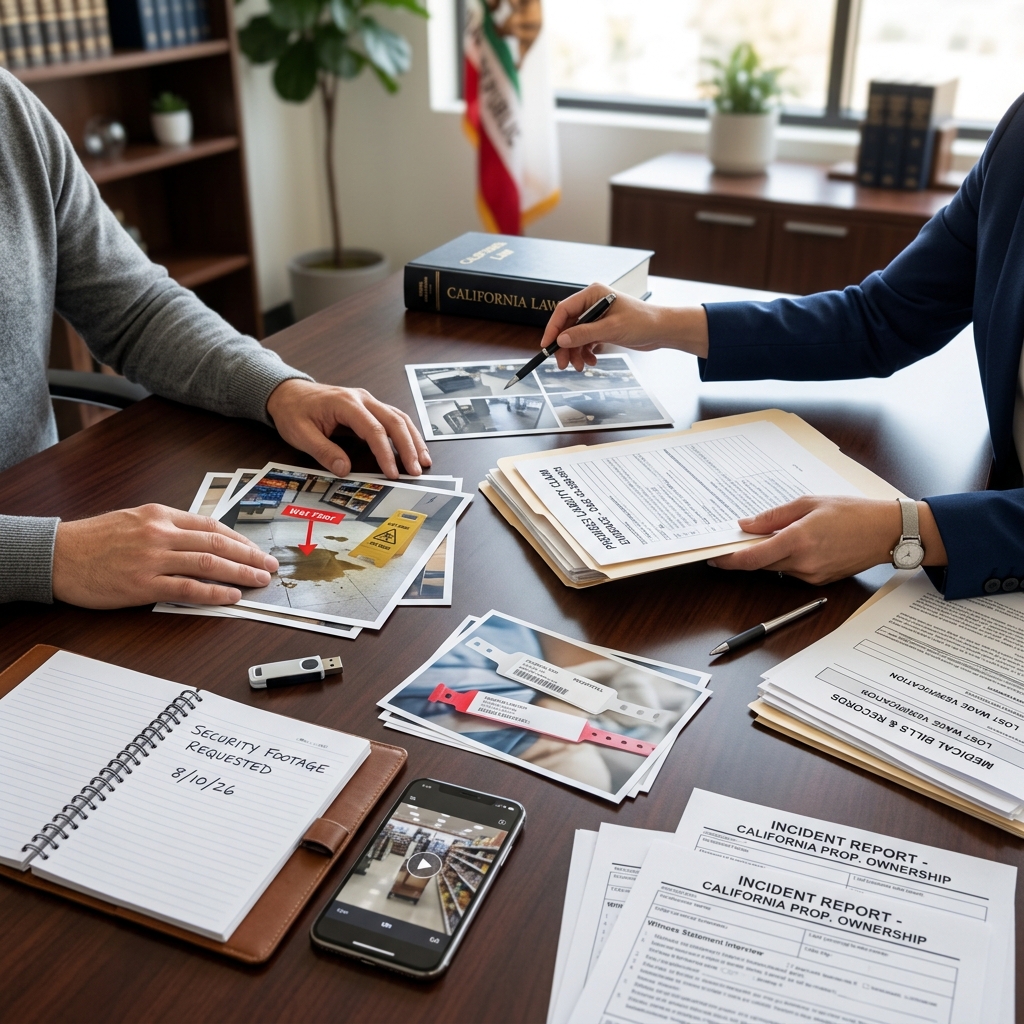
Video documentation extends beyond security cameras. If you or a bystander recorded video of the scene after your accident, that’s valuable too. Photos or video showing the hazardous condition, the lack of warning signs, or the state of the property at that moment all support your claim. We preserve and authenticate these videos for court presentation.
Witness Statements and Testimony
Eyewitnesses often make the difference between a strong case and a weak one. Someone who saw your fall, noticed the hazardous condition, or heard conversations about maintenance failures provides independent corroboration that the property owner’s account cannot dismiss easily.
Collect witness information at the scene if you’re able. Get their full names, phone numbers, email addresses, and a brief description of what they saw. Ask them to write down their account while it’s fresh. Later, we conduct formal interviews and may obtain sworn statements that can be used if the witness is unavailable at trial. Multiple witnesses describing the same hazard or negligence creates a compelling narrative.
Don’t overlook employees. Store staff, maintenance workers, or security personnel often know about recurring problems. If an employee mentioned to you that “we’ve had complaints about that step,” or if a worker was seen mopping the floor but didn’t post a wet floor sign, these details matter. We know how to elicit testimony that reveals the property owner’s knowledge and disregard for safety.
Medical Records and Treatment Documentation
Your medical records quantify your injuries and connect them directly to the accident. Hospital emergency room records, doctor’s notes, imaging reports (X-rays, MRIs), and treatment bills all establish what happened to your body and what it cost to repair the damage. Insurance companies scrutinize these documents, so completeness and clarity are essential.
Obtain copies of all medical records immediately. Include emergency room visits, follow-up doctor appointments, physical therapy sessions, imaging studies, and specialist consultations. Keep detailed records of your medical bills and lost wages. If you missed work due to recovery, document those lost paychecks and any lost benefits. This evidence directly supports your damage claims.
Consistency strengthens your case. If your medical records show ongoing treatment, pain complaints, and functional limitations that match your accident, the narrative is clear. Gaps in treatment or unexplained gaps in your medical documentation can be exploited by the defense to argue your injuries were minor. Stay engaged with your healthcare providers and keep us informed of your recovery progress.
Incident Scene Photos and Physical Evidence
Photographs taken at or shortly after the accident freeze the scene in time. A picture of the broken stair, the unmarked wet floor, the missing guardrail, or the debris that caused your fall is concrete evidence the property was unsafe. Photographs should show the hazard itself, warning signs (or the absence of them), lighting conditions, and relevant context.
If you were injured but able to safely take photos, do so immediately. If someone else documented the scene, obtain copies of those photos. Note the date, time, and exact location. We request additional photos from the property owner, emergency responders, or the business’s own investigation. These images become powerful exhibits in settlement negotiations and trial.
Physical evidence preservation matters too. If you slipped on a substance, save a sample if possible or have us photograph it. If a product caused injury, preserve that product exactly as it was when the accident occurred. Never discard or modify any object involved in your accident, no matter how insignificant it seems. We may need expert analysis or testing to demonstrate the hazard.
Property Maintenance Records and Inspection Reports
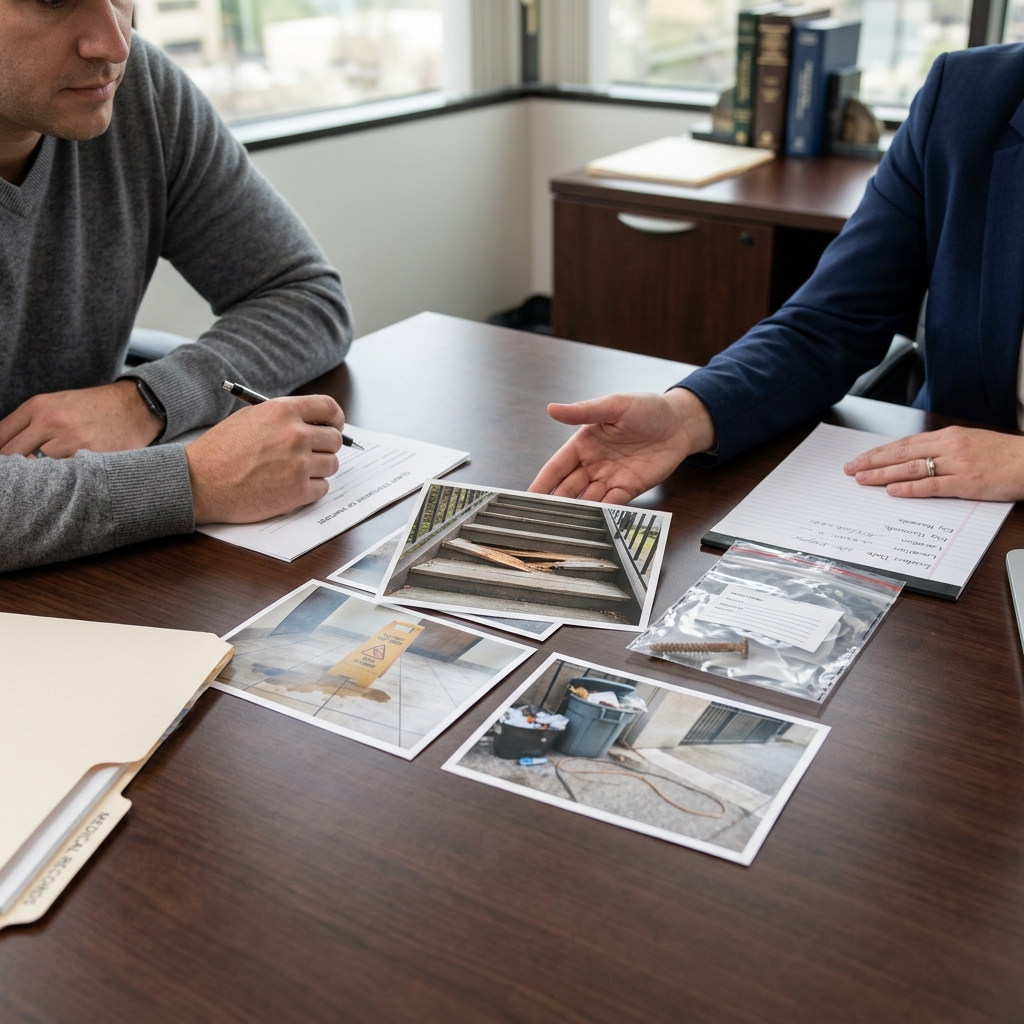
Property maintenance records reveal what the owner knew and when. If a business had been warned of a hazard but failed to repair it, internal maintenance logs, work orders, or incident reports prove negligence. Similarly, if an inspection report documented a safety violation that was never corrected, that’s compelling evidence.
We subpoena maintenance records, safety inspection reports, and incident logs from the property owner. These documents often show a pattern of neglect. For example, if prior complaints about a broken step were documented but never acted on, and you fell on that same step weeks later, the owner’s liability is clear. We pursue full and fair compensation by exposing how the property owner ignored known hazards.
Many properties conduct regular safety inspections but suppress unfavorable findings. During discovery, we obtain these reports and any communication between management and maintenance staff. If records show the owner knew about the condition and did nothing, that strengthens your case dramatically.
Safety Violation Documentation and Code Compliance
California building codes and safety standards establish what reasonable property owners must do. If an accident resulted from a building code violation (inadequate lighting, missing guardrails, improper stair construction, inadequate drainage), that violation strengthens your negligence claim. It shows the owner failed to meet the legal standard of care.
We review California building codes, OSHA standards, and industry-specific safety guidelines relevant to your accident. If the property violated a code, we document that violation and explain its relevance to a jury. Experts may inspect the property and provide testimony that the hazard violated applicable safety standards. This expert validation makes the owner’s negligence undeniable.
Request any inspection reports issued by local authorities, health departments, or building inspectors. These government findings carry significant weight. If the property received a citation for a safety violation shortly before your accident, that timeline is powerful evidence the owner knew or should have known about the hazard.
Insurance Policy and Coverage Information
Understanding the property owner’s insurance coverage affects your claim strategy and recovery potential. Most property liability policies cover premises liability claims. However, policy limits, exclusions, and coverage details vary. We investigate what insurance applies and ensure we pursue maximum compensation within available coverage.
Early policy information gathering prevents surprises. We request policy declarations and limits from the property owner or their insurer. Some properties have umbrella or excess liability coverage that increases available compensation. If a business is uninsured or underinsured, we explore other recovery avenues, including the property owner’s personal assets. Document any statements the property owner makes about their insurance.
Coverage disputes sometimes arise during settlement or litigation. Insurance companies may deny coverage based on policy exclusions or argue the claim falls outside policy terms. We navigate these disputes aggressively, pursuing every available avenue to recover for your injuries and losses.
How We Preserve and Present Evidence for Maximum Compensation
Evidence preservation and presentation require strategy and expertise. We issue preservation letters to the property owner, insurer, and relevant third parties demanding they retain all evidence. We photograph and document the scene comprehensively. We obtain records through formal discovery requests and subpoenas. We work with expert investigators, medical experts, and reconstruction specialists to analyze evidence and prepare it for presentation.
Our approach to evidence presentation is disciplined. We organize facts chronologically, group evidence by theme (establishing the hazard, proving owner knowledge, demonstrating failure to warn or repair), and build a narrative that juries understand. Exhibits are clearly labeled, photographs are enlarged and annotated, and witness statements are summarized concisely. We don’t overwhelm with quantity; we persuade with precision.
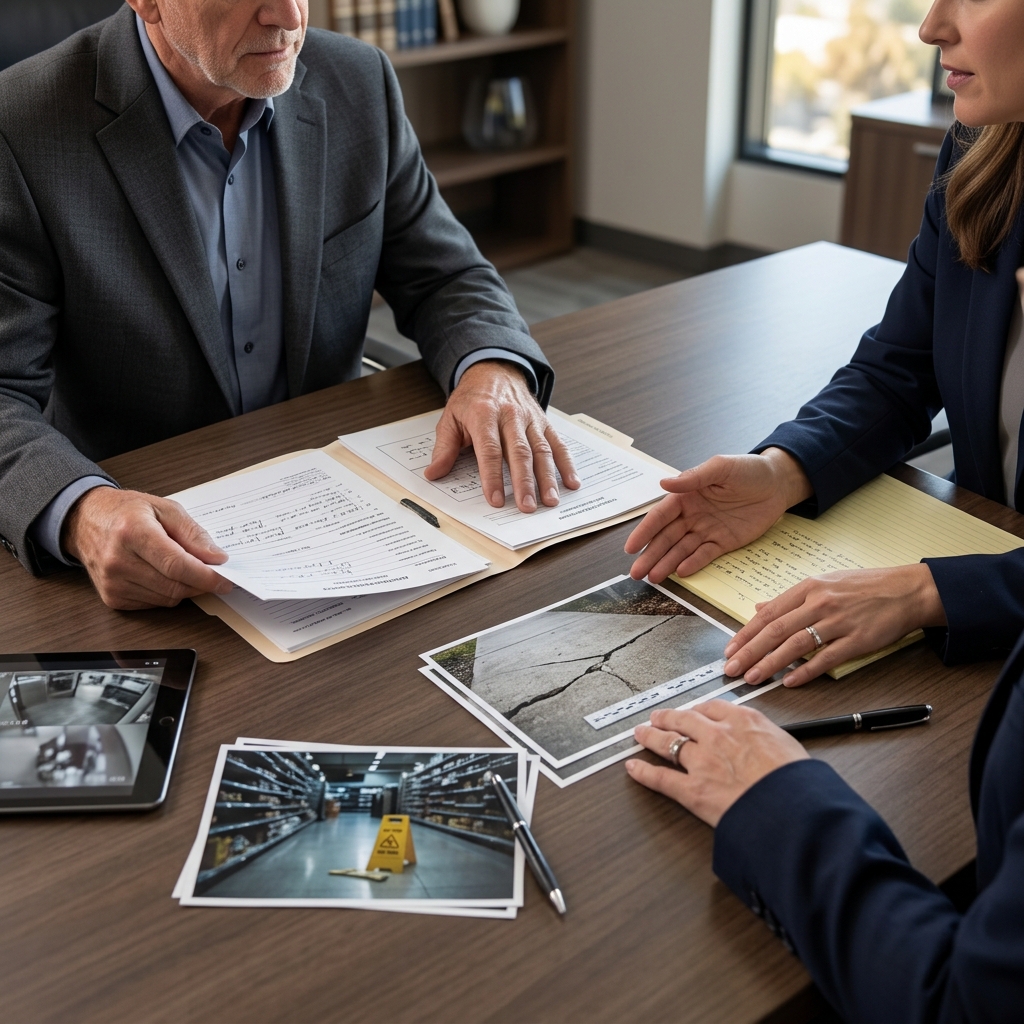
During settlement negotiations, we present evidence strategically to convince the insurer your case is strong and going to trial is costly. If settlement fails, we prepare evidence for court, including witness examination, expert testimony, and persuasive visual presentations. Our goal is clear: secure compensation that fully covers your medical bills and lost wages while holding negligent property owners accountable.
Your Path Forward: Why We Deliver Results
Building a strong premises liability claim requires immediate action, careful documentation, and expert legal guidance. You have rights after an accident. California law protects injured people, but only if you take steps to preserve evidence and file within the statute of limitations — the deadline to file a claim, which is typically two years from the injury date in California premises liability cases.
We combine compassionate client support with aggressive claim advocacy. From your first free consultation, we listen to your story, answer your questions plainly, and explain California premises liability law without jargon. We investigate all available evidence, negotiate firmly with insurance companies, and are fully prepared to litigate if necessary. No fee unless we recover for you. Your recovery is our mission.
Contact us today for a free consultation. We’ll review your case, explain your rights, and discuss the evidence strategy that positions you for maximum compensation. The property owner should not escape accountability, and you should not bear the financial burden of their negligence. Let us fight for the fair compensation you deserve.
For further reading: Premises liability services.
Contact us today for a Free Case Consultation!
Frequently Asked Questions (FAQ)
What types of evidence do we need to build a strong premises liability claim?
We gather multiple forms of documentation to support your case, including security camera footage, witness statements, medical records showing your injuries, photographs of the hazardous condition, and property maintenance records. We also collect evidence of safety code violations and inspect insurance policy details to understand available coverage. The stronger our evidence foundation, the better we can demonstrate the property owner’s negligence and secure fair compensation for your damages.
How quickly should we act to preserve evidence after an accident on someone else’s property?
Time is limited—act now. We recommend preserving any evidence immediately because property owners may remove hazardous conditions, delete security footage, or alter maintenance records once they know about an injury. You should document the scene with photos, get medical care right away, and contact us as soon as possible so we can issue evidence preservation notices and begin our thorough investigation before critical proof disappears.
What happens if the property owner or their insurance company disputes our evidence?
We pursue full and fair compensation by presenting our evidence strategically through negotiation and, if necessary, litigation. We investigate all available evidence to build an unshakeable case, including expert analysis when needed. If disputes arise, we’re ready to take your case to court and have the evidence reviewed by a judge or jury to protect your rights and maximize what you recover.