
Table of Contents
- When a Property Owner’s Security Failures Leave You Injured
- Understanding Premises Liability and Your Rights Under California Law
- How Security Negligence Creates Legal Liability for Property Owners
- Common Premises Liability Scenarios: Inadequate Security, Foreseeable Harm
- Why Documentation and Evidence Preservation Matter Immediately After Your Injury
- How We Investigate Security Negligence Claims and Build Your Case
- Calculating Your Damages: Medical Bills, Lost Wages, and More
- Insurance Company Negotiations: Why You Need Experienced Representation
- The Timeline Pressure: Understanding California’s Statute of Limitations
- Your Path Forward: How We Secure Maximum Compensation for You
- Frequently Asked Questions (FAQ)
When a Property Owner’s Security Failures Leave You Injured
You were at a shopping mall, apartment complex, or entertainment venue when someone attacked you or a crime occurred. The property owner had security cameras, hired security staff, or could have installed better lighting, yet they failed to act. Now you’re facing medical bills, lost wages, and the emotional aftermath of an injury that might have been prevented.
You have rights after an accident or crime on someone else’s property. California law recognizes that property owners have a duty to maintain reasonably safe premises and implement appropriate security measures when danger is foreseeable. When they neglect this duty and you’re harmed as a result, you may be entitled to compensation.
At Weinberger Law Firm, we understand the frustration and pain that follows a security-related injury. We’ve helped clients pursue full and fair compensation from property owners and their insurance companies for injuries caused by negligent security. Your first step is understanding what premises liability means and whether you have a viable claim.
Understanding Premises Liability and Your Rights Under California Law
Premises liability is a legal concept that holds property owners responsible for injuries that occur on their land or in their buildings due to unsafe conditions or negligence. In California, property owners must exercise reasonable care to maintain safe premises and warn visitors of known dangers.
When security negligence is involved, the standard shifts slightly. The property owner must take reasonable precautions to protect visitors from foreseeable criminal acts or harm. This doesn’t mean they’re automatically liable for every crime that occurs on their property. Instead, they must have reasonably anticipated the risk and failed to implement appropriate security measures.
California courts have established that premises liability includes a duty to provide adequate security when circumstances make criminal conduct foreseeable. If a property owner ignores prior incidents, fails to install basic security measures, or hires inadequate security personnel despite known risks, they may be held liable for injuries that result.
Your rights include the ability to recover damages not just for your immediate medical expenses, but also for lost income, pain and suffering, and other quantifiable losses. Understanding these rights is the foundation for building a strong claim.
How Security Negligence Creates Legal Liability for Property Owners
Security negligence occurs when a property owner knows or should know that criminal activity is a foreseeable risk, yet fails to implement reasonable security measures. The key legal test involves three elements: foreseeability, duty, and breach.
Foreseeability means the property owner should have anticipated that criminal conduct could occur at their location. This is established through prior incidents, complaints, police reports, or general knowledge of crime in the area. A property owner cannot claim ignorance if they’ve received multiple reports of assault or theft on their premises.
Duty is the legal obligation a property owner owes to visitors and customers. In California, this duty includes maintaining premises in a reasonably safe condition and taking precautions against foreseeable criminal acts. The extent of this duty depends on the type of property and the foreseeability of harm.
Breach is the failure to fulfill that duty. If a property owner ignored prior security problems, failed to install adequate lighting, didn’t maintain security cameras, or employed inadequate security personnel despite known risks, they’ve breached their duty.
When all three elements exist and you’re injured as a result, the property owner becomes liable for damages. We will investigate all available evidence to establish each element and demonstrate the owner’s negligence.
Common Premises Liability Scenarios: Inadequate Security, Foreseeable Harm
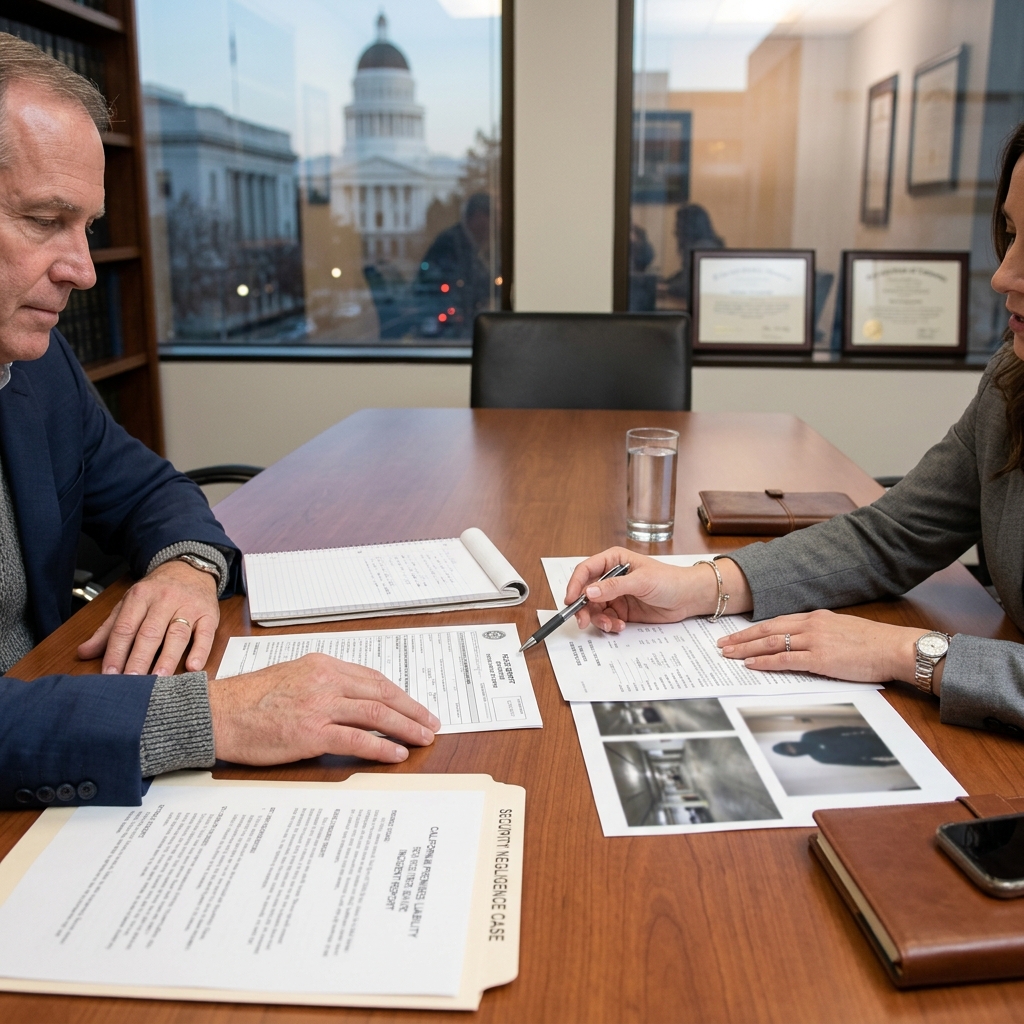
Security negligence appears in many real-world situations. Understanding common scenarios helps you recognize whether your injury may involve a viable claim.
Inadequate lighting in parking structures or outdoor areas is one of the most common security failures. Apartment complexes, shopping centers, and parking garages have a duty to provide sufficient lighting to deter criminal activity and help visitors see potential hazards. An assault in a poorly lit parking area where the owner knew crime had occurred previously often results in liability.
Lack of security personnel or surveillance cameras despite prior crimes represents another clear breach. A business that experiences repeated theft or assault but hires no security staff and installs no cameras has failed its duty to protect visitors.
Failure to repair broken locks, gates, or access controls allows unauthorized individuals onto the property. If a residential complex has a broken gate that residents reported multiple times, and an intruder enters and commits a crime, the property owner’s negligence is evident.
Poor hiring and training of security staff can also create liability. If a property owner hired security personnel without background checks, or the staff was inadequately trained and failed to respond to dangerous situations, the owner bears responsibility.
Ignoring prior incidents or complaints is particularly damaging to a property owner’s defense. If residents or customers reported security problems and management took no action, a pattern of negligence emerges that strengthens your claim.
Each scenario relies on establishing that the harm was foreseeable and that reasonable security measures could have prevented your injury.
Why Documentation and Evidence Preservation Matter Immediately After Your Injury
The hours and days following your injury are critical. Evidence can disappear, memories fade, and witnesses become harder to locate. Taking immediate action to preserve and document what happened creates a stronger foundation for your claim.
Preserve any evidence and get medical care. Seek immediate medical attention and keep detailed records of all treatment, prescriptions, and follow-up appointments. Medical documentation proves the extent of your injuries and creates an official record. Take photographs of your injuries, the location where you were harmed, and any visible security failures (broken locks, dark areas, absent cameras).
Document the scene thoroughly. Note the time of day, weather conditions, and any surveillance cameras visible. If you can, identify and collect contact information from witnesses. Ask the property owner or manager for incident reports and prior complaints. Request copies of security camera footage immediately, as properties often delete or overwrite footage after 30 days.
Write down everything you remember about the incident while it’s fresh. Include dates, times, names of people involved, and exactly what happened. This contemporaneous account is more credible than a delayed recollection.
Contact us as soon as possible. Early involvement allows us to issue preservation notices to the property owner and ensure evidence isn’t destroyed. Time is limited — act now to protect your ability to recover compensation.
How We Investigate Security Negligence Claims and Build Your Case
Our investigation process is thorough and strategic. We combine legal expertise with investigative rigor to uncover the facts that support your claim and establish the property owner’s negligence.
We begin by reviewing all available evidence: your medical records, police reports, witness statements, photographs, and video footage. We examine the property’s history for prior incidents, complaints, or known security problems. This establishes foreseeability and demonstrates that the owner knew or should have known about the risk.
We consult with security experts who review the property’s layout, lighting, access controls, and surveillance systems. They assess whether the security measures in place were reasonable and whether additional precautions would have prevented your injury. Expert testimony often proves decisive in demonstrating the owner’s breach of duty.
We interview witnesses and obtain their sworn statements. We request police reports and dispatch records that document prior crimes at the location. We file discovery requests with the property owner’s insurance company to obtain internal incident reports, maintenance records, and security protocols.
We document the owner’s knowledge of prior crimes. If the property experienced previous assaults, thefts, or security breaches, we gather evidence of those incidents. Each prior incident strengthens the argument that your injury was foreseeable and preventable.

Once we’ve gathered and analyzed all evidence, we prepare a comprehensive case that demonstrates the owner’s negligence and the damages you’ve suffered. This positions us strongly for settlement negotiations or trial.
Calculating Your Damages: Medical Bills, Lost Wages, and More
Damages in a premises liability case encompassing security negligence include both economic and non-economic losses. Understanding what you can recover helps you appreciate the full value of your claim.
Economic damages are quantifiable financial losses. Medical bills and lost wages are the most obvious. Include all emergency room visits, surgeries, medication, physical therapy, and ongoing treatment. If your injury forced you to miss work, document lost income and any lost benefits. Calculate future medical expenses if your injury requires long-term care.
Non-economic damages compensate for pain, suffering, emotional distress, and reduced quality of life. If your injury prevents you from enjoying activities you previously engaged in, or causes lasting psychological effects, these losses are recoverable. Permanent scarring, disfigurement, or disability increases these damages significantly.
Punitive damages are occasionally available if the property owner’s conduct was particularly reckless or malicious. These damages punish wrongdoing and deter future negligence.
We pursue full and fair compensation by calculating damages comprehensively. We work with medical experts to project future treatment costs, vocational experts to assess lost earning capacity, and economists to account for inflation and long-term financial impact.
Insurance adjusters often undervalue non-economic damages. Our role is to present compelling evidence that your pain, suffering, and lost quality of life deserve substantial compensation.
Insurance Company Negotiations: Why You Need Experienced Representation
After we’ve built a strong case, we enter negotiations with the property owner’s insurance company. This is where experienced representation makes a measurable difference in the outcome.
Insurance companies are sophisticated negotiators with financial incentives to minimize payouts. They employ adjusters trained to challenge claims, question injury severity, and shift blame to injured parties. Without skilled representation, you’re at a significant disadvantage.
We approach negotiations with a clear strategy backed by evidence. We present our case systematically, demonstrating the property owner’s liability and the full extent of your damages. We know how insurance companies evaluate claims and what evidence moves them toward settlement.
We’re prepared to litigate if negotiation doesn’t produce fair compensation. Insurance companies often recognize that a case backed by strong evidence and an attorney ready to take it to court is more expensive to defend than to settle. This reality creates leverage in our favor.
We handle all communication with the insurance company, protecting you from making statements that could undermine your claim. Our goal is to secure maximum compensation without you bearing the stress of direct negotiations.
The Timeline Pressure: Understanding California’s Statute of Limitations
California law imposes strict deadlines for filing premises liability claims. The statute of limitations — the filing deadline — is typically two years from the date of your injury for personal injury claims. This may seem like a long time, but it passes quickly.
Waiting until the deadline approaches creates unnecessary risk. Witnesses move away or forget details. Evidence deteriorates or disappears. Medical records become harder to locate. Starting your claim immediately gives us maximum time to investigate thoroughly and negotiate effectively.
Some circumstances extend or shorten the deadline. If you were a minor at the time of injury, the deadline may be extended. If you didn’t discover the injury immediately, the clock may start at discovery rather than the date of harm. Property damage claims have their own deadlines.
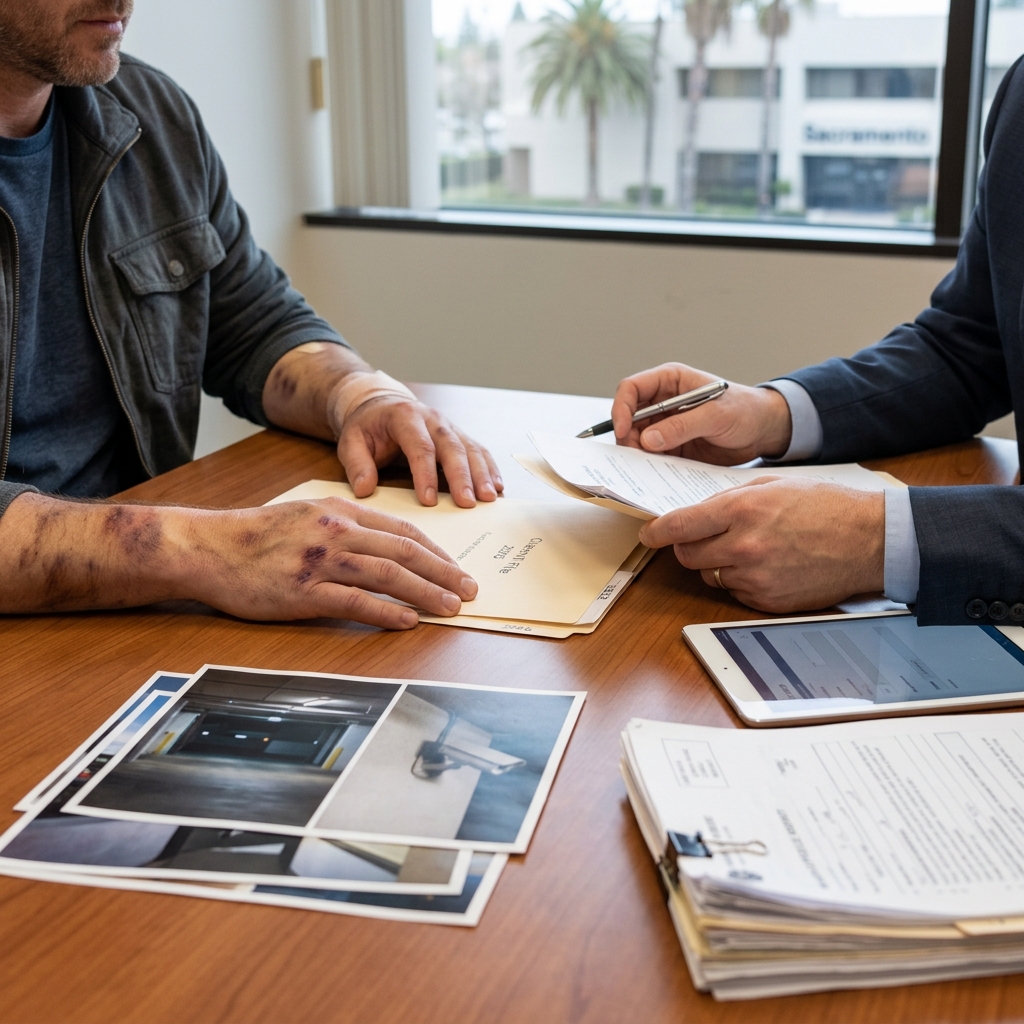
We evaluate your specific situation and establish a clear timeline for action. We file claims promptly and ensure all procedural deadlines are met. Missing a deadline can bar your claim entirely, making immediate action essential.
Contact us without delay. The sooner you reach out, the sooner we begin protecting your rights and building your case.
Your Path Forward: How We Secure Maximum Compensation for You
Your path to recovery involves clear steps, beginning with a free consultation where we evaluate your claim and explain your options.
During our initial meeting, we listen to your account of what happened. We review any documents you’ve gathered and assess the strength of your claim. We explain California premises liability law in plain language and answer your questions honestly.
If we determine you have a viable claim, we take over the investigative and legal process. You focus on healing while we handle the demanding work of building your case, negotiating with insurers, and, if necessary, preparing for trial.
We operate on a contingency fee basis: no fee unless we recover for you. This means you have no upfront legal costs, and we’re motivated to secure the maximum compensation possible because our fee comes from your recovery.
We communicate clearly throughout the process. You’ll understand what we’re doing, why we’re doing it, and what to expect next. We respect your time and emotional energy by handling the legal complexity so you can focus on recovery.
The journey from injury to compensation requires patience, documentation, evidence preservation, and skilled legal representation. We’ve guided many clients through this process and secured substantial recoveries. You don’t have to navigate this alone.
Reach out to Weinberger Law Firm today for a free consultation. We’ll evaluate your claim, explain your rights, and show you how we can help you secure the compensation you deserve.
For further reading: Sacramento premises liability guide.
Contact us today for a Free Case Consultation!
Frequently Asked Questions (FAQ)
What should I do immediately after being injured due to inadequate security on a property?
First, prioritize your safety and get medical attention right away. Then, document everything: photograph the scene, note any security cameras or absent security measures, and collect contact information from witnesses. We strongly recommend preserving any evidence and reporting the incident to the property owner or manager in writing. Time is limited under California’s statute of limitations, so contact us for a free consultation as soon as possible so we can begin investigating your claim.
How do we prove that a property owner’s security negligence caused my injury?
We will investigate all available evidence to establish that the property owner knew or should have known about the security risk, that their failure to address it was unreasonable, and that this negligence directly caused your injury. This involves reviewing security footage, interviewing witnesses, examining the property’s history of similar incidents, and consulting security experts when necessary. We pursue full and fair compensation by building a factual record that demonstrates the owner’s liability for their security breach.
What damages can I recover in a premises liability security negligence claim?
You have rights to recover economic damages including medical bills, lost wages, and ongoing treatment costs, as well as non-economic damages for pain, suffering, and emotional distress. We calculate your compensation by thoroughly documenting your medical records, income losses, and the full impact of your injury. Our negotiation with insurance companies ensures we maximize your recovery potential so you receive fair compensation for what you’ve endured.