
Table of Contents
- Why You Need Professional Legal Guidance After an Accident
- Understanding Your Rights Under California Personal Injury Law
- The Critical First Steps: Evidence Preservation and Medical Documentation
- Calculating Your Full Damages: Medical Bills, Lost Wages, and Beyond
- The Pre-Suit Demand Phase: Our Negotiation Strategy
- Statute of Limitations: Why Time Is Your Most Valuable Asset
- Filing Your Complaint: Meeting California Court Requirements
- Discovery and Investigation: How We Build Your Strongest Case
- Evaluating Settlement Offers Versus Going to Trial
- What to Expect During Litigation and Court Proceedings
- Why Our Firm Gets You the Results You Deserve
- Take Action Now: Your Free Consultation Awaits
- Frequently Asked Questions (FAQ)
Why You Need Professional Legal Guidance After an Accident
If you were injured due to another party’s negligence, you have rights after an accident. The path forward can feel overwhelming when you’re managing medical care, lost income, and emotional recovery. We understand this is a difficult time, and our role is to guide you through every stage of filing a personal injury lawsuit in California so you can focus on healing while we pursue full and fair compensation on your behalf.
After an accident, many people attempt to handle claims alone. Insurance companies, however, employ experienced adjusters trained to minimize payouts. They will contact you early, ask detailed questions, and often encourage quick settlements that undervalue your case. Without legal representation, you risk accepting far less than you deserve.
We navigate these negotiations and hold insurers accountable. Our expertise in California injury law means we understand the tactics used against accident victims and how to counter them effectively. We investigate all available evidence, from police reports to medical records to witness statements, building a case that reflects the full extent of your damages.
Time matters here. The sooner you secure legal guidance, the better we can preserve evidence and protect your rights. Contact us for a free consultation to discuss your specific situation with no obligation.
Understanding Your Rights Under California Personal Injury Law
California law allows injured people to recover damages when someone else’s negligence causes harm. This applies across many scenarios: car accidents, motorcycle collisions, premises liability (injuries on someone else’s property), and product liability (injuries from defective products).
To win a personal injury case in California, we must establish four elements: duty (the defendant owed you a legal obligation), breach (they violated that duty), causation (their breach caused your injury), and damages (you suffered measurable harm). For example, a driver owes you a duty to follow traffic laws; running a red light breaches that duty; the collision causes injury; and your medical bills and lost wages represent damages.
You have rights to recover economic damages (medical bills, lost wages, future medical care) and non-economic damages (pain and suffering, emotional distress, loss of enjoyment of life). In some cases involving egregious conduct, punitive damages are also available. Understanding these categories helps us quantify what you’re owed.
The Critical First Steps: Evidence Preservation and Medical Documentation
The first hours and days after an injury are critical. Preserve any evidence and get medical care immediately. Photograph the accident scene, vehicle damage, visible injuries, and hazardous conditions. Collect contact information from witnesses. Keep receipts for all expenses related to your injury.
Medical documentation is your foundation. Seek treatment as soon as possible, even if injuries seem minor. Insurance adjusters often argue that delayed treatment suggests injuries weren’t serious. Detailed medical records from emergency rooms, doctors, therapists, and specialists create an irrefutable timeline and prove the extent of your harm.
Document everything going forward: medical appointments, prescriptions, physical therapy sessions, missed work days, and how your injury affects daily activities. Save emails, texts, photos, and written notes. This meticulous record becomes the evidence we will investigate and present to build your strongest case.
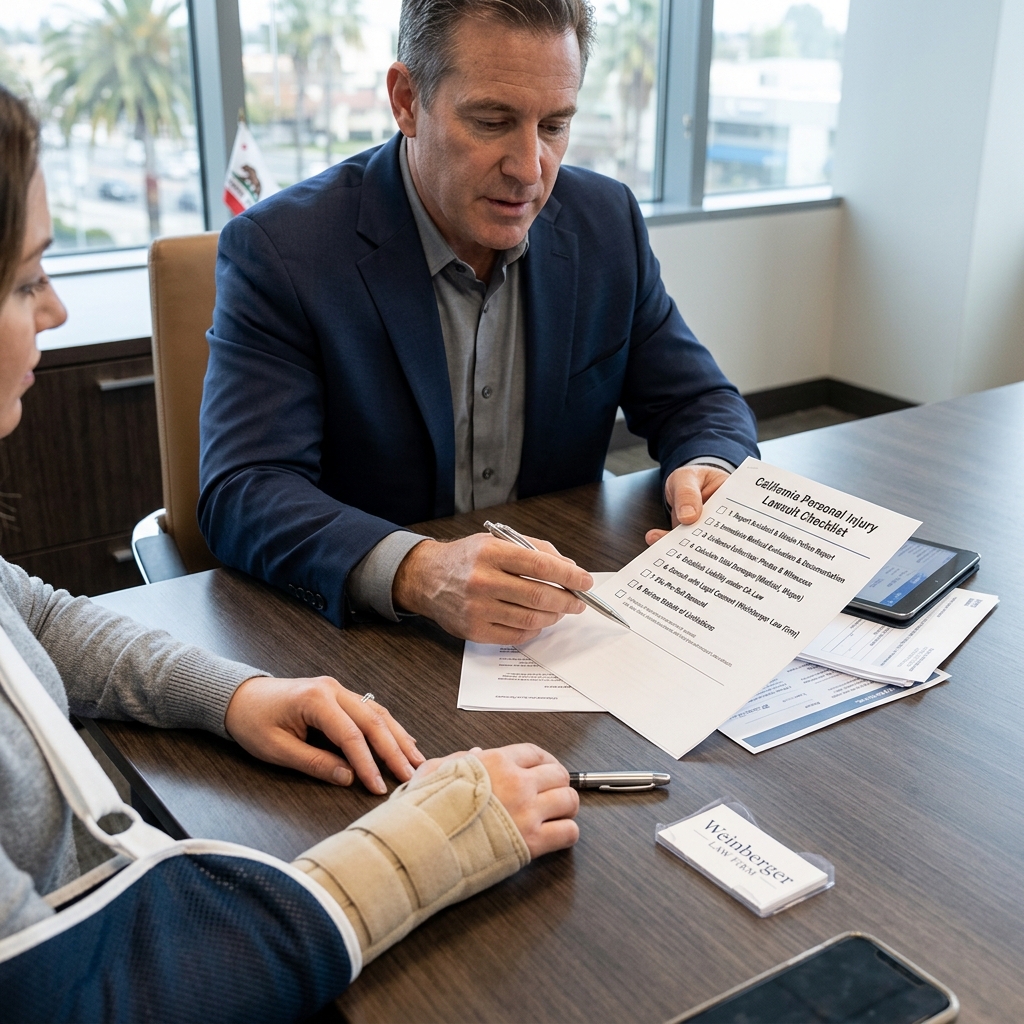
Calculating Your Full Damages: Medical Bills, Lost Wages, and Beyond
Many accident victims focus only on immediate medical bills, missing significant compensation they’re entitled to. We calculate damages comprehensively.
Economic damages include:
- Current medical expenses and projected future medical care
- Lost wages and diminished earning capacity
- Transportation costs for treatment
- Home care or modification costs if needed
Non-economic damages address intangible harms:
- Physical pain and suffering
- Emotional distress and anxiety
- Loss of companionship or lifestyle
- Permanent scarring or disfigurement
We work with medical experts to project long-term care needs and economists to calculate lost future income. This thorough approach maximizes your compensation potential and ensures you receive what you truly deserve.
The Pre-Suit Demand Phase: Our Negotiation Strategy
Before filing a lawsuit, we typically send a demand letter to the at-fault party’s insurance company. This letter details the accident, your injuries, medical treatment, damages, and the compensation we’re seeking based on California law and comparable cases.
Insurance companies often respond with low initial offers. Our negotiation strategy draws on years of experience and intimate knowledge of what similar cases settle for. We counter their offers strategically, providing evidence and legal reasoning that support our valuation. Many cases settle during this phase without going to court.
We pursue full and fair compensation at every stage. If the insurer’s final offer falls short of what your case is worth, we’re prepared to file suit and litigate aggressively. Our willingness to take cases to trial gives us leverage in settlement discussions.
Statute of Limitations: Why Time Is Your Most Valuable Asset
California’s statute of limitations sets a filing deadline for personal injury lawsuits. Generally, you have two years from the date of injury to file. Missing this deadline means losing your legal right to sue, regardless of how strong your case is.
This deadline is absolute. Courts will not extend it for any reason. We track these critical dates and ensure all paperwork is filed well before expiration. Time is limited, so act now to protect your rights.
Some circumstances may toll (pause) the statute of limitations, such as if you’re a minor or if the defendant leaves California. Even so, relying on exceptions is risky. Contact us immediately after an injury so we can secure your case timeline and prevent any possibility of lost rights.
Filing Your Complaint: Meeting California Court Requirements
Once negotiation concludes without a fair settlement, we file a complaint in court. This formal document outlines your claim, the defendant’s wrongdoing, the injuries you sustained, and the damages you seek.

California courts have specific filing requirements: proper naming of defendants, accurate case caption format, adherence to page limits, and payment of filing fees. Any procedural misstep can delay your case or create legal vulnerabilities. We handle these technical requirements precisely so your case proceeds without interruption.
After filing, the defendant has 30 days to respond. We prepare for their response and any legal motions they file. This stage transitions your case from negotiation into the formal litigation process.
Discovery and Investigation: How We Build Your Strongest Case
Discovery is the phase where both sides exchange evidence and information. We send interrogatories (written questions), requests for production of documents, and requests for admissions. We also depose the opposing party and their witnesses under oath.
Simultaneously, we conduct our own investigation. We interview witnesses while memories are fresh, obtain traffic camera footage from nearby businesses, subpoena police reports and medical records, and consult expert witnesses in accident reconstruction, medicine, or other relevant fields. Each piece of evidence strengthens your case.
This phase typically lasts several months and reveals the other side’s weaknesses and strengths. Armed with this comprehensive understanding, we refine our strategy and either pursue settlement or prepare for trial.
Evaluating Settlement Offers Versus Going to Trial
As discovery concludes, settlement discussions often intensify. Insurance companies may raise their offers, but the question becomes: is it enough?
We advise you on the pros and cons of settling versus proceeding to trial. Settlement offers certainty, finality, and faster compensation. Trial offers the possibility of a larger award but carries the risk of a jury verdict lower than expected. We present you with clear analysis: what the evidence supports, what comparable cases achieved, and what realistic trial outcomes look like.
You always make the final decision. We provide honest counsel and strong advocacy either way. If we recommend trial, we’re fully prepared to present compelling evidence to a jury. If settlement makes sense, we negotiate a final agreement that fully compensates you.
What to Expect During Litigation and Court Proceedings
If your case reaches trial, we guide you through every step. This includes final pre-trial conferences with the judge, courtroom procedures, jury selection, opening statements, witness testimony, cross-examination, and closing arguments.
Trials are rigorous. We prepare you for how to testify, how opposing counsel will challenge your account, and what courtroom decorum requires. We present medical evidence, expert testimony, and witness accounts in a compelling narrative. Our goal is clear: convince the jury that the defendant’s negligence caused your harm and that you deserve full compensation.
Litigation timelines vary. Some cases resolve in under a year; others take two to three years. Throughout, we keep you informed and ensure you understand each development and decision point.
Why Our Firm Gets You the Results You Deserve

We bring together comprehensive personal injury legal services focused entirely on your recovery and compensation. Our approach combines strong negotiation with insurance companies and complete litigation readiness. We handle diverse cases—car accidents, motorcycle collisions, premises liability, product liability—and we understand California law inside and out.
Clear communication is our foundation. We explain complex legal concepts in plain language, respond quickly to your questions, and treat you as a valued client, not just a case number. Our responsive client support means you always know where your case stands.
We also work on contingency. No fee unless we recover for you. This aligns our interests completely with yours: we only earn when you receive compensation. You face no financial risk, and we’re fully motivated to maximize what you recover.
Take Action Now: Your Free Consultation Awaits
If you’ve been injured due to negligence, don’t delay. The statute of limitations is already running, and early action protects your rights and evidence. We offer a free consultation where we listen to your story, answer your questions, and explain the path forward clearly.
Contact Weinberger Law Firm today. We’ll review your case, discuss your options, and commit to pursuing the full and fair compensation you deserve. You don’t face this alone—we’re here to guide you through every step toward justice and recovery.
For further reading: California personal injury steps.
Contact us today for a Free Case Consultation!
Frequently Asked Questions (FAQ)
What is the statute of limitations for filing a personal injury lawsuit in California?
In California, you generally have two years from the date of your injury to file a personal injury lawsuit, though this deadline can vary depending on the type of case. We strongly advise acting quickly because once this deadline passes, you lose your right to pursue compensation entirely. Time is limited, so we recommend contacting us as soon as possible to ensure we preserve your claim and gather evidence while it’s still fresh.
How do we handle costs if I can’t afford an attorney?
We work on a contingency fee basis, which means we don’t charge you anything unless we recover compensation for you. You won’t pay upfront legal fees, court costs, or investigation expenses, so you can pursue your case without financial burden. We only get paid when you do, aligning our interests directly with your success.
What should I do immediately after an accident to protect my case?
Preserve any evidence you can safely gather, including photos of the accident scene and your injuries, contact information from witnesses, and the at-fault party’s insurance details. Seek medical care promptly and keep all medical records and documentation of your treatment. Contact us for a free consultation so we can guide you through the next steps and ensure nothing falls through the cracks.