
Table of Contents
- Understanding Product Liability: Your Rights After a Defective Product Injury
- Common Types of Defective Products We Handle
- Why You Need Experienced Product Liability Representation
- Critical Evidence We Preserve for Your Case
- How We Investigate and Build Your Claim
- Negotiating with Manufacturers and Their Insurance Companies
- When Litigation Becomes Necessary for Full Recovery
- Calculating Your Damages: Medical Bills, Lost Wages, and More
- Timeline and Statute of Limitations for Product Claims
- Why Weinberger Law Firm Is Your Best Choice for Defective Product Claims
- Frequently Asked Questions (FAQ)
Understanding Product Liability: Your Rights After a Defective Product Injury
If a defective product injured you, you have rights. Manufacturers are legally responsible for placing safe products into the market, and when they fail to do so, we hold them accountable. At Weinberger Law Firm, we help injured individuals across California understand their legal options and pursue the compensation they deserve. A product liability claim can recover medical bills, lost wages, pain and suffering, and more, but only when you take the right steps quickly. Let’s walk through how we build these cases and what you need to do now.
Product liability law exists to protect you. When a manufacturer, distributor, or seller places a dangerous or defective product in your hands, they bear responsibility if that product injures you. This is different from typical negligence because you don’t need to prove carelessness; you need to show the product was defective and caused your harm.
California recognizes three types of product defects. A manufacturing defect occurs when something goes wrong during production, creating a product different from its intended design. A design defect means the product was designed unsafely from the start, even if manufactured correctly. A failure to warn happens when manufacturers don’t provide adequate instructions or safety labels. You have rights under all three categories.
The key advantage of product liability law is that you don’t need to prove the manufacturer knew about the danger. You simply must demonstrate that the product was defective and that defect caused your injury. This shifts responsibility where it belongs: on the company that profited from selling the product.
Your next step: Document everything about the product and the injury it caused. Take photos of the defect, your injuries, and the product’s packaging. Write down when and how you were injured. Keep all medical records and receipts.
Common Types of Defective Products We Handle
We represent clients injured by many product categories. Defective appliances cause electrical burns and explosions. Faulty auto parts lead to brake failures and accelerator malfunctions. Dangerous toys, furniture that collapses, cosmetics causing chemical burns, and medical devices that malfunction all create paths to recovery.
Common examples from our cases include:
- Defective e-bike batteries that overheat and ignite
- Vehicle airbags that deploy improperly or fail to deploy
- Power tool malfunctions causing severe lacerations
- Slip-prone flooring materials causing falls and fractures
- Defective prescription medication or compounded drugs causing adverse reactions
- Children’s clothing with flammable materials
Each case involves the same core question: did the product fail to perform as a reasonable consumer would expect, and did that failure cause injury? Whether the defective product is a household item, automotive component, or industrial equipment, the legal framework remains consistent.
The injured party’s experience, however, varies widely. Some people face temporary injuries and quick recoveries. Others endure chronic pain, permanent disability, lost career opportunities, and ongoing medical treatment. We pursue compensation that reflects the full scope of your harm.
Your next step: Preserve the defective product in its current state. Do not attempt repairs or modifications. Store it safely and document its condition with photographs before and after the incident.
Why You Need Experienced Product Liability Representation
Product liability cases are complex. Manufacturers employ teams of engineers, scientists, and defense lawyers to challenge your claim. They’ll argue the product met industry standards, that you misused it, or that other factors caused your injury. Without skilled representation, you’ll face an uneven fight.
We bring expertise in product design, manufacturing standards, industry regulations, and the specific laws governing California claims. We know how to identify and retain expert witnesses who can explain technical failures to a judge or jury. We understand how to navigate discovery, depositions, and the negotiations that follow.
Equally important, we handle the communication burden. While you focus on healing, we manage phone calls with manufacturers’ insurers, coordinate with medical providers, organize evidence, and prepare your case for settlement or trial. This support allows you to recover both physically and emotionally.
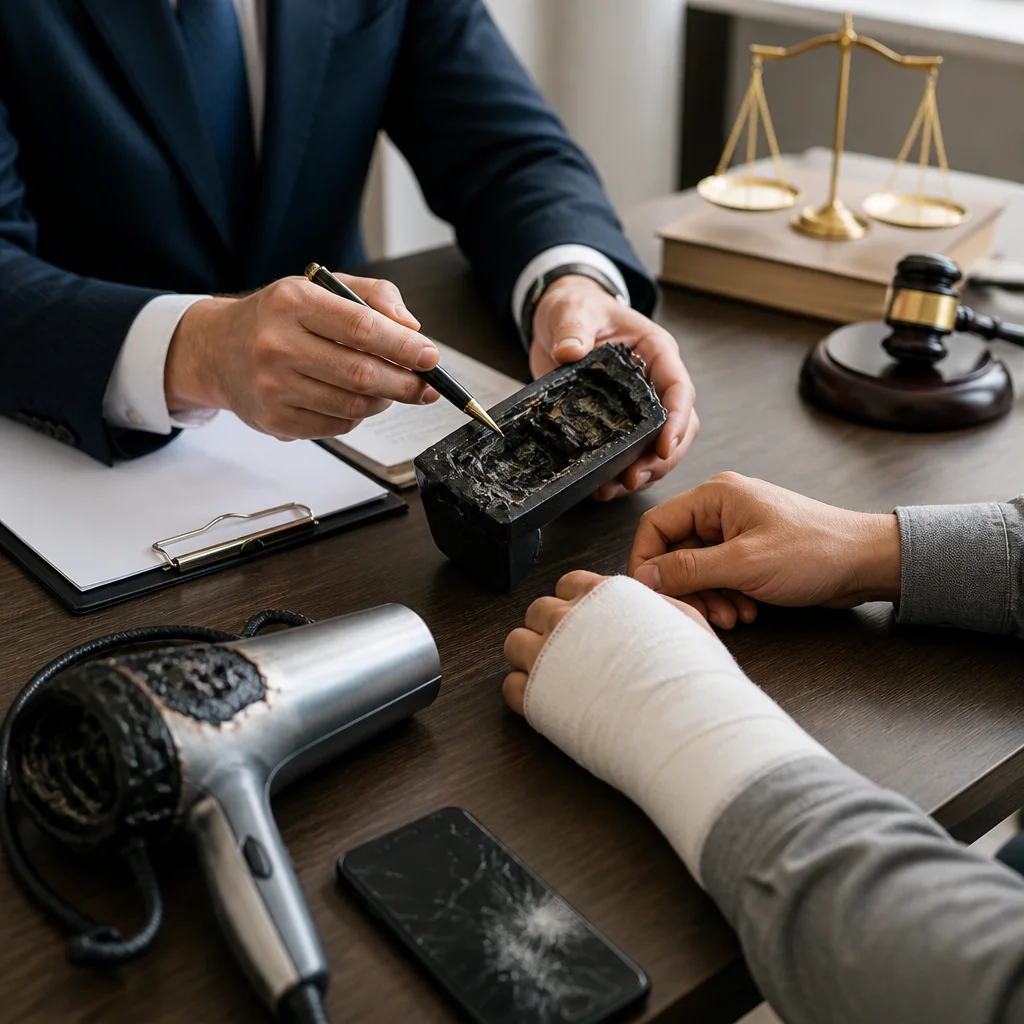
Insurance companies represent manufacturers’ financial interests, not yours. They’re skilled at minimizing payouts and will use anything you say against you. Having us in the conversation changes the dynamic immediately; insurers know we’re prepared to litigate if necessary and that we understand the true value of your claim.
Your next step: Do not speak directly with the manufacturer or their insurance company. Contact us first, and we’ll handle all communications on your behalf.
Critical Evidence We Preserve for Your Case
Evidence is everything in product liability claims. Early preservation prevents manufacturers from destroying or altering the very proof you need to win. We move quickly to secure the defective product itself, photographs, purchase records, medical documentation, and witness statements.
The defective product is central to your case. We photograph it, document its condition, and store it safely to prevent loss or destruction. We obtain the original packaging, instruction materials, and any warning labels. We pull your purchase receipt and warranty information. This foundation establishes that you acquired and owned the product.
Medical records are equally critical. Your injury documentation creates the connection between the defect and your harm. We gather hospital records, surgical reports, imaging results, and ongoing treatment notes. We obtain statements from medical providers confirming the defect caused your injuries and the long-term implications.
Witness statements strengthen your case significantly. Anyone who saw the product malfunction or your injuries immediately afterward provides corroboration. We conduct formal interviews and obtain written statements from witnesses early in the process before memories fade.
We also investigate the manufacturer’s knowledge of the defect. Recall notices, prior complaints, regulatory agency reports, and internal company documents sometimes reveal that the manufacturer knew the product was dangerous. This evidence can be decisive in establishing liability and supporting higher damage awards.
Your next step: List all witnesses who saw the product or your injury. Gather receipts, warranty cards, and instruction manuals. Request your medical records from all healthcare providers involved in your treatment.
How We Investigate and Build Your Claim
Our investigation begins with understanding exactly how and why the product failed. We examine the defect carefully and develop a clear explanation of what went wrong. We consult with engineers and product safety experts who can testify about design or manufacturing defects and explain deviations from industry standards.
We research the manufacturer’s history with this product. Have other people been injured by the same defect? Are there regulatory reports, recalls, or lawsuits involving similar issues? This pattern evidence shows the defect was foreseeable and that the manufacturer should have known about the danger.
We analyze the manufacturer’s warnings and instructions. Did they adequately warn consumers about the risk? For many products, better warnings could have prevented your injury. This becomes part of your claim’s value.
We gather your economic damages meticulously. Your medical bills are straightforward: hospital costs, surgical fees, therapy, medications, and ongoing treatment. Lost wages include time missed from work during recovery and any reduced earning capacity if the injury left you unable to perform your job. We calculate past losses and project future losses over your expected lifetime if the injury causes permanent harm.
Throughout investigation, we document everything systematically. This foundation lets us present a clear, compelling narrative when we approach manufacturers or, if necessary, present your case to a judge or jury.
Your next step: Compile all medical bills and pay stubs showing lost income. Note any ongoing treatment you’ll need and estimate duration. This information helps us calculate your full damages.
Negotiating with Manufacturers and Their Insurance Companies
Negotiation typically follows investigation. We present the manufacturer with a demand letter outlining the defect, your injuries, medical evidence, and the financial damages you’ve incurred. We explain why the manufacturer is liable and propose a settlement amount based on the strength of our evidence and the value of your case.
Manufacturers’ insurers initially often respond with low offers or denials. This is standard. We counter with detailed explanations of why our valuation is correct and why their position is legally weak. We provide expert reports, medical records, and evidence of similar injuries or recalls to support our argument.
Our approach to insurance negotiation strategies emphasizes credibility and leverage. We’ve successfully negotiated hundreds of claims. Insurance adjusters know our reputation for thorough investigation and courtroom skill. This credibility accelerates settlement discussions and increases offers.

We never pressure you to accept a settlement that doesn’t fairly represent your harm. Our role is to advise you on whether an offer reflects your case’s true value, explain your options if you reject it, and proceed toward litigation if negotiations stall. You maintain control over your claim’s outcome.
Many cases settle during negotiation, saving you and the manufacturer the time and expense of trial. But we’re equally prepared to move forward if settlement numbers don’t meet your needs.
Your next step: Be patient during negotiation. Insurers calculate time as a factor, hoping you’ll accept lower offers out of financial pressure. We work at the pace that serves your interests best.
When Litigation Becomes Necessary for Full Recovery
Some manufacturers refuse to offer fair settlements. When negotiation reaches an impasse, we file a lawsuit and prepare your case for trial. This isn’t failure; sometimes litigation is the only way to secure the full compensation you deserve.
Litigation involves several phases. During discovery, both sides exchange evidence, documents, and witness statements. We’ll take depositions, asking the manufacturer’s representatives and experts questions under oath to lock in their testimony and identify inconsistencies. We’ll respond to their questions about your background, the injury, and your damages.
We’ll file motions addressing legal issues before trial. We may seek summary judgment, asking the court to rule in your favor based on the evidence. We’ll respond to the manufacturer’s motions attempting to dismiss or narrow your claim.
Pre-trial conferences bring both parties before a judge to assess the case’s status and explore settlement one final time. Even as trial approaches, last-minute settlements occur when manufacturers realize they face significant exposure.
If we reach trial, we present your evidence before a jury. We explain the defect clearly, connect it to your injury, and demonstrate the damages you’ve incurred. We call expert witnesses who explain technical details. We present your testimony and that of witnesses who saw the incident. We ask the jury to hold the manufacturer responsible and award compensation that fully addresses your harm.
Trial is demanding, but we’re trial-ready for every case we accept. This preparation gives us leverage throughout negotiations and ensures we can deliver a strong case if settlement doesn’t materialize.
Your next step: Understand that litigation takes time. Most cases file suit within 1-2 years of injury, but trials may not occur for another 2-3 years. We’ll keep you informed throughout this process.
Calculating Your Damages: Medical Bills, Lost Wages, and More
Damages are the financial compensation you’re entitled to recover. California law recognizes several categories, and we calculate them carefully to ensure nothing is overlooked.
Economic damages include all direct financial losses. Medical bills cover emergency care, hospitalizations, surgeries, medications, physical therapy, and ongoing treatment related to your injury. Lost wages include time away from work during recovery and any permanent reduction in earning capacity if the injury prevents you from returning to your previous job. If you required home care, transportation modifications, or assistive devices, those costs are recoverable too.
Non-economic damages address pain, suffering, emotional distress, and reduced quality of life. These lack objective price tags but are legally recognized and often substantial. If the injury caused chronic pain, disfigurement, or disability affecting your daily activities and relationships, a jury may award significant non-economic damages.
In cases involving gross negligence or intentional misconduct, punitive damages may apply. These aren’t tied to your specific harm but instead punish the manufacturer for reckless behavior and deter similar conduct in the future. Punitive damages require clear evidence of the manufacturer’s knowledge and disregard for your safety.
We calculate damages by reviewing medical records with healthcare providers, analyzing your employment history and income, and developing projections for lifetime costs if the injury is permanent. We work with economic experts who can explain future damages clearly to insurers and juries.
Your next step: Organize all medical bills chronologically. Calculate how many days you missed work and your average daily income. Note any ongoing treatment you’ll need and estimate its cost.
Timeline and Statute of Limitations for Product Claims

Time is limited. California law imposes a statute of limitations, the filing deadline, on product liability claims. For most personal injury cases, you have two years from the date of injury to file a lawsuit. Miss this deadline, and your case is permanently barred regardless of merit.
Some situations involve discovery rules that may extend the deadline if you didn’t know about the defect until later, but these are exceptions and have strict requirements. We never rely on discovery rules without strong factual support. Instead, we move quickly to preserve evidence and file claims within safe windows.
Beyond the statute of limitations, practical time concerns matter. Witnesses’ memories fade. Evidence deteriorates. The longer you wait to contact us, the harder our investigation becomes. We recommend consulting with us as soon as possible after your injury.
Product liability claims typically move through several phases. Investigation takes 2-6 months depending on complexity. Demand and negotiation can last 3-12 months. If settlement fails, filing a lawsuit typically occurs within the statute of limitations window. Litigation itself may last 1-3 years before trial.
Understanding this timeline helps you plan realistically. We keep you informed at every stage and explain what to expect next.
Your next step: Don’t wait. Contact us immediately to discuss your injury. Even a brief initial conversation preserves your right to file a claim later, and we can advise you on important preservation steps today.
Why Weinberger Law Firm Is Your Best Choice for Defective Product Claims
We’re dedicated to representing injured individuals in Sacramento and throughout California. Our team combines compassionate support with authoritative legal expertise, and we handle product liability with the thoroughness these complex cases demand.
We investigate aggressively. We retain expert witnesses to explain defects to juries. We negotiate effectively with insurers who understand our track record and litigation readiness. We’re trial-ready for every case we accept. We communicate clearly, keeping you informed and answering your questions. Most importantly, we work on contingency, meaning you pay no fee unless we recover for you.
Our clients recover fair compensation because we pursue full and fair compensation in every case. We don’t settle quickly to close files; we settle when the offer reflects your true damages or we proceed to trial to secure what you deserve.
You have rights after a defective product injury. Preserve any evidence and get medical care immediately. Contact us for a free consultation. We’ll listen to your story, evaluate your claim, and explain exactly how we can help you recover.
Time is limited. Act now.
Contact us today for a Free Case Consultation!
Frequently Asked Questions (FAQ)
What should I do immediately after being injured by a defective product?
First, preserve the defective product and document its condition with photos or videos. Get medical care right away and keep all medical records, as these establish your injury and damages. You have rights after an accident, and we recommend contacting us quickly because the statute of limitations sets a strict filing deadline for product liability claims in California.
How do we build a strong defective product case?
We investigate all available evidence, including the product’s design, manufacturing records, warnings, and your medical documentation. Our team works to identify the specific defect that caused your injury and connect it directly to your damages. We pursue full and fair compensation by gathering expert testimony and demonstrating how the manufacturer failed to provide a safe product.
What compensation can we recover for you?
We calculate your damages to include medical bills, lost wages, pain and suffering, and any ongoing treatment costs. Our experienced negotiators work with manufacturers and their insurance companies to secure the maximum compensation you deserve. No fee unless we recover for you, so we’re committed to maximizing your recovery from the start.