
Table of Contents
- Why Evidence Collection Matters in Your Injury Claim
- Understanding Metadata and Timestamping Requirements
- Proper Techniques for Photographing Accident Scenes
- Video Documentation Best Practices
- Establishing and Maintaining Chain of Custody
- Common Mistakes That Damage Your Evidence
- How We Help Strengthen Your Case with Evidence
- California Law and Admissibility Standards
- Immediate Steps to Take After an Accident
- Protecting Evidence Until Your Consultation
- Your Next Steps: Free Case Evaluation
- Frequently Asked Questions (FAQ)
Why Evidence Collection Matters in Your Injury Claim
If you were injured in an accident, the shock and pain can make it hard to think clearly. Yet the decisions you make in the first hours and days afterward directly impact your claim. Strong photographic and video evidence often becomes the difference between recovering full compensation and settling for far less. We’ve seen cases where clear, documented images convinced insurers to increase settlement offers significantly, and others where poor documentation weakened otherwise solid claims.
Evidence is the foundation of any injury claim. Insurance adjusters evaluate settlement amounts based on what they can verify, and courts decide cases on documented facts. Photos and videos create an immediate, objective record that no one can dispute or reinterpret later. Unlike witness statements or your own recollection, a photograph captures the scene exactly as it was moments after impact.
When you document the accident scene, vehicle damage, road conditions, traffic signals, and your visible injuries, you establish credibility from the start. This shifts the negotiation in your favor. We’ve negotiated substantially higher settlements when clients provided comprehensive photographic evidence showing skid marks, debris patterns, or dangerous conditions that contributed to the accident. Without these images, adjusters often default to minimizing liability and reducing offers.
Time matters here: evidence degrades quickly. Weather conditions change, cleanup crews remove debris, medical teams treat visible injuries, and human memory fades. The sooner you capture images, the stronger your documentation.
Action: If you’re able to do so safely after an accident, begin taking photos and videos immediately. Document the scene before anything is moved or cleaned up.
Understanding Metadata and Timestamping Requirements
Modern smartphones automatically embed metadata in photos and videos, including the exact date, time, and GPS location where the image was taken. This metadata becomes powerful proof in your claim because it corroborates when and where documentation occurred. Adjusters and attorneys use this information to verify authenticity and establish a clear timeline of events.
When courts or insurers review evidence, they examine whether timestamps are consistent with the accident timeline and whether GPS coordinates match the accident location. If a photo lacks this data or shows inconsistent information, it may raise questions about reliability. Conversely, metadata that matches your account strengthens your credibility significantly.
Keep your phone settings configured to enable location services and timestamp functions before an accident occurs. If you’re using an older phone or camera without automatic metadata, record the date, time, and location in writing immediately after capturing images. This written documentation becomes a secondary backup if metadata is missing.
Action: Check your phone settings now to ensure location services and automatic timestamping are enabled. If you take photos after an accident, do not edit or compress them before sharing with your attorney.
Proper Techniques for Photographing Accident Scenes
Begin with wide-angle shots that show the overall scene, including street names, traffic signals, road conditions, and surrounding landmarks. These context photos help anyone reviewing your case understand the environment and any hazards that may have contributed to the accident. Include at least one photo showing a street sign or landmark so location is unmistakable.
Next, photograph the vehicles from multiple angles: frontal damage, side impacts, rear damage, and undercarriage if accessible. Get close-up shots of specific damage areas, as these show the force and point of impact clearly. Photograph the interior of your vehicle if you were injured, including torn upholstery, deployed airbags, or visible damage that indicates the violence of the collision.
Document environmental details that contributed to the accident: skid marks on pavement, debris fields, weather conditions, lighting (especially if the accident occurred at dusk or night), and any road hazards like potholes or obstructions. If a traffic signal was involved, photograph it from the angle you approached it, showing its color at the time of documentation.
Photograph your own visible injuries as soon as safely possible, and continue documenting them over the following weeks as bruising develops or wounds heal. These progressive images create a powerful visual record of injury severity.
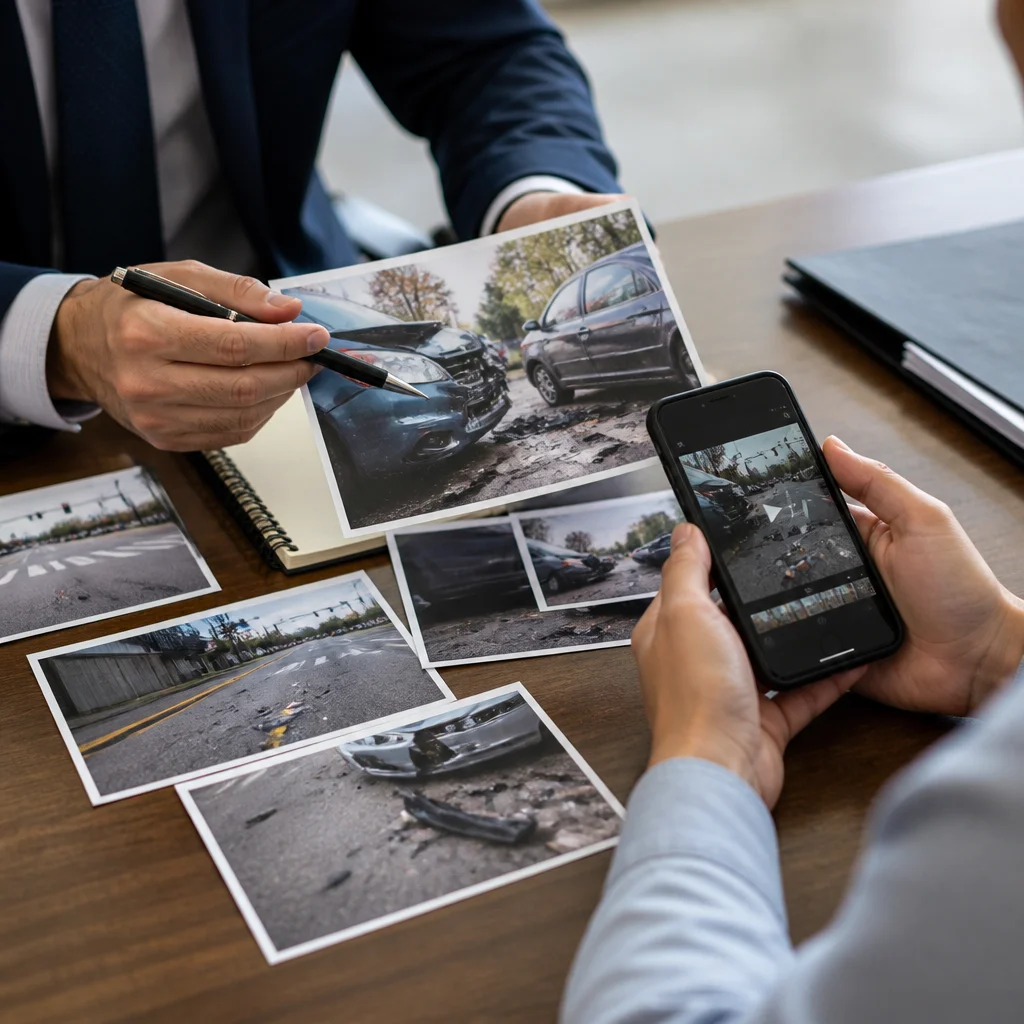
Action: Take at least 15-20 photos covering wide scene views, vehicle damage from multiple angles, and close-ups of specific impact points. Include at least one photo with identifying landmarks or street signs visible.
Video Documentation Best Practices
Video adds dimension that still photographs cannot capture. A short video walkthrough of the accident scene, narrated calmly, creates a compelling record of conditions, damage extent, and site hazards. Keep videos under two minutes; longer recordings often become cumbersome and less persuasive.
When recording, describe what you see out loud: “This is the intersection of Main and Fifth Streets. The traffic light facing my direction shows red. My vehicle is the blue sedan on the right side. There is significant damage to the front right quarter panel and the driver’s side door is crushed inward.” This narration anchors the video to specific facts and prevents misinterpretation later.
Maintain steady camera movement and adequate lighting. Shaky, dark, or unclear video weakens its persuasive impact. Film from different angles to show the relationship between vehicles, road features, and environmental factors. If witnesses are present and willing, brief video statements from them can be invaluable.
Store original video files in their native format without compression or editing. Many smartphones compress videos automatically when uploading to cloud storage or messaging apps, which can degrade quality and remove metadata.
Action: If you record video, narrate what you observe clearly and store the original file without compression. Share only the unedited version with your attorney.
Establishing and Maintaining Chain of Custody
Chain of custody refers to the documented history of who handled evidence and when. From a legal perspective, maintaining clear chain of custody proves that evidence has not been altered, contaminated, or tampered with. Courts and insurers scrutinize evidence without clear provenance, especially if multiple people have accessed it.
Preserve your original photos and videos in one secure location, such as cloud storage with access controls or an external hard drive locked away. Note the date and time you captured each image and store that list with your evidence. If someone else was present during documentation, have them sign a brief statement describing what they witnessed and photographed.
When you share evidence with your insurance company, law enforcement, medical providers, or our firm, document those transfers. Keep a record showing dates of sharing and with whom. This transparent history demonstrates that images remained unchanged from capture through final presentation.
Do not allow anyone to edit, crop, filter, or alter your original images, even to improve clarity or remove irrelevant background elements. Any modification raises admissibility questions. If you need to highlight or annotate images for presentation purposes, do so on copies only, preserving the originals untouched.
Action: Store original images separately from any edited versions. Create a simple dated list of what you documented and when. If others helped document the scene, ask them to confirm this in writing.
Common Mistakes That Damage Your Evidence
The most damaging error is waiting to document the scene. Hours or days later, cleanup crews have removed debris, weather has changed conditions, and your injuries appear less severe than they actually were. By then, the critical window for objective documentation has closed.
Editing, filtering, or enhancing images before sharing them is another serious mistake. Even well-intentioned brightening or cropping can be misconstrued as evidence tampering. Insurance adjusters and opposing counsel may argue that modifications suggest you’re hiding the truth or exaggerating facts.
Failing to photograph your own injuries compounds the problem. Medical records document treatment, but they don’t show how bruises developed or wounds appeared in the immediate aftermath. Photos of visible injuries taken over weeks create a timeline that demonstrates pain and suffering beyond what billing records alone can convey.
Relying solely on police or insurance company photos is inadequate. You have no guarantee those photos capture details relevant to your claim or present your perspective. Taking your own images ensures your account is documented from your viewpoint.
Finally, deleting original files or allowing phone storage to become corrupted loses irreplaceable evidence. Backup important photos immediately to cloud storage or external drives.
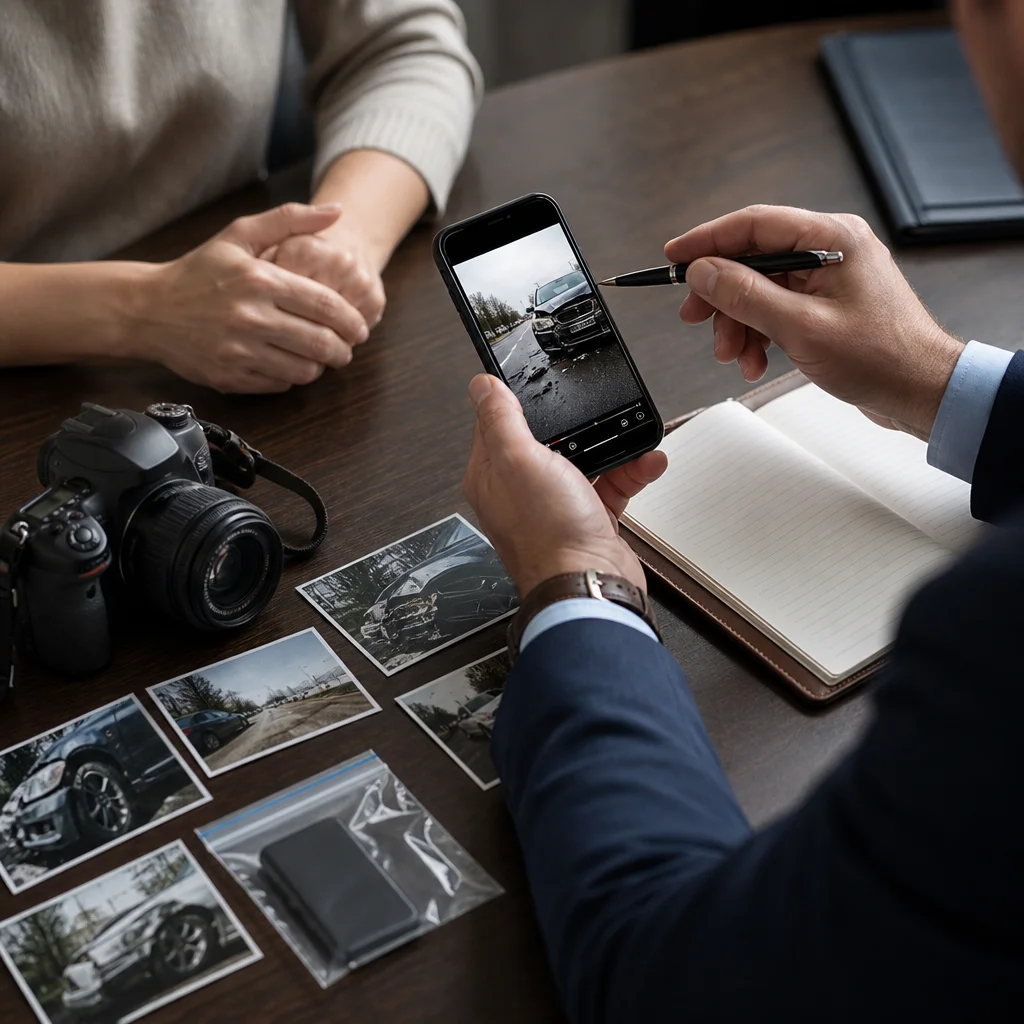
Action: Do not delay documentation. Do not edit images. Do not rely on third-party photography alone. Capture your own evidence immediately and back it up.
How We Help Strengthen Your Case with Evidence
Once you contact us, our team reviews all documentation you’ve collected and identifies gaps that may weaken your claim. We determine whether additional evidence is needed and advise on whether expert photography or scene reconstruction is warranted. In complex cases involving hazardous conditions or premises liability, we work with accident reconstruction specialists who can analyze your photos alongside physical evidence and expert observations.
We negotiate with opposing insurance companies using your evidence strategically. When we present clear, timestamped photographs showing vehicle damage patterns, scene conditions, and injury progression, adjusters recognize the strength of your documentation and often increase settlement offers to avoid litigation. Courts also respect cases backed by thorough photographic evidence because it reduces ambiguity.
We also preserve evidence in ways that comply with California discovery rules and court procedures. When litigation becomes necessary, we ensure all images are properly cataloged, metadata is preserved, and evidence meets admissibility standards. This preparation prevents last-minute disputes about evidence validity that can derail cases.
Action: Gather all photos and videos you have and bring them to your free consultation. We’ll review them and advise on next steps.
California Law and Admissibility Standards
Under California Evidence Code Section 1401, photographic evidence is admissible if the witness testifies that the photograph accurately represents what it depicts. The metadata and chain of custody strengthen this testimony significantly. Courts also apply the “Best Evidence Rule,” which generally requires original documents when their contents are disputed, but digital photographs with intact metadata typically satisfy this requirement.
California courts recognize that photographs taken contemporaneously with events are more reliable than those taken much later. This timing advantage strengthens your documentation if you capture images within hours of the accident. The legislature and courts understand that immediate documentation is more objective than delayed recollection.
Video evidence follows similar admissibility rules and carries the added benefit of showing motion, sound, and spatial relationships. Courts often find video particularly persuasive when it captures conditions as they existed without editing or manipulation.
Action: Understand that your timely, unedited photos and videos are strong legal evidence in California. This reinforces why immediate, unaltered documentation is so valuable.
Immediate Steps to Take After an Accident
Your safety comes first. If you’re injured or the accident occurred in traffic, move to a safe location if possible and call 911. Request emergency medical evaluation even if injuries seem minor; some injuries develop or worsen over hours.
Once you’re in a safe environment, begin documenting. Take photos and videos of your injuries, starting with visible bruises, cuts, or swelling. Photograph the accident scene from multiple angles as described above. Capture vehicle damage and environmental conditions.
Collect names and contact information from any witnesses. Ask them to briefly describe what they saw, and request permission to take a brief video statement if possible. Do not discuss fault or your insurance information with the other driver beyond basic identification; stick to factual details.
Call the police and report the accident if injuries or significant property damage occurred. A police report creates an official record that supports your claim. Request the report number for your records.
Seek medical care promptly, even for seemingly minor injuries. Medical documentation creates a timeline and establishes that you took your health seriously immediately after the accident.
Action: Safety first, then document everything. Call 911 if needed, photograph the scene and your injuries, collect witness information, and schedule medical evaluation.
Protecting Evidence Until Your Consultation
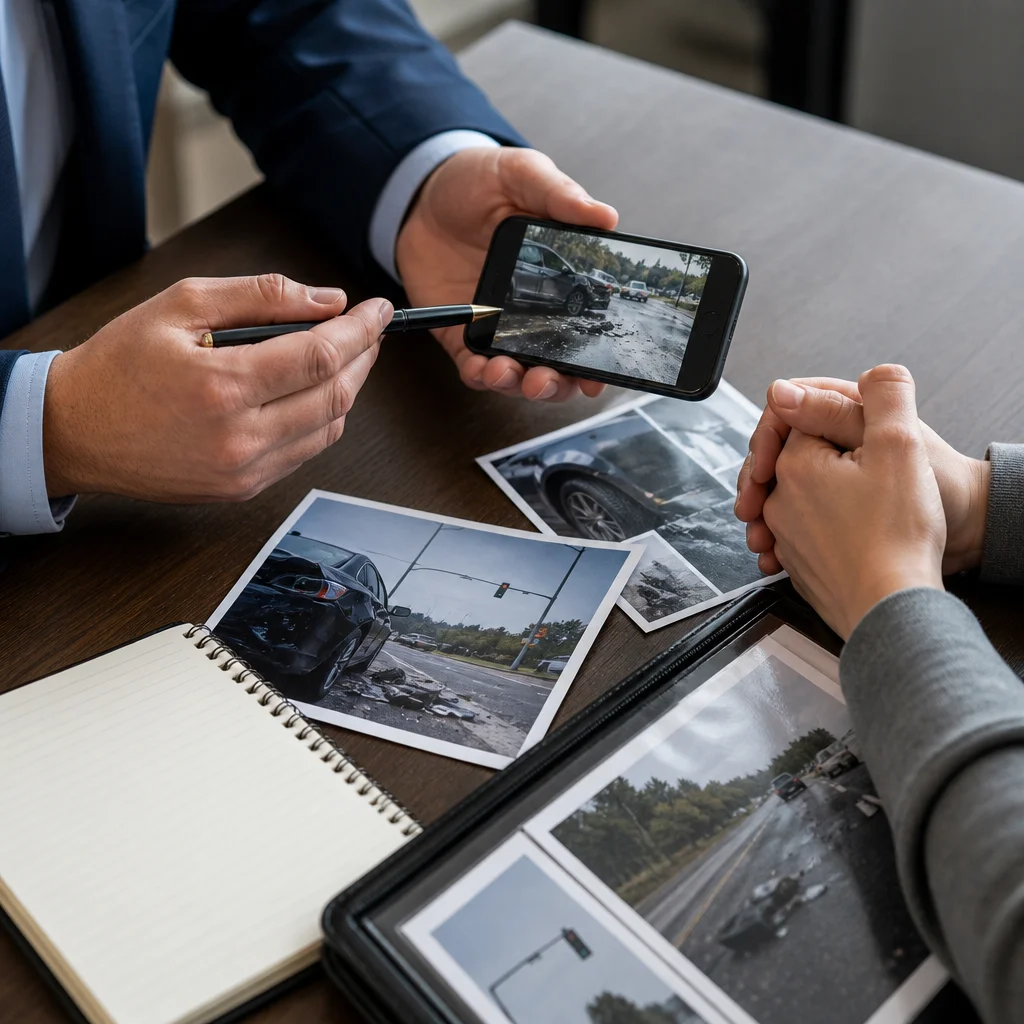
After initial documentation, store your photos and videos securely. Upload them to cloud storage immediately so they’re backed up and cannot be lost if your phone is damaged or lost. Use a service like Google Drive, Dropbox, or iCloud that creates automatic timestamps.
Do not discuss the accident details or share evidence with the other driver’s insurance company without legal counsel. Insurance adjusters may misuse your statements or photographs against you. Similarly, do not post about the accident on social media, as these posts can be misconstrued or used to minimize your claim.
Write down your own detailed account of the accident while memory is fresh: what time it occurred, weather conditions, what you were doing, what you remember about the other vehicle or driver, and how you felt immediately afterward. Include notes about any medical symptoms that developed in the hours after the accident.
Keep all original medical records, bills, insurance documents, and communications related to the accident organized in one folder. These materials will be essential when we evaluate your claim.
Action: Back up your evidence today. Do not discuss details with the other driver’s insurer. Document your account in writing while it’s fresh. Organize all related records.
Your Next Steps: Free Case Evaluation
You have rights after an accident. California law allows you to recover compensation for medical bills, lost wages, pain and suffering, and other damages caused by another party’s negligence. A statute of limitations—the filing deadline—applies to your claim, and time is limited. The sooner we evaluate your case, the better we can protect your rights and preserve all available evidence.
We pursue full and fair compensation for every client. That means we investigate thoroughly, negotiate aggressively with insurance companies, and prepare to litigate if necessary. Our fee structure ensures your interests align with ours: we collect no fee unless we recover for you.
Contact us today for a free consultation. Bring all documentation you’ve collected, and we’ll review your evidence, explain your legal options, and advise on the best path forward. We’re here to answer your questions and guide you through the Frequently Asked Questions (FAQ)
We recommend documenting the scene immediately if it’s safe to do so, ideally within the first few hours before conditions change or evidence is disturbed. The sooner you capture photos and videos, the more accurately they reflect what actually happened and the stronger your evidence becomes for your claim. If you’re injured or unsafe, prioritize your medical care first and document what you can from a safe location. We advise you to preserve the original files on your device without editing or deleting them, as metadata (the timestamp and location data) proves authenticity in California courts. Store copies in multiple secure locations, such as cloud storage and email, so you have backups if your phone is lost or damaged. When you’re ready, share the unaltered originals with us so we can properly document the chain of custody and present them effectively to insurance companies and in court if needed. Yes, we can use witness-captured photos and videos as part of your case, though we’ll need to establish how those images were obtained and stored. Eyewitness documentation often strengthens your claim by providing multiple perspectives of what occurred. Contact us with any photos or videos you’ve collected so we can evaluate their admissibility and integrate them into your evidence strategy.How soon after an accident should we take photos and videos?
What should we do with photos and videos to protect their legal value?
Can we use photos or videos taken by other people at the accident scene?