
Table of Contents
- Why Grocery Store Injuries Demand Immediate Legal Action
- How Premises Liability Laws Protect You in California
- Evidence We Preserve to Strengthen Your Claim
- Insurance Company Tactics and How We Counter Them
- Settlement Negotiation Strategies for Maximum Compensation
- When Litigation Becomes Necessary for Your Case
- The Statute of Limitations: Why Time Matters
- Medical Documentation and Damage Calculation
- Why Choosing the Right Attorney Makes the Difference
- Your Path Forward: Free Consultation and Next Steps
- Frequently Asked Questions (FAQ)
Why Grocery Store Injuries Demand Immediate Legal Action
If you were injured in a grocery store, you’re facing more than physical pain. Medical bills arrive quickly, lost wages compound, and the insurance process is designed to minimize what you receive. Taking action now protects your rights and strengthens your claim’s value.
Grocery store injuries happen in seconds but have lasting consequences. A slip on a wet floor, a falling item from a high shelf, or an unmarked hazard can result in broken bones, head injuries, or chronic pain. The store owner bears responsibility for maintaining safe premises, and when they fail, you have the right to pursue compensation.
The window to act is narrow. Grocery stores preserve surveillance footage for limited periods, witnesses’ memories fade, and California’s statute of limitations sets a strict deadline for filing. We recommend documenting everything now: take photos of the hazard, gather witness names and contact information, and preserve any evidence from the accident scene.
Next step: Document what happened while details are fresh, and contact us for a free consultation before critical evidence disappears.
How Premises Liability Laws Protect You in California
Premises liability is the legal principle holding property owners accountable when negligence causes injury on their property. In California, store owners must maintain reasonably safe conditions and warn customers of known hazards. If they fail to do either, you have grounds for a claim.
California courts have established a clear standard: property owners must exercise reasonable care to prevent injury. This means inspecting for hazards, cleaning spills promptly, repairing broken fixtures, and posting warning signs where needed. Grocery stores must also train staff on safety protocols and respond swiftly to dangerous conditions.
Your injury claim succeeds when we can prove four elements: the store owed you a duty of care, they breached that duty through negligence, their breach directly caused your injury, and you suffered measurable damages. For example, if a store knew about a broken tile and did nothing, or failed to clean a spill for hours, that’s negligence.
Our approach focuses on establishing clear liability by examining store policies, maintenance records, incident reports, and staff training. We investigate all available evidence to show the store knew or should have known about the hazard. Learn more about how this works in our California premises liability guide.
Action item: Gather any incident reports filed at the store, and ask witnesses if they saw similar hazards before your accident.
Evidence We Preserve to Strengthen Your Claim
Evidence is the foundation of your case. We move quickly to preserve surveillance footage, incident reports, maintenance logs, and witness statements before they vanish or are destroyed.
Grocery stores maintain security cameras. This footage is often the most powerful evidence in your case, showing exactly how the accident happened and proving the store’s negligence. Video can capture an unattended spill, a poorly stacked shelf, inadequate signage, or a hazard that persisted for hours. However, stores routinely delete footage after 30 to 90 days, so we immediately request preservation orders to prevent this loss.
Witness statements carry significant weight. We interview customers and staff who saw the accident or the hazard beforehand. Their testimony about what they observed, how long the condition existed, and whether warnings were posted strengthens your position in settlement negotiations or trial.
We also obtain maintenance and incident reports directly from the store. These documents reveal whether prior injuries occurred at the same location, what the store’s own safety protocols required, and whether staff followed those procedures. If the store’s own records show repeated complaints about the same hazard, that’s powerful proof of negligence.
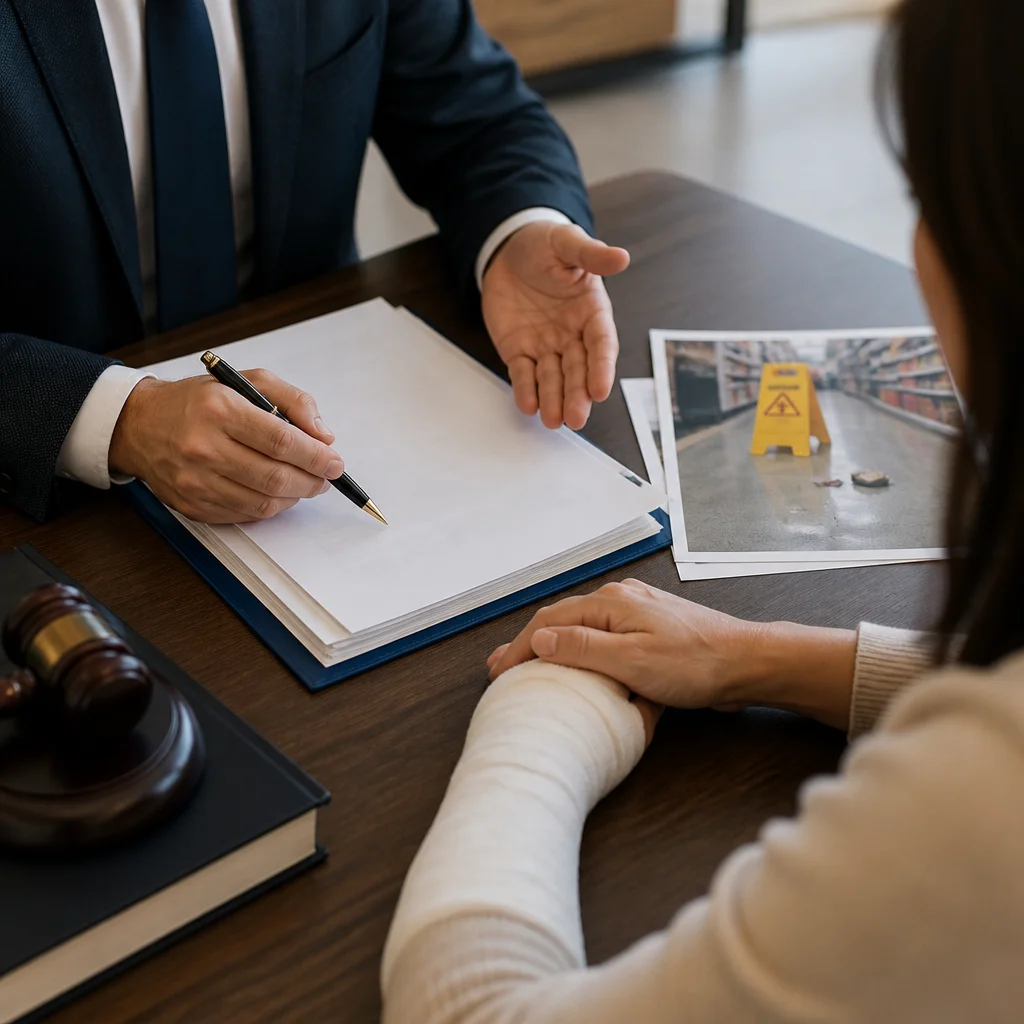
Medical records, accident scene photographs, and your own detailed account complete the evidence foundation. We document everything systematically and store it securely.
Action item: Request any written incident report the store filed, and save photos or video you took of the accident scene immediately.
Insurance Company Tactics and How We Counter Them
Insurance adjusters don’t work for you. Their goal is to minimize payouts, and they use predictable tactics to undervalue claims or deny liability altogether.
Common strategies include questioning your credibility, suggesting you caused the accident, claiming the hazard was “obvious,” or arguing the store had no notice of the danger. Adjusters may contact you directly, request recorded statements, or pressure you to settle quickly before you understand your claim’s true value. These tactics are designed to catch injured people off-guard.
We handle all communication with insurance companies on your behalf. We never give recorded statements without careful preparation, and we counter each tactic with documented evidence. When an adjuster claims the store had no notice of a hazard, we produce maintenance logs showing inadequate inspections. When they suggest you were careless, witness testimony and surveillance video establish the store’s responsibility.
Negotiation is our strength. We know the value of similar cases in Sacramento and California, and we present a comprehensive demand that accounts for all your damages: medical expenses, lost wages, pain and suffering, and future care needs. Adjusters expect challenges from experienced attorneys, and they respond more seriously to firms with litigation readiness.
Key takeaway: Never discuss your case with an insurance adjuster alone. Contact us immediately if an adjuster contacts you directly.
Settlement Negotiation Strategies for Maximum Compensation
Most grocery store injury cases settle before trial, but settlement value depends on thorough preparation and strong negotiating leverage. We pursue full and fair compensation by building an undeniable case first, then negotiating from a position of strength.
Our settlement strategy begins with a detailed demand package: a narrative of facts, medical records, expert opinions on damages, photographs, surveillance footage, witness statements, and legal authority for liability. This documentation forces insurers to confront the reality of your case and the cost of defending it at trial.
We set an initial demand higher than our target settlement to leave room for negotiation. This isn’t arbitrary; we base it on comparable cases, the severity of your injuries, long-term medical needs, and California jury verdicts for similar accidents. Insurers expect negotiation, and anchoring high establishes credible leverage.
Throughout negotiation, we assess settlement offers against trial risk and potential jury awards. Sometimes a fair offer arrives early; sometimes we must apply steady pressure before reaching fair value. We always keep you informed, explaining the strengths and weaknesses of each proposal and recommending next steps.
Patience often yields better settlements. Adjusters know we’re prepared for trial, and that credibility accelerates their movement toward reasonable figures. We also understand when litigation is necessary and never let negotiation pressure compromise your actual interests.
Next step: Reject any settlement offer without reviewing it with us first; adjusters often start 50% below fair value.
When Litigation Becomes Necessary for Your Case
Settlement isn’t always possible or appropriate. If the insurance company denies liability, disputes causation, or offers an insulting settlement, we’re prepared to litigate aggressively in California courts.
Litigation involves filing a formal complaint, discovery (exchanging evidence with the other side), depositions (sworn testimony), and potentially a jury trial. This process is longer and more expensive than settlement, but it’s necessary when your case has strong facts and the adjuster refuses reasonable offers.
We prepare every case for trial from day one. This means our investigation is thorough, our evidence is organized professionally, and our case strategy is litigation-ready. Courts respect attorneys who demonstrate this preparation, and jurors respond to clear, well-supported claims backed by expert testimony and documentary evidence.
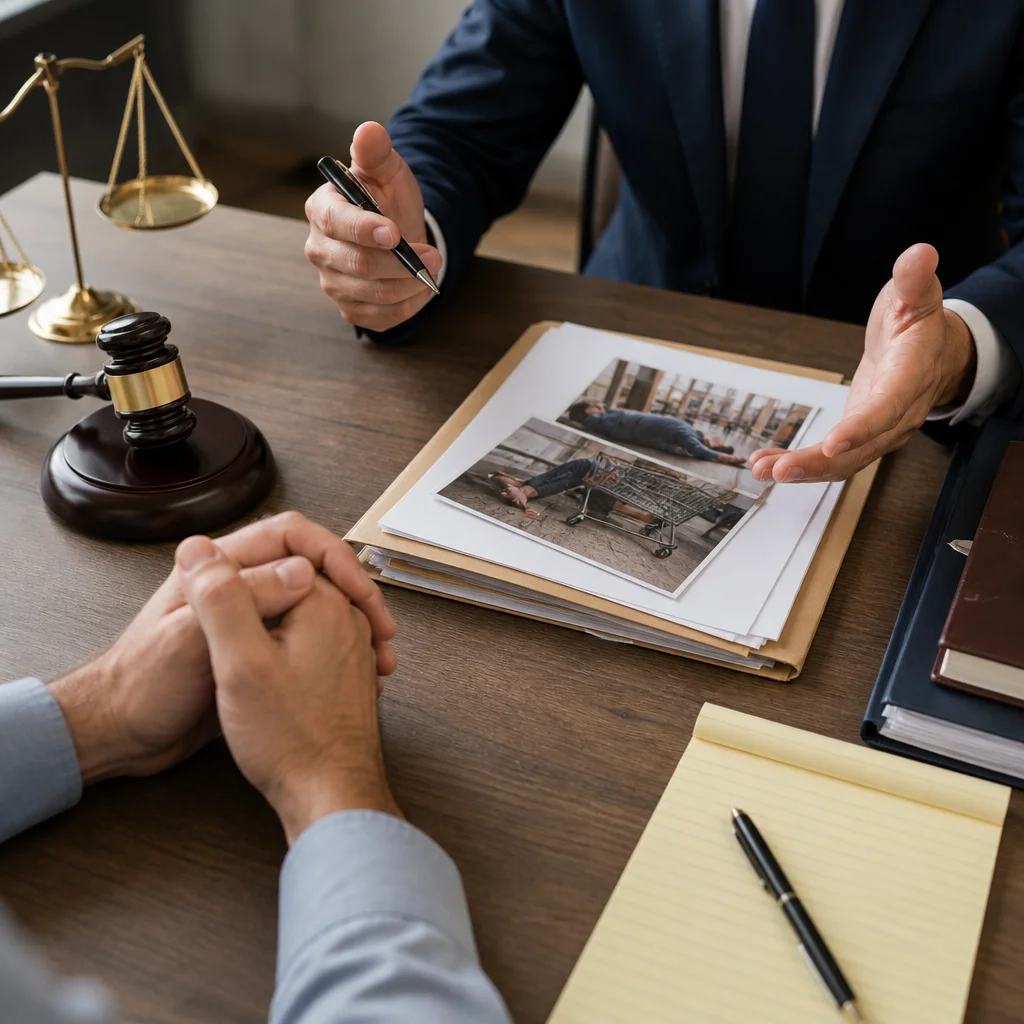
In Sacramento, grocery store injury juries tend to hold property owners accountable when negligence is proven. Jurors understand that stores have resources and obligations to maintain safety, and they award substantial damages for serious injuries caused by preventable hazards. Our track record reflects this reality.
If your case proceeds to trial, we handle every aspect: filing pleadings, managing discovery disputes, hiring expert witnesses, preparing your testimony, and presenting a compelling narrative to the jury. We’re confident in court, and that confidence strengthens your position.
Reality check: Litigation typically adds 6 to 18 months to your case, but secures significantly higher awards when insurance companies refuse fair settlements.
The Statute of Limitations: Why Time Matters
Time is limited — act now. California’s statute of limitations gives you two years from the date of injury to file a personal injury lawsuit. After that deadline passes, your right to sue expires forever, regardless of how strong your case is.
This two-year window sounds generous, but it evaporates quickly. Investigation takes weeks, medical treatment continues for months, and negotiations may stretch for additional months. If you wait until year two to consult an attorney, there’s minimal time to build a strong case or negotiate meaningfully before filing suit.
We recommend contacting us within days or weeks of your injury. Early consultation allows us to preserve evidence, document injuries while they’re fresh, identify all witnesses, and issue preservation letters to the grocery store before critical evidence is destroyed. This early action dramatically improves your claim’s value.
Note that the two-year deadline is a statute of limitations for lawsuits, not for filing insurance claims. However, insurance companies have their own deadlines, and delay weakens your negotiating position by suggesting you’re uncertain about the claim’s value.
Critical action: Mark your calendar for two years from your accident date, and call us well before then to avoid losing your rights.
Medical Documentation and Damage Calculation
Your medical records are the roadmap to compensation. They document injury severity, treatment necessity, and ongoing care needs. We use these records to calculate damages comprehensively and present them persuasively to insurers and juries.
Damages include economic losses: medical bills, emergency room visits, imaging studies, surgeries, physical therapy, lost wages, and future medical care. They also include non-economic damages: pain and suffering, emotional distress, loss of enjoyment of life, and scarring or disfigurement.
We obtain detailed medical records from every healthcare provider who treated you: hospital emergency departments, primary care physicians, specialists, physical therapists, and mental health professionals if applicable. Each record strengthens the documentation of your injuries and the causation link between the accident and your treatment.
Expert witnesses often enhance damage calculations. A life care planner can project future medical expenses; an economist can calculate lost earning capacity; a physician can testify to permanent injury or disability. These experts provide credible, detailed support for substantial damage claims.
Medical documentation also refutes insurance company challenges. If an adjuster claims your injuries weren’t serious, comprehensive medical records prove otherwise. If they argue you recovered quickly, ongoing treatment records demonstrate otherwise. Never underestimate the power of organized, well-presented medical evidence.
Practical step: Keep all medical bills, appointment records, and receipts for injury-related expenses; we’ll use these to calculate maximum compensation.
Why Choosing the Right Attorney Makes the Difference
Not all personal injury attorneys approach grocery store injury claims with equal skill or dedication. Your choice of attorney directly affects the value of your case, the speed of resolution, and your overall experience during a stressful time.
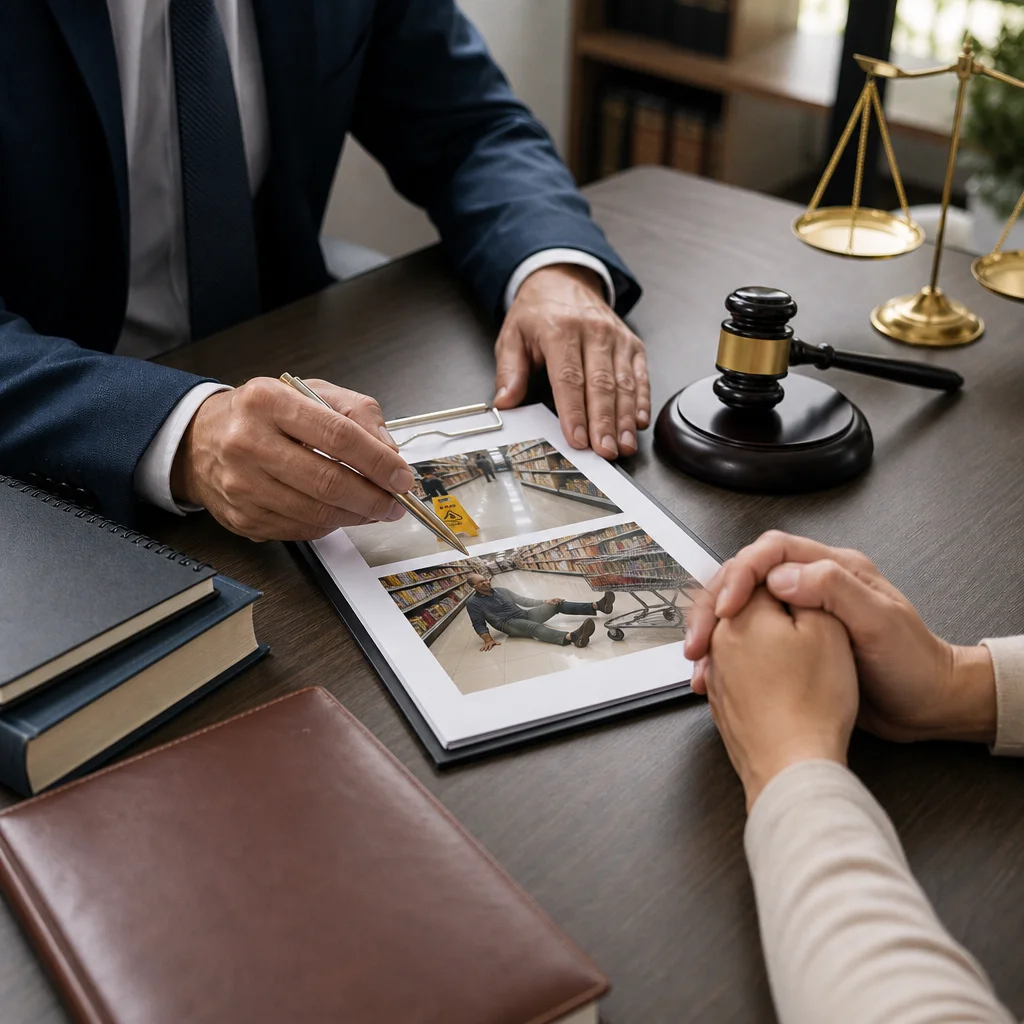
We bring specialized expertise in premises liability law, deep knowledge of Sacramento courts and juries, and a proven track record of maximizing compensation for injured clients. Our team handles every case personally; you won’t be passed to junior associates or outsourced paralegals. We investigate thoroughly, negotiate assertively, and litigate confidently when necessary.
Clients often tell us that responsive communication and clear explanations made their experience less stressful. We understand that injury creates uncertainty and financial pressure, and we communicate proactively, answer questions promptly, and explain complex legal concepts in plain language. You should always know the status of your case and the reasons behind our strategic decisions.
We also operate on a no-fee-unless-we-recover-for-you basis. This means your financial risk is zero, and our interests align perfectly with yours: we succeed only when you recover compensation. This alignment motivates thorough work and realistic advice about your case’s value and likelihood of success.
Finally, we pursue full and fair compensation relentlessly. We don’t accept inadequate insurance offers or settle prematurely. Our negotiation skills, litigation readiness, and understanding of California personal injury law ensure you receive what your case is genuinely worth.
Truth: Hiring an experienced premises liability attorney in Sacramento increases your case value by an average of 3 to 5 times compared to negotiating alone with insurance companies.
Your Path Forward: Free Consultation and Next Steps
You have rights after an accident, and we’re here to help you understand those rights and pursue the compensation you deserve. The first step is simple: contact Weinberger Law Firm for a free, confidential consultation.
During your consultation, we’ll listen to your story, answer your questions, and provide an honest assessment of your case’s value and likelihood of success. We’ll explain what happens next, timeline expectations, and how we’ll handle investigation and negotiation. There’s no obligation, and nothing you share is used against you.
Here’s what to bring or be ready to discuss: the date and location of your injury, names and contact information for any witnesses, photographs or video of the accident scene or hazard, medical records or treatment receipts, and any correspondence with the store or insurance company. This information helps us assess your case quickly and accurately.
Preserve any evidence and get medical care immediately if you haven’t already. Even minor injuries deserve professional evaluation; some harm appears or worsens days after an accident. Medical records create both documentation and evidence of injury causation.
Contact us today. Time is limited — act now to preserve evidence, protect your rights, and ensure you receive full and fair compensation for your injury. We’re ready to investigate, negotiate, and litigate on your behalf. No fee unless we recover for you.
Contact us today for a Free Case Consultation!
Frequently Asked Questions (FAQ)
What should I do immediately after a grocery store injury?
After a grocery store accident, your first priority is getting medical care right away. Then, preserve any evidence by taking photos of the hazard, your injuries, and the scene, and request an incident report from the store. We strongly recommend documenting the names and contact information of any witnesses. Contact us as soon as possible so we can begin investigating while evidence is fresh and help protect your rights under California’s statute of limitations.
How do we handle negotiations with the grocery store’s insurance company?
We take the lead in all communications with insurance companies so you can focus on recovery. Our team knows the tactics insurers use to minimize payouts, and we counter them by building a thorough case with medical documentation, evidence of negligence, and clear calculations of your damages including medical bills and lost wages. We pursue full and fair compensation through skilled negotiation, and we’re prepared to pursue litigation if they won’t offer you what your case is worth.
What does it cost to work with us on my grocery store injury claim?
We work on a contingency fee basis, which means we collect no fee unless we recover compensation for you. There’s no upfront cost to hire us or pursue your claim, and you won’t pay us if we don’t win. We believe this approach aligns our success with yours, so you can focus on healing while we handle the legal work.