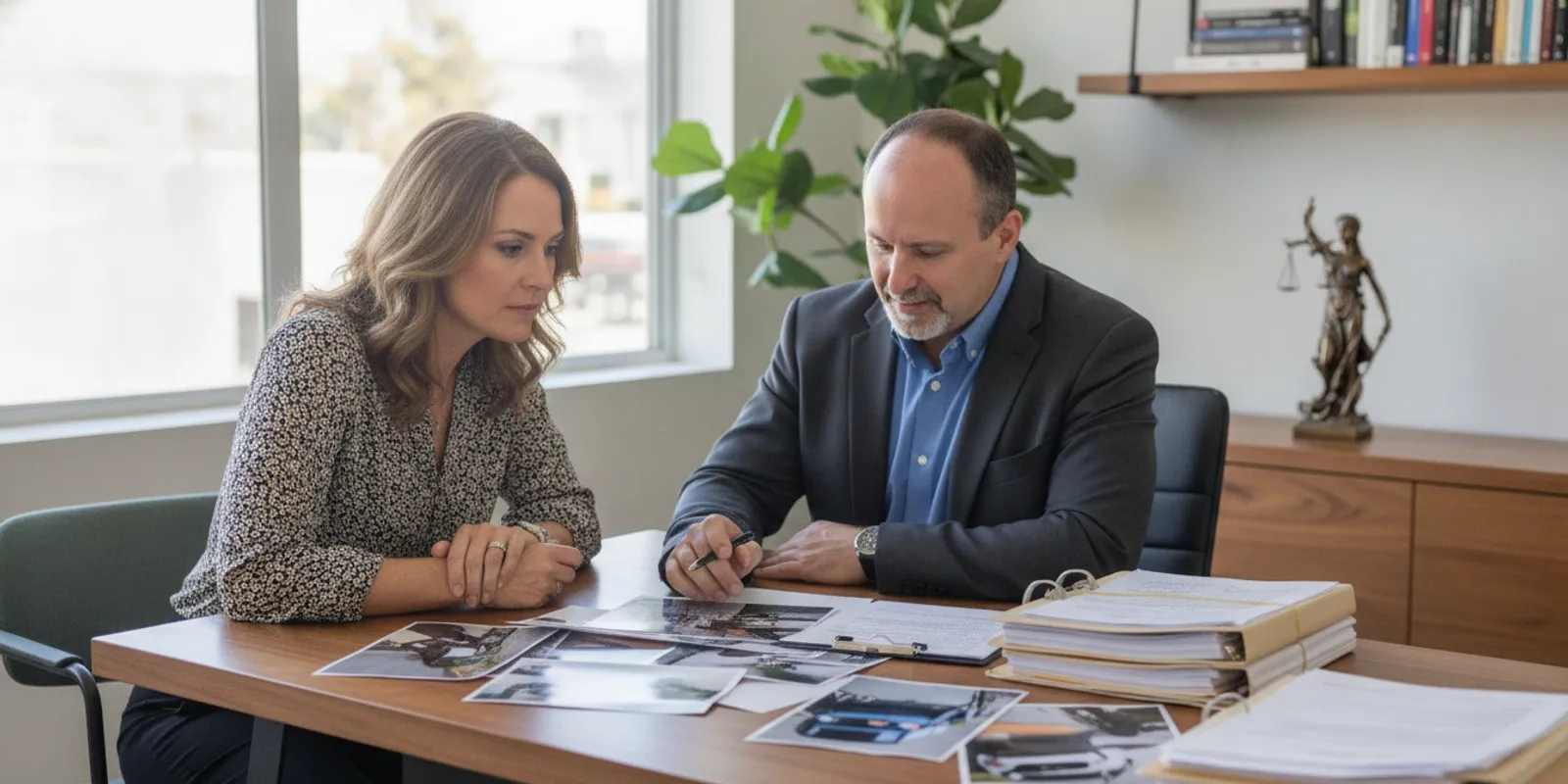
If you are asking how to prove negligence in a California personal injury case, start by separating what you know from what you still need to find out. An accident may leave you with medical appointments, insurance calls, and incomplete memories all at once. A clear timeline and careful preservation of records can help show what happened, whether someone’s conduct may have contributed, and how the event affected you.
Call Weinberger Law Firm at 916-357-6767 to discuss your next steps.
What does negligence mean in a California injury claim?
Negligence generally means that a person or organization failed to use reasonable care and that the failure caused harm. An injury alone does not establish negligence. The circumstances matter: what responsibility applied, what the person did or failed to do, how that conduct relates to the incident, and what injury or loss followed.
It can help to organize the facts around four questions:
- Duty: Did the person or organization have a responsibility to use reasonable care in the circumstances?
- Breach: What specific action or failure to act may have fallen short of reasonable care?
- Causation: What connects that conduct to the incident and the injury?
- Harm: What physical, financial, or other loss followed, and what records document it?
These are practical questions, not a checklist that decides a claim by itself. A driver may have had a responsibility to watch the road, for example, but the relevant facts could include the driver’s actions, traffic conditions, the sequence of impacts, and whether the injuries claimed are connected to the crash. In a fall, the condition’s location and visibility, how long it may have existed, and whether anyone knew about it may matter more.
Evidence may support one part of the analysis without proving the others. A photograph could show a hazard, but it may not establish who created it or knew about it. A medical record may document treatment, but ordinarily does not determine who caused the accident. Looking at how different records fit together is more useful than relying on one item as the whole answer.
What should you write down first?
Make a neutral timeline while your recollection is fresh. Record the date, approximate time, location, what you noticed before the incident, what happened, and what you did immediately afterward. Include later events such as when you first sought care and when you reported the incident. If you are unsure about a detail, label it as uncertain instead of filling in a gap with a guess.
Then separate direct observations from information you learned later. For example, write “I saw the car enter the intersection” if you personally saw it, but note “a witness later told me the light was red” if that came from someone else. This distinction can make your account clearer and help identify who may be able to confirm each point.
Questions to consider include:
- Where exactly did the incident happen? Can you identify a nearby intersection, entrance, aisle, or other landmark?
- What did you personally see, hear, or do in the moments before and after it?
- Who else was present, and how can you reach them?
- Were there nearby cameras, businesses, vehicles, or public spaces that may have recorded the area?
- Could lighting, weather, sight lines, signs, road layout, or an obstruction have affected what someone could see?
- Which details come from your memory, and which came from a report, another person, or an online post?
A timeline is a working document. If you later find a report or photograph that changes your understanding, keep the original note and add a dated clarification rather than silently rewriting the earlier account. Do not ask a witness to adopt your version. Record their contact information and, if they volunteer an account, note their own words as accurately as you can.
Which evidence may help explain what happened?
Begin with items already in your possession, then make a list of records that may be held by someone else. Keep original photographs, messages, letters, and reports where possible. Make copies for working notes and record the source and date. Avoid editing images or deleting communications, even if you think they are unimportant.
| Evidence to consider | What it may help clarify | Limit to keep in mind |
|---|---|---|
| Scene and damage photographs | Visible conditions, damage, positions, sight lines, or where a hazard was located | A photograph captures one angle and moment; it may not show how the event unfolded. |
| Witness names and accounts | What another person observed or heard before, during, or after the incident | People have different viewpoints and memories; record contact details without coaching anyone. |
| Police or incident reports | Information reported at the scene, people involved, and observations recorded | A report may include preliminary information and may not resolve every disputed fact. |
| Medical records and bills | Symptoms reported, dates of care, diagnoses, treatment, and related expenses | These records document health care, not necessarily who caused the incident. |
| Video, phone, or business records | Timing, sequence, communications, or activity near the location | Availability and retention periods vary; some recordings may be overwritten. |
| Inspection or maintenance records | Whether a condition was reported, inspected, repaired, or otherwise addressed | Records need context, and an absent record does not automatically prove fault. |
For a vehicle crash, take note of the direction of travel, lane position, signal or sign locations, damage, and possible witnesses. Do not return to a dangerous location or interfere with traffic to obtain photographs. A reader looking for an example of crash-related information can review the firm’s car accident resource for Auburn. The location in a page title is not a substitute for evaluating the specific facts of your own incident.
For a fall, note the exact location and appearance of the condition, whether there were warning signs, and who you told about it. If you can safely take photographs, include wide views that show the surrounding area as well as closer views of the condition. Record when each image was taken and by whom. A related example is the firm’s personal injury information for Antelope.
If a video or record may be controlled by a business, property owner, or other organization, write down who may have it, what time period matters, and why it could answer a particular question. Do not trespass, access another person’s account, or try to remove or copy equipment. A lawyer can discuss appropriate ways to request records when that is relevant.
How do you connect the incident to the injury?
Evidence about what happened and evidence about the injury answer different questions. To understand the connection, keep a dated record of symptoms, appointments, treatment instructions, and the effect on ordinary activities. Save bills, appointment summaries, prescriptions, and work absence records. If symptoms change or appear later, tell your health care provider accurately when you noticed them and what has changed.
Helpful questions may include:
- When did you first notice each symptom, and when did you report it to a provider?
- What treatment did you receive, and what do the records say about the course of your symptoms?
- Were there earlier conditions or later events that could also be relevant?
- Are there gaps in care that you should explain accurately?
- What records could help distinguish the effects of this incident from other health concerns?
Be candid with health care providers and follow appropriate medical guidance. Do not exaggerate symptoms, ask a provider to make a legal finding, or delay necessary care to collect evidence. A record is more useful when it accurately reflects what you experienced and the care you received.
Losses can also involve time away from work or changes to daily routines. Keep any relevant employer communications, pay information, and a simple note of missed work or tasks that became difficult. Whether a particular loss is legally recoverable depends on the facts and applicable law, so treat your notes as documentation rather than a calculation of a claim’s value.
What if another person says you share responsibility?
People may disagree about how an incident happened. An insurer or another party may say you could have avoided it, that someone else contributed, or that your account does not match a record. Instead of treating the disagreement as a conclusion, identify the exact point in dispute and what information might clarify it.
California applies comparative fault principles. In general, responsibility may be divided, and a person’s recovery may be reduced based on that person’s share of responsibility. The way those principles apply depends on the facts and the type of claim. Do not assume that a claim is automatically resolved because someone alleges you were partly at fault, and do not assume that a preliminary insurer position is a final legal decision.
Try framing the dispute in checkable questions: What specific conduct does the other side attribute to me? What evidence supports that view? Is there a witness, photograph, scene feature, or record that helps explain the sequence? Are important records still missing? A precise question can be more useful than a broad argument over blame.
It is also important not to alter evidence or post uncertain conclusions as established facts. Keep copies of communications and note when you received them. If asked to provide a statement, distinguish what you remember from what you infer. If you do not know an answer, it is reasonable to say that you do not know rather than speculate.
How can the type of accident change the evidence?
The core questions about care, conduct, causation, and harm are useful across many claims, but the records differ by setting. A truck collision may involve information about the vehicle, trip, or sequence of events in addition to scene evidence. The firm’s truck accident resource for Cool provides a related example of that accident category; it does not establish what evidence exists in a particular case.
In a bicycle crash, road position, visibility, turning movements, and the physical layout may help explain what happened. The firm’s bicycle accident resource for Oxnard addresses that type of incident. For a train incident or a premises claim, there may be different parties, records, and procedures. Evidence should be chosen because it helps answer a question about the actual incident, not simply because it is available.
When an incident involves a public entity, a fatal injury, or several potential responsible parties, deadlines and procedures may differ from those in an ordinary claim. Avoid relying on a general online checklist to calculate a deadline. Get advice promptly if you are unsure which rules may apply.
What should you consider before responding to an insurer?
You can provide accurate basic information without guessing about disputed events or agreeing to a description you do not understand. Read a document before signing it. Keep a copy of requests and your responses, and note the date and substance of important calls. If you do not know something, do not fill the gap with an assumption.
Before responding, consider asking:
- What is the purpose of this request, and what records or time period does it cover?
- Is it asking for facts I know, or asking me to speculate about fault or medical cause?
- Have I kept a copy of the request and any response?
- Would it be useful to get legal guidance before giving a recorded statement or signing a release?
Do not destroy, alter, or hide relevant records. A short, accurate response is better than trying to answer every question before you understand what is being asked. If the request is unclear or could affect your rights, you can pause to seek legal guidance before deciding how to respond.
When can a legal review help?
A lawyer can review available information, identify unanswered questions, and explain possible next steps. A review may be useful when fault is disputed, important footage or a witness may be hard to locate, several parties are involved, injuries are serious, or an insurer asks you to sign documents. It can also help separate evidence about the event from evidence about the injury and its effects.
You do not need a polished file to have a conversation. A short timeline, photographs, witness names, reports, medical paperwork, insurer correspondence, and a list of open questions can make a review more focused. Be candid about facts that seem unhelpful as well as those that support your account. The goal is to understand what the available information does and does not show.
Weinberger Law Firm represents people injured in California, with a local focus that includes Roseville, Sacramento, and Folsom. The firm describes its fee arrangement as contingency based: clients pay nothing upfront and pay a fee only if the firm recovers compensation. The fee terms and case details should be discussed directly so you understand how they apply. A consultation is an opportunity to discuss facts; submitting information or speaking with a firm does not by itself create an attorney-client relationship.
If you are concerned about sensitive details in public court filings, California Courts explains that a person in a personal injury case may ask the court to keep certain information private, including a home address or phone number, when disclosure could put them at risk. Read the California Courts personal injury case guide for that specific issue.
Call Weinberger Law Firm at 916-357-6767 to request a free consultation.
Frequently Asked Questions
Do I need every piece of evidence before asking for a legal review?
No. You can discuss the information you have and identify what may still need to be obtained. A timeline and a list of possible witnesses or record sources can be useful. Do not delay necessary medical care or put yourself at risk to collect evidence.
Does a police or incident report prove who was negligent?
Not necessarily. A report may contain useful observations and statements, but it may not resolve every disputed question. Consider it alongside photographs, witness accounts, medical information, and other available records.
What if I do not remember every detail?
Be honest about what you recall and what you do not. Write down the details you can remember, mark uncertainties, and avoid guessing. Other records or accounts may help clarify the sequence later.
Can a claim still be considered if I may share some fault?
Possibly. An allegation of shared responsibility does not, by itself, answer every question about a claim. California comparative fault principles may affect how responsibility and recovery are assessed, but the effect depends on the facts and applicable law.
What should I bring to an initial consultation?
Bring any report, photographs, witness details, medical paperwork, bills, work absence records, and insurer communications that you already have. A brief timeline and your questions can also help. Do not access or share private records you are not authorized to obtain.
Proving negligence is a fact-specific process: preserve what you know, distinguish observation from assumption, and note what remains uncertain. This article provides general information, not legal advice; a consultation can help you discuss how the facts of your situation may be evaluated.