California Negligent Maintenance and Property Accident Claims can turn on details that are easy to overlook in the first hours after a fall or other property injury. A broken step, loose handrail, leaking pipe, or unmarked spill does not automatically make an owner responsible. The key questions include what created the hazard, who knew or should have known about it, and whether a reasonable response could have prevented the injury.
Call Weinberger Law Firm at 916-357-6767.
This practical guide explains how negligent maintenance claims are commonly evaluated, what information may help preserve the facts, and what to consider before speaking with an insurer. It offers general information, not legal advice for a specific situation. A lawyer can assess the facts of an individual incident.
What does negligent maintenance mean in a California injury claim?
Negligent maintenance generally refers to failing to use reasonable care to keep property in a reasonably safe condition or to address a hazard. A claim may involve a residence, store, apartment complex, parking lot, office, or another property open to visitors. The legal analysis is fact-specific. A property owner or manager is not automatically liable just because someone was hurt on the premises.
In a typical premises-liability case, the injured person may need to establish that a responsible party owned, leased, occupied, or controlled the property; that the party was negligent in maintaining or using it; that the person was harmed; and that the negligence was a substantial factor in causing that harm. The party responsible for a condition can vary. A landlord, tenant, property manager, maintenance contractor, or another entity may have had control over the specific area or repair.
Maintenance failures can include ignoring a reported leak, leaving a damaged stair unrepaired, failing to inspect a common area, or not addressing a recurring hazard. The existence of a defect alone may not establish negligence. Evidence about how long it existed, who had responsibility, and what action was reasonable under the circumstances can matter.
Which facts help show who may be responsible?
A useful first step is to describe the hazard precisely rather than assume who caused it. Was the floor wet, uneven, obstructed, or poorly lit? Was a stair loose or a handrail missing? Was there a recurring drainage problem? What part of the property was involved, and who used or maintained it?
Then consider how the responsible party could have learned about the condition. Evidence may show actual notice, such as a complaint, repair request, inspection report, or staff member seeing the hazard. It may show constructive notice if the condition existed long enough, or occurred often enough, that a reasonable inspection could have discovered it. There is no single time period that decides every claim. The nature of the hazard, the inspection routine, and the surrounding circumstances all matter.
For example, a freshly spilled drink may be difficult to discover immediately. A stain, damaged flooring, or repeated leak documented over time may raise different questions. An incident report alone does not prove that a property owner was negligent, but it may help establish when the condition was reported and how the owner responded.
Control matters as well. A lease, maintenance agreement, work order, or management record may help explain who was responsible for inspecting or repairing the location. A person should not assume that the property owner controlled every hallway, walkway, parking area, or piece of equipment. Identifying the relevant party may require records that are not available to an injured visitor.
Maintenance practices can help explain whether an inspection was reasonable. For a sudden spill, the timing of the last inspection and the usual foot traffic may be relevant. For a defect that develops gradually, repair history, earlier complaints, or repeated service visits may help show whether the condition should have been found. The right questions depend on the location and the type of hazard; a routine that makes sense for one property may not fit another.
Look for clues about whether the condition was recurring. Water marks, a patched area, a temporary barrier, or a repair that appears incomplete may prompt questions about earlier problems. These observations do not prove that anyone had notice, but recording them can help guide later requests for maintenance records or witness information.
What evidence should you preserve after a property injury?
Evidence can change quickly. A spill may be cleaned, a broken fixture repaired, or surveillance footage overwritten. If it is safe and practical, record the scene as soon as possible, without putting yourself or anyone else at risk.
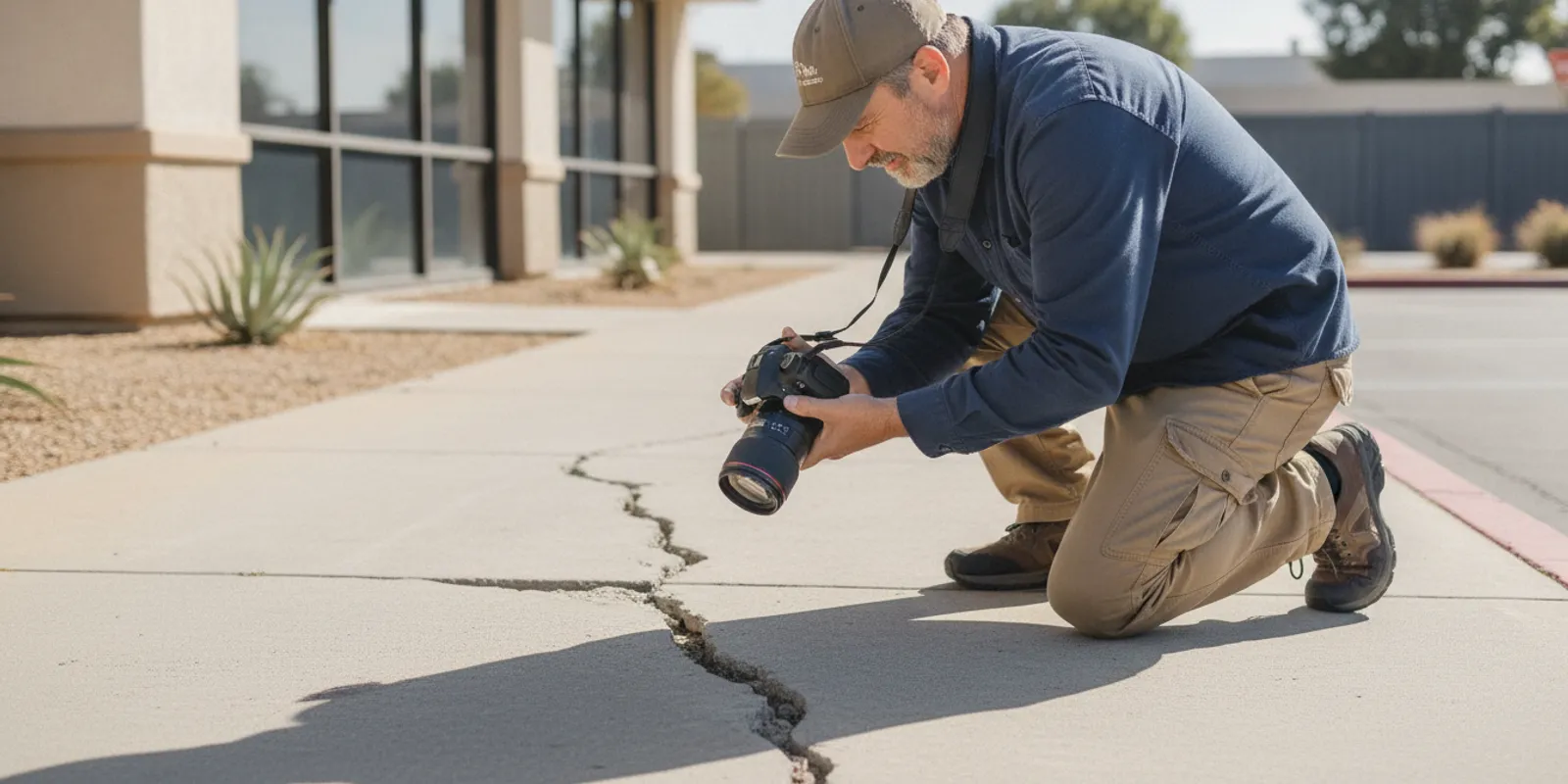
- Photograph or video the hazard. Take wide views that show where it is, then close views that show its condition. Include lighting, warning signs, nearby objects, and the route a visitor would take.
- Note the time and location. Write down the date, approximate time, exact area, and weather or lighting conditions. Record how you encountered the hazard and what happened immediately afterward.
- Identify witnesses. Ask for names and contact information if people saw the incident or can describe how long the condition was present. Avoid coaching anyone or asking them to speculate.
- Report the incident. Notify the property owner, manager, or appropriate staff member. Ask how to obtain a copy of any incident report. Keep your account factual and save messages or emails about the report.
- Keep relevant items. Preserve the shoes and clothing worn at the time, and do not alter them. Store them safely in case their condition becomes relevant.
- Save communications. Keep repair requests, emails, texts, notices, and any responses from the property or its insurer. Make a note of calls, including the date and the person you spoke with.
Do not trespass or return to a dangerous area to collect evidence. Do not remove a fixture, clean a hazard, or post private information online. If a camera, maintenance log, or inspection record may exist, make a written request that the relevant materials be preserved. A request does not guarantee that the owner will provide the material directly, but it creates a dated record that you raised the issue.
Make a short timeline while your memory is fresh. Include when you arrived, where you walked, when you first noticed the condition, who you told, and what happened next. Keep observations separate from assumptions. For example, write “the floor looked wet and there was no sign near the entrance” rather than concluding that staff knew about it. A factual timeline is easier to compare with photographs, witness accounts, and later records.
If you think a business or building has video, act promptly to identify the camera area and the approximate time window. Many systems overwrite recordings as part of ordinary operations. You may not be able to obtain footage immediately, but accurately identifying what may exist can help a legal representative consider preservation steps. Do not access a recording system or ask another person to share material they are not authorized to provide.
How should you document an injury and its effects?
Seek medical attention when you need it. An injury may not feel serious at first, and prompt evaluation can help a health professional assess your condition. Follow the medical guidance you receive and keep copies of visit summaries, referrals, prescriptions, and bills. Do not delay urgent care to gather evidence or speak with an insurer.
As you recover, keep a simple, dated record of symptoms and practical effects. Note missed work, tasks you cannot perform, transportation to appointments, and changes in your normal routine. Save pay records or employer communications that help show time away from work. These notes are not a substitute for medical records, but they can help you recall how the injury affected everyday life.
Be accurate and avoid guessing. If a symptom changes or a new concern arises, discuss it with a medical professional. Do not exaggerate, minimize, or assume that every later problem is connected to the incident. A careful record allows a lawyer and medical providers to evaluate the timeline more clearly.
What should you say to a property owner or insurance adjuster?
It is reasonable to report the incident and provide basic factual information. You can identify when and where it happened, describe what you observed, and explain that you were injured. Ask for the name of the insurer and the claim number, and keep copies of documents you submit.
Before giving a recorded statement or signing a release, make sure you understand what is being requested and how it may be used. You can ask for a copy of a document and time to review it. Avoid speculating about the cause, accepting blame before the facts are clear, or agreeing that an early offer resolves every injury and expense. A release may affect the ability to pursue additional compensation later.
Be cautious about sharing detailed medical or personal information that is not relevant to the incident. Keep your communications civil and factual. If you are unsure what a request means, you can seek legal guidance before responding. An insurer’s investigation and your own assessment of the claim are not the same thing.
Keep a copy of every form, letter, estimate, and email. If you send photographs or bills, make a list of what you sent and when. You can ask the adjuster to put requests and important decisions in writing. If a request is unclear, ask for clarification rather than guessing at the answer. These habits create a more complete record and reduce the chance of misunderstanding about what was provided.
Call Weinberger Law Firm at 916-357-6767 to discuss your next steps.
What losses may need to be documented?
Depending on the facts, an injury claim may involve medical expenses, lost income, and the personal effects of pain or limits on ordinary activities. Which losses can be considered, and what proof is needed, depend on the circumstances and applicable law. Keep bills, receipts, wage information, and records showing the care recommended or received. If you paid out of pocket for transportation or other injury-related needs, save receipts and make a note of why the expense arose.
Do not treat a list of expenses as a guaranteed measure of a claim. Medical charges, future care, time away from work, and the effect on daily life may require different evidence and evaluation. Be prepared to explain what changed after the incident and what has improved or remains difficult. A careful review can separate documented losses from assumptions and help identify information that may still be needed.
What if you may share some responsibility?
Do not assume that a claim is barred simply because another person says you were not watching where you walked or should have noticed a condition. California follows comparative-fault principles. Depending on the facts, responsibility may be apportioned among parties, and an injured person’s share of fault can affect a potential recovery. The details matter: visibility, lighting, warnings, the route available, and what each party knew may all be relevant.
Likewise, a warning sign does not answer every question. Its placement, visibility, timing, and whether it reasonably addressed the hazard may matter. The same is true of a property rule or visitor instruction. A careful review considers what actually happened rather than treating one fact as conclusive.
How do different property hazards change the investigation?
The evidence to look for depends on the condition. The table below is a starting point, not a checklist that proves liability. A lawyer may need to identify the responsible party, request records, and evaluate whether the available information supports a claim.
| Hazard or incident | Useful facts to record | Potentially relevant records |
|---|---|---|
| Spill or wet floor | Location, size, appearance, warning signs, foot traffic, and any visible source | Cleaning schedules, inspection logs, incident reports, and available video |
| Broken step or handrail | Which component moved or failed, lighting, photographs from more than one angle, and prior complaints | Repair requests, work orders, inspection records, and contractor communications |
| Uneven walkway or pavement | Change in height, surrounding surface, lighting, route, and whether the condition was obscured | Maintenance plans, repair history, inspection notes, and ownership or control records |
| Leak or recurring water condition | Where water appeared, whether it returned, nearby drains or fixtures, and prior visible damage | Plumbing or roof repair records, tenant reports, vendor invoices, and inspection logs |
| Falling object or unsafe equipment | Object or equipment involved, where it came from, warnings, and whether the area was restricted | Inspection and service records, incident reports, and maintenance contracts |
Some evidence may be held by a landlord, business, management company, contractor, or public agency. A visitor may not know which entity controls the location. Take care to distinguish what you personally observed from what someone later told you.
What changes if the property belongs to a public entity?
An injury involving a public sidewalk, school, government building, transit facility, or other public property can involve special rules. A claim against a public entity may require an administrative claim before a lawsuit, and the deadline can be much shorter than the general time limit for many injury lawsuits. The applicable deadline depends on the facts and the type of claim. Do not rely on a general internet summary or wait to seek legal advice while trying to identify it. A hazard near a public building may be on land controlled by a different agency, a private owner, or a contractor. Identify the precise spot rather than assuming the agency named on a nearby building is responsible for it.
Try to identify the exact location and the public agency that owns or maintains it. Photograph nearby signs, street names, building names, or other location markers. Keep any report or response you receive. For general court information, consult the California Courts website; it is not a substitute for advice about a specific claim or a deadline.
How can local information help with a California injury claim?
Property conditions vary by site, and the location may help identify who maintains an area and which records exist. A person hurt in a private apartment complex, a business parking lot, and a public walkway may need to ask different questions about control and notice. Weinberger Law Firm represents personal injury clients in California, with a local focus that includes Roseville, Sacramento, and Folsom.
For related personal-injury information in nearby communities, see the firm’s pages for Antelope, Davis, and Ladera. These pages are general location resources; the relevant legal questions still depend on the facts and property involved.
When can a legal review be useful?
A legal review may help when the hazard was repaired quickly, the responsible party is unclear, the property has several managers or contractors, or an insurer disputes how long the condition existed. It may also help when an injury requires ongoing care, time away from work, or significant changes to daily activities. A lawyer can assess the available evidence, identify what may be missing, and explain possible next steps without assuming that a claim will succeed.
Weinberger Law Firm offers a free consultation and handles personal injury matters on a contingency-fee basis. Clients pay nothing upfront and pay a fee only if the firm recovers compensation. The terms and costs should be explained before representation begins. A consultation does not itself establish an attorney-client relationship or guarantee that the firm will take a case.
Call Weinberger Law Firm at 916-357-6767 for a free consultation.
Frequently Asked Questions
Does an injury on someone else’s property prove negligent maintenance?
No. The fact that an injury happened on a property does not, by itself, establish negligence. The investigation may consider who controlled the area, whether a dangerous condition existed, whether the responsible party knew or should have discovered it, and whether the condition caused the injury.
What if the hazard was fixed before I took a photograph?
Write down what you remember as soon as you can. Note when you saw the condition, where it was, how it looked, and who was present. Ask witnesses for their contact information and save any incident report or message about the repair. Other records, such as maintenance logs or surveillance footage, may help establish what was there.
Should I accept an insurance offer before finishing treatment?
Consider the scope of any release and what is known about your injury before agreeing to settle. A settlement document may close the claim, including for harm that becomes clearer later. If you do not understand the offer or release, get legal guidance before signing.
Is there a different deadline for an injury on government property?
There may be. Claims involving a public entity can have an administrative claim requirement and a shorter deadline than many claims against private parties. The correct rule depends on the circumstances, so seek legal advice promptly rather than assuming the ordinary lawsuit deadline applies.
What should I bring to a consultation?
Bring or gather photographs, the incident report, names of witnesses, communications with the owner or insurer, and available medical or work records. If you do not have everything, do not delay asking questions. A clear timeline and the exact location are useful starting points.
Every property accident is different, and early details can be hard to recover later. Preserve what you can, take care of your health, and get advice promptly if you need help understanding your options.