
Table of Contents
- Why Evidence Matters in Your DUI Injury Claim
- Critical Evidence Types We Pursue in DUI Cases
- Scene Documentation and Photographs You Should Preserve
- Medical Records and Treatment Documentation Requirements
- Police Reports and Official Investigation Materials
- Witness Statements and Testimony Collection
- Expert Analysis and Reconstruction Evidence
- Digital and Electronic Evidence Preservation
- Insurance Company Communications and Documentation
- Statute of Limitations and Timeline Urgency
- How We Build Stronger Cases With Complete Evidence
- Contact Weinberger Law Firm for Your Free Consultation
- Frequently Asked Questions (FAQ)
Why Evidence Matters in Your DUI Injury Claim
If you were injured in a DUI accident, you have rights after an accident. The path to fair compensation starts with one critical step: gathering and preserving evidence. Strong evidence transforms your claim from a “he said, she said” dispute into a compelling case that insurance companies and courts take seriously.
We understand that after a DUI collision, you’re managing medical treatment, lost income, and emotional stress. That’s exactly why we focus on the investigative heavy lifting. Our job is to document, preserve, and present the facts that prove liability and secure the full compensation you deserve.
Evidence is the foundation of every successful personal injury claim. In DUI cases, quality evidence goes beyond proving the other driver was intoxicated; it establishes causation, quantifies your damages, and removes doubt from the minds of adjusters and juries.
Without strong evidence, even clear-cut accidents can stall in settlement negotiations. Insurance companies depend on incomplete records to minimize payouts. We investigate all available evidence to close those gaps and build an undeniable case for your recovery.
The stronger your evidence collection starts immediately after the collision, the better your outcome. Photographs fade from memory, witnesses relocate, and surveillance footage disappears. Time is limited — act now to preserve what matters most.
Critical Evidence Types We Pursue in DUI Cases
DUI injury claims require a layered evidence strategy. We pursue multiple categories of proof, each serving a specific purpose in proving negligence and quantifying harm.
Physical evidence at the scene tells the story of impact force and vehicle damage. Medical documentation proves injury causation and treatment necessity. Police reports establish intoxication and officer observations. Witness statements corroborate your account and provide independent perspectives. Expert analysis reconstructs the collision mechanics and validates causation.
Toxicology results, breathalyzer readings, and field sobriety test results are critical in DUI cases. These demonstrate impairment at the exact moment of the collision. We work systematically through law enforcement records, medical files, and third-party evidence to build a comprehensive picture.
Scene Documentation and Photographs You Should Preserve
Photographs taken at the accident scene are among the most powerful evidence we review. They document vehicle positions, damage patterns, road conditions, traffic signals, and environmental factors that influenced the collision.
If you can safely take photos immediately after the collision, capture these angles:
- Damage to both vehicles from multiple sides and distances
- Tire marks, skid patterns, and debris on the pavement
- Traffic signals, stop signs, and street markings
- Road surface conditions (wet, potholed, icy)
- Lighting conditions and visibility factors
- Surrounding business signage and buildings (potential surveillance cameras)
Video recordings from your smartphone are equally valuable. A 30-second clip showing vehicle positions and road conditions provides context that still photos sometimes miss. If the scene is still active, police will document it as well; we obtain those official photos through the incident report.
Preserve any evidence and get medical care. Don’t clean your vehicle immediately after the collision, as police may need to inspect it. Mark the location of the accident if you can do so safely.
Medical Records and Treatment Documentation Requirements
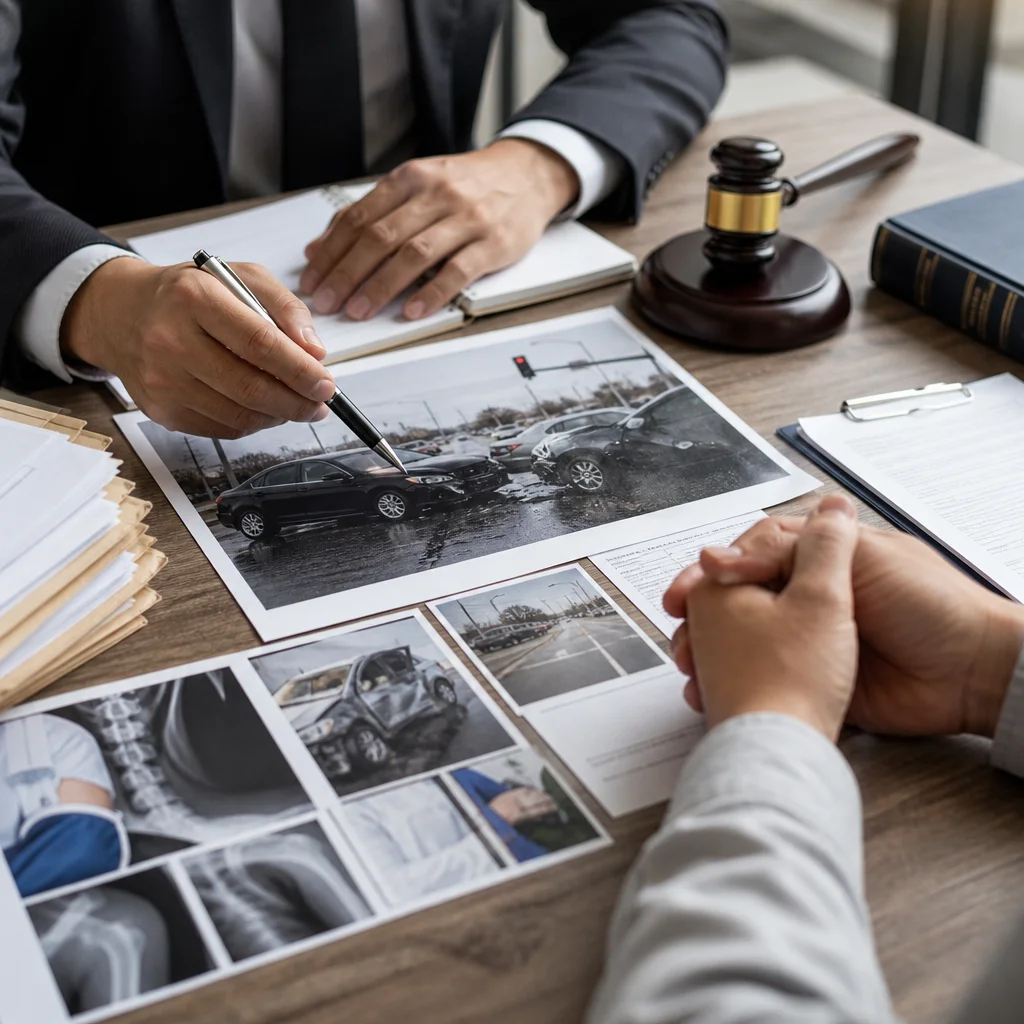
Your medical records are direct proof that the DUI collision caused your injuries. Every hospital visit, physical therapy session, imaging study, and provider note becomes evidence of harm and recovery trajectory.
We thoroughly review your complete medical file to establish a clear cause-and-effect link between the collision and your injuries. This includes:
- Emergency room reports and imaging (X-rays, CT scans, MRI results)
- Hospitalization records and discharge summaries
- Surgical reports and anesthesia records
- Physical therapy and rehabilitation notes
- Primary care follow-ups and specialist consultations
- Medication records and prescriptions
- Mental health treatment (trauma, PTSD, anxiety related to the collision)
Gaps in treatment can undermine your claim’s credibility. If you stop seeking care for six months and then resume treatment, insurers argue your injuries healed. We advise you to follow your doctor’s treatment plan consistently and document every visit.
[Organize your medical records] systematically as you go. Request copies from every provider and create a timeline showing treatment dates, procedures, and providers involved. This foundation makes our case preparation significantly stronger and faster.
Police Reports and Official Investigation Materials
Police reports are essential documents in DUI cases. Officers at the scene document the driver’s behavior, observations of intoxication, field sobriety test results, and preliminary investigation findings.
We obtain the full police report through California public records requests. This includes:
- Officer narrative descriptions of the collision
- Driver statements and admissions
- Dispatch records and call details
- Photographs and diagrams prepared by police
- Citations issued to the at-fault driver
- Arrest records and charges filed
- BAC (blood alcohol content) results
- Dashboard camera or body camera footage
DUI charges or convictions against the other driver significantly strengthen your civil injury claim. A criminal conviction proves impairment beyond reasonable doubt, which carries weight in your compensation case. Even if criminal charges are pending, the police report itself establishes key facts.
We request these materials promptly and thoroughly review them for inconsistencies, admissions, and evidence gaps. Our team knows which agencies to contact and how to expedite release of reports and recordings.
Witness Statements and Testimony Collection
Independent witnesses provide credibility your account alone cannot achieve. A business owner across the street, a passenger in a nearby vehicle, or a pedestrian who saw the collision firsthand can corroborate your version of events.
We work to locate and interview witnesses while their memories are fresh. This includes:
- Obtaining witness contact information from the police report
- Conducting recorded interviews documenting their observations
- Preserving written statements describing what they saw
- Identifying video surveillance from nearby businesses or traffic cameras
- Securing witness availability for future depositions or trial testimony
Witness statements often reveal details the police report missed. A witness might remember the at-fault driver’s erratic driving for several blocks before impact, or recall seeing the driver swerving. These details strengthen the causation narrative and demonstrate a pattern of impaired operation.
We follow a systematic process to preserve testimony before witnesses become unavailable due to relocation, memory fade, or other life circumstances. This proactive approach is one reason we recover stronger settlements for our clients.
Expert Analysis and Reconstruction Evidence
Complex DUI collisions often benefit from expert analysis. Accident reconstruction specialists examine vehicle damage, debris patterns, and collision physics to prove how the impact occurred and validate your account of events.

We retain qualified experts when case circumstances warrant their analysis. Common expert engagements include:
- Accident reconstruction specialists who diagram impact forces and vehicle trajectories
- Medical causation experts who link collision mechanics to your specific injuries
- Toxicology consultants who interpret BAC results and impairment timelines
- Economic damages experts who calculate lost wages and future earning capacity
Expert testimony carries substantial weight with juries and settlement negotiators. A reconstruction expert’s conclusion that the at-fault driver had approximately 0.8 seconds to react — but a sober driver would have had sufficient time to avoid collision — powerfully demonstrates impairment-related negligence.
We evaluate whether expert evidence strengthens your case and, if so, engage specialists early in the process. This allows adequate time for analysis and report preparation before litigation timelines compress.
Digital and Electronic Evidence Preservation
Modern vehicles and infrastructure generate digital evidence that many claimants overlook. Cell phone records, vehicle diagnostic data, and traffic camera footage provide objective documentation of collision circumstances.
Digital evidence we commonly pursue includes:
- Cell phone records showing the at-fault driver was texting or calling at collision time
- Vehicle event data recorder (EDR) information documenting speed, braking, and steering
- Traffic camera footage from nearby intersections, businesses, or municipal systems
- GPS and navigation data showing the at-fault driver’s route and speed
- Social media posts made by the at-fault driver around the collision time (showing intoxication or reckless behavior)
- Insurance company communications and adjuster notes
Preserve any electronic devices involved. Don’t reset or clear your phone, and don’t allow the at-fault driver’s vehicle to be scrapped without EDR data extraction. Request that your insurance company preserve the police vehicle’s dashcam footage immediately.
Insurance Company Communications and Documentation
Insurance company files contain valuable evidence, but companies rarely volunteer this information. We request complete claim files, including adjuster notes, investigation reports, and recorded statements.
Insurance companies often document facts that strengthen your claim if you know how to access and interpret them. An adjuster’s note might reference the at-fault driver’s admission of impairment, or an investigation report might identify surveillance footage you weren’t aware existed.
We file formal discovery requests for insurance materials and use California public records law to obtain police and municipal documents. This systematic approach ensures no evidence source is overlooked.
Statute of Limitations and Timeline Urgency
California law imposes strict deadlines for filing injury claims. The statute of limitations — the deadline to file a lawsuit — is typically two years from the collision date for personal injury cases. Time is limited — act now to preserve your legal rights.
This two-year window creates urgency for evidence collection. Surveillance footage is routinely deleted after 30 to 90 days. Witnesses relocate or become unavailable. Medical records become harder to locate. Insurance companies begin settlement discussions early, and accepting a premature offer forfeits additional compensation you may discover later.
Contact us within weeks of your collision, not months. Early engagement allows us to issue evidence preservation letters to businesses, secure witness statements while memory is sharp, and build a comprehensive case file before critical evidence disappears.
Understanding your [injury claim timeline] helps you prioritize your actions and avoid costly delays. We guide you through each phase so deadlines are met and opportunities aren’t missed.
How We Build Stronger Cases With Complete Evidence
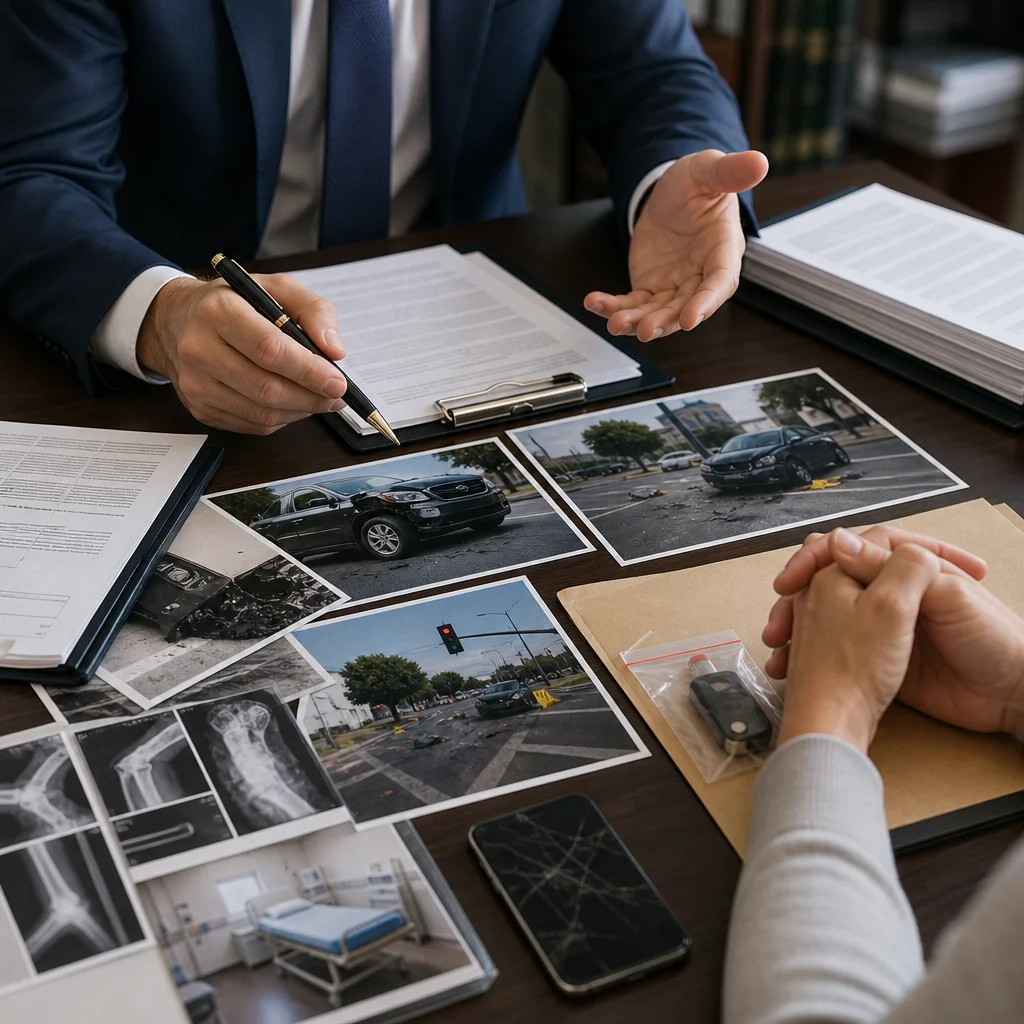
Our evidence collection process is systematic and thorough. We don’t rely on what police gathered or what insurance companies tell us; we independently investigate and verify every critical fact.
Here’s how we transform evidence into recovery:
- We immediately preserve digital evidence and issue preservation letters to relevant businesses and agencies
- We conduct recorded witness interviews before memories fade or witnesses relocate
- We obtain and review complete medical records, medical bills, and lost wage documentation
- We secure police reports, arrest records, and toxicology results through public records requests
- We retain accident reconstruction or medical experts when complex causation requires professional analysis
- We build a detailed case chronology showing collision circumstances, injury causation, and damages
- We negotiate from a position of strength, backed by evidence that removes ambiguity
This evidence-first approach achieves higher settlements because we demonstrate clearly what happened, why the at-fault driver is liable, and what compensation is appropriate. Insurance companies know we’re prepared for litigation and have pursued all available evidence.
We pursue full and fair compensation by leaving no stone unturned. Your maximum recovery depends directly on the quality and completeness of evidence supporting your claim.
Contact Weinberger Law Firm for Your Free Consultation
If you were injured in a DUI collision in California, we’re here to help. We understand the physical pain, financial stress, and emotional toll of accident recovery. Our team handles the investigation and evidence gathering so you can focus on healing.
No fee unless we recover for you. We work on contingency, meaning you pay nothing upfront and only if we secure compensation on your behalf.
Contact Weinberger Law Firm today for your free consultation. We’ll review your collision circumstances, explain your rights, and outline the evidence strategy we’ll pursue to maximize your recovery. Call us or visit https://weinbergerlaw.net to schedule your consultation with a compassionate, experienced personal injury attorney.
Your case deserves thorough investigation and skilled advocacy. Let’s build the strongest possible claim together.