Table of Contents
- Why Motorcycle Accidents Demand Specialized Legal Expertise
- The Hidden Costs Beyond Medical Bills
- California’s Statute of Limitations: Why Time Matters
- How We Investigate and Build Your Case
- Negotiating with Insurance Companies on Your Behalf
- Why You Have Rights After a Motorcycle Accident
- Common Motorcycle Injury Scenarios We Handle
- Preserving Evidence: What You Must Do Now
- Documenting Damages: Medical Bills, Lost Wages, and More
- From Settlement to Full Litigation Readiness
- Why No Fee Unless We Recover for You Matters
- Get Your Free Consultation Today
- Frequently Asked Questions (FAQ)
Why Motorcycle Accidents Demand Specialized Legal Expertise
If you were injured in a motorcycle accident, you’re facing medical bills, lost wages, and emotional strain—all while navigating complex insurance claims and legal deadlines. We understand this is overwhelming. At Weinberger Law Firm, we’ve spent years helping injured motorcyclists in Sacramento and across California secure the compensation they deserve. You have rights after an accident, and we’re here to help you understand them and pursue full and fair compensation.
Motorcycle accidents are fundamentally different from car collisions. The physics alone make them more severe: without a protective frame, airbags, or crumple zones, motorcyclists absorb far more impact force. This means injuries tend to be catastrophic—spinal cord damage, traumatic brain injury, crushed limbs, and severe road rash are common outcomes.
Insurance companies and opposing counsel know this too. They often use it against you, either arguing that your injuries were your own fault or that you were engaging in inherently risky behavior. They may minimize your claim, dispute liability, or offer settlements that fall far short of your actual damages.
We bring specialized knowledge of how motorcycles behave in accidents, how to counter bias against riders, and how to build cases that hold negligent drivers accountable. Our investigation goes beyond the police report—we examine road conditions, vehicle inspection data, witness testimony, and expert analysis specific to motorcycle dynamics. This expertise shifts the balance in your favor.
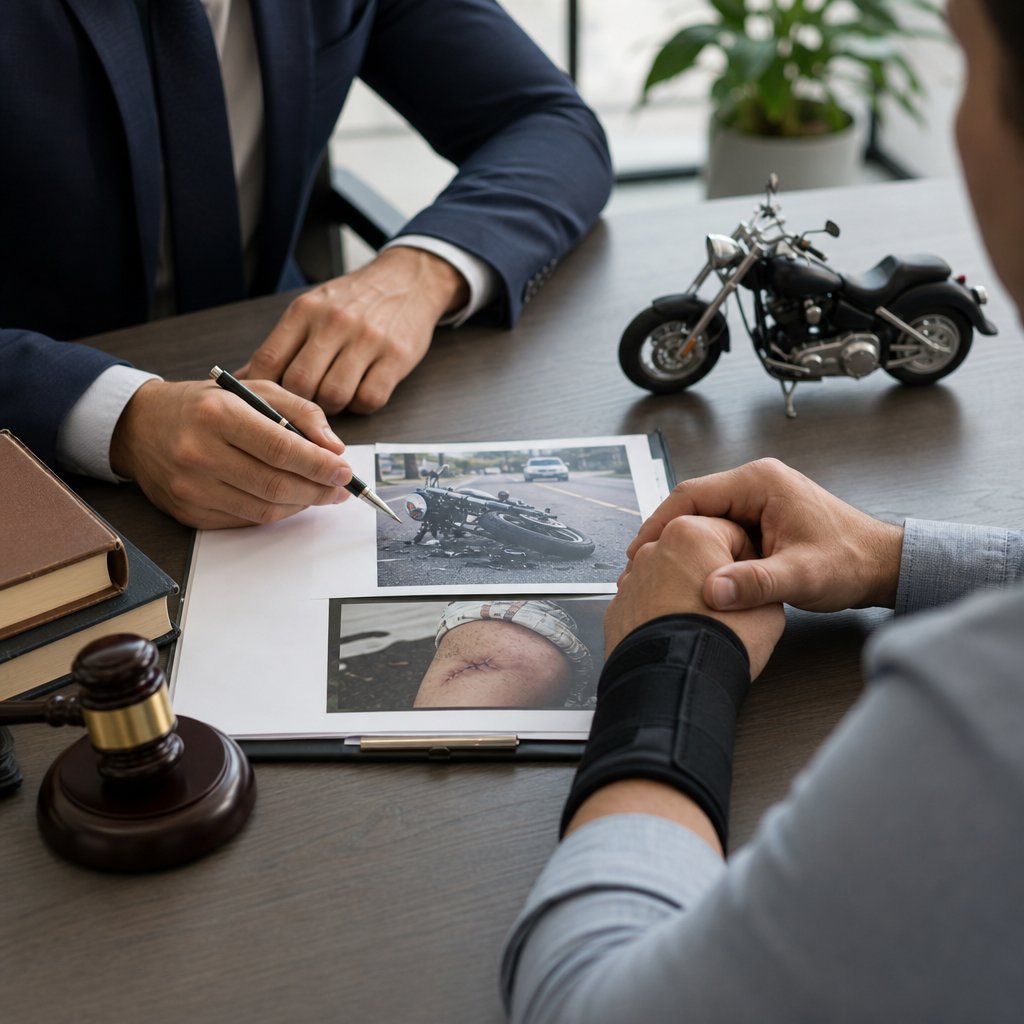
What to do next: Document everything from the accident scene. Preserve photos of your motorcycle, the other vehicle, road conditions, and your injuries. Get medical care immediately, even for injuries that seem minor—some impact injuries show symptoms days later.
The Hidden Costs Beyond Medical Bills
Your hospital bills and surgeon’s fees are only the visible portion of your financial loss. Most injured motorcyclists face costs and losses that extend far beyond the emergency room.
Consider what happens after discharge. Physical therapy can span months or years. Prescription medications accumulate. Ongoing specialist visits add up. If your injuries left you with chronic pain or reduced mobility, you may need home modifications—grab bars, ramps, or adapted furniture—or future surgeries you haven’t had yet.
Then there’s lost income. If you couldn’t work during recovery, that’s lost wages. If your injuries prevent you from returning to your previous job or earning capacity is permanently reduced, that’s an ongoing financial injury the law recognizes. Mental health treatment, vocational rehabilitation, and travel for medical appointments all count as damages you can recover.
Pain and suffering—the non-economic damage—is equally real. Scarring, permanent disfigurement, loss of enjoyment of life, and psychological trauma are all legally compensable. Insurance companies want to downplay these intangible losses, but your quality of life matters.
We ensure every cost and loss gets documented and presented. No legitimate damage gets overlooked because of incomplete accounting on your part.
California’s Statute of Limitations: Why Time Matters
California law sets strict deadlines for filing personal injury claims—what we call the statute of limitations. For most motorcycle accident cases, you have two years from the date of your injury to file a lawsuit. This might sound like ample time, but it isn’t.
Evidence degrades. Witness memories fade. Security camera footage gets overwritten or deleted. Medical providers change locations or retire. Insurance companies benefit from delay because it weakens your case. Once the two-year deadline passes, your right to sue is gone. No exceptions, no second chances, no extensions for hardship.
We recommend acting within the first few months. This isn’t to rush you, but to protect your rights and gather the strongest possible evidence while it’s fresh. Even if you’re still in treatment or unsure whether to settle, we can open an investigation and preserve critical evidence.
How We Investigate and Build Your Case
A strong personal injury case rests on evidence. We will investigate all available evidence, starting immediately after you contact us.
Our investigation typically includes:
- Accident scene photography and drone footage to show road conditions and sight lines
- Police report review and follow-up with responding officers
- Witness statement collection and verification
- Medical record compilation from all providers involved in your care
- Vehicle inspection and damage analysis to determine impact force and speed
- Traffic camera footage from nearby businesses or intersections
- Cell phone records to check if the other driver was distracted
- Maintenance records for both vehicles to rule out mechanical failure
- Expert reports on accident reconstruction, injury causation, and future care needs
Each piece of evidence tells part of your story. Together, they create a narrative that insurance adjusters and, if necessary, a jury can understand and trust. We document, preserve, and present the facts in a way that maximizes your position during negotiation or trial.
Negotiating with Insurance Companies on Your Behalf
Most motorcycle accident claims settle before trial, but only if you’re represented by someone who understands the negotiation process and isn’t intimidated by insurance company tactics.
Insurance adjusters use several strategies to reduce payouts: questioning your credibility as a rider, suggesting comparative fault (“you should have seen us”), refusing to acknowledge future medical costs, or making a low initial offer hoping you’ll accept out of desperation. They have training, experience, and financial incentives to minimize what they pay.
We negotiate from a position of strength. We present medical evidence of injury severity, expert testimony supporting your damages, clear documentation of financial losses, and our willingness to take the case to trial if needed. Insurance companies know that litigation is expensive and unpredictable for them. This leverage typically results in substantially higher settlements than injured riders can secure alone.
We pursue full and fair compensation, not the fastest settlement. If an offer doesn’t reflect your actual damages and future needs, we say no and prepare for the next phase.
Why You Have Rights After a Motorcycle Accident
This is foundational: you have rights after a motorcycle accident, regardless of what anyone tells you. California law protects injured people from negligence. If someone else’s carelessness caused your injury, you have the legal right to recover damages.
Your rights include:
- The right to hold the negligent party accountable
- The right to recover medical expenses, lost wages, and other financial losses
- The right to compensation for pain, suffering, and reduced quality of life
- The right to legal representation and expert assistance
- The right to refuse an unfair settlement offer
- The right to have your case evaluated by an experienced attorney