
Table of Contents
- Why Premises Liability Cases Demand Immediate Action
- Understanding Premises Liability: When Property Owners Are Responsible
- Critical Evidence You Must Preserve After Your Injury
- California’s Statute of Limitations: Your Filing Deadline Explained
- Essential Documentation for Your Premises Liability Claim
- How We Build Your Case From Evidence to Negotiation
- Filing Your Lawsuit: Steps We Handle for You
- Overcoming Common Defense Strategies Insurance Companies Use
- Calculating Full Compensation for Your Damages
- Why Choosing the Right Legal Team Matters
- Your Next Step: Free Consultation With Our Team
- Frequently Asked Questions (FAQ)
Why Premises Liability Cases Demand Immediate Action
If you were injured on someone else’s property due to negligence, you have rights after an accident. A fall in a neglected stairwell, a slip on an unmarked wet floor, or an injury from poor maintenance can create legal liability. Understanding how to file a premises liability lawsuit in California is the first step toward securing the compensation you deserve for your medical bills, lost wages, and suffering.
Time is limited — act now. Evidence disappears quickly. Witnesses move away or forget details. Surveillance footage may be overwritten in days or weeks. Property owners often begin repairs or alterations that hide the negligent conditions that caused your injury.
We recommend documenting your injury and the hazardous condition immediately. Take photographs of the scene, your injuries, and any visible dangers. If you can safely do so, note the date, time, and weather conditions. Medical care should be your priority, but securing evidence runs a close second.
Property owners and their insurance companies also act fast. They begin their own investigation and may contact witnesses before you do. The sooner you contact us, the sooner we will investigate all available evidence and protect your legal position.
Understanding Premises Liability: When Property Owners Are Responsible
California law holds property owners and managers accountable when they fail to maintain safe conditions or warn of known hazards. This is called premises liability. The property owner’s duty depends on your status as a visitor.
If you were an invited guest or customer (an “invitee”), the owner must maintain reasonably safe conditions and warn you of hidden dangers. If you were a social guest (“licensee”), the owner still owes you basic safety duties. Even trespassers have some limited protections in certain situations.
The core question is whether the property owner knew about a dangerous condition, or should have known about it through reasonable inspection, and failed to fix it or warn you. A missing handrail on stairs, inadequate lighting in a parking lot, or debris left on a floor can all create liability if the owner neglected to address them.
Our team evaluates each case by examining what the owner knew, what they should have known, and whether they acted reasonably. We pursue full and fair compensation based on the facts.
Critical Evidence You Must Preserve After Your Injury
Preserve any evidence and get medical care. Medical records are crucial — they document your injuries, link them directly to the fall or incident, and establish the severity of your condition. Seek immediate medical attention even if you feel only minor pain.
Gather and preserve the following evidence:
- Photographs of the hazardous condition (wet floor, broken step, poor lighting, clutter)
- Video footage from your phone showing the scene
- The names and contact information of all witnesses
- Your own written account of what happened, recorded as soon as possible
- Receipts for medical expenses and records of missed work
- Clothing or items damaged in the incident
- Any warnings or lack of warnings posted at the location
Ask the property manager or owner in writing to preserve all surveillance recordings. This formal request creates a legal obligation. If footage is later destroyed, we can argue that evidence was intentionally hidden.

California’s Statute of Limitations: Your Filing Deadline Explained
California’s statute of limitations for premises liability is two years from the date of your injury. This is the filing deadline — the last day you can file a lawsuit. Miss this deadline, and you lose your right to sue, regardless of the strength of your case.
If you were injured today, you have two years to file. This deadline applies to most personal injury cases in California, including premises liability. There are rare exceptions for injuries to minors or cases involving fraud, but you should not rely on exceptions.
We strongly recommend filing well before the deadline. Gathering evidence, investigating the property owner’s history, negotiating with insurers, and preparing for trial all take time. Starting early gives us the best chance to build a strong case and negotiate a fair settlement.
Contact us for a free consultation as soon as possible. We will review your specific deadline and ensure we meet all filing requirements.
Essential Documentation for Your Premises Liability Claim
Building a strong case requires organizing thorough documentation. Begin with medical records: all doctor visits, hospital reports, imaging studies, physical therapy sessions, and prescribed medications. These records establish the nature and extent of your injuries.
Next, compile financial documents:
- Medical bills and healthcare provider invoices
- Pay stubs showing lost wages and reduced income
- Receipts for out-of-pocket expenses (transportation, home care, medications)
- Proof of property damage if applicable
- Invoices for future medical care or ongoing treatment
Third-party documentation strengthens your claim:
- Police or incident reports filed at the property
- Witness statements signed by those who saw the hazard or the incident
- Prior complaints or reports about the same hazard at that location
- Maintenance records showing the owner failed to address known issues
- Property manager or owner communications admitting knowledge of the danger
We will request these documents from you and help you organize them chronologically. We also file formal discovery requests with the property owner’s legal team to obtain their maintenance logs, inspection records, and prior complaints.
How We Build Your Case From Evidence to Negotiation
We will investigate all available evidence systematically. Our investigation begins with a site visit to photograph and measure the hazardous condition, document current safety features, and interview anyone still available at the location. We retain experts such as engineers or safety specialists to analyze whether the condition was reasonably foreseeable and preventable.
We gather the property owner’s records through formal legal discovery. These documents often reveal prior complaints, failed repairs, budget cuts to maintenance, or ignored safety recommendations. We also research the owner’s history with regulatory agencies or previous lawsuits involving similar hazards.
Once our investigation is solid, we prepare a demand letter to the property owner’s insurance company. This letter presents the evidence, explains the owner’s legal liability, and quantifies your damages. Many cases settle at this stage without needing to file a lawsuit.
If the insurance company refuses a fair offer, we file a lawsuit and proceed to litigation. We prepare for depositions, expert testimony, and trial. Throughout this process, we maintain clear communication with you so you understand each step and your options.

Filing Your Lawsuit: Steps We Handle for You
When settlement negotiations stall, filing a lawsuit becomes necessary. We begin by drafting and filing a complaint in California court — a legal document that names the property owner as defendant and describes their negligence and your injuries.
The defendant then has 30 days to respond. If they fail to respond, we can ask the court for a default judgment in your favor. Usually, they do respond and the case enters the discovery phase.
During discovery, both sides exchange documents, written questions (interrogatories), and requests for admissions. We also conduct depositions — recorded interviews of the defendant, their employees, and witnesses under oath. This process reveals the other side’s evidence and weaknesses.
Pre-trial motions may be filed by either side to dismiss claims or narrow the issues. If the case does not settle during discovery, we prepare for trial. We organize exhibits, prepare you for testimony, and practice our arguments.
Most premises liability cases settle before trial. We negotiate aggressively to secure maximum compensation while keeping you informed of all settlement offers and recommendations.
Overcoming Common Defense Strategies Insurance Companies Use
Defense attorneys use predictable arguments to minimize or deny liability. Understanding these strategies helps you recognize them and know how we will counter them.
The most common defense is “assumption of risk” — the argument that you should have noticed the hazard and avoided it. Our response is that property owners have a duty to make conditions reasonably safe, not to force visitors to detect hidden dangers.
Another frequent defense is “comparative fault” — claiming you were partly responsible for your injury. California allows recovery even if you were partially at fault, but your damages are reduced by your percentage of fault. We fight to minimize any assigned fault by showing the hazard was hidden or unexpected.
Insurance companies may also claim the condition was “open and obvious” — so apparent that you should have seen it. We counter this by presenting evidence that the hazard was obscured by darkness, distance, distraction, or the property’s layout.
We also address arguments that the owner “could not have known” about the hazard. Here, we present maintenance records, prior complaints, and expert testimony showing the owner should have discovered and fixed the problem.
Calculating Full Compensation for Your Damages
Premises liability damages in California include economic and non-economic losses. Economic damages are measurable: medical bills, hospital and surgical costs, physical therapy, lost wages, and anticipated future medical care.
We gather all bills and receipts. We also calculate lost income by reviewing pay stubs and working with your employer to verify missed work days. For ongoing conditions, we retain medical experts to estimate future treatment costs and earning capacity loss.
Non-economic damages cover pain and suffering, emotional distress, reduced quality of life, and permanent disability. California does not cap these damages in premises liability cases. We calculate them by considering the severity of your injury, duration of recovery, impact on daily activities, and extent of permanent impairment.
We also pursue punitive damages if the property owner’s conduct was particularly reckless — for example, ignoring repeated complaints about a hazard or deliberately hiding a known danger. Punitive damages punish the defendant and deter similar conduct.
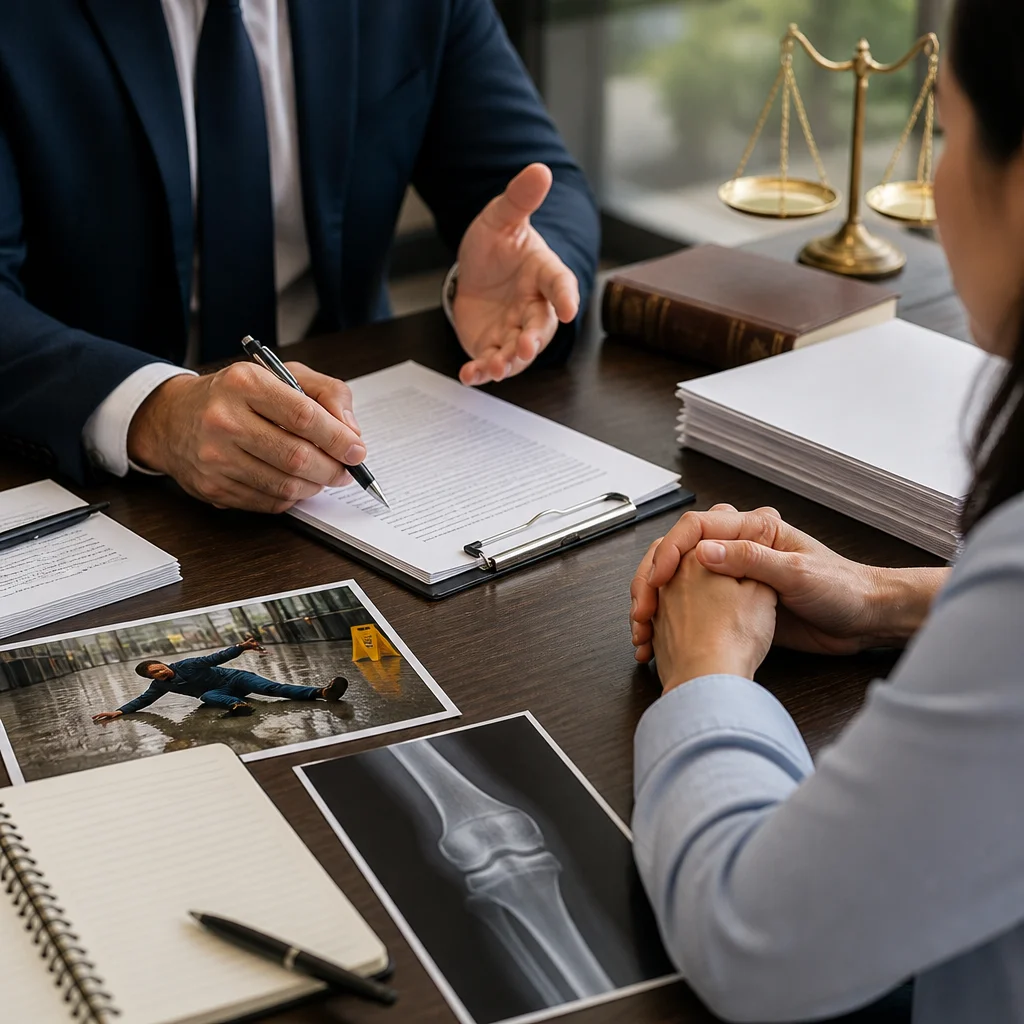
Our goal is to document and present the facts so you receive full and fair compensation for all your losses, both tangible and intangible.
Why Choosing the Right Legal Team Matters
Premises liability cases are complex. They require knowledge of California property law, insurance practices, expert witness coordination, and trial strategy. Most importantly, they demand someone who understands your situation and will fight for your rights.
We combine legal expertise with genuine compassion. We listen to your story, explain your options clearly, and make decisions with your best interests in mind. We handle the legal complexity so you can focus on healing.
Our fee structure removes financial barriers: no fee unless we recover for you. You pay nothing upfront, and we only receive a contingency fee if we win your case or secure a settlement. This aligns our incentives with yours — we succeed only when you do.
We are responsive and transparent. You will speak with a real attorney who knows your case, not a distant representative. We provide regular updates and answer your questions directly.
Your Next Step: Free Consultation With Our Team
If you were injured on someone else’s property in California, contact us today for a free consultation. We will review your case, explain your rights, and advise you on next steps. There is no obligation, and all information is confidential.
Time is limited — act now to preserve evidence and meet filing deadlines. Call us or visit our website to schedule your free consultation with Weinberger Law Firm. We are ready to fight for the compensation you deserve.