
Table of Contents
- Why Evidence Collection Matters in Rideshare Accident Claims
- Your Rights as a Rideshare Passenger or Driver
- What Evidence You Must Preserve Immediately
- Documenting the Scene and Your Injuries
- Obtaining Rideshare Company Records and Data
- Medical Records and Professional Documentation
- How We Investigate Rideshare Accident Claims
- Building Your Compensation Case With Evidence
- Common Evidence Mistakes That Hurt Claims
- Time Limits for Filing Your Rideshare Accident Claim
- Why You Need Our Legal Support
- Contact Us for Your Free Consultation
- Frequently Asked Questions (FAQ)
Why Evidence Collection Matters in Rideshare Accident Claims
If you were injured in a rideshare accident, you have rights after an accident. The path to fair compensation depends on one critical factor: evidence. Strong, well-preserved evidence transforms a claim from uncertain to compelling. Without it, even legitimate injuries go uncompensated. This guide walks you through exactly what evidence matters, how to collect it, and why time is critical.
Evidence is the foundation of every successful claim. Insurance companies and rideshare platforms like Uber and Lyft scrutinize claims carefully, demanding proof before they pay. Your account of what happened carries weight, but supporting documentation carries far more.
Strong evidence answers the questions insurers ask: Was the driver negligent? How severe were your injuries? What are your actual damages? Traffic camera footage can be decisive. Medical records establish injury causation. Witness statements corroborate your account. Without these elements, even clear liability becomes hard to prove.
Rideshare accident claims face unique challenges. Digital platforms store data that disappears quickly. Vehicle telematics records vanish after weeks. Rideshare company policies limit driver information access. The window to preserve critical evidence is narrow. We will investigate all available evidence, but your immediate actions set the foundation.
What to do next: Start collecting evidence today, even before contacting an attorney. Waiting costs you irreplaceable documentation.
Your Rights as a Rideshare Passenger or Driver
You have rights after an accident, regardless of your role in the rideshare transaction. California law protects both passengers injured during rides and independent drivers providing services.
As a passenger, you can hold the rideshare company and the driver liable for negligence. Rideshare platforms carry insurance for passenger injuries during active rides. You may also pursue claims against third-party drivers who caused the accident. California’s comparative negligence rules mean you can recover even if partially at fault, though compensation reduces by your percentage of fault.
If you’re a rideshare driver, your rights differ slightly. Your personal auto insurance typically excludes rideshare activity. However, Uber and Lyft provide coverage during rides. You can pursue claims against other drivers whose negligence caused your injury. If a passenger was injured by your actions, you may face liability but also have platform-provided coverage.
Understanding which parties are responsible requires thorough investigation. Multiple insurance policies may apply. Rideshare platforms often deny claims initially, claiming driver independence. We pursue full and fair compensation by identifying all liable parties and their applicable coverage.
What to do next: Document your exact role (passenger, driver) and the ride’s active status when the accident occurred, as this determines coverage applicability.
What Evidence You Must Preserve Immediately
The first hours after an accident are critical for evidence preservation. Certain types of evidence vanish quickly or become degraded if not secured promptly.
Preserve any evidence and get medical care immediately. Your health comes first, but don’t delay documentation. Before leaving the accident scene, photograph and video record everything: vehicle damage, license plates, street signs, traffic signals, road conditions, and skid marks. Use your phone’s timestamp feature for credibility.
Collect contact information from all involved parties and independent witnesses. Ask about nearby businesses with security cameras. Note the exact date, time, and location. Request the police report number if officers responded. If the rideshare driver was at fault, screenshot their profile information from your app before it updates or disappears.
Critical evidence that degrades quickly:
- Vehicle damage photos and damage inspection reports (change within weeks of repair)
- Witness recollections and statements (accuracy fades within days)
- Rideshare app ride details, driver information, and route data (platforms may alter or delete records)
- Traffic camera footage (retention policies vary; some delete after 30 days)
- Medical evidence showing immediate post-accident conditions (medical bills and lost wages documents must be current)
What to do next: Within 24 hours, send yourself timestamped photos and compile witness contact information in a document you can share with your attorney.
Documenting the Scene and Your Injuries
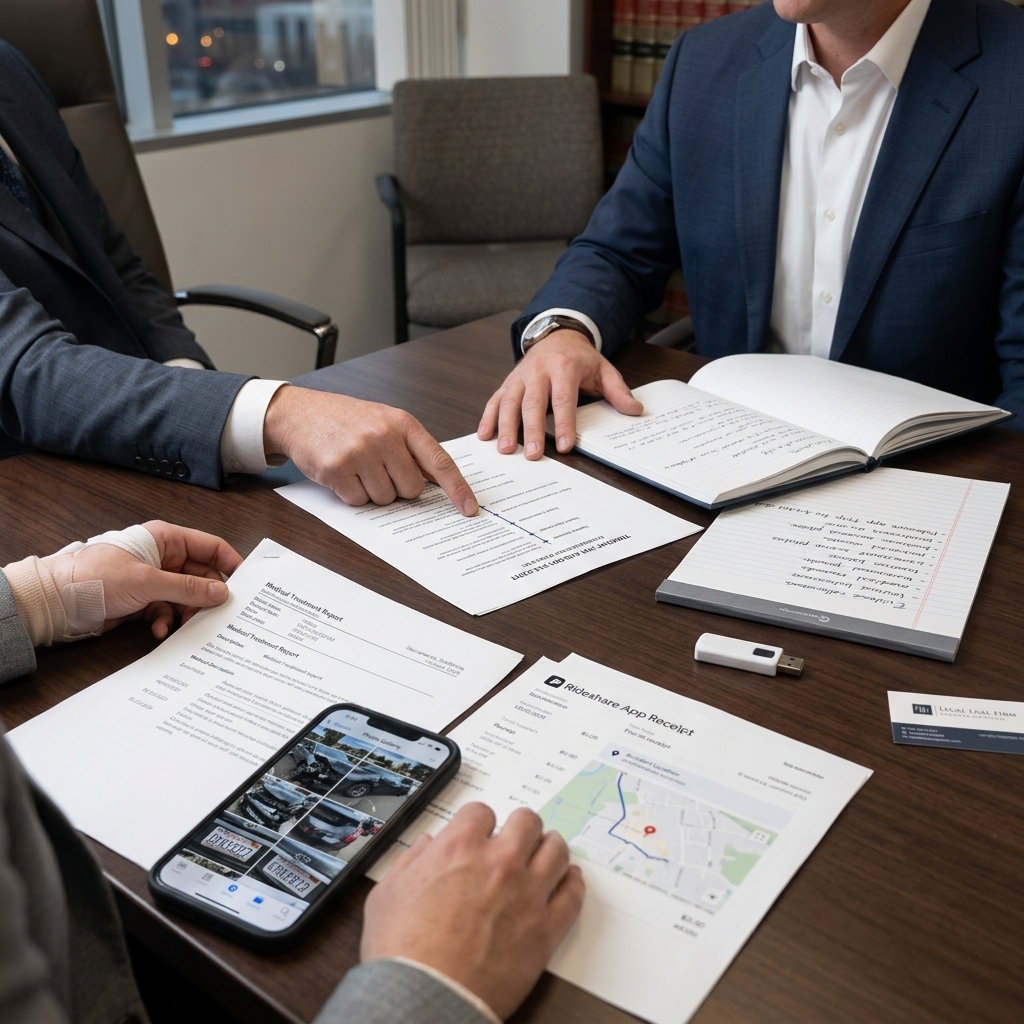
Scene documentation creates an objective record of conditions that caused your injury. This evidence rarely changes and carries substantial weight with insurers.
Photograph the accident location from multiple angles. Capture road conditions, weather, signage, and traffic patterns. If safe and able, shoot video walking around the scene. Include wide shots showing the accident’s relationship to nearby businesses, intersections, and landmarks. These details help reconstruct what happened.
Document your injuries immediately and continuously. Take photos of visible injuries the day of the accident and again as bruising, swelling, or wounds develop. Document bandages, casts, and medical devices. Photograph your home setup if injury required accessibility modifications.
Create a written timeline recording your immediate post-accident symptoms and how they evolved. Note which activities became impossible: walking, working, sleeping, driving. Include medical appointments and treatments. This personal documentation corroborates medical records and demonstrates impact on daily life.
Injury documentation extends beyond photos. Save every medical bill, pharmacy receipt, and transportation cost related to recovery. Document lost wages with pay stubs or employer statements. Record time spent on medical appointments and recovery tasks.
What to do next: Start a dedicated folder on your phone or computer today with all photos, receipts, and records in one searchable location.
Obtaining Rideshare Company Records and Data
Rideshare platforms possess critical evidence that passengers and drivers cannot access independently. We will investigate all available evidence by requesting records from Uber, Lyft, or other platforms involved.
Rideshare data includes driver information, vehicle details, passenger history, ride routing data, real-time location tracking, communication between driver and passenger, and in-app reported issues. Some platforms record vehicle telematics showing speed, acceleration, and braking patterns. This data can prove negligent driving behavior.
Obtaining this information requires proper legal channels. Direct requests to rideshare companies typically fail. We use discovery procedures available through litigation to compel production. Some platforms settle claims more quickly when we demonstrate evidence access and anticipated litigation.
The challenge is timing. Rideshare platforms delete data after set periods, typically 60 to 90 days for routine ride records. Telematics and detailed location data may purge faster. Once deleted, this evidence is gone permanently. Our team acts quickly to issue preservation notices and formal requests.
If you’ve already requested records directly, preserve any response or confirmation. Even partial platform data strengthens your case. Most claims never require litigation to recover this information, as we negotiate directly with claims adjusters who have internal access.
What to do next: Contact our office immediately so we can issue a preservation notice to the rideshare platform before critical data expires.
Medical Records and Professional Documentation
Medical evidence proves injury causation and establishes the extent of your damages. Insurance companies prioritize documented medical treatment over personal statements.
Seek medical evaluation immediately after the accident, even if injuries seem minor. Whiplash, internal injuries, and concussions may not appear immediately. Emergency room visits create official injury documentation dated to the accident. Follow up with your primary care physician and pursue specialist referrals for imaging, physical therapy, or mental health support.
Medical bills and lost wages documents form the core of economic damages. Gather hospital records, surgical reports, medication lists, physical therapy notes, and mental health treatment records. Request itemized bills from every provider. These establish what you’ve paid and project future medical needs.
Lost income documentation requires detail. Provide pay stubs from before and after the accident, employer statements confirming lost shifts or reduced hours, and tax returns showing self-employment income if applicable. Calculate future lost earning capacity if injuries create permanent limitations.
Insurance companies often challenge injury severity by pointing to treatment gaps. If you stop attending physical therapy, they argue your injuries weren’t serious. Consistency of treatment strengthens your case. We review all medical records to identify strengths and address inconsistencies before presenting your claim.
What to do next: Request complete medical records from all providers now and organize them chronologically with corresponding bills for immediate access.
How We Investigate Rideshare Accident Claims
Our investigation process goes beyond what you can accomplish independently. We have access to tools, databases, and expert networks that unlock evidence invisible to individuals.
We begin with scene investigation and accident reconstruction. We visit the accident location to assess sightlines, road conditions, and traffic patterns. Expert accident reconstructionists analyze vehicle damage and physics to determine how the collision occurred. This expert opinion powerfully counters insurance company denials.
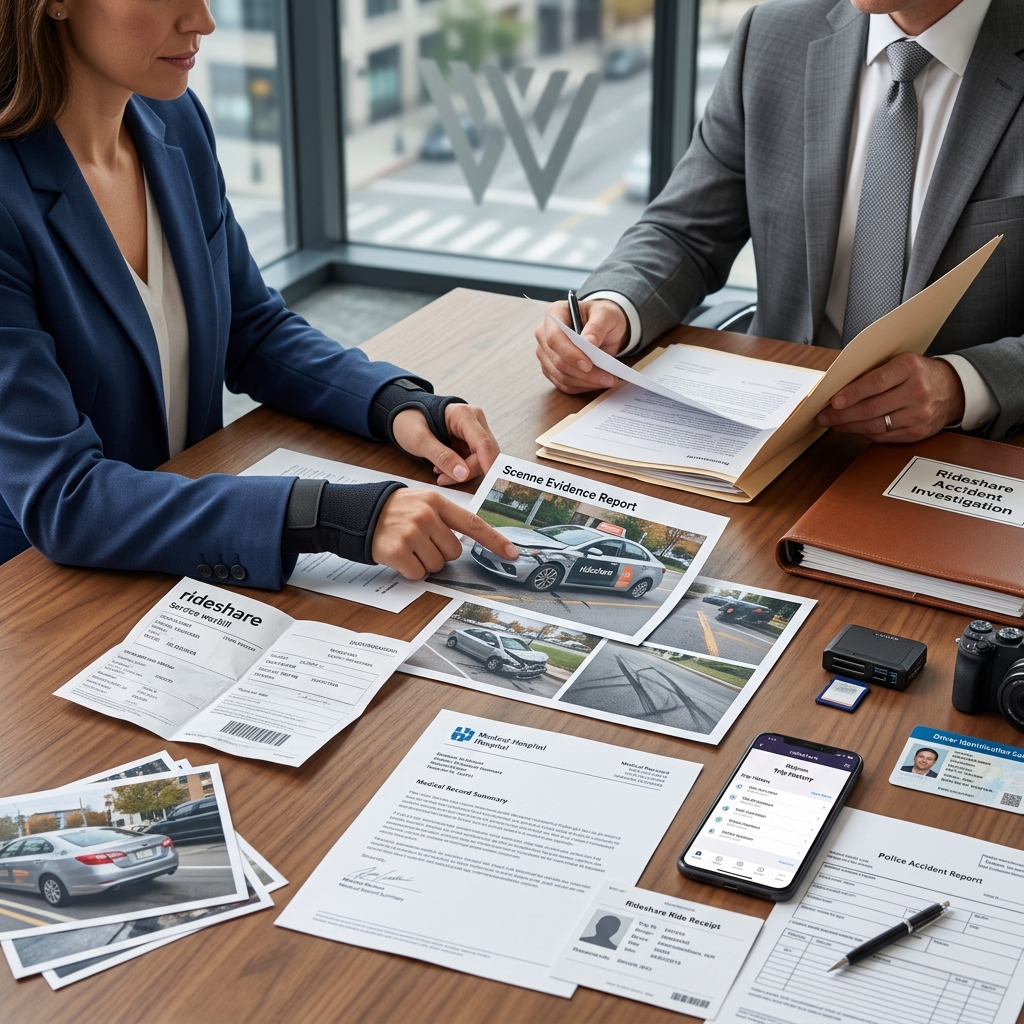
We aggressively pursue Rideshare company records through preservation notices and legal requests. We identify which insurance policies apply and determine coverage limits. We research the driver’s history, training records, and prior incidents. Background investigations sometimes reveal prior accidents or complaints that establish a pattern of negligence.
Witness identification and statement collection are critical. We locate and interview independent witnesses whose accounts corroborate your version of events. We obtain security camera footage from nearby businesses. We subpoena traffic camera records from municipalities. These third-party sources carry enormous credibility with insurers.
Medical expert consultation helps when insurers dispute injury severity. We work with physicians who review medical records and provide opinions supporting your injury claims. For permanent disabilities, we consult vocational experts to calculate future earning losses.
What to do next: Trust our investigation process completely and provide us every detail you remember, no matter how minor it seems.
Building Your Compensation Case With Evidence
Your evidence collection supports a comprehensive compensation demand covering all your damages. California law recognizes both economic and non-economic damages in accident claims.
Economic damages include medical bills, lost wages, future medical care, assistive devices, and home modifications. We document, preserve, and present the facts surrounding every expense. Itemized medical bills, pay stubs, and expert testimony establish these amounts precisely.
Non-economic damages address pain and suffering, emotional distress, and diminished quality of life. These lack simple dollar amounts but deserve compensation. We use medical documentation, personal testimony, and expert psychology evaluations to demonstrate suffering’s extent. Severe injuries, permanent disabilities, or scarring warrant substantial pain and suffering awards.
Strong evidence increases settlement leverage dramatically. Insurance adjusters know when cases are litigation-ready. Documented evidence that would survive cross-examination puts pressure on them to settle reasonably. Weak evidence signals an easy defense, encouraging low offers.
We present evidence strategically in demand letters that tell your story clearly. Photos, medical records, expert reports, and witness statements form a compelling narrative. This evidence package often resolves claims without litigation. When settlement talks stall, litigation-ready evidence wins trials.
What to do next: Ensure all your evidence is organized logically before we submit your compensation demand.
Common Evidence Mistakes That Hurt Claims
Accident victims often unintentionally damage their claims through poor evidence handling. Understanding these pitfalls protects your compensation.
Posting on social media is catastrophic. Insurance investigators mine social media for statements or photos contradicting injury claims. Vacation photos, active posts, or casual comments about feeling better become evidence against you. Even private settings offer no protection. Suspend social media activity until your claim resolves.
Inconsistent statements undermine credibility. If you tell the police you’re fine but later claim serious injury, insurers attack your entire narrative. Conversely, exaggerating initial injuries strains credibility later. Stick to factual descriptions matching your medical documentation.
Missing medical appointments signals reduced injury severity to insurers. Treatment gaps are interpreted as healing or diminished suffering. Consistent, documented medical care from appropriate providers strengthens claims substantially.
Altering or losing evidence is devastating. Don’t discard damaged clothing, repair vehicles immediately, or manipulate photos. Original items provide tangible injury proof. We preserve evidence properly for potential courtroom presentation.
Discussing fault on social media or with other parties creates problems. Admissions or defensive statements can be used against you. Always defer to your attorney and avoid characterizing the accident publicly.
What to do next: Stop social media posting today and avoid discussing your accident with anyone except your attorney.
Time Limits for Filing Your Rideshare Accident Claim
California law imposes strict deadlines for personal injury claims. The statute of limitations (the filing deadline) for rideshare accidents is typically two years from the injury date. Missing this deadline eliminates your legal right to compensation permanently.
This two-year window seems generous until you realize investigation, negotiation, and potential litigation consume months. We must identify all parties, preserve evidence, obtain records, gather medical documentation, and build a case. Starting your claim within weeks of injury, not months, prevents deadline pressure from forcing unfavorable settlements.
Some claims against government entities or public transit face shorter deadlines. If your accident involved a municipal vehicle or occurred on public property, claim notice requirements may require filing within 90 days. We assess your specific situation to determine applicable deadlines.
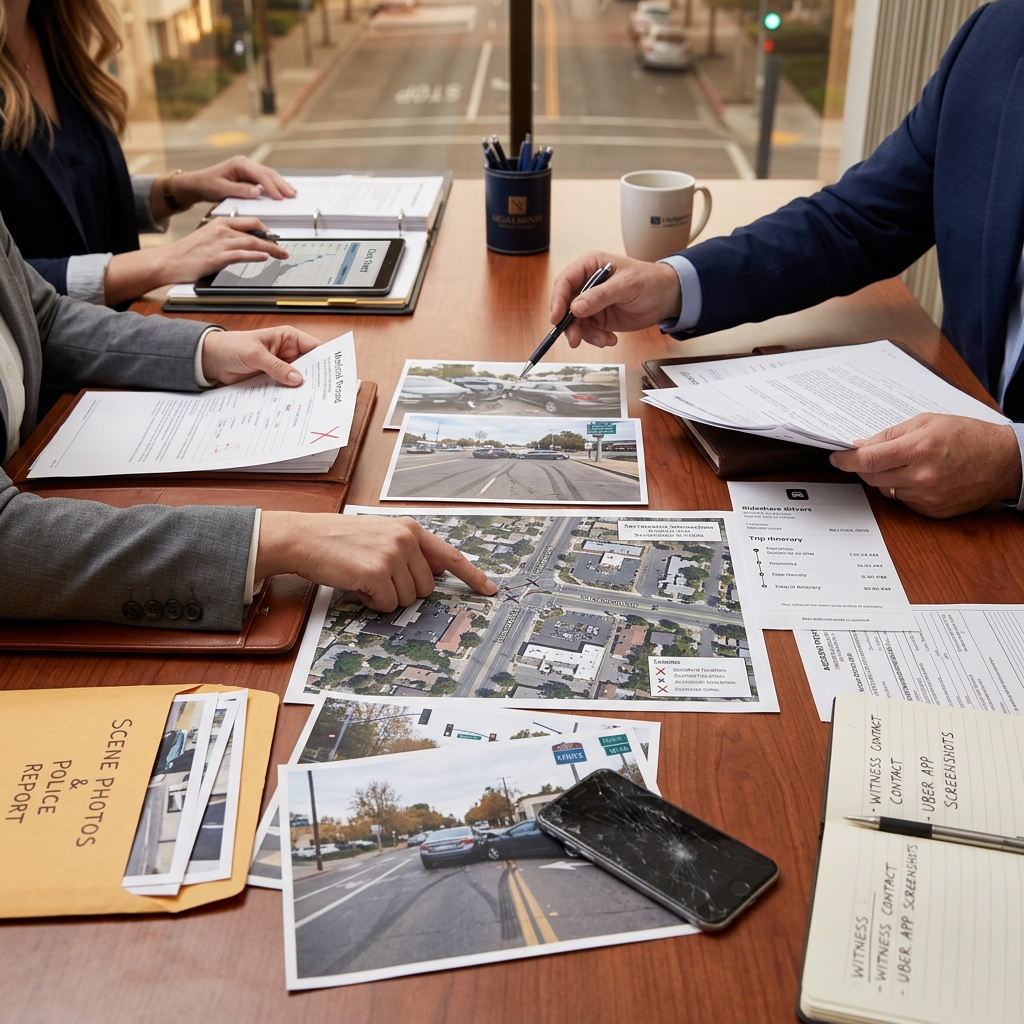
Insurance company timelines differ from legal deadlines. While you have two years to sue, negotiation momentum fades after months. Fresh evidence, clear memories, and strong documentation drive faster settlements. Delaying claims allows memories to blur, witnesses to become unreachable, and evidence to deteriorate.
Time is limited — act now. Contact us immediately to begin your claim while evidence is fresh and time is abundant. Early consultation prevents deadline crises and strengthens your negotiating position.
What to do next: Schedule your free consultation this week rather than waiting, even if you haven’t finished gathering evidence.
Why You Need Our Legal Support
Navigating rideshare accident claims independently is possible but costly. Insurance companies employ experienced adjusters trained to minimize payouts. Rideshare platforms use sophisticated legal strategies to avoid liability. Without legal guidance, injured victims frequently accept settlements far below their claim’s actual value.
Our role is balancing the playing field. We understand California personal injury law, rideshare platform operations, and insurance company tactics. We know what evidence matters most and how to obtain it despite corporate resistance. We negotiate from strength, backed by investigation and litigation readiness.
We handle communication with insurance companies, eliminating your direct contact and protecting you from recorded statements. We interpret settlement offers, advising whether to accept or continue negotiating. We navigate medical lien issues and workers compensation claims coordination. These complex interactions require legal expertise.
Perhaps most importantly, we work on contingency — no fee unless we recover for you. Your legal representation carries no upfront costs. You only pay if we secure compensation. This aligns our interests completely with yours and removes financial barriers to seeking justice.
What to do next: Contact us for a free consultation to discuss your accident and learn how we can maximize your recovery.
Contact Us for Your Free Consultation
Your accident created injury, hardship, and financial strain. Securing fair compensation requires evidence, expertise, and aggressive advocacy. We provide all three. Our rideshare accident lawyer team has recovered substantial settlements and verdicts for injured victims throughout California.
When you contact Weinberger Law Firm, you gain a dedicated advocate understanding both your injury’s physical impact and its financial consequences. We investigate thoroughly, negotiate aggressively, and litigate when necessary. Most importantly, we genuinely care about helping you recover.
Call us today for your free consultation. We’ll review your accident, explain your rights, discuss evidence collection, and outline how we’ll pursue your claim. You’ll understand your case’s potential and the path forward. No obligation exists, and all conversations remain confidential.
Your accident wasn’t your fault. Your compensation shouldn’t be either. Let us fight for your rights and the compensation you deserve.
Contact Weinberger Law Firm: Call or visit our website to schedule your free consultation with a member of our legal team.
Contact us today for a Free Case Consultation!
Frequently Asked Questions (FAQ)
What evidence should I collect immediately after a rideshare accident?
You should preserve any evidence at the scene right away: take photos of vehicle damage, the accident location, traffic signs, and road conditions from multiple angles. Get the rideshare driver’s information, insurance details, and contact information from any witnesses. If you’re injured, seek medical attention immediately and keep all medical records and receipts. We recommend documenting your injuries with photos and writing down your account of what happened while it’s fresh in your memory.
How much time do I have to file a rideshare accident claim?
The statute of limitations in California gives you two years from the date of your accident to file a personal injury lawsuit, but we strongly advise acting much sooner. Insurance companies move quickly, and delaying your claim can result in lost or degraded evidence that weakens your case. We will investigate all available evidence and work aggressively to protect your rights, so contact us for a free consultation as soon as possible after your accident.
Will I have to pay your firm if we don’t recover compensation for me?
No. We work on a contingency fee basis, which means you pay no fee unless we recover compensation for you. You have rights after a rideshare accident, and we’re committed to pursuing full and fair compensation without putting financial pressure on you during this difficult time.