
Table of Contents
- Why Proper Case Evaluation Matters for Your Recovery
- Tip 1: Document Everything at the Scene and Beyond
- Tip 2: Seek Immediate Medical Attention and Keep Records
- Tip 3: Preserve All Evidence Before It Disappears
- Tip 4: Understand Your Rights Under California Law
- Tip 5: Gather Witness Statements and Contact Information
- Tip 6: Track All Financial Losses and Damages
- Tip 7: Know the Statute of Limitations for Your Case
- How We Evaluate Your Sacramento Injury Case
- Why Professional Legal Evaluation Beats DIY Assessment
- Get Your Free Comprehensive Case Evaluation Today
- Frequently Asked Questions (FAQ)
Why Proper Case Evaluation Matters for Your Recovery
If you were injured due to someone else’s negligence, you have rights after an accident. The path from that moment to fair compensation, however, depends heavily on how thoroughly and strategically your case is evaluated early on. A comprehensive injury case evaluation protects your interests, identifies all available sources of recovery, and prevents costly mistakes that could reduce what you ultimately receive.
Many injured people underestimate the value of their claims or overlook critical evidence simply because they don’t know what to look for. Insurance adjusters count on this. They know that claimants who gather minimal documentation and skip professional guidance often accept lower settlements. By understanding the key elements of a strong case evaluation, you position yourself to pursue full and fair compensation from day one.
The seven tips below reflect what we examine when assessing Sacramento injury cases. Whether you’ve been in a car accident, suffered a fall on someone’s property, or been harmed by a defective product, these principles help ensure nothing is missed.
Tip 1: Document Everything at the Scene and Beyond
The moments after an injury happen quickly, and it’s easy to focus only on immediate pain and shock. Yet the evidence you gather right then often becomes your strongest proof later. Your smartphone is one of your best tools: photograph the accident scene, property conditions, vehicle damage, and visible injuries before anything is cleaned up or repaired.
Capture multiple angles and include context. If you slipped on a wet floor in a store, photograph the wet spot, nearby warning signs (or their absence), and the general area. If a vehicle hit you, document road conditions, traffic signals, skid marks, and the final positions of all vehicles. These images preserve facts that change or disappear within hours.
Beyond photos, write down what you remember while it’s fresh: the date, time, weather, exactly what happened, and how you felt physically. Note the names and contact information of anyone present, including employees, customers, or bystanders. Keep receipts for everything accident-related going forward: medical appointments, prescriptions, mileage to treatment, and repairs.
Action step: Start a dedicated folder (digital or physical) for all accident-related documents. Organize by date and category so you can quickly find what you need when you discuss your case with us.
Tip 2: Seek Immediate Medical Attention and Keep Records
Medical care serves two critical purposes: it protects your health and it creates an official record of your injuries. Even if you feel “okay” immediately after an accident, injuries like concussions, internal bleeding, or soft tissue damage may not show symptoms right away. Seeking prompt medical attention is both medically wise and legally protective.
Your medical records form the foundation of your injury claim. Doctors’ notes, diagnostic test results, imaging reports, and treatment plans document the nature and extent of your injuries. Insurance companies and juries rely on these records to understand what happened to your body and why you deserve compensation. Without them, your claim rests on your word alone, which carries less weight.
Keep copies of every medical bill, prescription receipt, and treatment summary. Note the names of all providers who treat you. If your injury required multiple specialists or ongoing rehabilitation, maintain a timeline showing each appointment and its purpose. These records also help calculate medical bills and lost wages, which form the core of your damages claim.
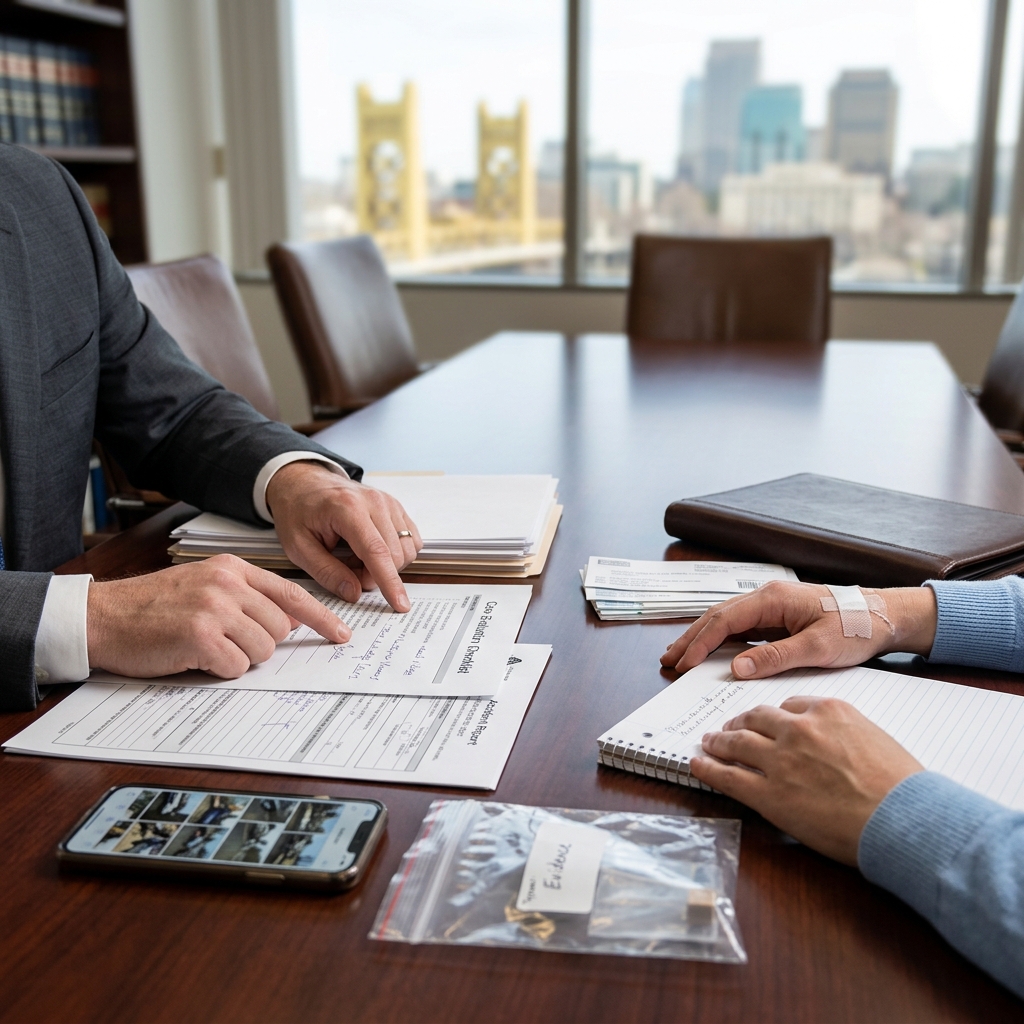
Action step: Request your complete medical file from each provider. Review it for accuracy and store copies securely. If treatment is ongoing, set reminders to request updated records every few months.
Tip 3: Preserve All Evidence Before It Disappears
Evidence has a shelf life. Video footage from traffic cameras or business security systems is often saved for only 30 to 90 days. Skid marks fade from pavement. Witnesses move away or forget details. The longer you wait, the more evidence slips beyond recovery.
We will investigate all available evidence on your behalf, but time is limited. If you’ve identified a potential camera that recorded your accident, inform us immediately so we can send a preservation notice to that property owner or business. This legal notice prevents them from deleting footage. Similarly, if you know a witness who was present, get their information and consider asking them to document their account in writing while their memory is sharp.
Physical evidence matters too. If a defective product caused your injury, preserve it exactly as it was when you were hurt. Don’t repair, disassemble, or alter it. Damaged vehicles, fallen merchandise, or torn flooring can all be crucial proof, but only if they remain in their original condition. Photographs help, but the physical item itself often tells the clearest story.
Action step: Make a list of every potential evidence source (cameras, witnesses, damaged items, business records). Contact us right away with this list so we can issue preservation notices and gather evidence before it’s lost.
Tip 4: Understand Your Rights Under California Law
California personal injury law protects you in specific, meaningful ways. You have the right to pursue compensation for economic damages (medical bills, lost wages) and non-economic damages (pain and suffering, emotional distress). You also have the right to hold multiple parties accountable if they each contributed to your injury.
A key protection is that California recognizes comparative negligence. Even if you were partly at fault for your accident, you may still recover compensation, though your award is reduced by your percentage of fault. This differs from other states where any degree of shared fault bars recovery entirely. Understanding this principle prevents you from assuming you have no case when you bear some responsibility.
Our comprehensive guide to personal injury law in California explains these protections in detail. We recommend reading it to understand the legal landscape and your position. Knowing your rights helps you recognize when an insurance company’s offer is unfairly low or when they’re trying to shift blame to you unfairly.
Action step: Familiarize yourself with California’s comparative negligence rule and the types of damages you can claim. This knowledge empowers you in discussions with insurance adjusters and helps you evaluate settlement offers realistically.
Tip 5: Gather Witness Statements and Contact Information
Eyewitnesses often provide the most compelling evidence because they have no stake in the outcome. Their neutral account of what happened can sway negotiations or trial decisions. Yet many injured people neglect to document witness information, and by the time a case goes to trial, those witnesses are impossible to locate.
At the scene, collect the name, phone number, email, and address of every person who saw the accident. Don’t rely on memory; write it down. Ask each witness to briefly describe what they saw. If someone is willing, ask them to sign and date a short written statement. You might say: “I was struck by a car while crossing at the intersection. Did you see what happened?” Their answer, documented in their own words, becomes invaluable evidence.
Witness statements also help counter the other party’s false narrative. Insurance companies sometimes pressure witnesses to change their story or avoid involvement altogether. Having a signed, dated statement from a witness protects against this influence and demonstrates their credibility should the case proceed to court.

Action step: Even weeks after an accident, try to locate and reconnect with witnesses. Ask them to provide a brief written or recorded account of what they observed. If you’ve already collected their information, share it with us so we can formally interview them.
Tip 6: Track All Financial Losses and Damages
Compensation isn’t just about medical bills. Your injury may have cost you far more in lost income, travel expenses, childcare to replace what you couldn’t do, home modification, and diminished earning capacity. Documenting these losses is essential to calculating what you truly deserve.
Create a detailed spreadsheet of all accident-related expenses and lost income. Include obvious items like emergency room bills and surgeon fees, but also less obvious costs: mileage to treatment appointments, parking, prescription copays, home care services, and missed work days with hourly rate calculations. If your injury prevents you from working long-term, calculate the projected income loss over your expected recovery period.
Non-economic damages are harder to quantify but equally important. Pain and suffering, emotional distress, loss of enjoyment of life, and scarring all have value. We use medical records, your testimony, and comparable case outcomes to assign reasonable figures to these damages. The more thoroughly you document your suffering through medical notes and personal records, the stronger our argument for substantial compensation.
Action step: Start tracking expenses and lost income immediately. Use a simple format: date, description, and amount. Save all receipts. If your injury keeps you from work, ask your employer for written confirmation of missed days and your hourly rate.
Tip 7: Know the Statute of Limitations for Your Case
California’s statute of limitations is a firm deadline to file a lawsuit. For most personal injury cases, you have two years from the date of injury to file in court. For some cases, like those involving minors or government agencies, the deadline may differ. Missing this deadline is catastrophic: your right to sue expires entirely, and you lose all legal recourse.
Time pressure works against you in another way too. Insurance companies know the deadline and sometimes use it as leverage. They may delay settlement discussions, betting that your frustration and financial pressure will push you to accept a lowball offer just to close your case before time runs out. Understanding your California injury deadlines protects you from this tactic.
The statute of limitations doesn’t mean you should wait two years. In fact, settling or litigating earlier is almost always advantageous. The sooner you move forward, the fresher evidence and witness memories are, and the sooner you can recover financially. But knowing your legal deadline prevents panic and empowers you to make informed decisions without artificial urgency.
Action step: Note your injury date and add a calendar reminder for 18 months out. Contact us well before that date so we can file any necessary legal documents. Don’t let this deadline sneak up on you.
How We Evaluate Your Sacramento Injury Case
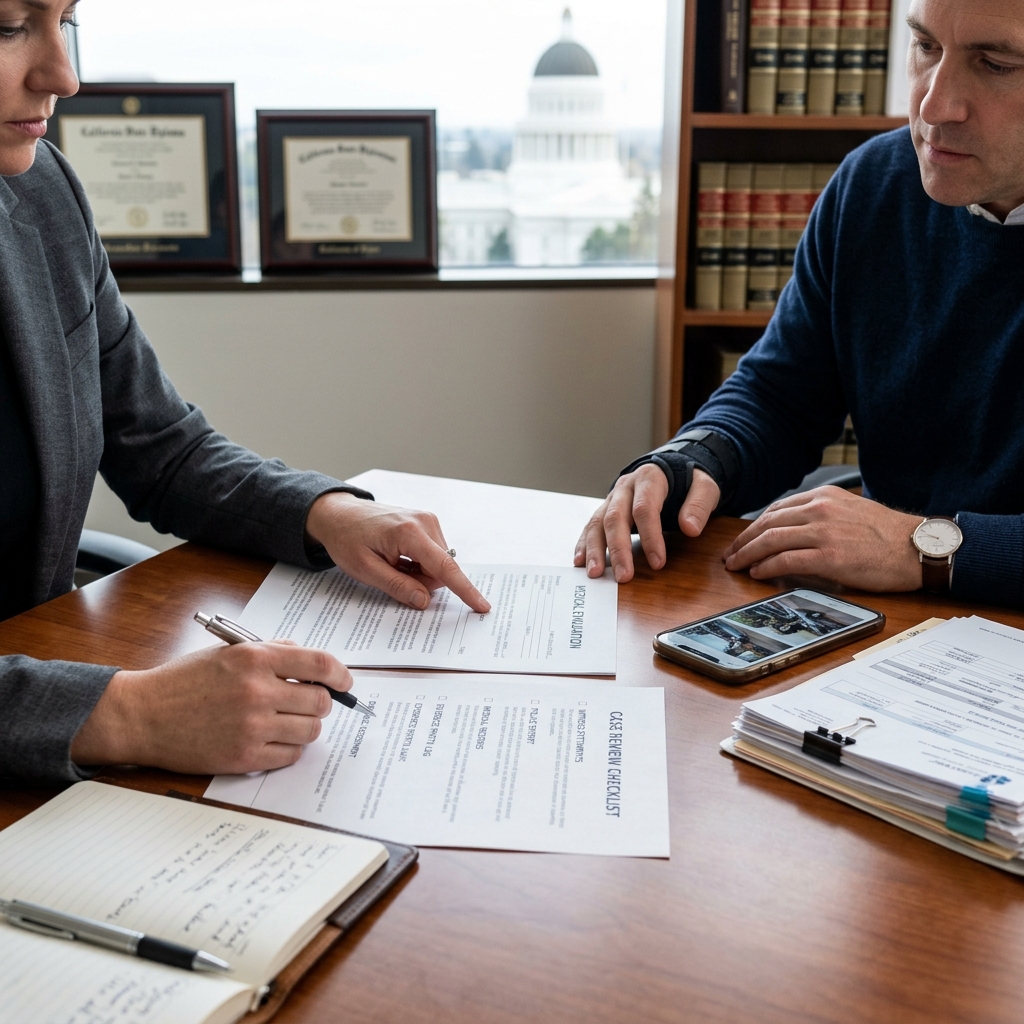
When you bring your case to us, we conduct a methodical evaluation that goes beyond surface-level assessment. We review all medical records to understand the full scope of your injuries and recovery timeline. We examine accident reports, photographs, video footage, and witness statements. We research similar Sacramento cases to understand what comparable injuries have recovered, accounting for local jury tendencies and settlement patterns.
We also investigate liability thoroughly. We determine who was at fault, whether multiple parties share responsibility, and what evidence supports your claim. If the at-fault party was a business, we examine their policies, training records, and prior complaints to identify patterns of negligence. If a product caused your injury, we investigate the manufacturer’s design, warnings, and prior complaints.
Our evaluation includes a candid assessment of case strengths and weaknesses. We’ll tell you plainly what we think your case is worth, what risks exist, and what our strategy will be. Some cases settle quickly because liability is clear and insurance coverage is sufficient. Others require negotiation or litigation. We match our approach to your case’s unique facts and your goals.
Why Professional Legal Evaluation Beats DIY Assessment
You might assume your case is straightforward and not worth an attorney’s cost. But professional evaluation consistently uncovers value that injured people miss on their own. Insurance adjusters are trained negotiators who earn bonuses by paying less. They’ll be polite, seem reasonable, and offer a number that sounds substantial. But it’s often far below what your case is actually worth.
When you represent yourself, you’re competing against an insurance company’s trained adjuster, legal team, and financial resources. You lack access to expert witnesses, discovery tools, and the credibility that comes with an attorney’s license. Most critically, you don’t know what you don’t know. You might have a claim worth $150,000 but accept $30,000 because you have no basis for comparison.
We represent you on a contingency basis: no fee unless we recover for you. This means our interests align with yours. We only profit if we secure substantial compensation, so we work hard to maximize your recovery. We have the tools, expertise, and experience to identify settlement pressure, resist lowball offers, and litigate when necessary. Our presence alone often increases what insurance companies will offer.
Get Your Free Comprehensive Case Evaluation Today
You don’t have to navigate this process alone, and you shouldn’t. After an injury, your focus should be on healing, not on learning insurance law or building legal arguments. That’s where we come in.
Contact Weinberger Law Firm for a free consultation to discuss your case. There’s no cost, no obligation, and no pressure. We’ll listen to what happened, ask clarifying questions, review any documents you have, and give you our honest assessment of your situation. We’ll explain your rights, outline the process, and answer your questions clearly.
Time is limited. Preserve any evidence and get medical care if you haven’t already, then reach out to us. We pursue full and fair compensation for Sacramento injury victims, and we’re ready to fight for you.
Contact us today for a Free Case Consultation!
Frequently Asked Questions (FAQ)
What should I do immediately after an accident to protect my injury case?
First, prioritize your safety and get medical attention right away. We recommend documenting everything at the scene by taking photos of property damage, injuries, and road conditions, then collecting contact information from witnesses. Preserve any evidence like clothing or vehicle parts, and keep all medical records and receipts organized from day one. Time is limited, and thorough documentation now strengthens your ability to recover full compensation later.
How long do I have to file a personal injury claim in California?
California’s statute of limitations typically gives you two years from your accident date to file a lawsuit, but this deadline varies depending on your case type. We stress that waiting too long can result in losing your right to pursue compensation entirely. Contact us promptly so we can review your specific situation and ensure you meet all filing deadlines while we investigate and build your case.
Why is professional case evaluation better than handling this on my own?
We evaluate cases by investigating all available evidence, calculating your full damages including medical bills and lost wages, and negotiating strategically with insurance companies who prioritize their interests over yours. Our experience with Sacramento injury claims means we identify compensation opportunities you might miss and present the facts persuasively. We pursue fair and complete compensation while you focus on healing, and you pay nothing unless we recover for you.