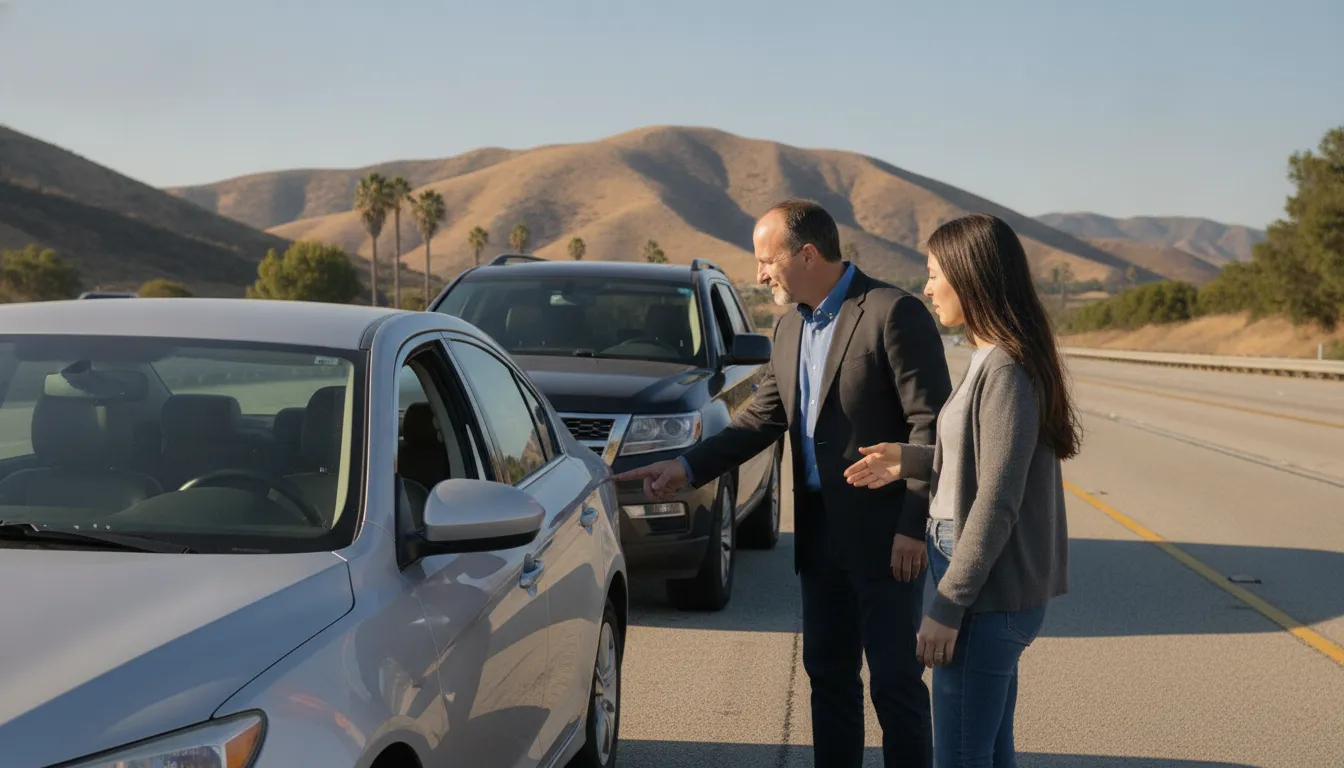
A car crash can leave you shaken, hurt, and unsure which decision matters most. In the minutes that follow, your priorities are safety, medical care, accurate documentation, and protecting your ability to seek compensation. A calm, organized response can preserve important evidence while helping you avoid preventable mistakes. For broader guidance on accident claims, see our complete guide to car, truck, and motorcycle accident claims in California.
Knowing what to do after a car accident in california means getting to safety, calling 911 when appropriate. Exchanging required information, documenting the scene, seeking medical attention, and notifying the right parties without admitting fault.
Call Weinberger Law Firm at 916-357-6767.
The right next step depends on what happened, whether anyone is injured, and what evidence is available. Start with the immediate actions at the scene, then follow the California reporting, medical, and insurance steps that protect your claim.
What to Do After a Car Accident in California, Step by Step
The first few minutes after a collision should focus on safety, emergency care, and preserving accurate information. If you are physically able, work through these steps calmly and avoid discussing who caused the crash before you understand what happened.
- Stop immediately. California law requires a driver involved in a crash that causes injury or death to stop at the scene immediately. Do not drive away, even if the damage appears minor. Stopping allows emergency responders to help and helps you meet your legal obligations. Review the California Vehicle Code requirement to stop for the applicable rule.
- Check yourself and others for injuries. Look for severe bleeding, breathing problems, loss of consciousness, confusion, or other urgent symptoms. Ask passengers whether they are hurt, but do not move an injured person unless remaining in place creates an immediate danger. Some crash injuries may not be obvious right away, so feeling able to stand does not necessarily mean you are uninjured.
- Move to a safer location if you can do so safely. If the vehicles can be driven and no one needs immediate treatment at the scene, move them out of active traffic when possible. Turn on hazard lights and stay away from lanes where another collision could occur. If a vehicle is disabled or moving it could worsen an injury, remain in place and wait for emergency personnel.
- Call 911 when there are injuries, a death, or significant damage. Tell the dispatcher where the collision occurred, how many vehicles are involved, and whether anyone appears injured or trapped. Request police and medical assistance when needed. Give responders a clear description of what you observed, without guessing about speed, fault, or details you did not actually see.
- Exchange required identifying and insurance information. Obtain the other driver’s name, address, driver’s license information, insurance company, and policy details when possible. California DMV guidance states that drivers must provide their name, address, and insurance information to other drivers and law enforcement. You can review the California DMV accident-reporting guidance for the information to exchange.
Use your phone to photograph the vehicles, visible damage, license plates, road conditions, traffic controls, and the surrounding scene if it is safe. Get witness contact information and note the time, location, weather, and anything you remember before details fade. Do not place yourself in traffic for a better photograph.
Keep your statements factual. Be courteous, but do not argue with the other driver or say that the collision was your fault. If you are unsure what to do next, Weinberger Law Firm’s essential legal steps after an accident can help you organize the next stages after the scene is secure.
Why You Should Never Admit Fault at the Scene
After a collision, it is natural to apologize, especially when everyone is shaken and trying to understand what happened. However, statements made in those first few minutes can later be taken out of context. Saying “I’m sorry,” admitting that you were distracted. Or telling the other driver that you caused the crash may be used by an insurer or opposing attorney as evidence of fault. Even if you were simply expressing concern or reacting to the stress of the moment.
Keep the conversation focused on safety and information
You should check for injuries, call 911 when appropriate, and cooperate with responding officers. You should also exchange the information required after a California crash, including your name, address, and insurance information. What you should not do is argue about who caused the collision or speculate about details you cannot yet confirm.
Speak calmly and stick to observable facts. You can say where the vehicles were located, explain that you are hurt, or point out an immediate safety concern. Avoid phrases such as “I wasn’t paying attention,” “I should have stopped,” or “It was completely my fault.” Do not accuse the other driver either. A heated accusation may complicate the investigation, and you may not know all the relevant facts. Including whether another vehicle, road condition, or mechanical problem contributed to the crash.
If the other driver asks you to agree that the collision was your fault, you do not have to answer. You also should not provide a detailed statement about fault to the other driver’s insurance company before you understand your rights. Politely explain that you are gathering information and will respond through the appropriate process. For more guidance on protecting yourself, review these legal protections after a car accident.
Partial fault does not automatically end your claim
Not admitting fault does not mean you are hiding anything. It means you are allowing the facts to be investigated before assigning legal responsibility. Police officers may document the scene, interview witnesses, review vehicle positions, and prepare a report. The report can be important, but it is not the only evidence used to evaluate a claim. Photos, traffic-camera footage, medical records, vehicle damage, witness accounts, and other records may also help establish what happened.
California’s pure comparative negligence rule is another reason not to make a rushed admission. Under this rule, an injured person may still recover damages even if that person was partially responsible for the accident. The amount recovered is reduced by the person’s percentage of fault. For example, if a claim is valued at $100,000 and the injured person is found 20 percent at fault, the recovery may be reduced to $80,000. California courts describe the rule as allowing recovery even when a plaintiff bears a substantial share of responsibility, subject to that reduction. California court resources provide the authoritative source for this rule.
Because fault can affect the value of a claim, let the evidence, not a stressful roadside conversation, establish responsibility. If you were injured in Sacramento, Roseville, Folsom, or elsewhere in California. A personal injury lawyer can help you communicate with insurers and evaluate the facts before you make statements that could affect your recovery.
| What to do | What to avoid |
|---|---|
| Check for injuries and call 911 when needed | Admitting fault or apologizing |
| Cooperate with responding officers | Arguing about who caused the crash |
| Exchange name, address, and insurance information | Speculating about details you cannot confirm |
| Stick to observable facts you are sure about | Giving a recorded statement about fault before understanding your rights |
When and How to Report a Car Accident to the California DMV
California requires you to report a traffic collision to the Department of Motor Vehicles within 10 days when anyone was killed or injured. Or when property damage exceeds $1,000. This requirement applies even if you believe the other driver caused the crash. The California DMV explains the reporting threshold and deadline in its accident-reporting guidance.
To make the report, complete a Report of Traffic Accident Occurring in California, commonly called an SR-1, and submit it to the DMV within the 10-day period. The form asks for information about the collision, the vehicles and drivers involved, insurance coverage, and any injuries or property damage. Use the DMV’s current instructions and keep a copy of the completed form and any delivery confirmation for your records.
When to call the police
Call 911 or the appropriate local law enforcement agency from the scene when someone is injured or killed. A driver may be impaired, the vehicles create a safety hazard, or the collision involves significant damage. Officers can arrange emergency medical care, secure dangerous traffic conditions, identify the drivers, and prepare an official report. If the other driver leaves, refuses to exchange information, threatens you, or appears intoxicated, tell the responding officer exactly what happened.
Even when injuries seem minor, consider reporting the collision to police. Some symptoms do not appear until later, and an initial report can help document when and where the crash occurred. Do not delay emergency treatment while waiting for an officer. If you are in immediate danger, move to a safe location when possible and follow the instructions of emergency personnel.
What information to gather for the SR-1
- Your name, address, driver’s license information, and vehicle details.
- The other driver’s name, address, vehicle information, and insurance details. California requires drivers to provide identifying and insurance information to other drivers and law enforcement.
- The date, time, and location of the crash.
- A description of the collision, visible damage, and any known injuries.
- Insurance policy information for each involved vehicle.
Photographs, witness contact information, medical records, and the police report can help preserve the facts, but do not wait for every document before meeting the DMV deadline. If you are unsure whether damage exceeds $1,000, report the collision rather than guessing. Failing to file when the law requires it can create licensing or insurance complications and may make it harder to show that you followed California reporting rules.
For more practical guidance on protecting yourself after a collision, review these legal protections after a car accident. If the crash caused injuries, a California personal injury lawyer can help you understand the reporting process while you focus on medical care.
What Evidence Should You Collect After a Car Accident?
Evidence collected at the scene can help preserve what happened before vehicles are moved, weather changes, or memories fade. If it is safe to do so, document the accident without putting yourself or anyone else in danger. You can also review these essential legal steps after an accident for guidance on what to do next.
Start with the following information and documentation:
- Photographs and video: Take wide photos of the entire scene, then closer images of every vehicle’s damage. Capture the road surface, weather or lighting conditions, traffic signs, lane markings, signals, skid marks, debris, and the surrounding intersection. Include several angles and, when possible, enough of the wider scene to show where each vehicle was positioned. Photos of vehicle damage, road conditions, and traffic signs can be critical when evaluating an insurance claim or legal case. Weinberger Law Firm recommends documenting the scene promptly.
- The other driver’s information: Record the driver’s full name, address, driver’s license information if available, license plate number, telephone number, and insurance carrier and policy information. California DMV guidance states that drivers must provide their name, address, and insurance information to other drivers and law enforcement. You can review the California DMV accident-reporting guidance for the official requirements. Do not rely on memory. Photograph the insurance card and license when practical, while protecting private information from public sharing.
- Witness details: Ask people who saw the collision for their names, telephone numbers, email addresses, and a brief description of what they observed. Include passengers, nearby drivers, pedestrians, and employees or residents who may have seen the traffic conditions. A neutral witness may remember details that are difficult to establish later.
- Police information: Write down the responding officer’s name, badge number, agency, and the police report number. Ask how you can obtain a copy of the report and note any instructions the officer gives you. The report may help organize the basic facts, but continue preserving your own evidence as well.
- Your personal notes: As soon as you can, write down the date, time, location, direction of travel, weather, traffic. Speed, road conditions, what you saw and heard, and what happened immediately before and after impact. Note any pain, dizziness, or other symptoms, even if they seem minor. Keep records of medical visits, treatment instructions, missed work, and accident-related expenses in one secure place.
Do not edit or filter the evidence to make it appear more favorable. Preserve original photos, videos, messages, and notes, and avoid posting the accident or your injuries on social media. If you are too injured or shaken to document the scene, ask a trusted person to help or tell your attorney what evidence may exist. Prompt, accurate records can make it easier to explain what happened and protect your ability to pursue appropriate compensation.
Why You Should See a Doctor Before Calling the Insurance Company
After a collision, medical care should come before a detailed conversation with an insurance adjuster. Adrenaline can mask pain, and some injuries become noticeable only hours or days later. The Mayo Clinic advises seeing a doctor even if you feel fine because injuries such as whiplash can have delayed symptoms. A medical evaluation protects your health and creates an early record of what happened.
Do not assume that a low-speed crash or a lack of visible bruising means you are uninjured. Neck, back, shoulder, and head injuries may not be obvious at the scene. Delaying care can allow a condition to worsen and may make it harder to connect later symptoms to the collision. Follow the provider’s instructions, attend recommended follow-up appointments, and keep records of bills, prescriptions, referrals, and missed work.
Safety equipment reduces risk, but it does not eliminate the possibility of injury. The CDC reports that seat belts reduce the risk of death and serious injury in a crash by about half. That statistic is a reminder that a restrained person can still need prompt medical attention after an accident. Seat-belt use should never be treated as proof that an injury could not have occurred.
Protect your health before discussing the claim
An insurance company may contact you quickly and ask what happened, how you feel, or whether you will provide a recorded statement. You can report that a collision occurred and provide basic information, but avoid guessing about fault. Minimizing your symptoms, or giving a detailed recorded statement before you understand your injuries. Even an honest attempt to be helpful can leave out symptoms that have not appeared yet or create wording that is later taken out of context.
- Seek prompt medical evaluation, especially if you have pain, dizziness, headache, numbness, weakness, confusion, or limited movement.
- Describe all symptoms accurately to the medical provider, including symptoms that seem minor or intermittent.
- Keep copies of medical records, discharge instructions, bills, medication receipts, and appointment details.
- Do not sign a release or accept a quick settlement before you know the likely scope of your treatment and recovery.
- Ask a California car-accident lawyer to review communications or settlement paperwork if the insurer pressures you to decide quickly.
A quick payment may cover an initial visit while leaving you responsible for future treatment, lost income, or ongoing pain. Once a settlement is accepted, you may lose the ability to seek additional compensation for injuries that become clearer later. Getting evaluated first does not mean refusing to cooperate with the insurer. It means making health decisions and claim decisions with reliable information instead of pressure and incomplete symptoms.
For more guidance, review these essential legal steps after an accident and preserve every document connected to your care.
When Should You Call a Car Accident Lawyer in California?
Contact a car accident lawyer as soon as it becomes clear that the crash may involve more than a simple property-damage claim. Early legal guidance can help protect evidence, prevent avoidable statements, and keep an insurer from defining the value of your injury before your medical condition is fully understood.
You should strongly consider speaking with an attorney if you suffered serious injuries, spent time in the hospital, need ongoing treatment, or expect to miss work. The same is true when the other driver disputes fault, multiple vehicles were involved, an uninsured or underinsured motorist may be responsible. Or an insurance adjuster is pushing you to give a recorded statement or accept a quick settlement. A lawyer can also help when the crash caused a death. Wrongful-death claims involve different legal issues and should not be handled casually while a family is grieving.
Do not assume that a partially disputed accident automatically prevents recovery. California follows a pure comparative negligence system, so an injured person may still recover damages when they share some responsibility. Although the recovery can be reduced by their percentage of fault. Review these essential legal steps after an accident if you are still organizing what happened at the scene.
Do not wait until the deadline is close
California’s statute of limitations for a personal injury lawsuit is generally two years from the date of the accident, according to the California Courts. That deadline is not a reason to delay a consultation. Medical records, photographs, vehicle evidence, witness accounts, and other information can become harder to locate as time passes. Some claims may also involve different deadlines or notice requirements, so an attorney should evaluate the facts rather than relying on a general rule.
Calling a lawyer does not commit you to filing a lawsuit. A consultation gives you an opportunity to understand your options, identify potential insurance issues, and learn what information should be preserved. It can also clarify the legal protections after a car accident that may apply to your situation.
Weinberger Law Firm offers a free consultation for California accident victims. The firm handles qualifying injury cases on a contingency fee basis. Meaning there are no upfront attorney fees and you pay only if the firm recovers compensation for you. If you are deciding whether to report an injury, respond to an adjuster, or pursue the California personal injury claim process, getting advice early can help you make that decision with clearer information.
Call Weinberger Law Firm at 916-357-6767.
Frequently Asked Questions
Should I contact my insurance company if I am not at fault?
Yes. Notify your own insurer promptly and provide accurate, limited facts about what happened. Avoid guessing about speed, fault, or the extent of your injuries, and do not agree to a settlement before you understand your medical needs and available coverage.
How long after a car accident in California can I still report it?
Report the crash as soon as possible. California generally requires a DMV report within 10 days when anyone is injured or killed, or when property damage exceeds $1,000. See the California DMV’s accident-reporting requirements.
What should I not say to an insurance company after an accident?
Do not admit fault, minimize your pain, speculate about causes, or say that you are completely fine when you have not been evaluated. Answer basic questions honestly, but consider legal guidance before giving a recorded statement or discussing a settlement.
Do I need to call the police after a car accident in California?
Call law enforcement when anyone may be injured, the scene is unsafe, or the drivers cannot exchange information. California law also requires drivers in an injury or death crash to stop at the scene immediately. [California Vehicle Code section 20001]
Should I see a doctor after a car accident if I feel fine?
Yes, arrange a medical evaluation, especially if you notice pain, stiffness, headache, dizziness, or numbness. Some collision injuries, including whiplash, can develop delayed symptoms, so follow your doctor’s advice about treatment, activity, and rest.
Schedule a Free Consultation After a California Car Accident
If you are unsure what to do next, a conversation with an experienced California car accident lawyer can help you understand your options and protect your claim. Weinberger Law Firm offers free consultations with no upfront costs, and you only pay if the firm recovers compensation for you.
Schedule a free consultation by calling Weinberger Law Firm at 916-357-6767.