
Table of Contents
- 1. Seek Immediate Medical Care and Document Your Injuries
- 2. Preserve Evidence at the Accident Scene
- 3. Report the Accident to Insurance Companies
- 4. Gather and Organize All Supporting Documentation
- 5. Understand California Statute of Limitations for Filing
- 6. Avoid Common Mistakes That Reduce Compensation
- 7. Negotiate with Insurance Companies for Fair Settlement
- Frequently Asked Questions (FAQ)
1. Seek Immediate Medical Care and Document Your Injuries
If you were injured in a motorcycle accident, you have rights after an accident. The path to fair compensation feels overwhelming when you’re facing medical bills, lost wages, and physical recovery. We understand this burden, and we’re here to guide you through each step of the motorcycle personal injury claim process with clarity and confidence.
Motorcycle accidents often result in severe injuries because riders lack the protective shell of a vehicle. This reality means your claim demands thorough investigation, precise documentation, and skilled negotiation. Following these seven essential steps will help you preserve your rights, strengthen your case, and maximize the compensation you deserve.
Your health comes first, and medical records become the foundation of your entire claim. Even if you feel “okay” after the crash, adrenaline masks pain and hidden injuries. Visit an emergency room or urgent care facility immediately—some injuries like internal bleeding, concussions, or spinal damage appear hours or days later.
During your medical visits, be thorough and honest with healthcare providers about how you were injured and what symptoms you experience. They’ll document your condition in medical records that serve as critical evidence later. Request copies of all reports, imaging scans, lab results, and treatment plans before leaving each facility.
Photograph your injuries as they heal: bruises, road rash, surgical scars, and visible wounds. These images create a visual timeline that insurance adjusters and juries understand immediately. Keep a personal journal noting pain levels, medication side effects, sleep disruption, and how injuries affect your daily activities. This narrative strengthens your claim for non-economic damages like pain and suffering.
Preserve prescriptions, medical bills, and receipts for any treatment-related expenses. We will investigate all available evidence, including your medical history, to build the strongest possible case for compensation.
Action takeaway: Get medical care today, even if symptoms seem minor. Request and organize all medical documentation in a single folder.
2. Preserve Evidence at the Accident Scene
Evidence at the scene is perishable. Traffic camera footage gets overwritten, skid marks fade, and witness memories blur within days. If you’re physically able, photograph or video-record the accident scene immediately: vehicle positions, road conditions, traffic signals, debris scatter, and any visible hazards.
Capture images from multiple angles and distances. Close-ups show vehicle damage and contact points; wide shots establish road layout and surrounding context. Include time-stamped photos of the overall scene, street signs, weather conditions, and any property damage.
Identify and interview witnesses right away. Get their full names, phone numbers, email addresses, and addresses. Ask them to briefly describe what they saw, and note their account word-for-word if possible. Witness statements corroborate your version of events and carry significant weight in negotiations and litigation.
Request a police report if officers responded to the scene. The official accident report includes officer observations, citations issued, and sometimes photos or diagrams. Obtain the case number and file a records request if you don’t receive the report within days.
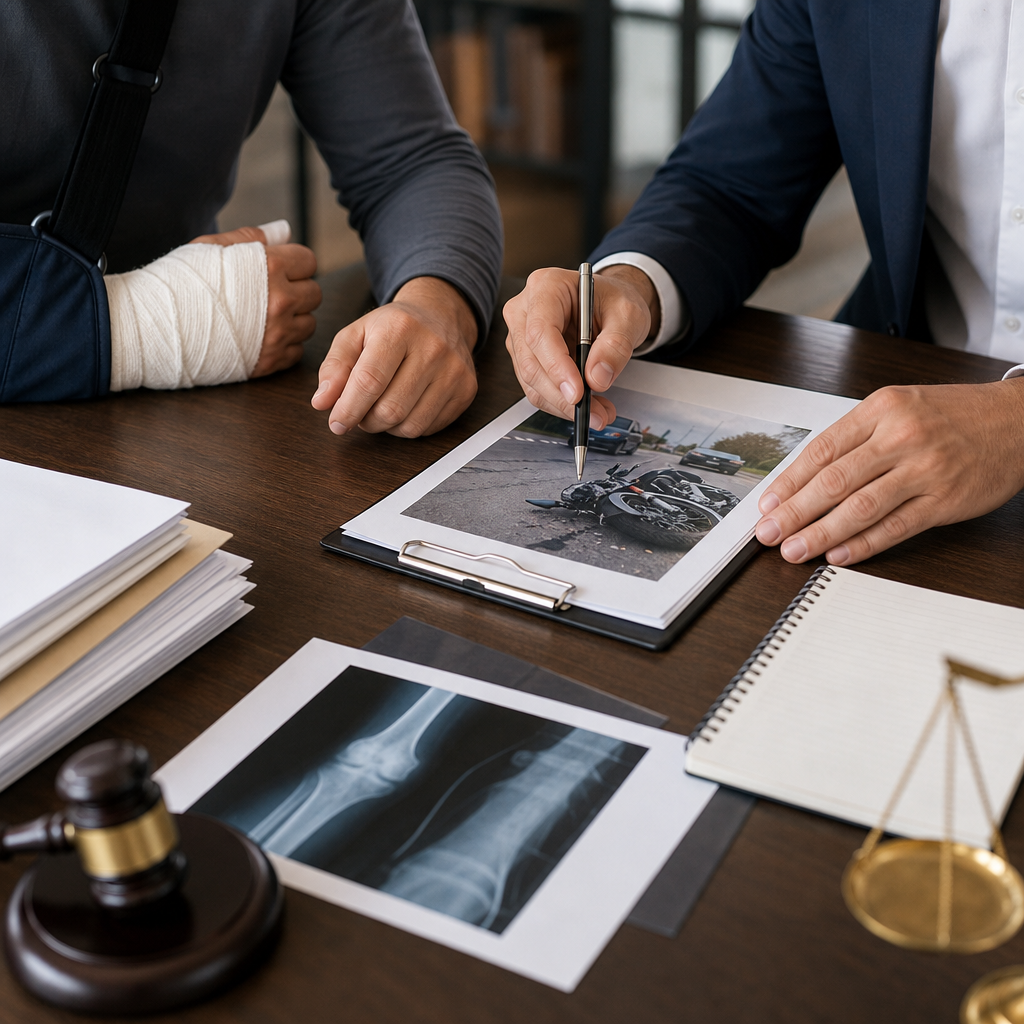
Check for nearby businesses with security cameras: gas stations, restaurants, convenience stores, or traffic monitoring systems. Contact property owners or managers and request camera footage preservation immediately—many systems auto-delete footage after 30 days.
Action takeaway: Photograph the scene now if safe. Collect witness contact information and request the police report today.
3. Report the Accident to Insurance Companies
You’re required to report the accident to your own motorcycle insurance company promptly, typically within 30 days. Contact your insurer and provide factual, brief information: date, time, location, and the basic sequence of events. Do not admit fault, speculate about liability, or elaborate beyond what’s necessary.
Similarly, you’ll need to report the accident to the at-fault driver’s insurance company if you’ve identified them. Again, stick to facts and avoid assumptions. Say something like: “I was injured in an accident on [date] at [location]. I’m contacting you to report the claim and will provide medical documentation as treatment continues.”
Be cautious when speaking with the other driver’s insurance adjuster. These professionals are trained to minimize payouts. They may ask recorded statements, request medical authorizations, or pressure you into quick settlements. Do not sign anything or agree to a settlement without reviewing your full damages first.
Keep written records of every call: date, time, person’s name, and what was discussed. Insurance companies track these details, and your notes create accountability if disputes arise later.
Most importantly, involve us early. We will investigate all available evidence and handle insurance communications on your behalf, ensuring nothing you say undermines your claim.
Action takeaway: Report to your insurer within days. Document each communication in writing, and let us know before signing anything.
4. Gather and Organize All Supporting Documentation
Strong claims rest on organized, comprehensive documentation. Compile medical records, including initial ER visits, follow-up appointments, physical therapy sessions, and specialist consultations. Include imaging reports, lab results, prescriptions, and surgical records if applicable.
Document all financial losses related to your injuries. Gather medical bills and invoices from hospitals, clinics, doctors, and therapists. Collect receipts for medications, medical equipment (compression sleeves, braces, walkers), and travel costs to medical appointments. Request wage loss statements from your employer showing the hours and income you lost due to your injury and recovery.
If you’re self-employed, compile profit-and-loss statements, invoices showing lost business, and tax returns to demonstrate income loss. If you received insurance payments or wage replacement benefits, document those as well—they may be subrogated (reclaimed by insurers), but they’re part of your total damages.
Preserve all property damage documentation related to your motorcycle: repair estimates, dealer invoices, salvage reports, and photos of the damaged bike. Vehicle value documentation supports claims for property damage, which can offset some of your compensation if you were partially at fault.
Collect any communications about the accident: emails, text messages, social media posts, or notes. Organize everything chronologically in physical and digital copies.

Action takeaway: Create a master folder with medical records, bills, wage loss statements, and property damage documentation. Label each document clearly.
5. Understand California Statute of Limitations for Filing
Time is limited—act now. California’s statute of limitations for personal injury claims is two years from the date of injury. This filing deadline is strict; if you miss it, you lose the right to pursue compensation entirely, regardless of the claim’s merit.
Two years sounds far away, but investigations, negotiations, and litigation take time. We recommend beginning your claim within the first few months of your injury. Early action allows us to gather fresh evidence, interview witnesses while memories are sharp, and negotiate from a position of strength before deadlines loom.
Exceptions exist in rare cases: if you were a minor at the time of injury, or if the at-fault party was absent from California, the deadline may extend. We review your specific circumstances to determine applicable deadlines.
Understanding your legal timeline prevents costly mistakes. For detailed guidance on California personal injury deadlines, we provide comprehensive resources explaining the nuances of statutes of limitations and how they apply to your case.
Action takeaway: Contact us within the first year of your injury. Don’t rely on insurance companies to remind you of deadlines.
6. Avoid Common Mistakes That Reduce Compensation
Many injured riders inadvertently harm their own claims through well-intentioned but damaging decisions. The most costly mistake is accepting a quick settlement from the insurance company before understanding your full damages. Adjusters offer premature settlements because they benefit insurers, not you. These early offers typically undervalue pain and suffering, future medical needs, and long-term disability.
Posting about your accident or injury on social media creates ammunition for the defense. Even innocent posts—a photo at a friend’s event, a comment about feeling better—can be twisted to suggest your injuries are less severe. We advise complete caution on social platforms during your claim.
Discussing your case with anyone except your attorney weakens it. Casual conversations with coworkers, family members, or the at-fault driver’s representative can be misrepresented later. Statements intended as small talk become “admissions” in litigation.
Delaying medical treatment signals to insurers that your injuries are minor. Gaps in treatment records suggest pain wasn’t serious, even if you were managing symptoms or facing financial barriers. Consistent medical documentation demonstrates ongoing need for care.
Failing to preserve evidence allows it to disappear forever. Security camera footage, witness contact details, and accident scene conditions vanish within weeks. Act immediately to document and preserve everything.
Action takeaway: Don’t settle quickly, stay quiet on social media, and preserve all evidence now.
7. Negotiate with Insurance Companies for Fair Settlement
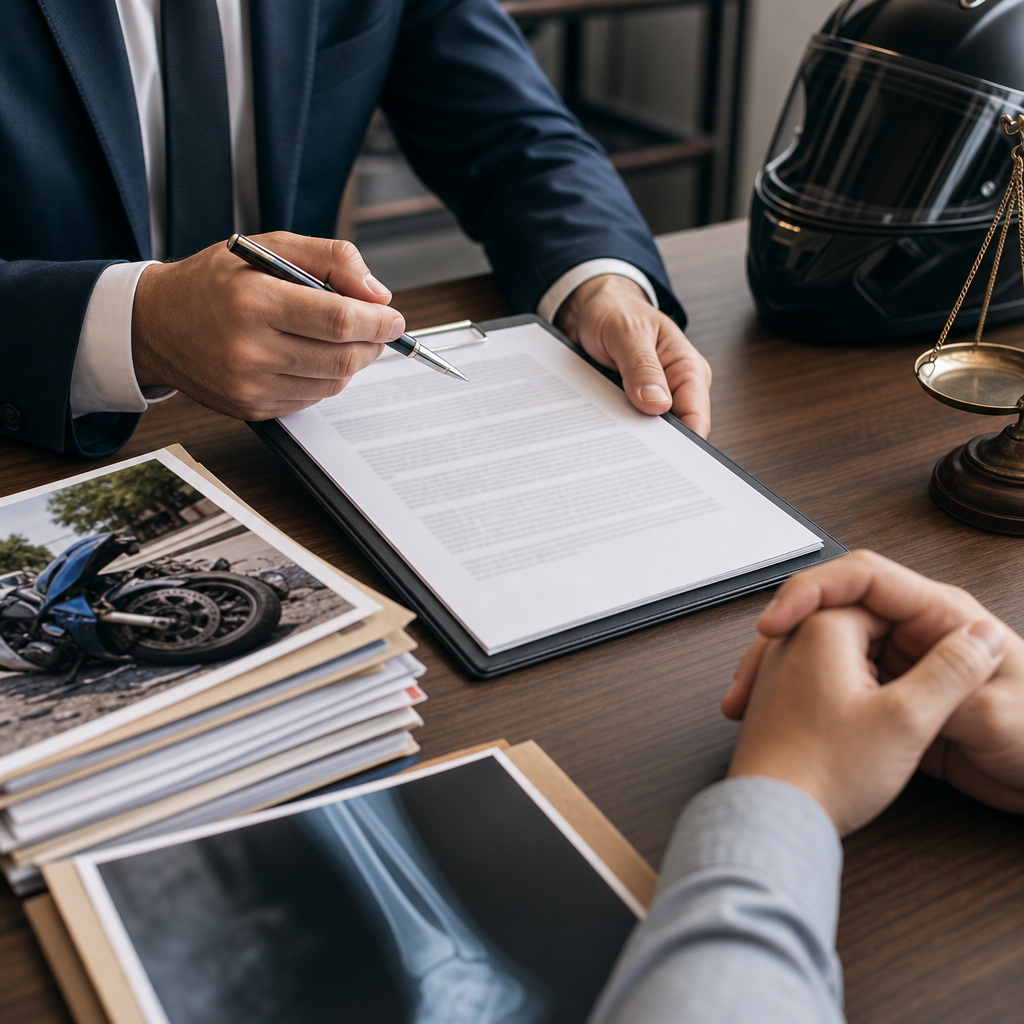
Most motorcycle personal injury claims resolve through settlement negotiation rather than trial. We pursue full and fair compensation by preparing a detailed demand package that documents your damages, liability, and comparable settlements in similar cases.
Your demand package includes medical records, expert medical opinions on your prognosis, lost income documentation, and a narrative explaining how the accident affected your life. This comprehensive presentation demonstrates the strength of your claim and sets the stage for serious negotiation.
Insurance adjusters will counter with lower offers. We negotiate strategically, countering with evidence and legal arguments that support your position. Our goal is a settlement reflecting the true value of your case—medical bills, lost wages, and reasonable compensation for pain, suffering, and any permanent disability.
If negotiations stall or the insurer’s offer remains far below the claim’s value, we prepare for filing a motorcycle accident claim in court. Sometimes the threat of litigation motivates insurers to improve their offer significantly.
Throughout negotiation, we maintain clear communication with you. We explain each offer, discuss your options, and never pressure you into accepting a settlement you’re uncomfortable with. The decision is ultimately yours, but we ensure you make it with complete information.
Action takeaway: Don’t negotiate directly with insurance adjusters. Let us handle settlement discussions to maximize your recovery.