
Table of Contents
- Why Uber Accidents Demand Immediate Legal Action
- Your Rights After an Uber Accident in Sacramento
- Understanding Liability in Rideshare Accidents
- Medical Documentation and Evidence Preservation
- Navigating Insurance Claims with Rideshare Companies
- How We Investigate Uber Accident Cases
- Calculating Full and Fair Compensation
- The Statute of Limitations and Your Filing Deadline
- Why You Need Dedicated Legal Representation
- Common Mistakes Accident Victims Make
- Our Approach to Maximum Recovery
- Contact Us for Your Free Consultation
- Frequently Asked Questions (FAQ)
Why Uber Accidents Demand Immediate Legal Action
If you were injured in an Uber accident, you have rights after an accident — and time is limited. Rideshare collisions in Sacramento often involve multiple parties: the Uber driver, the rideshare company, other vehicles, and insurance carriers. This complexity means evidence disappears quickly, witness memories fade, and medical records require immediate documentation.
Within hours of an accident, traffic cameras may record footage, bystanders scatter, and the accident scene changes. Uber’s internal records have retention policies, and insurance companies begin building their own narratives before you even contact a lawyer. Delay weakens your position and narrows your recovery options.
The first 24 to 72 hours are critical. You should preserve any evidence and get medical care immediately, even if injuries seem minor. Contact a rideshare accident lawyer in Sacramento as soon as possible to ensure nothing is lost and your claim is filed within legal deadlines.
Your Rights After an Uber Accident in Sacramento
You have the right to pursue compensation for all losses caused by another party’s negligence. In California, this includes medical bills and lost wages, along with pain and suffering, emotional distress, and diminished quality of life.
Rideshare accidents trigger unique liability questions. If you were an Uber passenger injured during your ride, Uber carries commercial liability coverage that typically exceeds standard auto insurance limits. If you were hit by an Uber vehicle while driving or walking, the driver and Uber’s insurance may both be responsible, depending on the circumstances.
Your rights also include the right to decline low settlement offers from insurance adjusters. Many accident victims accept the first offer without understanding the full value of their claim. We will investigate all available evidence and pursue full and fair compensation — not what insurers hope you’ll accept quickly.
Understanding Liability in Rideshare Accidents
Liability in rideshare accidents depends on where the driver was in Uber’s service cycle. If the driver was actively carrying a passenger or en route to pick one up, Uber’s commercial insurance applies and coverage is typically higher. If the driver was logged off the app, only personal auto insurance may apply, which limits recovery.
The other driver’s negligence is also critical. Did they run a red light, speed, drive distracted, or fail to yield? Establishing clear fault through traffic reports, dashcam footage, and witness testimony strengthens your claim significantly.
In some cases, multiple parties share liability. For example, a vehicle defect or poor road maintenance might contribute alongside driver error. We will investigate all available evidence to identify every party responsible and pursue compensation from all available sources.
Medical Documentation and Evidence Preservation
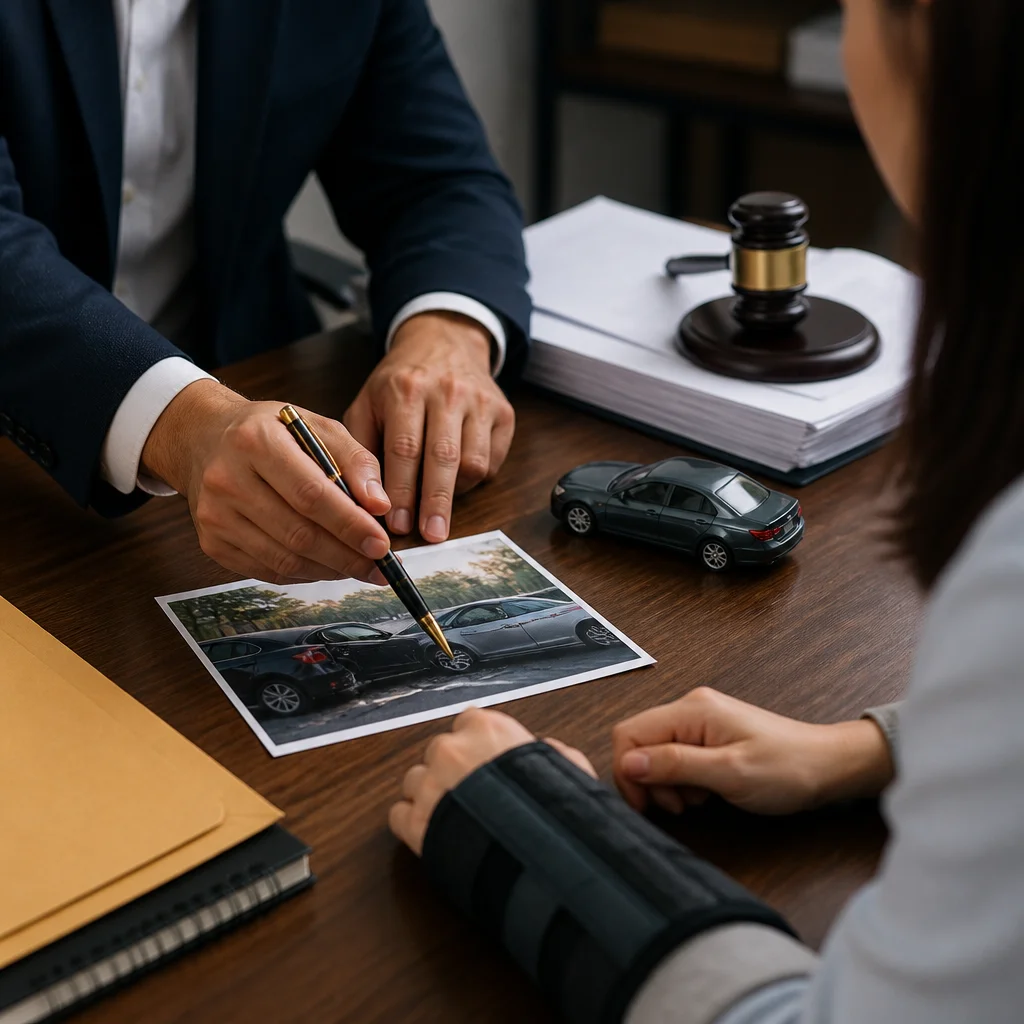
Document, preserve, and present the facts methodically. Seek medical evaluation immediately, even for seemingly minor injuries. Whiplash, internal bruising, and soft tissue damage may not show symptoms for hours or days, but early medical records establish the injury timeline.
Preserve these critical items:
- Photos of vehicle damage, accident scene, and visible injuries
- Medical bills, test results, and treatment records
- Pay stubs or employment records showing lost income
- Witness contact information and written statements
- The Uber trip receipt and driver information
- Traffic reports and police accident records
- Personal journal entries documenting pain, limitations, and emotional impact
Insurance adjusters will scrutinize medical records for gaps. If you delay treatment or miss appointments, insurers argue your injuries were minor or pre-existing. Consistent, documented medical care strengthens your claim and justifies higher compensation.
Navigating Insurance Claims with Rideshare Companies
Uber and Lyft have specific claims processes that differ from standard auto insurance. Filing a claim with Uber’s insurance is not the same as filing with the at-fault driver’s insurer, and Uber often requires you to file through their system first.
Do not accept Uber’s settlement offer without legal review. Their initial offers are deliberately low. We will negotiate with Uber’s insurance carriers on your behalf, pushing back against undervaluation and presenting evidence of your true losses.
Documentation is your leverage. Medical bills, pay stubs, and treatment records prove damages. Photos of vehicle damage, traffic footage, and witness statements prove liability. The more thorough your evidence, the stronger our negotiating position and the higher the settlement we can secure.
How We Investigate Uber Accident Cases
Our investigation process goes beyond the police report. We subpoena traffic camera footage from nearby intersections, businesses, and traffic control devices. We interview witnesses identified at the scene and canvas nearby properties for additional footage.
We also obtain the Uber driver’s history: prior accidents, traffic violations, and Uber safety ratings. We review the driver’s shift duration to identify potential fatigue factors. We examine the vehicle maintenance records to rule out mechanical failure.
Medical experts review your treatment records to assess injury severity and establish the connection between the accident and your ongoing symptoms. When necessary, we retain accident reconstruction specialists who analyze vehicle positioning, speeds, and physics to establish fault conclusively.
Calculating Full and Fair Compensation
Full and fair compensation includes economic and non-economic damages. Economic damages are straightforward: medical bills, surgeries, physical therapy, lost wages, and future medical care. We will investigate all available evidence to quantify these precisely.
Non-economic damages are trickier but equally valid. Pain and suffering, emotional distress, loss of enjoyment of life, and permanent disfigurement deserve compensation. We calculate these by reviewing comparable cases, injury severity, treatment duration, and long-term impact on your quality of life.
For severe injuries, we may pursue damages for lost earning capacity. If your injury prevents you from returning to your previous occupation or limits your future employment options, compensation should reflect that loss. We also account for future medical care, mobility aids, home modifications, and ongoing therapy costs.
The Statute of Limitations and Your Filing Deadline
Time is limited — act now. California’s statute of limitations — the filing deadline — typically allows two years from the accident date to file a personal injury lawsuit. However, this deadline applies strictly, and missing it forever bars your claim.
Do not rely on settlement negotiations to pause this clock. If we are negotiating with Uber’s insurance and a settlement appears likely, we still must file suit before the deadline expires to preserve your rights. Insurance companies sometimes exploit extended negotiations to run out the clock.
Contact us immediately after your accident. We will establish a clear filing deadline, monitor it carefully, and ensure your claim is filed if settlement negotiations stall. Waiting six months or a year to call a lawyer is a critical mistake that limits your options.
Why You Need Dedicated Legal Representation
Negotiating with Uber and insurance companies alone places you at a disadvantage. Adjusters employ psychological tactics: sympathetic language followed by low offers, time pressure, and false authority (“This is our final offer”). Many injured victims accept these offers without understanding their true claim value.
A dedicated rideshare accident attorney levels the playing field. We understand California personal injury law, how rideshare insurance works, and insurance company negotiation strategy. We have litigated Uber accident cases, so insurers know we will pursue trial if settlement is inadequate.
Our role is to translate your injuries and losses into clear, compelling claims that insurers cannot dismiss. We handle all communication with insurers, protecting you from inadvertent statements that damage your case. We pursue full and fair compensation and are prepared to litigate if necessary.
Common Mistakes Accident Victims Make
The most damaging mistake is accepting the first settlement offer. Injured victims feel pressured to resolve the case quickly so they can move forward. Insurers exploit this urgency by offering settlements 40 to 60 percent below actual claim value.
Delayed medical care is another critical error. If you delay seeking treatment “to see if injuries improve,” insurers argue your injuries were minor. Gaps in treatment are interpreted as absence of injury, not cost-conscious decision-making.
Posting about the accident on social media, discussing it with friends, or giving recorded statements to insurers without legal counsel can undermine your claim. Insurers use casual comments to minimize injury severity or suggest fault was shared. Do not provide recorded statements or sign forms without attorney review.
Our Approach to Maximum Recovery
We take a client-focused approach to rideshare accident recovery. We begin with a thorough case evaluation and investigation, identifying all liable parties and available insurance coverage. We calculate your full claim value using comparable cases, expert input, and detailed damage documentation.
We then negotiate aggressively with insurers, backed by clear evidence and trial readiness. If settlement offers remain inadequate, we litigate. We are not settlement-hungry — we are committed to maximum recovery, whether that comes through negotiation or court.
No fee unless we recover for you. We handle cases on contingency, so our success depends entirely on recovering compensation for you. We have strong negotiation track records with Uber and other rideshare carriers because we understand their operations and are willing to litigate when necessary.
Contact Us for Your Free Consultation
If you were injured in an Uber accident in Sacramento, contact us today for a free consultation. We will review your case, explain your rights, and outline a clear path to recovery. Time is limited — act now to protect your claim and maximize your compensation.
Call us or visit our website to schedule your free consultation. There is no obligation, and we will answer all your questions about the legal process and your potential recovery. We are here to help you navigate this difficult time and secure the compensation you deserve.