
Table of Contents
- Why Drunk Driving Victims Face Unique Challenges
- Understanding Your Rights After a DUI Accident
- Evidence Preservation: Protecting Your Case Foundation
- Medical Documentation and Injury Assessment
- Calculating Your Full Compensation: Damages Explained
- Why Insurance Negotiations Require Legal Expertise
- How We Maximize Recovery for Our Clients
- Timeline and Statute of Limitations in California
- Comparing DIY Settlement vs. Professional Representation
- Your Selection Guide: Why We Deliver Results
- Frequently Asked Questions (FAQ)
Why Drunk Driving Victims Face Unique Challenges
If you were injured by an impaired driver, you face a collision that was entirely preventable. Unlike typical accidents where both parties may share partial fault, drunk driving involves a deliberate choice to operate a vehicle while intoxicated. This distinction matters enormously for your case and recovery.
Drunk driving accidents often result in severe injuries because impaired drivers typically fail to brake or take evasive action before impact. They may also be difficult to locate immediately after the crash, complicating evidence collection at the scene. Additionally, you’re dealing with multiple parties: the at-fault driver, their insurance company, and possibly criminal proceedings that can affect your civil claim.
Medical expenses mount quickly after serious accidents. Lost wages compound the financial pressure while you recover. At the same time, insurance adjusters may minimize your claim or argue you contributed to the accident in some way, even when the evidence clearly shows negligence.
You have rights after an accident caused by an impaired driver. The first step is to preserve any evidence and get medical care immediately, even if you feel only minor discomfort.
Understanding Your Rights After a DUI Accident
California law holds drunk drivers strictly liable for injuries and damages they cause. This means you don’t need to prove the driver intended harm; you only need to show they were negligent and that negligence caused your injury. The impaired driver’s blood alcohol content (BAC) at the time of the accident provides strong evidence of negligence.
Beyond civil liability, the drunk driver may face criminal DUI charges. However, the criminal case and your personal injury claim are separate. A criminal conviction can strengthen your civil case, but you should not wait for that outcome to pursue compensation. Time is limited — act now to protect your legal rights and gather evidence while it’s fresh.
Your rights include compensation for economic damages (medical bills, lost wages, rehabilitation costs) and non-economic damages (pain and suffering, emotional distress, reduced quality of life). In cases involving gross negligence or intentional misconduct, you may also pursue punitive damages designed to punish the wrongdoer and deter similar behavior.
California’s comparative negligence rules protect you even if you’re assigned partial fault. You can still recover damages as long as you are less than 50% responsible for the accident. Document everything from the moment of impact: photographs, witness names and contact information, the other driver’s insurance details, and your own account of what happened.
Evidence Preservation: Protecting Your Case Foundation
The accident scene holds critical evidence that fades quickly. We will investigate all available evidence, starting with physical documentation and witness testimony collected within hours or days of the crash.
Traffic camera footage is invaluable. Sacramento’s major intersections, highways, and commercial areas often have surveillance systems that record accidents in real time. This video evidence can be decisive in proving the other driver’s impairment and establishing fault. Request footage preservation notices immediately to prevent businesses from deleting recordings.
Preserve these forms of evidence:
- Scene photographs (vehicle damage, skid marks, debris, road conditions, time of day)
- Witness statements and contact information
- Police report and accident report number
- Toxicology results or breath test records if available
- Medical records documenting injuries sustained in the crash
- Cell phone records showing the other driver’s activity at the time (if distracted driving was a factor)
- Bar or restaurant receipts or statements from the establishment that served the driver
Your own medical documentation becomes evidence of injury causation and severity. Request copies of all emergency room records, imaging studies, surgical reports, and follow-up care notes. These records demonstrate the direct link between the accident and your injuries, supporting your damages claim.

Contact us for a free consultation as soon as possible. The sooner we engage, the sooner we can issue preservation notices and begin our own investigation while evidence is still accessible.
Medical Documentation and Injury Assessment
Your medical records are the foundation of your compensation claim. They establish what injuries you sustained, the treatment you required, and your expected recovery timeline or permanent impairment. Insurance adjusters and juries rely heavily on medical documentation to assess damages credibility.
Seek immediate medical evaluation even if symptoms seem minor. Concussions, internal bleeding, spinal injuries, and soft tissue damage may not be apparent at the accident scene. A hospital visit creates a documented baseline of your condition and injury diagnosis. This record strengthens your claim significantly.
Maintain ongoing medical care and follow your doctor’s treatment recommendations carefully. Gaps in treatment or failure to follow medical advice can give the insurance company ammunition to argue your injuries are exaggerated. Conversely, consistent medical documentation demonstrates the seriousness of your condition and justifies higher compensation.
Include in your medical file:
- Initial emergency room or urgent care evaluation and diagnosis
- Imaging studies (X-rays, MRI, CT scans) showing structural injury
- Surgical reports if procedures were necessary
- Physical therapy and rehabilitation progress notes
- Medication prescriptions and pharmacy records
- Mental health treatment if you experienced trauma or PTSD following the accident
- Specialist evaluations (orthopedic surgeon, neurologist, pain management physician)
Medical bills directly translate to compensable damages. However, the value of your claim extends beyond medical costs. Pain and suffering, lost earning capacity, and permanent disability contribute substantially to fair compensation. We pursue full and fair compensation by connecting your medical evidence to the financial and emotional toll the accident inflicted.
Calculating Your Full Compensation: Damages Explained
Compensation in drunk driving accident claims includes both economic and non-economic damages. Economic damages are straightforward: quantifiable financial losses like medical bills and lost wages. These are easiest to document and calculate because receipts and pay stubs provide clear evidence.
Non-economic damages compensate you for pain, suffering, emotional trauma, and reduced quality of life. These lack receipts but are equally real and often represent the largest portion of your award. A jury considers factors like injury severity, recovery timeline, and how the accident affected your daily activities and relationships.
Break down your damages claim into these categories:
- Medical expenses (emergency care, hospitalization, surgery, ongoing treatment)
- Lost wages (time off work while injured or in medical appointments)
- Lost earning capacity (if you cannot return to your prior occupation)
- Rehabilitation and therapy costs
- Pain and suffering (current and future)
- Emotional distress and psychological trauma
- Loss of enjoyment of life (inability to participate in hobbies, family activities)
- Permanent scarring or disfigurement
- Punitive damages (in cases of gross negligence, awarded to punish the defendant)
The multiplier method applies a number (typically 2 to 5) to your actual damages to account for non-economic loss. A severe injury with ongoing impairment justifies a higher multiplier. We calculate damages comprehensively, ensuring no category is overlooked or undervalued when we present your case to insurers or a jury.
Why Insurance Negotiations Require Legal Expertise
Insurance adjusters are trained negotiators whose job is to minimize payouts. They may contact you immediately after the accident, before you fully understand your injuries or your legal options. Initial settlement offers are almost always lower than your claim’s true value.
The adjuster’s early offer serves their interest, not yours. Accepting it means forfeiting your right to pursue additional compensation later. Once you settle, you cannot reopen the claim or seek more money if your condition worsens or medical bills accumulate beyond your initial projection.
Insurance companies use several tactics to reduce liability:
- Requesting recorded statements and using your words against you
- Offering quick settlements that undervalue future medical care
- Arguing pre-existing conditions or comparative negligence to reduce their payout
- Delaying claim processing to pressure you into accepting less
- Disputing medical treatment as excessive or unrelated to the accident
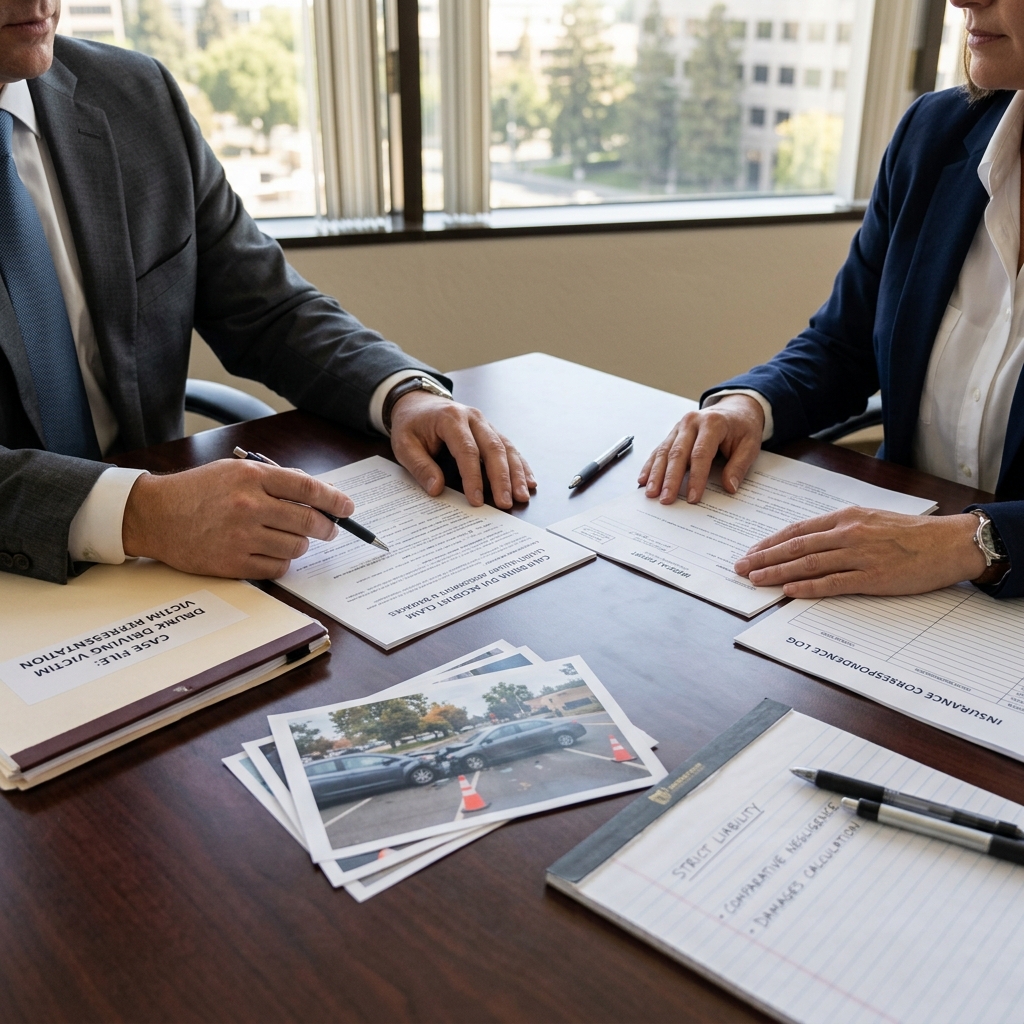
We handle all communication with the insurance company on your behalf. Our experience negotiating with major insurers and our track record of litigation readiness give us leverage. Adjusters take claims more seriously when they know an attorney is involved and prepared to litigate if necessary.
We investigate the driver’s insurance coverage, including liability limits and any additional policies (umbrella coverage) that expand available compensation. If the at-fault driver is uninsured or underinsured, we explore your own uninsured or underinsured motorist coverage as an alternative recovery source.
How We Maximize Recovery for Our Clients
Our approach centers on thorough case evaluation and litigation readiness. We don’t view settlements as the only outcome; we prepare every case as if trial is imminent. This preparation forces insurance companies to offer fair settlements rather than risk judgment by a jury who hears your full story.
We investigate all available evidence comprehensively. This includes obtaining police reports, interviewing witnesses while their memories are fresh, hiring accident reconstruction experts if needed, and securing surveillance footage. We review the at-fault driver’s prior traffic history, any prior DUI convictions, and whether they were under the influence at the time of your collision.
Medical expert review is central to our strategy. We work with physicians and medical economists to establish the full scope of your injuries, prognosis, and lifetime care costs. This clinical foundation supports higher damages awards because the evidence is medical fact, not speculation.
We communicate clearly and responsively with you throughout the process. You’ll understand every step of the claim, every settlement offer, and the reasoning behind our recommendations. Transparency builds trust and ensures you make informed decisions about your case.
Our fee structure aligns our interests with yours: No fee unless we recover for you. This contingency arrangement means you pay nothing upfront and only when we secure compensation. You absorb no financial risk while pursuing your rightful damages.
Timeline and Statute of Limitations in California
Time is a critical factor in personal injury claims. California’s statute of limitations — the filing deadline — gives you two years from the accident date to file a lawsuit. If you don’t file within that window, you lose your right to pursue compensation permanently, regardless of claim merit.
The two-year clock creates urgency, but it’s not your only deadline. Evidence degrades, witnesses move away or forget details, and surveillance footage is eventually deleted. Acting within weeks of the accident, not months, maximizes evidence availability and claim strength.
Key timelines in the claims process:
- Weeks 1-4: Medical evaluation, police report retrieval, initial evidence preservation
- Weeks 4-12: Claim filing with the at-fault driver’s insurance company
- Weeks 12-26: Insurance investigation and preliminary settlement discussions
- Months 6-12: Formal settlement negotiations and demand letters
- Beyond 12 months: Litigation and trial preparation if settlement cannot be reached
The criminal DUI case (if one exists) follows a separate timeline. You should not delay your civil claim waiting for criminal proceedings to conclude. Pursue both cases simultaneously, but through different legal channels.
Contact us as soon as possible after the accident. Early engagement means we can immediately issue preservation notices, gather evidence, and file administrative claims before deadlines compress your options. Every week of delay reduces evidence availability and strengthens the insurance company’s negotiating position.
Comparing DIY Settlement vs. Professional Representation
Some accident victims attempt to resolve claims independently, believing they’ll save attorney fees. In reality, self-representation typically costs significantly more in lost compensation than attorney fees would be.
Unrepresented claimants often accept initial settlement offers without understanding their claim’s true value. The average undervaluation is 30-40% below what legal representation secures. If your case is worth $100,000, a low initial offer of $60,000 might seem acceptable until you realize the true value was much higher.
Insurance adjusters exploit information asymmetry. They know their playbook, their company’s settlement authority, and industry standards. You’re negotiating as an amateur against a professional. The outcome reflects this imbalance.
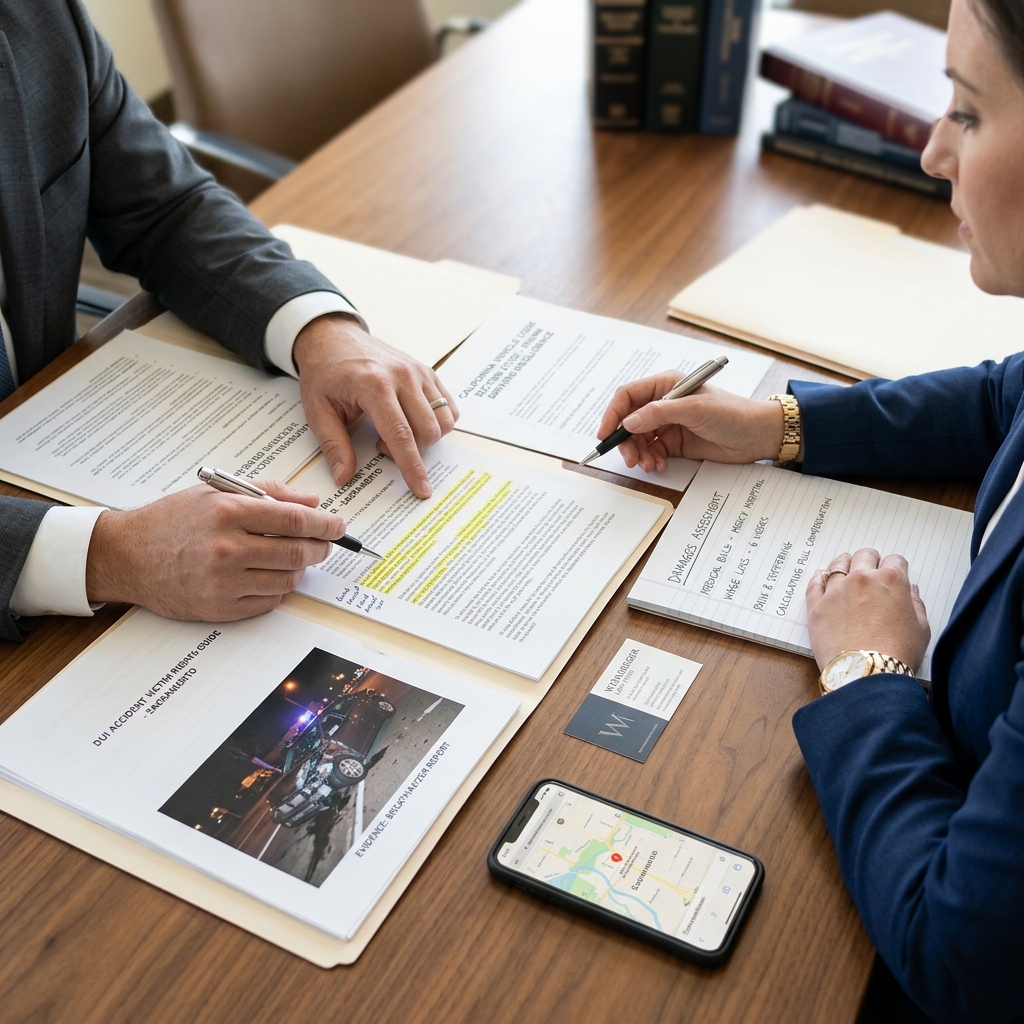
DIY risks include:
- Accepting inadequate settlements before understanding injury scope
- Missing deadlines and losing legal rights permanently
- Failing to identify all responsible parties and available insurance
- Undervaluing non-economic damages due to inexperience
- Making recorded statements that undermine your credibility
- Overlooking future medical care costs and lost earning capacity
We offset attorney fees by maximizing recoverable compensation. Your net recovery after attorney fees is substantially higher than what you’d receive negotiating alone. We also assume litigation risk, bearing costs of expert witnesses and court fees if trial becomes necessary.
Our clients pay no upfront fees and only when we recover for you. You gain professional representation without financial burden, and you benefit from our Sacramento connections and courtroom experience.
Your Selection Guide: Why We Deliver Results
Choosing the right legal representation determines your case’s outcome. Weinberger Law Firm brings comprehensive personal injury legal services specifically designed for accident victims like you. We handle diverse cases: car accidents, motorcycle crashes, premises liability, and product liability claims. This breadth of experience means we’ve seen similar fact patterns and know how to maximize compensation for each.
Our client-focused approach prioritizes your understanding and comfort throughout the process. We explain California personal injury law in plain language, avoiding legal jargon that confuses rather than clarifies. You’ll know exactly where your case stands and what to expect next.
Strong negotiation with insurance companies is our core strength. Adjusters know our reputation for thorough investigation and litigation readiness. This credibility translates to higher settlement offers because companies understand we won’t accept underfair compensation. When negotiation stalls, we litigate confidently, backed by our thorough case preparation.
We pursue full and fair compensation by investigating every detail and calculating damages comprehensively. Economic losses, pain and suffering, emotional trauma, and permanent impairment all factor into our demand. We don’t accept industry shortcuts or standard settlement formulas that undervalue your unique experience.
Your selection criteria should include: local expertise (we’re based in Sacramento and know local judges, juries, and court procedures), experience with your accident type, clear communication, responsive client support, and a fee structure aligned with your interests (ours is contingency-based).
Weinberger Law Firm delivers all of these. You have rights after an accident caused by a drunk driver. Exercise those rights by working with experienced advocates who understand Sacramento’s legal landscape and are committed to your recovery. Contact us for a free consultation to discuss your case and learn how we’ll pursue the compensation you deserve. Time is limited — act now to protect your legal rights and begin your path toward fair resolution.
Contact us today for a Free Case Consultation!
Frequently Asked Questions (FAQ)
What are my rights if I’ve been hit by a drunk driver in Sacramento?
You have the right to pursue compensation for all damages caused by the impaired driver’s negligence. This includes your medical expenses, lost wages, pain and suffering, and any long-term injuries. We help you understand these rights and hold the responsible party accountable through insurance claims or litigation. Time is limited because California has a statute of limitations, so reaching out to us promptly protects your ability to recover what you’re owed.
How much time do I have to file a claim after a drunk driving accident?
California law gives you two years from the date of your accident to file a personal injury claim. This deadline is strict, and missing it means losing your right to compensation entirely. We recommend contacting us immediately after your accident so we can preserve evidence, document your injuries, and begin building your case without delay.
Why shouldn’t I settle directly with the insurance company on my own?
Insurance companies are skilled at minimizing payouts, and they work quickly to lock in settlements before you understand the full scope of your damages. We negotiate with insurers on your behalf and investigate all available evidence to calculate what you actually deserve. Our fee structure means we only recover when you recover, so we’re motivated to pursue maximum compensation for your medical bills, lost income, and suffering.