
Table of Contents
- When You’re Injured on Someone’s Property: Understanding Your Rights
- What Premises Liability Claims Cover in California
- How Property Owners Fail to Protect Visitors and Guests
- Why Time Matters: The Statute of Limitations for Your Case
- How We Investigate and Build Your Premises Liability Claim
- Documenting Evidence That Strengthens Your Recovery
- Calculating Full and Fair Compensation for Your Damages
- Negotiating with Insurance Companies on Your Behalf
- When Litigation Becomes Necessary to Protect Your Rights
- Our Commitment to Supporting You Through the Legal Process
- Take Action Now: Schedule Your Free Consultation
- Frequently Asked Questions (FAQ)
When You’re Injured on Someone’s Property: Understanding Your Rights
You have rights after an accident, especially when someone else’s negligence caused your injury on their property. Whether you slipped on a wet floor at a grocery store, fell down poorly maintained stairs, or were injured due to inadequate security, the property owner bears a legal responsibility to keep their premises safe. California law recognizes that visitors and guests deserve protection, and when that duty is breached, you can pursue compensation.
We understand that being injured on someone else’s property is stressful. Beyond the physical pain, you’re likely facing medical bills, lost wages, and uncertainty about what comes next. The good news is that you don’t have to navigate this alone. Understanding your rights is the first step toward securing the compensation you deserve.
Property owners and their insurance companies have legal teams working to minimize their liability. You need someone equally dedicated to your case. That’s where we come in. We investigate all available evidence, build a compelling case on your behalf, and negotiate with insurers to ensure your voice is heard.
What Premises Liability Claims Cover in California
Premises liability covers a broad range of injuries that occur on another person’s property due to negligence. Common cases include slip and fall incidents, inadequate security leading to assault, defective conditions like broken handrails, and negligent maintenance of common areas. In California, property owners have a legal duty to either repair hazardous conditions or warn visitors about known dangers.
Your claim can cover several types of damages. Medical expenses, including emergency care, ongoing treatment, and rehabilitation, form the foundation. Lost wages from time away from work are equally important and often substantial. You can also recover compensation for pain and suffering, emotional distress, and permanent disability if applicable. In some cases, punitive damages may apply if the property owner’s conduct was particularly reckless.
The scope of your recovery depends on the specific facts of your case. A slip and fall in a store might result in a different recovery amount than a premises injury involving assault or a defective structural element. We pursue full and fair compensation by examining every aspect of your damages, not just the immediate medical bills.
How Property Owners Fail to Protect Visitors and Guests
Property owners neglect their safety duties in predictable ways. Failure to inspect for hazards, ignoring known dangerous conditions, and delaying repairs are common. A grocery store might know that a spill exists for hours without posting warning signs or cleaning it up. An apartment complex might ignore broken stair railings despite tenant complaints. A business might fail to hire adequate security despite previous incidents of violence on the premises.
Documentation of these failures is critical. We investigate whether the property owner knew or should have known about the dangerous condition. This often means reviewing maintenance records, prior incident reports, complaint logs, and security footage. If a hazard existed long enough that a reasonable property owner would have discovered it, negligence is demonstrated.
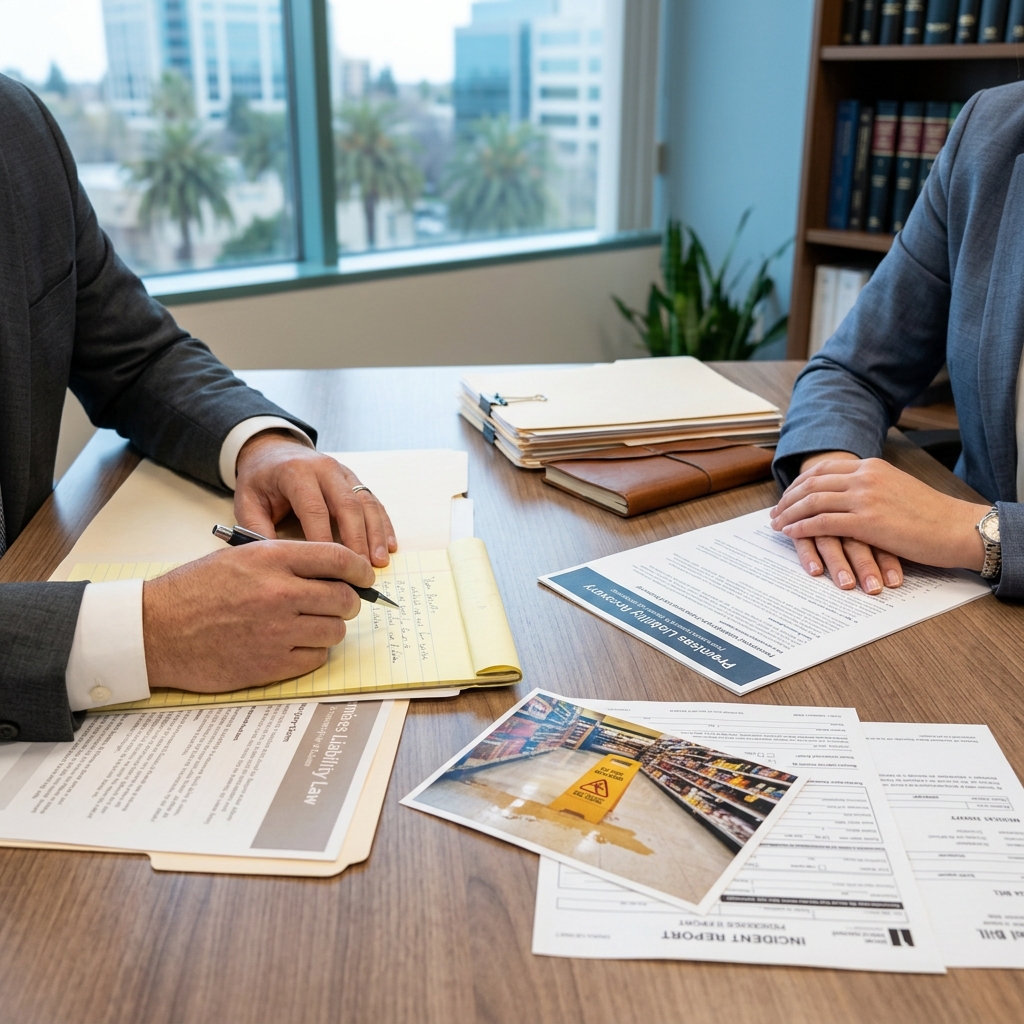
Negligent property owners often rely on the hope that injured visitors won’t pursue claims or understand their rights. We change that equation by gathering evidence systematically and presenting it clearly. Our investigation uncovers the patterns and facts that insurance companies can’t ignore.
Why Time Matters: The Statute of Limitations for Your Case
Time is limited — act now. California law sets strict deadlines for filing premises liability claims. The statute of limitations — the filing deadline — is generally two years from the date of your injury. Missing this deadline means losing your legal right to recover, regardless of the strength of your case.
This deadline matters for practical reasons beyond the legal requirement. Memories fade, witnesses become harder to locate, and evidence deteriorates or disappears. Security footage is often recorded over within days or weeks. Witness statements are more credible when fresh. Medical records and incident documentation are easier to obtain closer to the event.
We recommend contacting us as soon as possible after your injury. During your free consultation, we’ll explain your specific timeline and ensure you understand the urgency. Delaying action only weakens your position and limits your options. Early consultation also allows us to immediately preserve evidence before it’s lost.
How We Investigate and Build Your Premises Liability Claim
Our investigation begins with a thorough review of the facts surrounding your injury. We gather police reports, medical records, and incident documentation. We photograph the scene and document the hazardous condition that caused your fall or injury. We also identify and interview witnesses who saw what happened or can testify about the property owner’s negligence.
We request maintenance records and prior incident reports from the property owner. These documents often reveal patterns of negligence. For example, if a property owner ignored multiple slip and fall complaints, that pattern strengthens your claim substantially. We also investigate whether the property owner carried liability insurance and the coverage limits available.
Expert investigation is where cases are won or lost. Preserve any evidence and get medical care immediately — this protects both your health and your legal position. Then, let us handle the investigative work. We have relationships with accident reconstruction experts, medical professionals, and security specialists who can testify about what happened and why the property owner failed their duty.
Documenting Evidence That Strengthens Your Recovery
Strong documentation transforms a questionable claim into a compelling case. We help you organize medical records, establish a clear timeline of treatment, and document the impact on your daily life and work. Photographs of your injuries, the scene, and the hazardous condition are essential. Video evidence, such as traffic camera footage or store security video, can be decisive.
Witness statements carry significant weight. If other people saw your fall or were present when the injury occurred, their accounts support your version of events. We obtain written statements and contact information, and we prepare witnesses for potential deposition testimony. Medical records from your healthcare providers create an irrefutable timeline of your injuries and treatment.
Documentation also includes evidence of lost income, such as pay stubs and employer statements, and proof of non-economic damages like medical expense receipts and photos showing your recovery process. We compile this material into a persuasive presentation that insurance adjusters and, if necessary, juries can understand quickly and completely.
Calculating Full and Fair Compensation for Your Damages
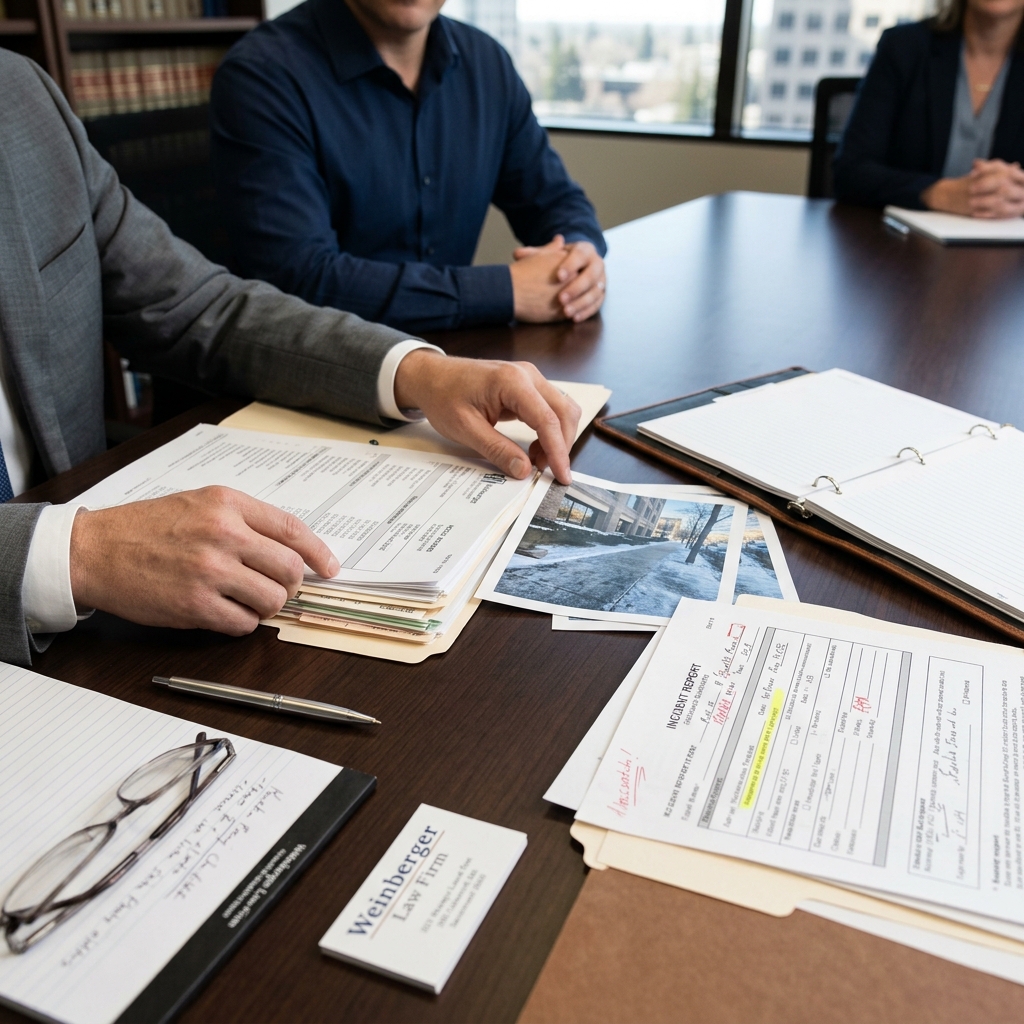
Calculating compensation requires careful analysis of both economic and non-economic losses. Economic damages are straightforward: medical bills, lost wages, and ongoing treatment costs. We obtain itemized bills from every healthcare provider and calculate wage losses by reviewing paystubs and employer records.
Non-economic damages — pain and suffering, emotional distress, and reduced quality of life — are equally important but require different analysis. We use industry standards and comparable cases to ensure your pain and suffering compensation reflects the severity of your injury and its impact on your life. Permanent disability or disfigurement significantly increases these damages.
We also account for future damages. If your injury results in ongoing medical treatment, chronic pain, or permanent limitations, we calculate the present value of future expenses and lost earning capacity. Our approach ensures you’re not settling for quick money that leaves you short when medical bills continue months or years later.
Negotiating with Insurance Companies on Your Behalf
We pursue full and fair compensation through skilled negotiation with the property owner’s insurance company. Insurance adjusters are trained to minimize payouts. They may argue the hazard was obvious, that you were partly at fault, or that your injuries are less severe than your medical records suggest. We counter these arguments with evidence, legal precedent, and clear communication about your damages.
Our negotiation strategy includes presenting a detailed settlement demand backed by documentation. We explain the strength of your case, the likelihood of judgment if litigation occurs, and the costs of defending a trial. Most cases settle during this phase when we demonstrate that fighting the claim will cost more than paying fair compensation.
We never accept lowball offers. If the insurance company won’t move toward fair compensation, we’re prepared to litigate. Insurance companies know this about our firm. They negotiate seriously because they understand we will take your case to trial if necessary.
When Litigation Becomes Necessary to Protect Your Rights
Sometimes settlement negotiations stall. The insurance company may refuse reasonable offers, or liability may be genuinely disputed. When that happens, we file a lawsuit and prepare for trial. Litigation is more time-consuming and costly than settlement, but we won’t let that pressure you into accepting unfair compensation.
Discovery — the process of exchanging evidence — often shifts negotiations dramatically. When the property owner must produce all maintenance records, prior incident reports, and communications about the hazard, the strength of your case becomes undeniable. Depositions of the property owner or property manager can reveal admissions or contradictions that settle cases.
We’re litigation-ready from the start. This means we investigate thoroughly, preserve evidence carefully, and build a case as if trial is inevitable. Even though most cases settle, this approach gives us credibility with insurance companies and ensures we’re fully prepared if a judge or jury must decide your case.
Our Commitment to Supporting You Through the Legal Process
We recognize that being injured and pursuing a legal claim is emotionally and physically demanding. Our commitment extends beyond legal strategy to genuine support throughout your case. We provide clear communication at every stage, explain legal concepts in plain language, and answer your questions promptly. You’ll know what’s happening and why.
We also handle the administrative burden so you can focus on recovery. We manage deadlines, coordinate with medical providers, organize documents, and communicate with insurance companies. You shouldn’t have to worry about missing a filing deadline or forgetting to send medical records while you’re healing.
Our fee structure removes financial barriers to justice. No fee unless we recover for you means you pay nothing upfront or if we don’t win your case. You’re never at financial risk, and we’re fully invested in maximizing your compensation because our fee comes from your recovery.
Take Action Now: Schedule Your Free Consultation
Your next step is straightforward: contact Weinberger Law Firm for a free consultation. During this conversation, we’ll listen to your story, explain your rights, review the facts of your case, and outline a path forward. We’ll answer your questions, address your concerns, and help you understand what to expect.
Time is limited — act now. The sooner we begin investigating, the better we can preserve evidence and build your case. Contact us today to schedule your free consultation. We serve Sacramento and the surrounding areas, and we’re ready to fight for the compensation you deserve after your premises liability injury.
For further reading: Premises liability matters.).
Contact us today for a Free Case Consultation!
Frequently Asked Questions (FAQ)
What types of injuries can we help you recover compensation for in a premises liability claim?
We handle claims involving slip and falls, inadequate security incidents, defective conditions on the property, and injuries caused by a property owner’s negligence. Whether you were injured at a business, rental property, or someone’s home due to unsafe conditions or lack of proper maintenance, we evaluate how the property owner failed to protect you. We’ll investigate what happened and determine what damages you’re entitled to recover, including medical bills, lost wages, and pain and suffering.
How much time do I have to file a premises liability claim in California?
California’s statute of limitations gives you two years from the date of your injury to file a lawsuit. We know this deadline approaches quickly, and waiting can weaken your case because evidence disappears and memories fade. Contact us immediately so we can preserve critical evidence, gather witness statements, and build a strong claim before time runs out.
Do I have to pay you upfront for legal representation?
We work on a contingency fee basis, which means we don’t get paid unless we recover compensation for you. You won’t pay us anything out of pocket, and we only collect a fee if we successfully settle your case or win at trial. This approach lets us focus entirely on maximizing your recovery without adding financial stress to what you’re already facing.