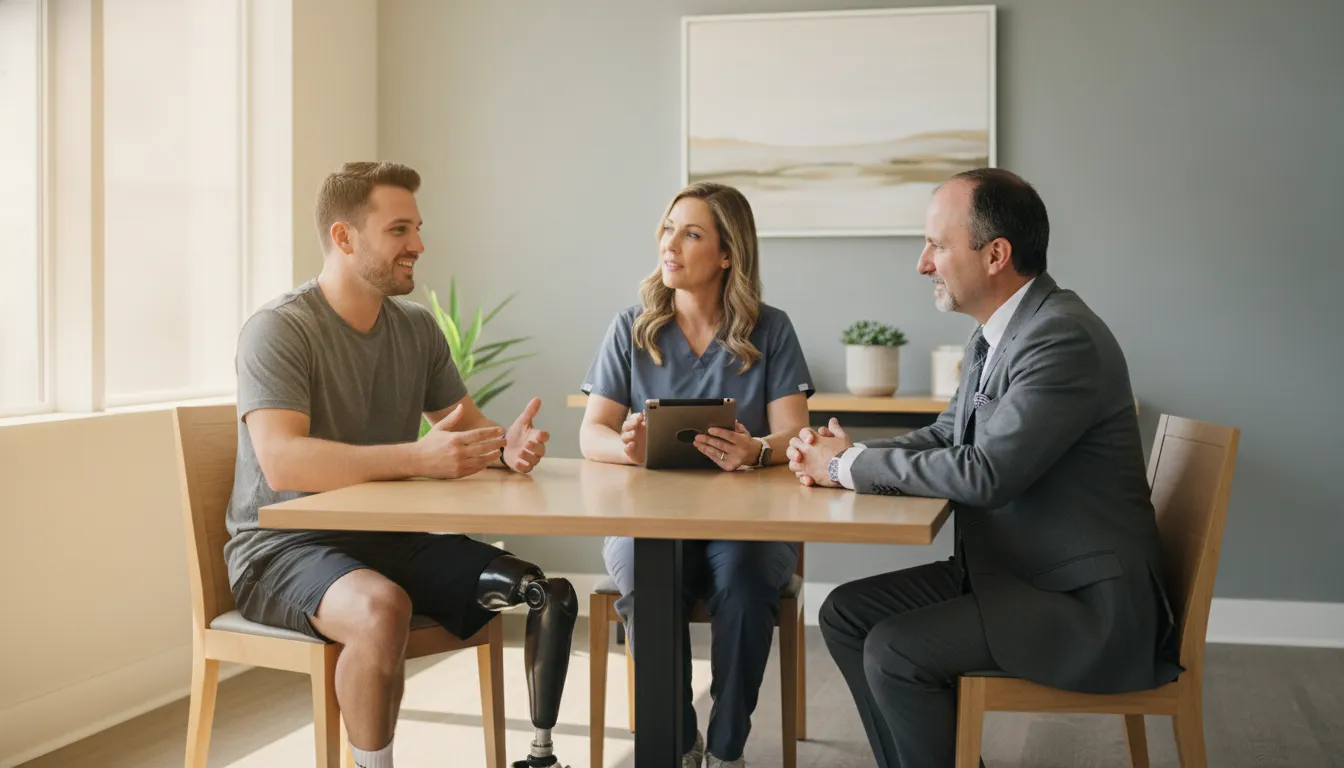
Losing a limb can change how you work, move, care for your family, and plan for the future. When another person or business may have caused the injury, the claim must account for more than emergency treatment. It may involve rehabilitation, prosthetic care, lost income, ongoing pain, and changes to everyday life.
Call Weinberger Law Firm at 916-357-6767 for a free consultation. You pay no upfront fee and only pay if the firm recovers compensation.
If you are searching for an amputation and limb loss injury lawyer in California, a compensation claim can involve investigating how the injury happened, identifying potentially responsible parties, and documenting losses. The legal path depends on the facts, including whether the injury involved a vehicle crash, unsafe property, defective equipment, or a workplace accident. California personal injury and workers’ compensation claims also follow different rules.
Understanding what makes a limb-loss injury legally actionable is the first step. That means looking closely at the cause, the role of negligence, and the evidence connecting the injury to another party’s conduct, including in California premises liability claims.
What Qualifies as an Amputation Injury Claim in California?
An amputation injury claim generally involves the traumatic loss of a limb or part of a limb because another person or entity may have acted negligently. Severe lower-extremity trauma can result in amputation, but not every amputation creates a personal injury claim. The medical distinction matters: amputation can also result from diabetes, vascular disease, neuropathy, or infection, as explained by the NCBI Bookshelf. A disease-related amputation, without a separate negligent act, is usually not treated as an accident claim.
When negligence may support a claim
A California personal injury case may be possible when unsafe conduct causes the traumatic injury. Examples can include a vehicle collision, an unsafe property condition, defective equipment, or another event where a responsible party failed to use reasonable care. The claim typically turns on the evidence, including what happened and who had a duty to act safely.
It also requires examining whether that duty was breached and how the injury affected the person’s medical care, work, and daily life.
Personal injury, workers’ compensation, and third-party claims
The available legal path also depends on where and how the injury occurred. Someone injured while performing job duties may have a workers’ compensation claim. If a separate person or company, such as a negligent driver, property owner, or equipment manufacturer, contributed to the injury, a third-party personal injury claim may also be possible. These systems have different rules and may sometimes overlap, so the facts should be reviewed carefully rather than assuming one route applies to every case.
Weinberger Law Firm represents injury victims throughout California, including the Roseville, Sacramento, and Folsom areas. A claim’s viability and potential recovery depend on the evidence and applicable law, not simply on the fact that limb loss occurred.
Common Causes of Traumatic Amputation in California Accidents
Traumatic amputation can happen when an accident causes catastrophic damage to a limb that surgeons cannot repair. Medical sources recognize trauma as one possible cause of amputation, alongside conditions such as vascular disease and infection. Severe lower-extremity trauma can be especially destructive when wounds are extensive or contaminated. See the NCBI overview of lower-extremity amputation causes for medical context.
Vehicle crashes
Car, truck, motorcycle, bicycle, pedestrian, rideshare, boating, and train crashes can produce crushing injuries, traumatic separation, or damage that later requires surgical amputation. Whether another person or entity is legally responsible depends on facts such as who had a duty of care, what happened before the crash, and whether that conduct caused the injury.
Workplace incidents
Industrial equipment, construction hazards, falls, vehicle operations, and other workplace incidents can cause limb loss. A workplace injury may involve workers’ compensation, while a separate claim may sometimes be possible against a negligent third party. The available legal path depends on the employer relationship, the equipment involved, and the evidence.
Unsafe premises and defective products
Property hazards, inadequate safeguards, dangerous machinery, and defective products can create crushing or cutting risks. A property owner, manufacturer, distributor, or another responsible party may be involved, but an accident alone does not establish liability. The investigation must connect a specific hazard or defect to the injury.
Medical negligence
In some cases, a serious complication or failure to provide appropriate care may raise questions about medical negligence. Those claims require careful review of the treatment, applicable professional standards, and the causal connection between the care and the amputation. Disease-related or infection-related amputations are not automatically negligence claims. Each situation requires an evidence-based analysis of what occurred and who, if anyone, was legally responsible.
How an Amputation and Limb Loss Injury Lawyer in California Builds a Compensation Claim
There is no reliable “average” settlement for an amputation claim. Two people may lose a limb in different circumstances, have different medical needs, and face very different effects on work and daily life. A careful evaluation starts with the documented losses and the facts showing who may be responsible, rather than a headline figure from another case.
| Claim area | Useful proof |
|---|---|
| Future care | Medical and rehabilitation records |
| Lost income | Wage and employment records |
| Daily impact | Daily-life notes and treatment records |
Economic damages may include past and anticipated medical bills, rehabilitation, prosthetic care, and lost wages. The claim may also address non-economic harm, such as pain, emotional distress, reduced independence, and the loss of activities that once formed part of a person’s routine. The available legal path can depend on how the injury occurred. For example, a personal injury claim and a workers’ compensation claim involve different rules, and some cases may involve a potential claim against a responsible third party.
What shapes the evaluation of a limb-loss claim?
- Severity and medical course: The level of amputation, complications, additional procedures, and the recovery process can affect the scope of documented harm.
- Future care: A claim should account for reasonably supported needs over time, including ongoing treatment, rehabilitation, equipment, and possible prosthetic adjustments. Those needs should be evaluated from medical records and qualified opinions, not guesses.
- Work and earning capacity: The analysis may consider time away from work, changes in duties, reduced earning ability, and the support needed to return to employment. Rehabilitation and return-to-work outcomes after amputation have been examined in occupational rehabilitation research: review of factors affecting return to work after amputation.
- Daily-life impact: Pain, loss of mobility, changes at home, effects on family responsibilities, and limits on recreation can help show the non-economic consequences.
Medical bills, lost wages, and pain and suffering are common loss categories in California injury claims. A broader overview of California personal injury compensation can provide additional context, but the value of an individual claim depends on its evidence, liability, and projected needs. A lawyer should review the records and circumstances before offering an opinion about potential recovery.
Lifetime Prosthetics and Rehabilitation Costs in an Amputation Claim
Future care can be a major part of an amputation claim. The medical plan may extend beyond the initial surgery and hospital stay, especially when a person needs wound care, follow-up procedures, prosthetic evaluation, replacement devices, or adjustments as mobility and daily needs change. The appropriate scope depends on the injury, health, age, occupation, and medical recommendations in the individual case.
Therapy, wound healing, and phantom pain
Rehabilitation often involves more than learning to walk with a prosthesis. The CDC explains that physical therapy can help rebuild strength, balance, and range of motion, while occupational therapy can help a person adapt to important daily activities. Therapy may continue after the wound heals. Some people also experience phantom pain, which is pain felt in a body part that is no longer present. These symptoms should be documented and discussed with treating providers. See the CDC guidance on recovery after amputation.
Prosthetic needs and returning to work
Prosthetic care may include assessments, fitting, training, maintenance, and future changes. A life-care or rehabilitation assessment can help identify reasonably anticipated treatment and support needs without relying on an invented price. The same analysis should consider whether the person can return to the prior job, needs modified duties, requires retraining, or faces reduced earning capacity. Research has reviewed factors affecting functional outcomes and return to work after amputation, as discussed in this occupational rehabilitation literature review.
Technology may also affect mobility and independence over time. For background on that distinct issue, read about prosthetic technology after amputation. Medical records, therapy notes, prosthetic recommendations, and employment documentation can help connect future care needs to the injury and support a fact-specific damages evaluation.
Who Is Liable for a Traumatic Limb Loss Injury in California?
Liability depends on what happened, who owed a legal duty, and whether that person’s conduct caused the injury. In a negligence claim, the injured person generally must show that the defendant failed to act with reasonable care. The analysis also asks whether that failure caused the accident or worsened the harm, and whether the limb loss resulted in legally recognized damages. The available claim may differ when the injury occurred at work, involved a government entity, or followed medical treatment.
Drivers, property owners, and employers
A careless driver may be responsible when a collision causes catastrophic trauma. A property owner or occupier may face a premises liability claim when a dangerous condition, such as an unsafe surface or inadequate protection, contributed to the injury. Review Weinberger Law Firm’s guide to California premises liability claims for more about this theory.
An employer may be involved in a workplace injury claim, but workers’ compensation and personal injury rules do not operate the same way. A separate claim against a negligent driver, property owner, equipment maker, or another third party may also be possible in some cases. The facts and employment relationship must be examined before deciding which claims apply.
Manufacturers and medical providers
A manufacturer or distributor may be responsible when a defective product or piece of equipment contributes to traumatic limb loss. The product’s design, warnings, manufacturing history, and use at the time of the incident can matter. Learn more about investigating defective product injury claims.
Medical negligence may be relevant if a provider’s conduct caused a separate injury or materially worsened the outcome. That conclusion requires a fact-specific medical review, not simply an unfavorable result. Identifying every potentially responsible party early can help preserve records and clarify how compensation claims should proceed.
What Evidence Strengthens a California Amputation Claim?
Strong evidence connects the injury to the incident, documents the treatment already received, and shows how limb loss affects future care, work, and daily life. Preserve copies of:
- Medical and surgical records: Emergency-room notes, imaging, diagnoses, operative reports, discharge instructions, medication records, and invoices can establish the injury and medical expenses.
- Rehabilitation records: Physical and occupational therapy notes can document strength, balance, range of motion, daily-activity limitations, and progress. Research also examines rehabilitation outcomes and return to work after amputation, making vocational records relevant to the claim.
- Prosthetic and future-care documentation: Keep prosthetist evaluations, fitting records, replacement recommendations, wound-care notes, pain treatment, and treatment plans. A qualified life-care or medical expert may help explain anticipated care and equipment needs without relying on guesswork.
- Work and financial proof: Save pay stubs, tax records, employment schedules, disability documentation, employer statements, and evidence of missed work or reduced earning capacity. These records support potential lost-wage claims.
- Incident and condition evidence: Obtain incident reports, preservation notices, photographs or video of the scene and injuries, witness names and contact information, vehicle or equipment records, and relevant communications. Do not alter photographs or discard physical evidence.
- Personal-impact evidence: A dated recovery journal can record pain, phantom pain, sleep disruption, mobility changes, and effects on family or routine. These details may help document pain and suffering.
Organizing medical expenses early can make the claim easier to evaluate. See this guide to recovering serious injury medical expenses for related record-keeping considerations.
What Should You Do After a Traumatic Amputation?
After an amputation, immediate medical care comes first. The decisions you make afterward can also help protect your health, document your losses, and preserve potential legal options.
- Follow emergency and rehabilitation care. Keep appointments, follow wound-care instructions, and report new symptoms promptly. Recovery may involve physical therapy for strength, balance, and range of motion, along with occupational therapy for daily activities. Some people also experience phantom pain. The CDC explains that therapy may continue after the wound heals: amputation recovery guidance.
- Preserve your records. Request copies of emergency, surgical, hospital, prosthetic, therapy, and prescription records. Save photographs, discharge instructions, incident reports, and messages related to what happened. Rehabilitation and return-to-work issues can remain important over time, as reflected in occupational rehabilitation research.
- Communicate carefully with insurers. Notify applicable insurers as required, but avoid guessing about fault, minimizing your injury, or giving a recorded statement before you understand what is being asked. Do not sign a release without reviewing it carefully.
- Track the full impact. Keep a running record of medical bills, travel, lost wages, work limitations, equipment needs, pain, and changes to daily life. These details may help document losses such as medical expenses, lost wages, and pain and suffering.
- Request legal review promptly. A California injury lawyer can assess the facts, identify potentially responsible parties, and explain California injury claim filing deadlines without assuming one deadline applies to every case. Weinberger Law Firm offers a free consultation and contingency representation, so clients pay no upfront fee.
Call Weinberger Law Firm at 916-357-6767 for a free consultation.
Frequently Asked Questions
How much compensation can you receive after losing a limb?
There is no reliable standard amount. A claim may address medical expenses, rehabilitation, prosthetic needs, lost wages, reduced earning ability, pain and suffering, and the effect on daily life. The available recovery depends on the evidence, the cause of the injury, the responsible parties, applicable insurance, and whether the claim proceeds through personal injury or workers’ compensation. A lawyer must evaluate the specific facts before estimating potential damages.
Can I bring a claim if the amputation happened at work?
Possibly. An employee may have a workers’ compensation claim, and a separate claim against a negligent third party may also be available in some situations. The correct path depends on who caused the injury and the details of the workplace, equipment, or accident. Report the injury as required, preserve medical and incident records, and obtain advice before making statements about fault or accepting a settlement.
What medical records matter in an amputation case?
Keep emergency and surgical records, imaging, medication information, wound-care notes, physical and occupational therapy records, prosthetic recommendations, and follow-up evaluations. Records documenting phantom pain and other ongoing symptoms can also help explain the injury’s continuing impact. Employment records, wage information, photographs, incident reports, and witness details may help connect the medical consequences to financial and personal losses.
Does rehabilitation affect an amputation compensation claim?
Yes. Rehabilitation can show the treatment needed to regain strength, balance, mobility, and independence. Physical and occupational therapy may address different recovery goals, and return-to-work planning can document effects on employment. Continue medically recommended care and keep records of appointments, limitations, assistive devices, and changes in daily activities. These details help show both current needs and possible future care.
Ready to Discuss Your California Amputation Claim?
A traumatic amputation can affect medical care, work, mobility, and daily life for years. A focused review of what happened and the losses involved can help you understand possible next steps. Call Weinberger Law Firm at 916-357-6767 for a free consultation about your California amputation or limb-loss injury claim. The firm represents injury victims on a contingency basis, so there is no upfront fee and payment is due only if compensation is recovered.