
Table of Contents
- When a Bus Accident Leaves You Injured: Understanding Your Rights
- How Liability Works in California Bus Accidents
- Common Causes and Fault Determination in Bus Collisions
- Split Liability and Comparative Negligence Rules
- Multiple Parties and Your Right to Compensation
- Investigating Your Bus Accident: Our Thorough Approach
- Preserving Evidence Before It Disappears
- Negotiating with Transit Companies and Insurance Carriers
- Calculating Your Full Damages: Medical Bills, Lost Wages, and Beyond
- Time is Limited: The Statute of Limitations for Bus Accident Claims
- Why You Need Dedicated Legal Representation for Bus Accidents
- Contact Weinberger Law Firm for Your Free Consultation
- Frequently Asked Questions (FAQ)
When a Bus Accident Leaves You Injured: Understanding Your Rights
If you were injured in a bus accident, you have rights. California law protects individuals harmed by another party’s negligence, and you may be entitled to compensation for your injuries, medical expenses, and lost income. Bus accidents often involve multiple parties—the bus driver, the transit company, other vehicles, and potentially manufacturers—which can make determining who pays more complex than a typical car collision.
Understanding your rights is the first step toward recovery. You have the right to pursue compensation from any party whose negligence caused your injuries. You also have the right to legal representation, a free case evaluation, and clear answers about your claim. We understand this is a difficult time, and we’re here to guide you through every step.
The path forward begins with documenting what happened and preserving evidence. Time is limited — act now to protect your claim and gather critical information while details and physical evidence remain available.
How Liability Works in California Bus Accidents
California operates on a fault-based insurance system, meaning the party responsible for causing the accident must pay for damages. In bus accidents, this responsibility can fall on the bus driver, the transit company that employs or operates the bus, another vehicle’s driver, or even a third party whose actions contributed to the collision.
We investigate all available evidence to establish who caused the accident. This includes driver conduct (speeding, distracted driving, failure to yield), vehicle maintenance records, road conditions, traffic signals, and witness accounts. The goal is clear: identify every responsible party and pursue full and fair compensation.
Bus companies and their insurers often have significant resources and experience defending claims. Understanding how liability is determined helps level the playing field. Negligence requires proving four elements: a duty of care owed to you, a breach of that duty, causation (the breach caused your injuries), and damages (your actual losses). When we build your case, we document and present the facts methodically to establish each element.
Common Causes and Fault Determination in Bus Collisions
Bus accidents happen for many reasons, and identifying the cause is central to determining fault. Common causes include driver fatigue or inattention, excessive speed, improper lane changes, failure to brake or yield, mechanical failures (brake defects, tire blowouts), and poor road maintenance. Some accidents involve multiple contributing factors.
Traffic camera footage, dashcam recordings, and witness statements are often decisive. Medical reports documenting your injuries and the force of impact help establish accident severity. Police reports provide official findings, though they’re not binding in a civil claim. We obtain and review all available documentation to build a thorough picture of how the accident occurred and who bears responsibility.
Bus drivers have heightened duties because they transport the public. They must maintain safe speeds, stay alert, perform required vehicle checks, and follow traffic laws strictly. When a driver breaches these duties and causes injury, both the driver and the transit company that employed or operated the bus may be liable. Your actionable next step is to report the accident to the transit agency and note the bus number, route, date, and time—this information helps us locate records and witnesses quickly.
Split Liability and Comparative Negligence Rules
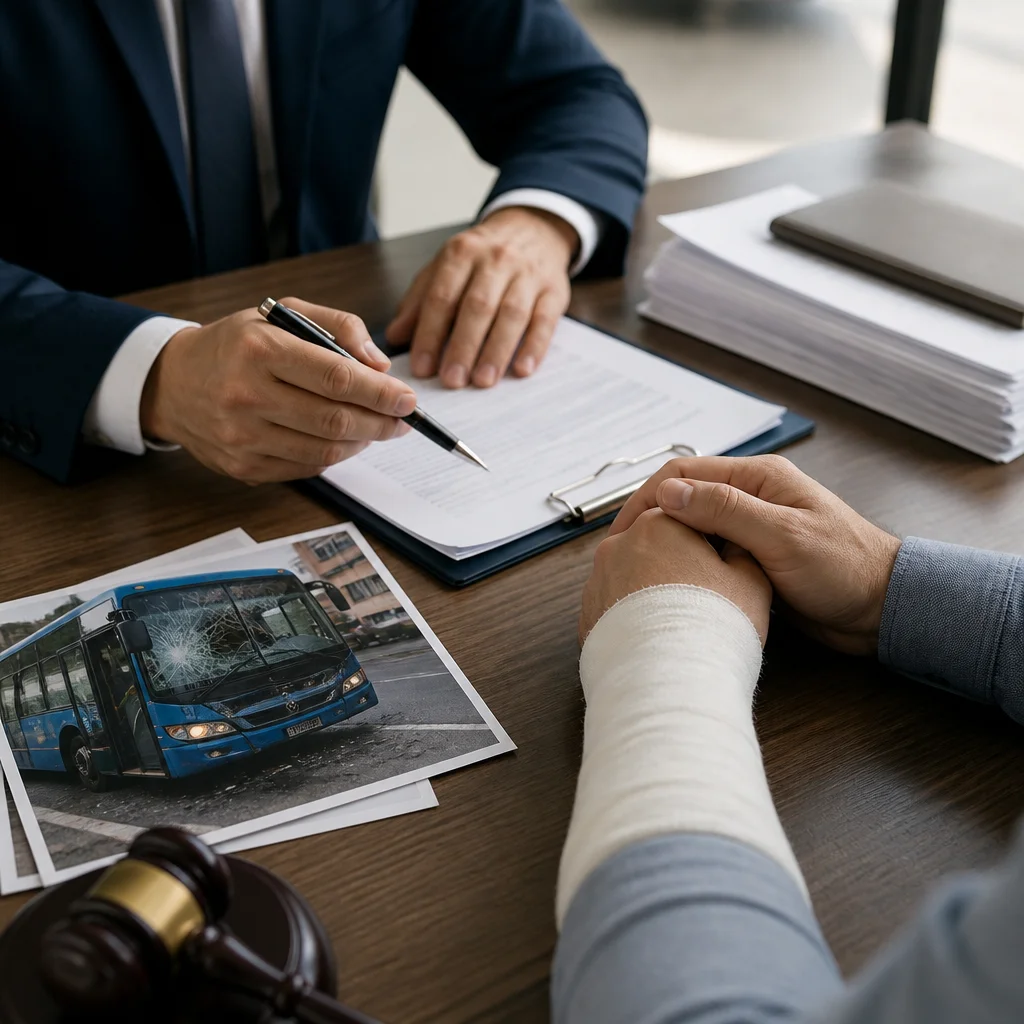
In some bus accidents, more than one party’s negligence contributes to the collision. California’s comparative negligence rule allows you to recover compensation even if you share some fault, as long as you are less than 50 percent responsible. Your recovery is reduced by your percentage of fault.
For example, if you were crossing the street against a walk signal and a bus driver, texting while driving, failed to avoid you, a court might find you 20 percent at fault and the driver 80 percent at fault. You could still recover 80 percent of your damages. This rule protects injured people from losing their entire claim due to minor contributory actions.
We evaluate shared fault carefully. When insurers or defendants claim you share responsibility, we counter with evidence and expert testimony showing how their negligence was the primary cause. Our goal is to minimize any assigned fault and maximize your recovery. If liability appears split, we discuss the realistic settlement range and litigation prospects so you can make an informed decision about your claim.
Multiple Parties and Your Right to Compensation
Bus accidents often involve multiple liable parties: the bus driver, the transit company, manufacturers (if equipment failure caused the accident), other drivers involved, or even a government entity if poor road maintenance contributed. You have the right to pursue claims against all responsible parties.
Each potential defendant has its own insurance coverage and legal defenses. The bus driver typically carries commercial auto liability insurance through the transit company. The transit company itself may have additional coverage. Other drivers have their own auto policies. Manufacturers may carry product liability insurance. We pursue recovery from all available sources to maximize compensation.
Coordinating claims among multiple defendants requires strategic planning. We investigate each party’s role, gather evidence specific to their conduct, and file claims accordingly. Government transit agencies may require special notice procedures or have claim caps, so we handle these procedural requirements precisely. Your actionable step is to preserve all communications with transit companies, insurers, or other parties—do not sign anything without our review.
Investigating Your Bus Accident: Our Thorough Approach
Our investigation begins immediately. We obtain the police report, identify and interview witnesses, photograph the accident scene, review traffic camera footage, and secure the bus driver’s records (including logbooks, safety violations, and training history). We also request the transit company’s maintenance records to determine if mechanical failure played a role.
Medical investigation is equally important. We obtain your complete medical records, imaging studies, test results, and treatment notes. We consult with medical experts if necessary to establish the connection between the accident and your injuries. This medical evidence quantifies your damages and supports our demand for full compensation.
We also investigate the bus itself. Defective brakes, faulty steering, or failing tires can cause accidents independent of driver conduct. If equipment failure contributed, the bus manufacturer may be liable. We review service records, prior complaints, and engineering data to identify mechanical causes. Our thorough approach means we leave no stone unturned—every piece of evidence strengthens your claim.
Preserving Evidence Before It Disappears
Evidence deteriorates quickly. Vehicle wreckage is often scrapped, surveillance footage is recorded over, witnesses move away, and memories fade. Acting fast preserves critical proof.
Take these steps immediately:

- Document injuries with photographs and medical records starting with your first visit to urgent care or the emergency room
- Preserve all medical bills, receipts, and statements related to treatment and recovery
- Save lost wage documentation: pay stubs, employer letters, and tax records showing income loss
- Note contact information for all witnesses you spoke with at the scene
- Request the police report using the accident date, location, and report number
- Ask the transit company for the incident report and preservation letter confirming they’re keeping accident evidence
Contact your phone company and local transit authority to request they preserve any surveillance video or communication records. Courts can sanction parties who destroy evidence, so formal preservation requests create a legal obligation. We send preservation letters on your behalf to ensure the transit company, other liable parties, and relevant agencies retain all evidence.
Negotiating with Transit Companies and Insurance Carriers
Transit companies and their insurers are experienced in defending bus accident claims. They often have investigators working simultaneously with ours, and they’re motivated to minimize payouts. Our approach is strategic, professional, and evidence-driven.
We negotiate insurance claims by presenting a detailed demand supported by medical evidence, economic damages documentation, and liability analysis. We articulate both the strength of your case and the risks the insurer faces if litigation proceeds. Many claims settle during negotiation when insurers recognize the cost of trial exceeds a reasonable settlement offer.
We never accept a first offer if it undervalues your claim. Settlement discussions include multiple rounds of negotiation, sometimes with mediation assistance. Throughout this process, you maintain full control—we advise you on every offer and recommendation, and you decide whether to settle or proceed to trial. Our communication with you is responsive and transparent, keeping you informed at every stage.
Calculating Your Full Damages: Medical Bills, Lost Wages, and Beyond
Damages in bus accident claims include economic losses (medical bills, lost wages, future medical care) and non-economic damages (pain and suffering, emotional distress, loss of enjoyment of life). California allows recovery for both.
Economic damages are straightforward to calculate. We add up all medical expenses: emergency room visits, surgeries, physical therapy, prescription medications, medical equipment, and anticipated future treatment. We calculate lost wages by reviewing pay stubs and employment records. If your injury affects your future earning capacity, we consult vocational experts to quantify that loss.
Non-economic damages require narrative and expert support. We document your pain, functional limitations, and emotional impact through your testimony, medical provider notes, and sometimes testimony from family members or therapists. Permanent scarring, disfigurement, or disability increases these awards. Pain and suffering awards vary, but courts typically apply multiples of economic damages—often 2-5 times the medical bills depending on injury severity and prognosis. We pursue full and fair compensation for every category of loss.
Time is Limited: The Statute of Limitations for Bus Accident Claims
The statute of limitations—the deadline to file a lawsuit—is two years from your injury date in California. If you miss this deadline, your claim is barred regardless of its merit. No exceptions exist for those unaware of the law or unprepared to sue.
This deadline applies to personal injury claims against bus drivers and transit companies. Claims against government entities (such as state or municipal transit agencies) have shorter notice periods, sometimes just 180 days. Acting within these timelines is essential.
We monitor all deadlines carefully and file suit if settlement negotiations don’t resolve your claim. Even before filing, we preserve your claim by sending demand letters and establishing the date of notice. Time is limited — act now by contacting us for a free consultation. The sooner we engage, the sooner we protect your rights and begin building your case.
Why You Need Dedicated Legal Representation for Bus Accidents

Bus accident claims are inherently complex. Multiple parties, significant damages, and experienced opposing counsel require dedicated advocacy. Attempting to negotiate alone puts you at a disadvantage against insurers and transit company lawyers who handle these claims daily.
We bring investigative resources, legal expertise, and negotiating leverage. We know how transit companies and their insurers operate, what evidence persuades them, and when litigation threats are credible. We handle all legal procedures—filing documents, meeting deadlines, responding to discovery requests, and preparing for trial if necessary. You focus on healing while we pursue compensation.
Our Sacramento-based firm serves accident victims throughout California. We work on contingency—no fee unless we recover for you—so our success depends on your success. This alignment ensures we fight for maximum compensation and pursue every claim thoroughly. Our responsiveness means you have a trusted advisor answering your questions and keeping you informed.
Contact Weinberger Law Firm for Your Free Consultation
You have rights after a bus accident. If you were injured due to negligence, you deserve compensation for your medical bills, lost wages, pain, and suffering. We’re ready to evaluate your claim at no cost and guide you toward fair recovery.
Call Weinberger Law Firm today for your free consultation. We’ll discuss what happened, explain your legal options, answer your questions, and outline our investigative and negotiation strategy. No pressure, no obligation—just straightforward advice from experienced Sacramento personal injury attorneys.
Preserve any evidence and get medical care immediately. Then contact us. We will investigate all available evidence and pursue full and fair compensation on your behalf.
Contact us today for a Free Case Consultation!
Frequently Asked Questions (FAQ)
Who pays for my injuries if a bus accident wasn’t entirely my fault?
We help you recover compensation from all responsible parties, even when fault is shared. California’s comparative negligence law allows us to pursue damages from the bus driver, transit company, other vehicles involved, or manufacturers if defective equipment contributed to the crash. We investigate thoroughly to identify every party that bears responsibility for your injuries.
How much time do I have to file a bus accident claim in California?
You have two years from your accident date to file a personal injury lawsuit, though we strongly encourage you to act sooner. Evidence disappears, witness memories fade, and insurance companies move quickly to minimize payouts. Contact us immediately so we can preserve critical evidence and protect your right to full compensation.
What should I do right after a bus accident to protect my claim?
Seek medical attention first, then document everything at the scene: photographs, witness contact information, the bus company name, and the date and time of the accident. Preserve any physical evidence and avoid giving recorded statements to insurance adjusters without our guidance. We will investigate all available evidence and handle negotiations with transit companies and their insurers so you can focus on recovery.