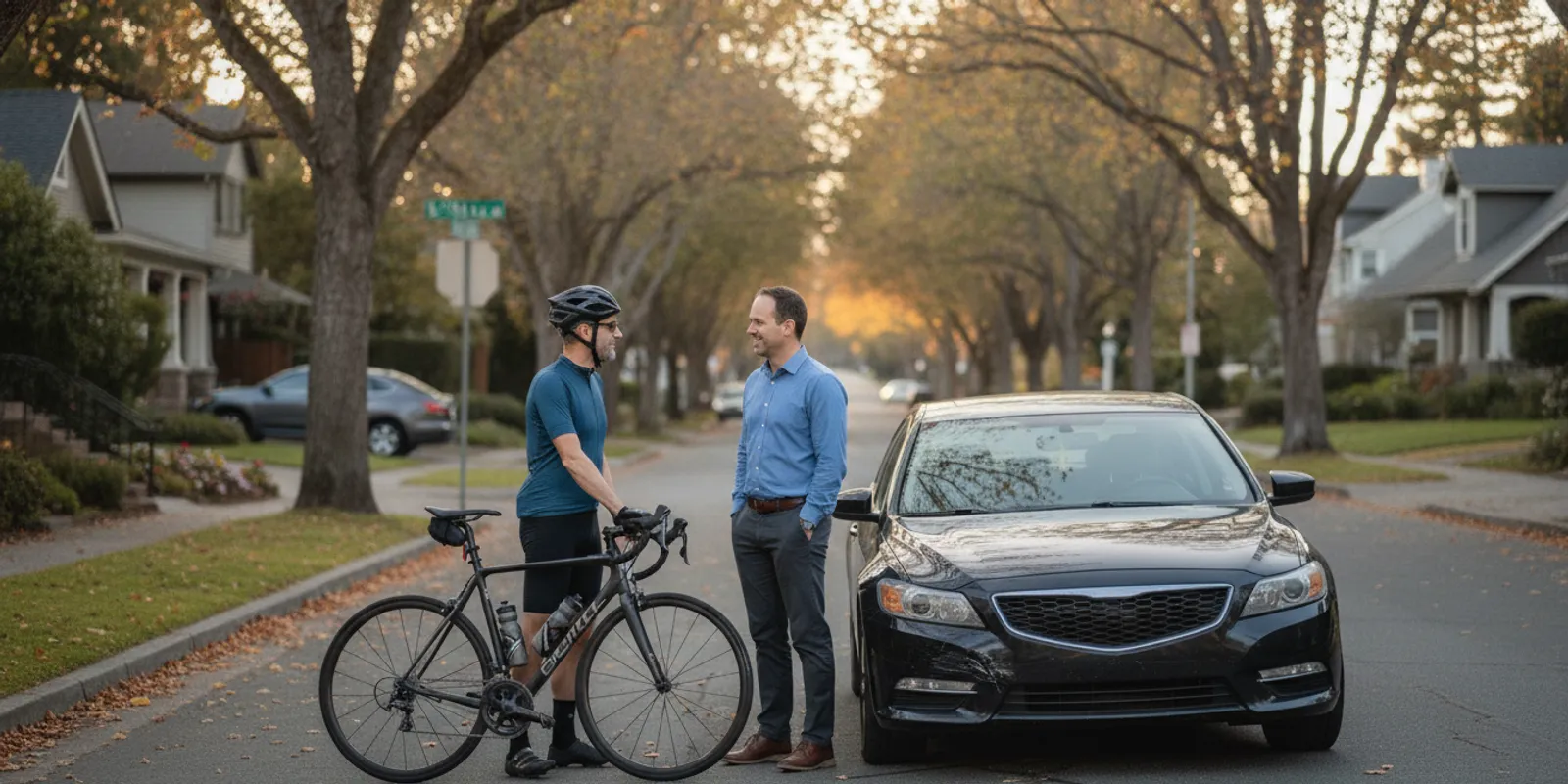
If you were hit while riding, the question behind “California Bicycle Accident Lawyer: Your Rights as a Cyclist Hit by a Car” is often practical: what should you do before the facts fade or an insurer asks for a statement? A collision may become a legal claim when someone’s careless driving caused injury and there is evidence to support that connection. The steps you take now can help preserve useful information without requiring you to decide everything today.
Call Weinberger Law Firm at 916-357-6767
When does a bicycle crash become a legal claim?
A crash alone does not establish that a driver is legally responsible. A claim generally asks whether a person or organization failed to use reasonable care, whether that failure contributed to the collision, and whether the collision caused injuries or other losses. A driver may have failed to watch for a cyclist, turned across a bicycle’s path, opened a car door without checking, or followed too closely. The details matter, and more than one person’s conduct can be part of the analysis.
In California, a person’s own share of responsibility may affect a claim rather than automatically ending it. For example, an insurer may argue that a cyclist was difficult to see, rode against traffic, or entered an intersection unexpectedly. The relevant evidence may show a different account, or it may support that both people contributed. Do not assume an insurer’s first description settles the question of fault.
There also needs to be a connection between the collision and the claimed harm. That can include a physical injury, treatment needs, time away from work, or other losses supported by records. A damaged bicycle or helmet can help document what happened, but property damage alone is not the same as an injury claim.
What should you do at the scene and in the first few days?
Put safety and medical needs first. Move out of traffic if you can do so safely, and call emergency services when anyone is seriously hurt or needs immediate help. An injury may not be obvious in the first moments. If pain, dizziness, confusion, or another symptom appears later, seek appropriate medical attention and describe what happened as accurately as you can.
If it is safe and practical, collect basic information before leaving:
- Get the driver’s name, contact details, license plate, and insurance information. Note the make and model of the vehicle.
- Ask witnesses for their names and a way to reach them. A witness may leave before an officer or insurer can speak with them.
- Photograph the bicycle, vehicle, visible damage, road surface, traffic controls, lighting, and the overall scene. Capture more than one angle.
- Write down the time, location, direction of travel, weather, and what you remember each person doing just before impact.
- Request an incident or collision report when one is made. Keep any report number and the responding agency’s details.
Do not put yourself in danger to take photographs or gather information. If you are too hurt or shaken to do this, a companion may be able to help. Preserve the bicycle, helmet, lights, clothing, and any damaged equipment rather than repairing or discarding them right away. These items can help explain the impact and condition of the bike, though they do not establish fault by themselves.
As soon as you are able, make a private, factual note of what you remember. Separate what you saw from what you inferred. For example, “the car began turning across the bike lane” is more useful than a conclusion such as “the driver was reckless.” Memories can change, so a dated note can help you keep details straight when speaking with an insurer or lawyer.
Which evidence may help explain how the collision happened?
Evidence should help answer specific questions: where were the cyclist and car, what could each person see, when did each person move, and what caused the impact? Photos of the scene may show a blocked sightline, a driveway, a painted lane, a traffic signal, or road work. Images taken soon after the crash can be especially helpful if the scene changes later.
Look for possible recordings, but do not assume they will be kept indefinitely. Nearby homes, shops, buses, or vehicles may have cameras. Note what you observed and where a camera appeared to point. An attorney or investigator may be able to send a preservation request when appropriate. The recording itself may be overwritten, and having a camera nearby does not guarantee that it captured the collision.
Other useful materials can include the police report, witness contact details, medical records, repair estimates, receipts, and messages exchanged with the driver. Keep original files where possible. Save photographs without editing them, retain copies of emails and letters, and keep a simple list of calls with dates, names, and the topic discussed.
Research on bicycling injuries has examined how transportation infrastructure relates to crash and injury risks. That research offers broader safety context, not a conclusion about what caused any one collision. The study on transportation infrastructure and bicycling injuries reviews evidence concerning bicycle-specific facilities and safety. The National Transportation Safety Board report on bicyclist safety likewise examines crash risks on U.S. roadways. For an individual claim, evidence from the actual location and collision remains central.
How can medical records support an injury claim?
Medical care is first about your health, not building a file. Follow the advice of your treating professionals and tell them about symptoms, even if they seem minor or change over time. Keep appointment summaries, bills, prescriptions, referrals, and instructions. If a symptom affects sleep, mobility, work, or ordinary activities, make a clear note and discuss it with a clinician rather than trying to diagnose it yourself.
Records can help establish when symptoms began, what treatment was recommended, and how the injury affected daily life. If there is a delay between the collision and treatment, explain the reason honestly. A gap is not proof that an injury is unrelated, but an insurer may ask about it. Accurate, consistent information is more useful than trying to make a record sound stronger than it is.
Keep track of expenses and time missed from work, but do not estimate or inflate amounts. Save bills, receipts, employer records, and written communications. Some losses may be disputed, and the documents that matter depend on the circumstances and the injury.
What should you know before talking with an insurance company?
The driver’s insurer may contact you to obtain basic information or ask for a recorded statement. You can provide accurate facts, but you do not have to guess when you do not know an answer. It is reasonable to ask who is calling, which insurer they represent, what claim the call concerns, and whether a statement is being recorded. Avoid speculating about speed, distance, or fault. Do not describe an injury as resolved if you are still receiving care or do not yet know how it will develop.
Do not sign a release or accept a payment without understanding what it covers. A payment for bicycle repairs may be separate from a bodily injury claim, while a release could affect more than one part of a dispute. Ask for proposed terms in writing and take time to read them. An early offer may arrive before the full course of treatment or the effect on work is clear.
You may also need to notify your own insurer, depending on your policy and the circumstances. Keep the account factual and consistent. If a question feels unclear, ask for it to be restated. If the insurer asks for broad medical or personal records, ask why they are needed and how they relate to the claim before providing them.
Which deadlines and claim details should you check?
Do not wait to ask about deadlines. The time to bring a lawsuit can depend on the parties and facts, and claims involving a public entity may have a separate, shorter claim process. A deadline can be affected by issues that are not obvious from the first conversation. A police report, insurance claim, or ongoing treatment does not necessarily preserve every legal deadline.
Make a short timeline while the information is available: date of collision, dates of medical visits, insurer contacts, any written offers, and any notices you receive. Keep envelopes and note when documents arrived. If a government vehicle, road condition, or public property may have played a role, mention that promptly when seeking legal guidance, because different procedures may apply.
For broader context about bicycle accident matters, the firm has a bicycle accident information page. People in nearby communities can also find general injury information on the firm’s Antelope personal injury page. The facts of a claim and the applicable deadlines still need to be considered individually.
What should you organize before asking for a claim review?
You do not need a complete file before asking questions. A simple folder can make an initial discussion clearer and reduce the need to search for basic details later. Start with the collision date and location, the names of the driver and any witnesses, and any report number you received. Add a brief sequence of events in your own words, including what happened before impact and what you did afterward.
Separate documents by topic so it is easy to tell what each item shows:
- Collision evidence: scene and damage photographs, witness information, report details, and any camera locations you noticed.
- Health information: appointment dates, care instructions, bills, and a short note about how symptoms affect daily activities.
- Insurance communications: claim numbers, adjuster names, letters, requested forms, and any proposed payment or release.
- Work and expenses: dates missed, employer records, transportation costs, and receipts tied to the crash.
Keep originals and make a backup. Do not alter a photograph or delete messages that may relate to the event. If information is missing, mark it as unknown instead of filling in a guess. A well-organized set of facts can help a lawyer identify what needs follow-up, but it does not by itself prove liability or the amount of any loss.
How do the next steps differ by situation?
The actions that matter depend on what is known and what remains uncertain. This comparison is a practical starting point, not a decision about liability or whether a particular claim will succeed.
| Situation | Useful next step | Keep in mind |
|---|---|---|
| Injury is serious or symptoms are changing | Seek appropriate medical care and keep instructions and records. | Do not delay care to collect evidence or speak with an insurer. |
| Fault is disputed | Preserve photos, witness details, reports, and a factual timeline. | Each person’s actions and the scene evidence may matter. |
| Insurer requests a recorded statement or release | Ask what the request covers and review documents before agreeing. | Avoid guessing or signing terms you do not understand. |
| Public property or a government vehicle may be involved | Ask promptly about the correct claim process and deadlines. | Special notice procedures may apply and can be shorter. |
| Only the bicycle appears damaged so far | Document the damage and monitor your health; seek care if symptoms arise. | Property damage by itself does not establish a personal injury claim. |
When can a lawyer’s review help?
A lawyer’s review may be useful when an injury needs ongoing treatment, fault is disputed, an insurer asks for a recorded statement or release, several parties may be involved, or a deadline is uncertain. A review can help organize the questions and explain possible next steps based on the documents and facts available. It cannot guarantee a particular result, and a brief conversation does not replace medical care.
Weinberger Law Firm represents people injured in accidents in California, with a local presence serving Roseville, Sacramento, and Folsom. Joseph B. Weinberger brings 38 years of California personal-injury experience and direct attorney involvement. The firm has published case results that include multi-million-dollar awards as well as smaller recoveries; prior results do not predict what may happen in another matter. The firm’s contingency-fee model means clients pay nothing upfront and pay a fee only if the firm recovers compensation. The fee arrangement and case costs should be explained before representation begins.
If you are in the Sacramento-area region, the firm also provides information about motor vehicle collisions on its Auburn car accident page. A bicycle-versus-car claim will turn on its own evidence, rather than simply on the category of accident or a general description of a law.
Call Weinberger Law Firm at 916-357-6767
Frequently Asked Questions
Can I bring a claim if the driver says I was partly at fault?
Possibly. A dispute about shared responsibility does not, by itself, answer whether a claim can be brought. The evidence may show that one person or more than one person contributed, and the effect of any assigned fault depends on the facts and applicable law. Preserve information and avoid treating an insurer’s initial position as a final decision.
Should I repair or replace my bicycle after the crash?
First, make sure it is safe to ride. Photograph the bicycle and damaged parts before repairs if you can, and keep repair estimates, invoices, and replaced components when practical. Do not ride equipment that may be unsafe. If an insurer or another party wants to inspect the bicycle, ask for the request and arrangements in writing before handing it over.
What if I felt fine at the scene but have symptoms later?
Seek appropriate medical attention and explain when the symptoms began and what changed. Keep a record of appointments and instructions. A later symptom does not automatically establish its cause, so a medical professional can assess your health and a claim review can consider the timing and other evidence.
Does contacting a law firm mean it represents me?
No. Reading this article or requesting information does not by itself create an attorney-client relationship or provide advice about your specific circumstances. A law firm must agree to represent you, typically through a written agreement, before that relationship begins.
Taking careful notes, getting needed care, and preserving evidence can help you make a better-informed decision about what to do next after a bicycle collision.