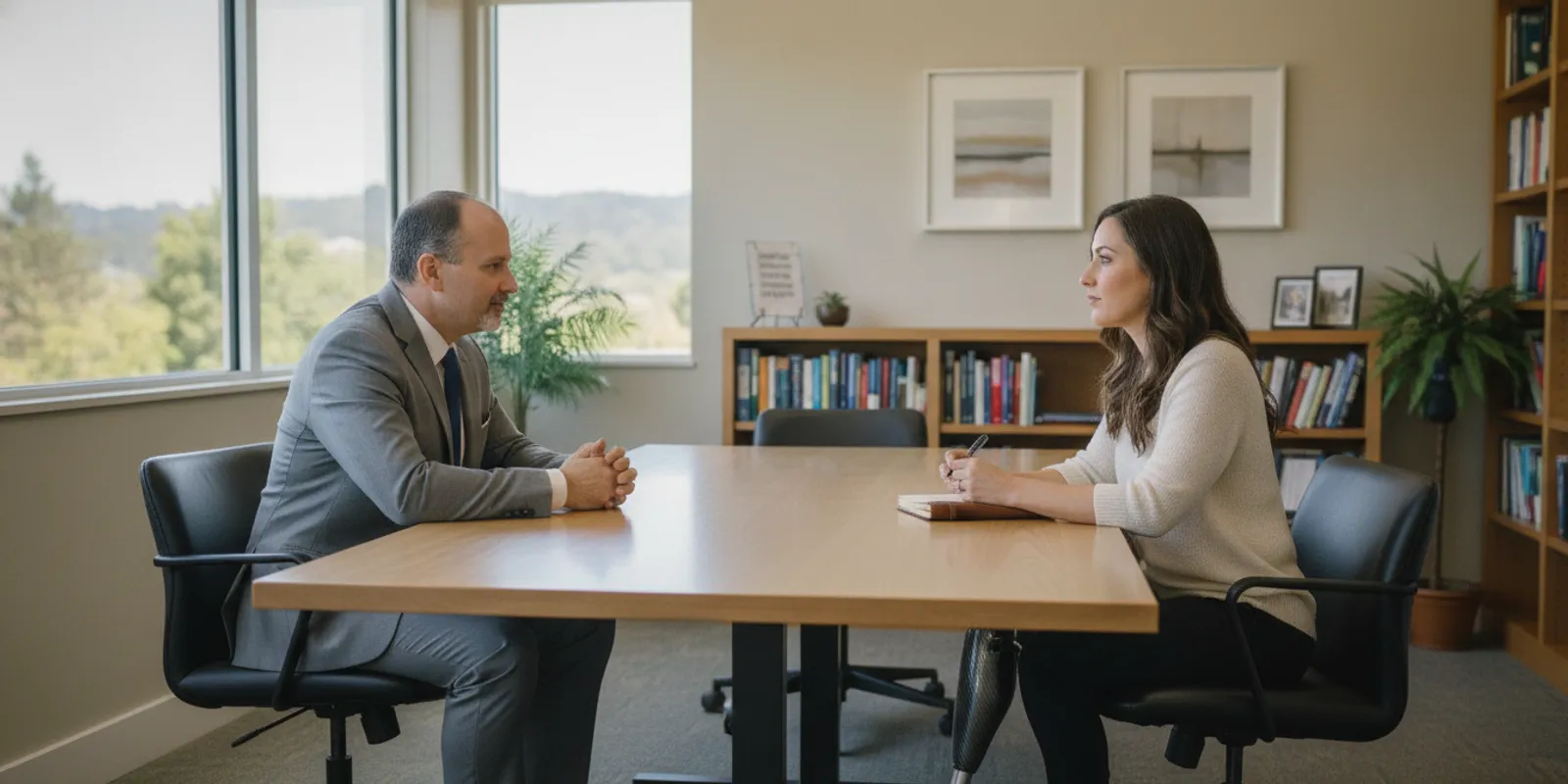
An amputation can change daily life in ways that unfold long after the initial emergency care. If you are searching for an Amputation and Limb Loss Injury Lawyer California, start by understanding what information can help explain how the injury happened, what care is needed, and how life has changed. The right next steps depend on the facts, the recovery process, and who may be responsible.
Call Weinberger Law Firm at 916-357-6767.
What should you understand first after an amputation injury?
Focus first on urgent medical care and personal safety. A legal claim should not interfere with treatment decisions. When it is practical, keep records and notes that may later help explain the accident and its effects. You do not need to have every document, know the final outcome of treatment, or decide immediately whether to pursue a claim before asking questions about your options.
An amputation may be traumatic, such as a loss caused by a collision or workplace incident, or it may occur after a serious injury leads to surgery. The circumstances matter. A claim generally requires evidence connecting another party’s conduct or a dangerous condition to the injury. The fact that an amputation occurred, by itself, does not establish who was at fault or what a claim may be worth.
Keep important communications and records in one secure place. If family members are helping, choose one person to track dates, documents, and questions. That can reduce the burden on the injured person and make it easier to notice missing records.
It may help to divide the first days into manageable tasks instead of trying to solve every legal and practical issue at once. One person can keep a short incident timeline, another can save bills and insurance letters, and the injured person can focus on care and recovery. Confirm that any helper has permission to handle private information. If the person is not able to manage paperwork, a family member can ask providers and insurers what authorization is needed before requesting records or discussing the claim.
What information can help explain how the accident happened?
Write down what you remember as soon as you are able. Include the date, approximate time, location, direction of travel or activity, people involved, and what happened just before and after the injury. Separate what you personally observed from what someone else told you. Memories can change with time, and a clear contemporaneous account can help guide later investigation.
When safe and permitted, preserve photographs or video of the scene, vehicles, equipment, property conditions, visible injuries, and relevant signs. Record the names and contact details of witnesses. If police, a property owner, an employer, or another organization prepared an incident report, keep a copy or note where and when it was made. Do not enter a dangerous area or put yourself at risk to collect evidence.
The event may involve a car, truck, motorcycle, pedestrian collision, bicycle, public transportation, or a fall on someone else’s property. For example, a person injured in a vehicle collision near Auburn may want to preserve the crash details and available witness information; the firm also has a car accident resource that illustrates one type of collision claim. A truck crash or a fall can raise different questions about vehicle records, site conditions, or who controlled the area.
Evidence can disappear or become harder to obtain. A damaged vehicle may be repaired, a business may overwrite surveillance footage, and road or worksite conditions may change. If you know that a camera, vehicle, machine, or other physical item may contain evidence, note who controls it and where it is located. Do not take or move property that is not yours. An attorney can advise whether and how to request preservation, while you keep the information you already have.
Try to preserve original files rather than relying only on screenshots or edited copies. Save the complete photo or video file, note when and by whom it was taken, and make a backup. If you send a copy to an insurer or another organization, keep the original and a record of what was sent. These small steps can help clarify how an image relates to the event without asking you to investigate the accident yourself.
Which records can show the injury’s full impact?
Keep copies of records that show the course of care and the practical effects of the injury. These may include hospital and surgical records, discharge instructions, rehabilitation notes, prosthetic or assistive-device records, invoices, prescriptions, and follow-up appointments. Save bills and insurance explanations of benefits, even if the final amounts are not yet clear.
Also keep information about changes to work, household responsibilities, transportation, hobbies, sleep, and day-to-day activities. A simple dated journal can note what tasks are difficult, what assistance is needed, and how that changes over time. Avoid trying to predict permanent limitations. Let treating professionals document medical issues, and describe your own lived experience accurately.
Medical records tell only part of the story. Employment schedules, pay statements, leave records, and communications about missed work may help document income disruption. Receipts for transportation, home adjustments, or other injury-related expenses can also be useful. Keep the originals when possible and store digital copies with dates and descriptive file names.
An academic article available through PubMed Central examines mobility changes in individuals with dysvascular amputation. That research concerns a particular group and does not predict what any one injured person will experience. For an injury claim, the practical point is to document function and needs over time, rather than focusing only on the date of surgery.
A timeline can make a large record set easier to understand. For example, note the date of a hospital discharge, the start of rehabilitation, when a new device was fitted, and when a work duty or household task changed. Match each entry to a document, if one exists, but keep personal notes clearly separate from medical opinions. If a treatment record contains an error or leaves out an important detail, raise it with the provider through the provider’s process rather than altering the record yourself.
Consider recording both needs and abilities. A useful entry might explain that a person can prepare a meal but currently needs help carrying items, or that a trip to an appointment takes longer because of transportation or mobility arrangements. Concrete examples are more useful than broad conclusions because they show what changed and when. Do not force a daily journal if it becomes burdensome; occasional dated notes or a helper’s observations may be more manageable.
How can you organize evidence without creating extra stress?
Use a simple folder system instead of trying to build a formal case file. A practical structure might include:
- Accident: photos, incident or police reports, witness details, and notes about what happened.
- Medical care: visit summaries, referrals, rehabilitation records, prescriptions, and device-related documents.
- Expenses and work: bills, receipts, insurance notices, wage information, and leave communications.
- Daily life: dated notes about assistance, activities, transportation, and changes in routine.
- Communications: letters, emails, claim numbers, and notes of calls with insurers or other parties.
For paper records, use labeled folders or a single binder and keep originals in a safe place. For electronic files, choose a consistent naming format such as date, source, and document type. For example, “2026-10-14 hospital discharge” is easier to find than “scan004.” Keep passwords private and avoid sending sensitive medical documents through a link you do not recognize.
Do not alter photographs, edit original messages, discard damaged equipment, or post detailed accounts of the incident on social media. If an insurer or another party asks for a recorded statement, broad medical authorization, or a signed release, you can ask what the document covers and take time to understand it before responding. Do not guess when you do not know an answer.
Avoid treating the folder as a reason to delay care or seek advice. Some records can be obtained later, and people may not have the energy or ability to organize everything immediately. Write down what exists and where it might be, then update the list when it is practical. If someone is helping, make a simple index so the injured person does not need to retell the same details each time.
What legal and insurance questions may affect a California claim?
Responsibility may be disputed. An insurer may ask how the event occurred, whether a person or organization had notice of a hazard, or whether more than one person contributed. The evidence needed depends on the setting. A collision may involve driver conduct and vehicle information. A fall may require details about the condition, who maintained the property, and how long the condition existed. A work-related incident can involve separate benefits and third-party questions.
Insurance coverage also matters. There may be more than one potentially relevant policy, and the existence of coverage does not itself establish fault or guarantee payment. Keep claim correspondence and policy information you already have, but avoid assuming that an early offer addresses future needs. The timing and terms of any release matter because signing one can affect the ability to pursue additional claims.
California filing deadlines depend on the type of claim and the parties involved. A claim involving a public entity can have a shorter preliminary claim-filing period than an ordinary injury lawsuit. Special circumstances may also change how a deadline applies. Do not rely on a general online article to calculate your own date; promptly ask a California attorney to assess the applicable deadlines and preserve options.
Fault questions can also affect a case. If an insurer says you share responsibility, that statement is not a final legal determination. The account of the incident, witness information, records, and other available evidence can all matter. Keep your description truthful and consistent, and seek advice before making assumptions about how fault rules apply to your specific facts.
Different incident settings can create different investigative tasks. In a commercial vehicle collision, for instance, there may be information about the vehicle, driver, route, or company procedures that is not available to an injured person. A property fall may involve maintenance records or a prior report about the condition. In an event involving a public agency, it is especially important to identify the agency and date promptly so a lawyer can assess any special claim procedure. A truck accident resource gives an example of how the type of event can shape the questions, but each incident requires its own fact review.
If you speak with an adjuster, listen carefully and take notes about the caller, company, claim number, requested documents, and response date. You can ask for requests in writing and clarify whether the call is about your own policy or another party’s insurer. Do not speculate about an uncertain detail or agree that an injury is fully understood while care is ongoing. If a deadline is mentioned, record it and seek advice rather than relying on a verbal summary.
What losses may need to be documented?
An injury claim may address different categories of harm, depending on the evidence and applicable law. These can include reasonable medical expenses, future care needs supported by appropriate evidence, lost income, changes in earning ability, and the physical and emotional effects of the injury. No checklist can establish the value of a particular case. The nature of the injury, available coverage, evidence of responsibility, and individual circumstances all matter.
For limb loss, relevant issues can include continuing care, rehabilitation, prosthetic fitting and maintenance, accessibility needs, and assistance with daily activities. The details should be supported by appropriate records and evidence, not assumptions. Keep information about needs as they arise, and speak with qualified care providers about medical questions.
It can be useful to distinguish expenses already paid from costs that are expected or still being reviewed. Keep a bill even if insurance has paid part of it, and record the amount paid, the remaining balance if shown, and any dispute or adjustment. Do not assume that a quoted device or care expense will necessarily be covered or recoverable. The amount and treatment of a claimed loss depend on evidence, applicable law, and the particular circumstances.
For an overview of the kinds of serious injury matters the firm discusses, readers in Antelope can review the local personal injury resource. Other accident circumstances can call for different records, such as information connected with a train accident. These examples are not a substitute for evaluating the specific facts of an injury.
Household support is another area people may overlook when first collecting information. If a relative takes time off work to help with transportation, appointments, meals, or daily tasks, keep a basic record of the dates and assistance provided. The purpose is not to assign a legal value on your own. It is to preserve a clear account that can be reviewed with the other records and evaluated under the facts and applicable law.
What can you compare when considering legal help?
You can ask how a lawyer would approach the records, what deadlines may apply, and how communication will work. A focused conversation should help you understand the process and the questions that still need answers. You do not need to share private details in a public forum or make a decision based only on advertising.
| Question to ask | Why it matters | What to clarify |
|---|---|---|
| Who will handle the matter and speak with me? | Serious injury cases can involve many records and ongoing questions. | Ask how attorney involvement and routine updates work. |
| What records should I preserve now? | Accident evidence, care records, and expense information may come from different sources. | Ask what is useful, what needs follow-up, and what should not be altered or discarded. |
| Which deadlines could apply? | Deadlines vary by claim type and potentially responsible party. | Ask for a discussion of the facts that may affect timing rather than relying on a generic date. |
| How are fees and case costs handled? | Written terms help you understand the financial arrangement before signing. | Ask when fees are owed, how costs are treated, and what the agreement says if there is no recovery. |
| What does the next step involve? | You should know what information is requested and what will happen after the conversation. | Ask what documents to bring and whether any form or release requires review. |
It is reasonable to take notes during an initial discussion or ask a family member to join if that is helpful. You can ask how the firm communicates, who will be your point of contact, what decisions require your approval, and what information is still missing. If you do not understand a fee term, request a plain-language explanation before signing anything. A consultation does not obligate you to hire counsel, and contacting a firm does not itself mean that it has accepted representation.
Weinberger Law Firm represents injury victims in California, including people in the Roseville, Sacramento, and Folsom areas. Joseph B. Weinberger has 38 years of California personal-injury experience, and the firm offers a free consultation. The firm works on a contingency-fee basis: clients pay nothing upfront and pay a fee only if the firm recovers compensation, under the terms of the fee agreement. The firm has published settlements and verdicts, including multi-million-dollar results; past outcomes depend on their own facts and do not predict another case. Ask for a clear explanation of fees and costs before deciding whether to retain counsel.
What should you do before an insurance conversation or consultation?
Gather what is readily available, but do not delay getting advice just because a file is incomplete. A short preparation list can make a first conversation more useful:
- Write down the date and location of the incident and a brief factual account.
- List the people and organizations involved, plus any witnesses you can identify.
- Note what care has occurred and any follow-up or rehabilitation already scheduled.
- Collect key bills, insurance letters, incident reports, and work records if available.
- Write down your questions, including deadlines, potential insurance coverage, fees, and who will communicate with you.
Bring or mention any upcoming appointment, requested statement, insurer deadline, or document you have been asked to sign. If you cannot find a report or bill, note who may have it instead of spending hours trying to retrieve it before the first conversation. Do not leave out an unfavorable detail because it seems embarrassing or confusing; a complete and accurate account is more useful than a polished version.
Do not send sensitive records through an unfamiliar link or assume that an online form or call means a lawyer has agreed to represent you. Ask how information will be used and whether the firm has formally agreed to take the matter. A bus accident resource may help explain a distinct accident setting, while the details of an amputation claim still need an individual review.
Call Weinberger Law Firm at 916-357-6767 to discuss your questions.
Frequently Asked Questions
Does an amputation automatically mean someone else is legally responsible?
No. A serious injury alone does not establish negligence or identify a responsible party. The circumstances, evidence, applicable law, and possible defenses need to be evaluated.
Should I wait until rehabilitation or prosthetic care is complete before asking about a claim?
You do not necessarily need to wait to ask questions. Some care and effects may continue over time, but deadlines can apply before treatment is complete. An attorney can discuss timing and what information may be useful while care continues.
What if the accident happened at work or involved a public entity?
Those circumstances can raise additional rules, benefits, parties, or notice requirements. Preserve relevant records and get advice promptly because the procedures and deadlines may differ from an ordinary claim between private parties.
Can a lawyer tell me what my case is worth during the first conversation?
A responsible evaluation depends on facts, records, applicable law, and available coverage. No article or brief call can promise a particular result. You can ask what further information would be needed to assess the issues.
Does contacting a law firm create an attorney-client relationship?
Not by itself. A consultation or submitted form is not a promise that the firm will take the case or individualized legal advice. Ask the firm to explain its process and confirm in writing if representation is accepted.
What is a practical next step?
After limb loss, it is reasonable to take matters one step at a time: prioritize care, preserve what information you can, and ask a California attorney about deadlines and possible responsibility before signing claim documents. A free consultation can help you understand what questions merit closer review, while any decision about representation remains yours.