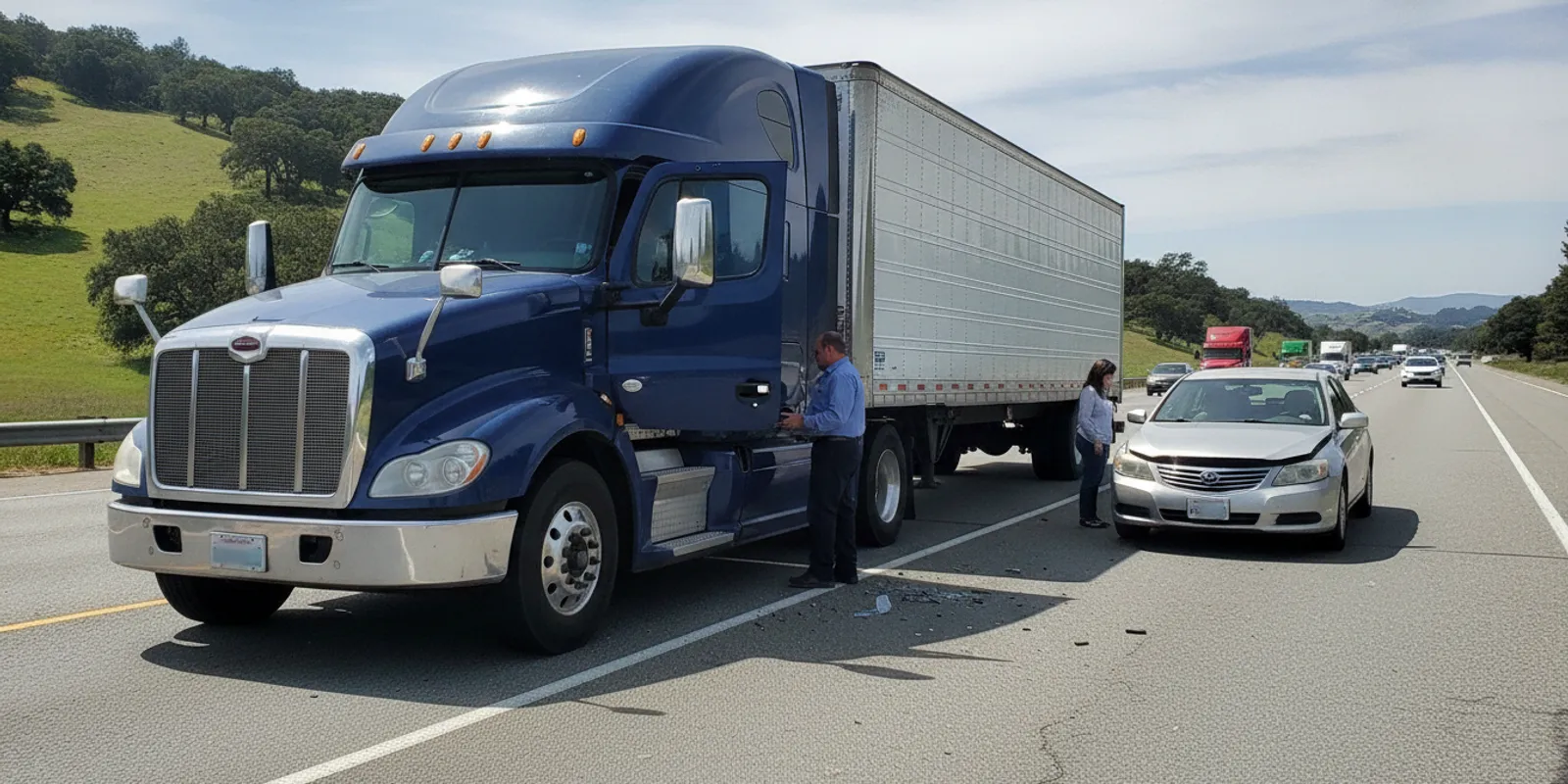
After a collision with a commercial truck, it can be hard to know whether the driver, the trucking company, or someone else may be responsible. Understanding trucking company liability after a California accident starts with the facts: how the crash happened, who controlled the work, and whether a safety failure contributed. A careful record of the event can help clarify those questions.
Call Weinberger Law Firm at 916-357-6767
Who may be responsible after a California truck accident?
A truck crash does not automatically make the trucking company legally responsible. Liability depends on evidence of negligence and how that conduct contributed to the injuries. More than one party may have played a role, so an investigation looks beyond the location of the impact.
Potentially responsible parties can include:
- The truck driver: A driver may have failed to use reasonable care, such as by driving too fast for conditions, following too closely, or failing to keep a proper lookout.
- The trucking company: The company may be relevant if its own decisions or practices contributed, or if the driver was acting within the scope of work and the law makes the employer responsible for the driver’s conduct.
- A maintenance or repair provider: Records may point to a mechanical problem and raise questions about who inspected or repaired the vehicle.
- A cargo loader or shipper: Improperly secured or distributed cargo may affect vehicle stability or spill onto the roadway.
- Another driver or entity: A separate vehicle, road condition, or other circumstance may have contributed to the collision.
These are possibilities to investigate, not conclusions about any particular crash. The company’s connection to a driver, vehicle, or shipment does not by itself prove fault. Evidence must connect a specific act or omission to the event and the injury.
When can a trucking company be responsible for a driver’s conduct?
One important question is whether the driver was working for the company and acting within the scope of the job when the collision occurred. That relationship may support responsibility for the driver’s conduct under applicable law. The details matter: an employment label alone may not resolve who controlled the work or whether the driver was performing a work task at the time.
A separate question is whether the company itself acted negligently. For example, an investigation might examine whether the company ignored a known safety issue, failed to maintain a vehicle, or made a decision that contributed to unsafe operation. Each theory requires facts; an accident alone does not establish that the company violated a duty.
Useful records may include dispatch instructions, work schedules, driver qualification and training materials, maintenance history, inspection documents, and communications about the trip. Some of these records may be held by the company or another business rather than the injured person. Their existence and availability depend on the circumstances.
Responsibility can also depend on the driver’s relationship with the carrier. A truck may display one company name while the driver, vehicle owner, dispatcher, or freight broker has a different role. The paperwork for the trip and the actual working arrangement may help explain who assigned the route, who had authority over the vehicle, and who maintained it. A logo alone cannot answer those questions.
It can help to separate two issues when reviewing the facts: whether the driver acted carelessly, and whether a company or other party had its own role in the events. For instance, a driver may have made an unsafe maneuver, while separate records raise a question about vehicle condition or trip instructions. These possibilities need evidence rather than assumption. An investigation may find that only one party was involved, that several contributed, or that the available information does not support a claim against a particular party.
What evidence can help explain how the crash happened?
Truck collisions can involve several explanations at once. Evidence gathered close to the event may help preserve details before vehicles are repaired, memories fade, or electronic information is overwritten. If you are physically able, prioritize safety and medical care; do not put yourself in danger to collect evidence.
- Scene and vehicle photographs: Images of vehicle positions, damage, skid marks, debris, traffic controls, weather, and visibility can help show the conditions.
- Witness details: Names and contact information for people who saw the collision may help investigators follow up. Note what each person says without pressing them to agree with a particular account.
- Official records: Keep the incident or police report information, insurer correspondence, and any reference numbers provided.
- Vehicle and maintenance records: Inspection, repair, and maintenance documents may help identify or rule out a mechanical issue.
- Trip and work records: Dispatch, route, delivery, and scheduling records may help establish what the driver was doing and under whose direction.
- Electronic data: A truck or related system may have records relevant to speed, braking, location, or operation. What exists and how it can be obtained varies by vehicle and company.
- Medical documentation: Visit summaries, treatment instructions, bills, and records of symptoms help track the injury and its effects.
Do not try to access or remove a company’s records or equipment yourself. Preserve what you already have, make a dated note of where it came from, and ask an attorney promptly if you are concerned that important records may not be kept indefinitely.
Keep original files when possible. If you take pictures on a phone, avoid editing the only copy; make a backup and note when and where the images were taken. A short caption such as “northbound lane, shortly after the collision” can make a photo easier to understand later. If a witness gives you contact information, record it accurately and keep the note separate from your own recollection.
Evidence should be organized by source and date. One folder can hold photographs and video, another medical and expense records, and another insurer or police correspondence. Keep a simple index listing each item, when you received it, and what it shows. This does not prove fault by itself, but it can make a later review more efficient and help identify missing information.
What should you do in the first days after a truck crash?
There is no single checklist that fits every collision, but a few practical steps can help protect your health and keep the basic facts organized:
- Get medical attention. Seek emergency care for urgent symptoms and follow medical instructions. Tell the clinician about symptoms even if they seem minor or develop later.
- Report the collision as appropriate. Follow instructions from responding authorities and keep any report or incident number.
- Write down what you remember. Note the date, time, location, direction of travel, road and weather conditions, and a plain account of what occurred. Separate what you saw from what you were told.
- Save records in one place. Keep photographs, medical documents, receipts, work-absence information, and insurer letters. Back up digital files and preserve original versions.
- Be careful with recorded statements. You may need to communicate with insurers, but avoid guessing about details you do not know or minimizing symptoms. You can ask what a request is for and consider legal guidance before providing a recorded statement.
- Do not rush to sign a release. A release may affect claims. Read documents carefully and understand what they cover before signing.
California Courts provides general information about personal injury cases, including the basic nature of a civil injury claim. It is general information, not a review of the facts or deadlines for an individual matter.
When writing your account, avoid filling gaps with estimates. If you do not remember the exact time or distance, say so. Keep a distinction between what you personally observed and what another person later told you. This care makes your notes more reliable and avoids turning an early impression into a firm conclusion.
Also note practical effects that may not appear in a police report: a damaged child seat, medication purchases, help needed with routine tasks, or a shift you missed. Save receipts and write down the date and reason. Do not throw away damaged personal property until you have documented it, unless it creates a safety or sanitation concern.
How do the possible sources of responsibility compare?
The table below is a starting point for organizing questions. It is not a finding that any particular party is liable, and several rows may apply to one crash.
| Potential source | Questions to investigate | Records or details that may matter |
|---|---|---|
| Driver conduct | What did the driver see, do, and have time to do? | Witness accounts, scene evidence, vehicle data, incident records |
| Company decisions | Was the driver working, and did company conduct contribute? | Work relationship, dispatch communications, training or safety records |
| Vehicle condition | Did a mechanical issue contribute, and who inspected or repaired the truck? | Maintenance, inspection, repair, and component records |
| Cargo handling | Was the load secured and distributed in a way that allowed safe operation? | Loading information, shipping records, photographs, witness observations |
| Other road users or conditions | Did another driver or an external condition play a part? | Road layout, signals, weather, other vehicle evidence, public records |
For example, suppose a truck changes lanes and a nearby driver reports that the truck drifted before impact. Photographs might show damage and lane positions, while electronic data or witnesses may clarify speed and braking. If the truck had a tire or brake issue, inspection and repair records could become relevant. If cargo shifted, loading documents and photographs may help show whether the load played a part. None of these facts should be treated as proof in isolation; they are leads that need to be checked against the full sequence.
Likewise, a collision involving a delivery truck during a work route may raise different questions from a truck being used privately. The truck’s markings, the driver’s statement, and a delivery schedule may give clues, but additional records may be needed to understand the working relationship and purpose of the trip. Where several entities appear in documents, write down each name and role instead of assuming they are interchangeable.
How can injury and financial effects be documented?
Responsibility is only part of a claim review. Records also help describe what the injury changed. Keep a simple timeline of appointments, symptoms, treatment instructions, and effects on ordinary activities. Save bills and receipts, and note missed work or changes in duties. If you are self-employed or have variable hours, retain records that show the work disruption rather than relying only on memory.
Do not assume that every expense or loss will be treated the same way. The relevant records and the amount that may be considered depend on the injury, evidence, applicable law, and other facts. A medical record is not a substitute for medical advice; follow your clinician’s guidance about care.
A useful symptom log can be brief and factual. Record the date, what you experienced, how long it lasted, and whether it affected sleep, driving, household tasks, or work. Do not exaggerate or try to make each day sound the same. An accurate record can show both improvement and setbacks, and may help you recall details when speaking with a clinician.
For work effects, keep schedules, pay statements, employer correspondence, or other records that reflect your usual work and any changes after the collision. If you used paid leave, record that too. Save receipts for travel to appointments and other accident-related spending, but keep them separate from unrelated household expenses. These documents help describe the impact; they do not by themselves determine what a claim is worth.
What insurance issues may arise?
A commercial vehicle collision can involve more than one insurance policy. The truck, driver, employer, cargo-related parties, or another motorist may have separate coverage, but the policies and their relevance vary. An insurer may investigate fault and request documents or statements.
Keep a log of calls, the name and organization of each person you speak with, the date, and any follow-up requested. Ask for important requests in writing when possible. Avoid speculating about the cause or promising that a document exists if you are unsure. If multiple insurers contact you, note which vehicle or party each represents.
For a plain-language overview of truck-accident matters, see the firm’s truck accident information. A page about a particular community is not a statement that the same facts or local rules apply to every collision.
Keep copies of anything you send and record the date and method. If an adjuster asks for a broad authorization, release, or recorded interview, ask what it covers and why it is needed. Do not assume every request has the same purpose, and do not feel you must answer a question by guessing. You can take time to understand the request and seek guidance before responding.
Insurance discussions can begin before the full extent of an injury is clear. If symptoms or treatment continue, organize new records as they arrive and avoid treating an early conversation as the final account of your condition. Keep your communication factual: identify the date of the crash, provide requested documents you are comfortable sharing, and correct an error if you notice one.
What deadlines should you check?
Deadlines depend on the parties and circumstances. A claim involving a public entity can have a different, shorter claim-presentation process than an ordinary claim against a private party. Other timing rules may apply to filing a lawsuit, insurance notice, or a particular claim. Do not assume that discussions with an insurer pause a legal deadline.
Write down the crash date and identify every potentially involved party, including any public agency or public vehicle. If you are unsure whether a public entity was involved, that is a reason to check promptly rather than wait. The California Courts’ general personal-injury information is a starting point, but it does not determine a deadline for your specific circumstances.
Make a list of dates that may matter: the collision, first notice to an insurer, any written demand, and any communication identifying a public agency. Save envelopes and emails that show when a notice arrived. If a truck appears to belong to a government department or a public contractor, do not rely on its appearance alone to decide which rules apply. Confirm the entity and ask about the applicable process promptly.
When may a legal review be useful?
A legal review may help when responsibility is disputed, several parties may be involved, serious injuries require ongoing care, or important records are controlled by a company. A lawyer can assess the available facts, explain options, and identify issues that may need further investigation. No review can promise a particular result.
Weinberger Law Firm represents people injured in California accidents, including truck crashes. The firm offers a free consultation and works on a contingency-fee basis: clients pay nothing upfront and pay a fee only if the firm recovers compensation. The specific fee arrangement and case costs should be explained in the agreement.
For general information about the firm’s California truck accident practice, visit its truck accident page. The circumstances of an individual collision determine whether and how a claim may proceed.
Before a conversation, you can gather the crash date and location, report number if available, names of other parties, photographs, and a short list of questions. You do not need to solve the liability question yourself or obtain company records before asking for a review. If you are still receiving treatment, mention that and bring the information you have; missing documents can be identified as part of the discussion.
When choosing what to ask, focus on your specific uncertainty. You might ask what records could clarify the driver’s work status, whether a company or another entity may need to be identified, and whether any timing issue needs prompt attention. A consultation is an opportunity to explain the facts and understand possible next steps, not a guarantee that a claim will be accepted or succeed.
Call 916-357-6767 to request a free consultation
Frequently Asked Questions
Is a trucking company automatically liable if its truck hits my vehicle?
No. A collision alone does not establish the company’s liability. The investigation must examine the driver’s conduct, the work relationship, any company conduct that may have contributed, and the connection between the evidence and the injury.
Can both a driver and a trucking company be responsible?
Possibly. A driver’s actions and a company’s separate conduct may both be relevant. Whether either or both are legally responsible depends on the facts and applicable law.
What if I do not know whether a truck defect contributed?
You do not need to diagnose a mechanical problem yourself. Preserve photographs and incident information, avoid altering relevant evidence, and note any unusual vehicle behavior you observed. Maintenance and inspection records may help answer the question.
Should I speak with the trucking company’s insurer?
You may receive calls or document requests. Be accurate, avoid guessing, keep a record of communications, and consider getting legal guidance before giving a recorded statement or signing a release.
What if a public agency may be involved?
Check promptly because a claim involving a public entity may have a separate claim-presentation process and shorter deadlines. The correct steps depend on the entity and circumstances.
What is a practical next step?
Start with your health, preserve the records you already have, and make a clear timeline while the details are fresh. If you have questions about potential trucking company liability after a California accident, a free consultation can help you understand what information may matter in your situation.