A motorcycle crash can leave you managing pain, medical appointments, damaged gear, and insurance calls at the same time. The first decisions matter because photos, witness details, medical records, and your own account of what happened can become important later.
Call Weinberger Law Firm at 916-357-6767 for a free consultation.
A California Motorcycle Accident Attorney can help you protect evidence, evaluate how the collision happened, respond to insurer questions, and understand whether comparative-fault arguments may affect your claim. Start by getting medical care, documenting the scene when it is safe, and avoiding statements that guess about fault. A free consultation can help you understand your options before early claim decisions narrow them.
This roadmap explains what to do from the crash scene through the first attorney consultation, including how to preserve information and handle early communications. Begin with the immediate safety and documentation steps that can support both your recovery and a clearer account of the collision.
What Should You Do Immediately After a California Motorcycle Crash?
The first minutes after a motorcycle crash can be confusing, especially if you are hurt or traffic is still moving around you. California safety guidance emphasizes helmet use, awareness by all road users, and reducing impaired riding. After a collision, focus on safety and accurate documentation rather than arguing about who caused it.
- Move to safety if you can do so without worsening an injury. Turn on hazard lights or use other warnings when possible, and call 911 for emergency help. Do not remove your helmet or move someone else unless necessary for immediate safety or directed by trained responders.
- Get medical care promptly. Allow emergency personnel to evaluate you, and follow up with a medical provider if symptoms develop or continue. Tell the provider about every symptom, including pain, dizziness, numbness, or difficulty concentrating. Keep discharge instructions, test results, prescriptions, bills, and later treatment records.
- Report the collision and exchange information. Cooperate with responding officers and obtain the incident or report information when available. Exchange names, insurance details, license information, and vehicle descriptions with other involved drivers. Avoid guessing about speed, distance, or fault.
- Document the scene when it is safe. Take photographs or video of the roadway, traffic controls, vehicle positions, visible injuries, motorcycle damage, skid marks, debris, and conditions that may have contributed to the crash. Ask witnesses for their names and contact information. Do not interfere with evidence or put yourself in traffic to get a picture.
- Preserve your gear and records. Keep the helmet, riding gear, damaged parts, and motorcycle in their post-crash condition. Save repair estimates, towing records, medical documents, insurance correspondence, and a simple account of what happened while your memory is fresh. These materials may help clarify what occurred.
- Keep communications factual. Do not admit fault, speculate about injuries, post detailed crash commentary online, or give a recorded statement before you understand what is being requested. You can report the collision without accepting another person’s version of events.
For a more detailed checklist, review these steps after a California motorcycle accident. The safest response is one that protects your health first and preserves reliable information for later review.
When Should You Contact a California Motorcycle Accident Attorney?
You do not have to wait until your medical treatment is complete, an insurer makes an offer, or you know the full value of your losses before seeking legal guidance. A consultation can help you understand what information matters and what steps may protect your options. It is especially worth considering early when the crash caused a significant injury, required emergency care, or has affected your ability to work or manage daily activities.
Situations that deserve prompt attention
Contact a California motorcycle accident attorney soon if fault is disputed. For example, an insurer or another driver may claim that you were speeding, failed to yield, or otherwise caused the collision. Motorcycle cases can also involve unfair assumptions about riders. A careful review of photographs, traffic-camera footage, witness accounts, vehicle damage, and the roadway may provide important context before memories fade.
You should also consider a consultation if an insurance adjuster pressures you to give a recorded statement, sign a release, or accept an early payment. You may need time to understand your injuries and the coverage available before making decisions. Avoid guessing about medical symptoms or liability in conversations with an insurer. You can provide basic information about the crash, but ask questions before agreeing to statements or documents that could affect a claim.
When the consequences are especially serious.
If a motorcycle collision caused a fatality, surviving family members may need guidance while dealing with grief, medical expenses, insurance communications, and potential wrongful-death issues. A consultation may also be useful when evidence could disappear, including damaged vehicles, roadway conditions, surveillance footage, electronic data, or witnesses who may be difficult to locate later. Preserving these materials does not establish fault by itself, but it can help professionals evaluate what happened.
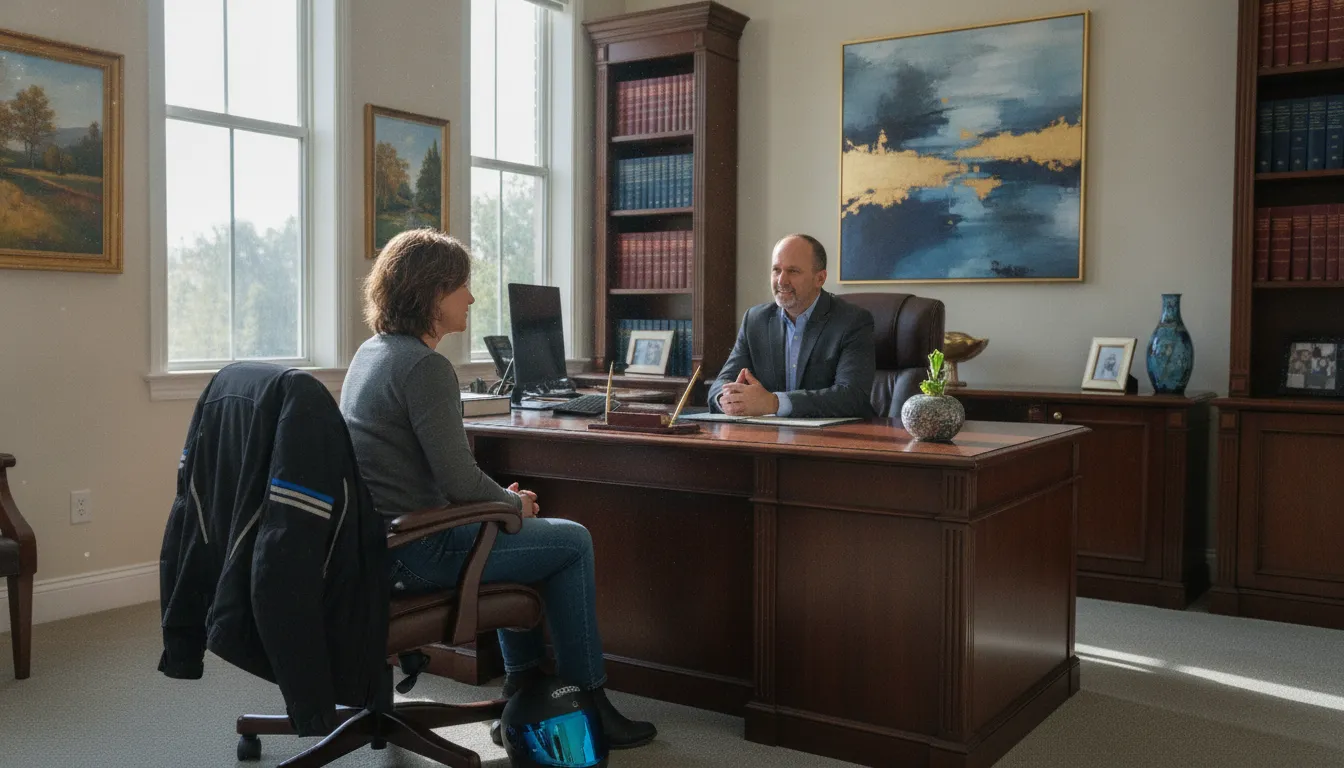
Weinberger Law Firm offers a free consultation for people injured in California motorcycle collisions. Its contingency-fee representation includes no upfront legal fees, while the details of any representation depend on the facts of the case. The firm serves clients statewide, including Roseville, Sacramento, Folsom, and surrounding Northern California communities. Speaking with an attorney early does not require you to predict the outcome. It gives you an opportunity to describe what happened, ask practical questions, and learn what next steps may fit your circumstances.
What Evidence Can Support a Motorcycle Accident Claim?
Evidence helps show what happened, how the collision affected you, and which facts may matter when liability is disputed. No single item guarantees a favorable result. A useful record often combines several sources that tell a consistent story.
Document the scene and the people involved.
If it is safe to do so, take photographs or video of the roadway, traffic controls, lane positions, visible injuries, debris, skid marks, lighting, and surrounding conditions. Preserve the original files when possible, including their dates and times. Gather names and contact information for witnesses, and note what each person actually observed rather than relying on memory later. A police report may also contain statements, diagrams, vehicle information, and the responding officer’s observations. It is important evidence to obtain and review, but it is not necessarily the final word on fault.
Preserve medical, equipment, and vehicle records
Keep medical records, discharge instructions, bills, prescriptions, and notes about symptoms and missed work. These materials can help connect treatment to the crash and show how injuries affected daily life. Do not discard a damaged helmet, jacket, gloves, boots, or other riding gear. Photograph the gear and store it safely, because its condition may provide useful information about the impact.
Photograph motorcycle damage before repairs if practical. Keep estimates, invoices, inspection reports, towing records, and communications with repair shops. Vehicle damage does not independently establish liability, but it can help investigators understand the collision. Data from nearby cameras or connected devices may also matter, so identify potential sources promptly before recordings are overwritten.
Build a clear claim timeline.
Write down the sequence of events while details are fresh: where you were traveling, what you noticed, when emergency services arrived, when symptoms began, and each significant medical or insurance communication. Save letters, emails, claim numbers, and recorded-statement requests from insurers. Do not guess when answering questions, and consider getting advice before giving a detailed recorded statement. For a practical overview of preserving records and taking early action, review these steps after a California motorcycle accident.
How Do Insurance and Liability Issues Affect a California Motorcycle Claim?
Insurance questions often begin before fault is fully established. An adjuster may ask how the crash happened, request a recorded statement, or seek permission to review medical records. Be accurate, but avoid guessing about speed, distance, or what another driver saw. A recorded statement can become part of the claim file, so it is sensible to understand what is being asked before answering in detail.
Coverage also requires careful review. The other driver’s policy, your own policy, vehicle damage, medical treatment, and available coverage may each raise different questions. Do not assume that an early offer reflects the full value of an injury claim or that a denial settles the liability issue. A lawyer can review the communications and explain the available options. Weinberger Law Firm provides practical guidance on insurance negotiations after a motorcycle crash.
Liability is based on evidence, not stereotypes about motorcyclists. Investigators may examine whether a driver failed to yield, turned improperly, ran a red light, or was speeding. The California Office of Traffic Safety identifies these behaviors as enforcement and safety concerns for motorcycle travel. Road hazards can matter too, including conditions that caused a rider to lose control or contributed to the collision. Photos, witness information, helmet and riding gear, vehicle damage, medical records, and scene details can help preserve the facts while they are still available.
| Issue | What it may affect | Practical response |
|---|---|---|
| Recorded statement | How the insurer characterizes the crash and injuries. | Answer truthfully, avoid speculation, and consider getting guidance before giving a detailed statement. |
| Failure to yield or another traffic violation | How responsibility is assigned | Preserve photographs, reports, witness details, video, and other evidence about the movement of each vehicle. |
| Comparative fault allegation | Whether the insurer argues that the rider shares responsibility | Review the complete sequence of events rather than accepting an assumption about the rider’s conduct. |
| Road hazard | Whether a roadway condition contributed to the crash | Document the location, condition, warnings, weather, and timing as soon as it is reasonably safe. |
Early fact review can reveal which evidence matters and which statements need clarification. It can also separate a coverage dispute from a liability dispute, which may require different responses. Because every claim depends on its specific facts, prompt legal review is useful before important communications or settlement decisions are made.
What Compensation May Be Available After a Motorcycle Crash?
The losses from a motorcycle crash can affect your health, work, transportation, and family life. Potential compensation depends on the injuries, evidence, insurance coverage, and how responsibility is evaluated in the specific case. Common categories may include:
- Medical expenses: This may include emergency care, hospital treatment, medication, rehabilitation, and other reasonable care related to the crash.
- Lost income: If injuries keep you from working, a claim may address missed wages. The analysis may also consider how the injury affects your ability to earn in the future.
- Property damage: Damage to the motorcycle, riding equipment, and other personal property may be part of the claim when supported by the facts and applicable coverage.
- Pain and suffering: Compensation may account for physical pain, emotional distress, loss of enjoyment, and the disruption caused by the injury. These effects are personal and cannot be evaluated from medical bills alone.
- Future needs: Serious injuries may require ongoing treatment, assistance, rehabilitation, or changes to daily living. A careful evaluation should address those needs rather than focus only on immediate expenses.
- Wrongful death: When a crash causes a death, eligible family members may have claims for losses recognized under California law. The available damages depend on the circumstances and the family’s relationship to the person who died.
Motorcycle claims can also involve disputes about whether a driver saw the rider, failed to yield, turned improperly, or is unfairly blaming the motorcyclist. Evidence such as photographs, witness accounts, medical records, employment information, and vehicle damage can help clarify what happened. For a closer look at how these cases may differ from car collisions, see these motorcycle and car accident claim differences.
A consultation can help identify which losses may apply and what documentation may be useful. Weinberger Law Firm offers free consultations and contingency-fee representation, meaning there is no upfront attorney fee and the firm is paid only if it recovers compensation.
What Happens During a Motorcycle Accident Claim?
A motorcycle accident claim usually develops in stages, but no two cases follow exactly the same path. The process begins with an intake conversation about the collision, injuries, treatment, insurance coverage, and immediate concerns. A lawyer will use that information to identify urgent issues, explain possible next steps, and determine what additional facts need to be examined.
Investigation and evidence collection
Early investigation may include reviewing the crash report, photographs, video, witness accounts, medical records, motorcycle damage, and available roadway or vehicle information. The goal is to build a reliable account of what happened rather than rely on assumptions about the rider. This can matter when an insurer argues that the motorcyclist caused or contributed to the collision. Evidence may also help evaluate whether another driver, a road condition, or more than one factor played a role.
The claim team may organize medical documentation and track how the injury affects work, daily activities, and future care. It can also communicate with insurers so that important information is presented accurately and the injured person is not left to manage every request alone. For an overview of this stage, review these motorcycle accident insurance claim steps.
Demand, negotiation, and possible litigation
Once the medical and factual picture is sufficiently developed, the attorney may prepare a demand to the relevant insurer. Negotiations can involve liability, available coverage, documented losses, and the expected effect of the injuries. A demand is not a guarantee of payment, and the strength or value of a claim depends on its specific evidence.
If negotiations do not resolve the dispute, litigation may become an option. That can involve filing a lawsuit, exchanging information, taking testimony, and presenting the evidence in court. Many claims resolve before trial, but the appropriate path depends on the facts, coverage, injuries, and the parties’ positions. A Sacramento rider can also review the firm’s Sacramento motorcycle accident lawyer resource for local service information.
Throughout the claim, clients should receive updates about meaningful developments, requests for information, and decisions that require their input. Timing varies with the investigation, medical recovery, insurance response, and any court process, so no responsible attorney can promise a particular schedule or result.
How Does a Free Consultation and Contingency Fee Work?
A free consultation is an opportunity to explain what happened, describe your injuries, and ask how the claim process may apply to your circumstances. You do not need to have every answer before speaking with a lawyer. The purpose of the conversation is to identify important issues, such as potential liability, insurance communications, medical care, and evidence that may need to be preserved.
Before the consultation, gather what you reasonably can. Helpful information may include the crash date and location, contact and insurance information for the involved drivers. The police or incident report number, photographs or video, witness details, medical records or bills, and information about missed work. Bring copies of letters, emails, claim forms, or recorded-statement requests from an insurer. If you do not have these materials, do not delay asking for guidance. Your account of the collision and current symptoms can still provide a useful starting point.
Contingency-fee representation generally means you do not pay an attorney fee upfront. Instead, the attorney fee is collected if compensation is recovered for you. That structure can make it possible to seek legal help without paying an hourly retainer at the beginning of the case. It does not necessarily mean every expense or case-related cost is waived, however. Ask how fees, costs, medical liens, and other potential expenses are handled.
Read the representation agreement carefully before signing it. Make sure you understand the fee arrangement, responsibility for costs, how communication will work, and what happens if the representation ends. Ask questions about anything unclear and keep a copy of the signed agreement for your records. The arrangement should reflect the facts of your case and your informed understanding.
Call Weinberger Law Firm at 916-357-6767 for a free consultation.
Frequently Asked Questions
When should I contact a motorcycle accident lawyer in California?
Consider a consultation as soon as practical if you were seriously injured, fault is disputed, someone died, or an insurer is pressing you for information. Early legal guidance can help preserve evidence and identify coverage issues before important details are lost. You do not need to wait until treatment is complete to ask questions.
What should I do right after a motorcycle crash in California?
Move to safety if possible, call 911 when appropriate, obtain medical care, and report the collision. Take photographs of the scene, vehicles, road conditions, visible injuries, and protective gear. Collect witness contact information, avoid admitting fault, and keep records of treatment, expenses, missed work, and communications with insurers.
What evidence helps a California motorcycle accident claim?
Useful evidence may include photographs and video, the police report, witness statements, medical records, repair estimates, helmet and gear information, vehicle data, and a written timeline of events. Preserve original files and do not alter damaged equipment before it can be documented. The most helpful evidence depends on how the collision occurred and what issues the insurer contests.
Should I give a recorded statement after a motorcycle accident?
Ask what the statement is for, who is requesting it, and whether you have legal advice before agreeing. Give accurate information, but avoid guessing about speed, distance, fault, or the full extent of an injury that is still being evaluated. A recorded statement can become part of the claim record, so careful, factual answers matter.
Ready to Discuss Your Motorcycle Accident Claim?
A clear review of the crash, available evidence, and insurance issues can help you understand your options before deciding on next steps. Weinberger Law Firm offers free consultations for California motorcycle accident claims and represents injured people on a contingency-fee basis, so there is no upfront legal fee. Call Weinberger Law Firm at 916-357-6767 to talk with the team about your situation.