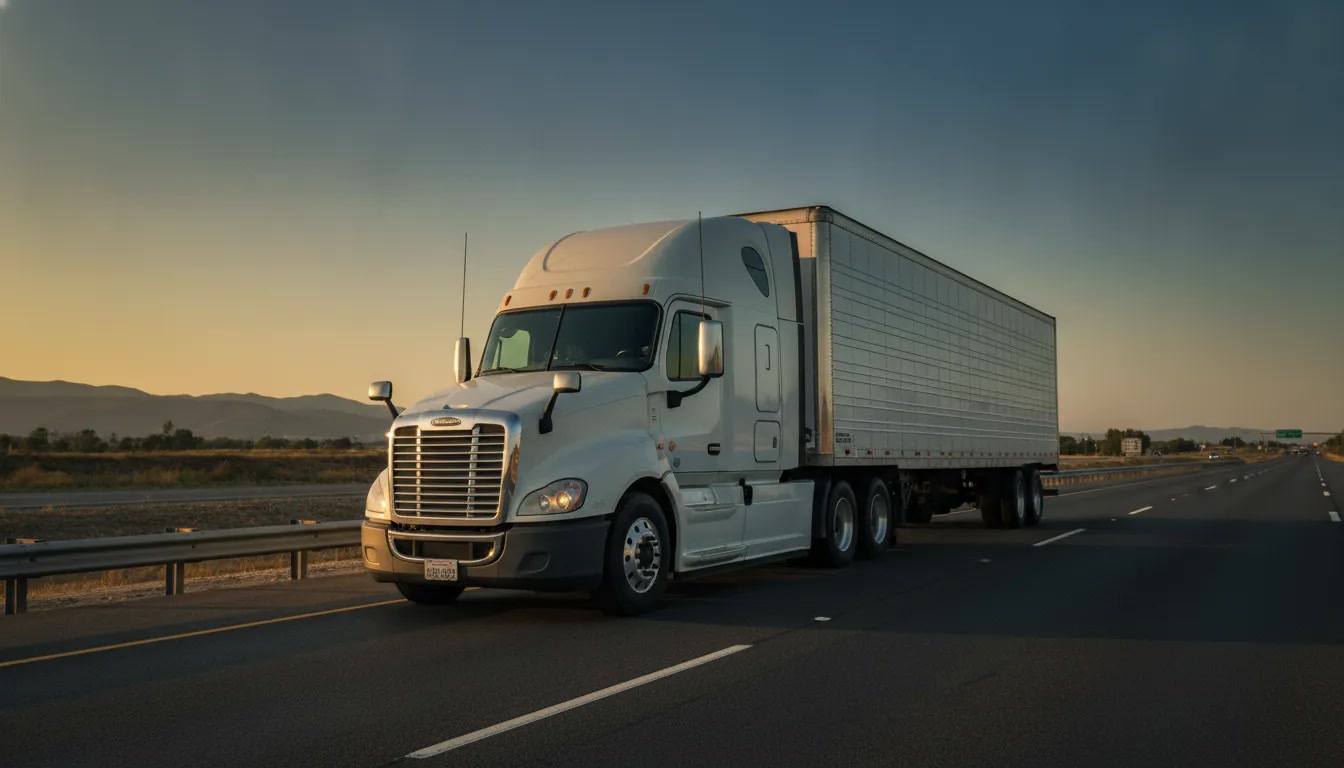
A semi truck accident lawsuit is not always a case against one driver. The name on the door, the company that dispatched the load, the shop that serviced the brakes, and the broker that arranged the haul can each sit in a different file. Filing against the wrong party, or only one of them, can leave the real coverage untouched.
Call Weinberger Law Firm at 916-357-6767 for a free consultation before you choose who to sue.
This guide covers who can be named in a California semi truck accident lawsuit, and which records change that list, before a complaint is filed. It does not walk through court stages after filing. Weinberger Law Firm represents injury victims across California, including Roseville, Sacramento, and Folsom, on a contingency fee. You pay nothing upfront, and a fee is owed only if the firm recovers compensation.
Who Can Be Named in a Semi Truck Accident Lawsuit?
The driver is usually the first name people think of. The driver is not always the only name that belongs on a complaint. A California semi truck accident lawsuit can reach anyone whose conduct helped cause the crash, if the evidence supports that link.
Start with the people and companies that touched the trip, then test each name against a document before you decide who belongs in the semi truck accident lawsuit.
- The driver. Speeding, fatigue, distraction, or a missed inspection can support a claim against the person behind the wheel.
- The motor carrier. The company that operates the truck may be responsible for hiring, training, dispatch, and the condition of the vehicle. How that responsibility works is covered on the firm’s page on trucking company liability after a California accident.
- The vehicle owner. Ownership and operation sometimes split. A leasing company or owner-operator may hold title while another company dispatches the truck.
- A maintenance contractor. A shop that inspected or repaired brakes, tires, or steering can be part of the case when that work is tied to the failure.
- A cargo loader or shipper. Overloaded, unbalanced, or poorly secured freight can change how a tractor-trailer handles.
- A freight broker. A broker that arranged the haul is not automatically liable. Careful selection of the carrier, or the lack of it, is a separate question from the driver’s conduct.
Naming a party is not the same as proving a case. Each name needs a factual hook. That hook might be a log, a repair order, a lease, a bill of lading, or a dispatch record. Two companies can share a similar name and a different role on the same load. Sue only the logo you remember, and you may miss the company that actually controlled the driver.
The truck accident lawyer page explains how the firm reviews those crashes for clients in Roseville, Sacramento, Folsom, and the rest of California, including which records to ask for first.
What Should You Confirm Before a Semi Truck Accident Lawsuit?
Before anyone drafts a complaint, the useful question is which files still exist. Trucking companies do not keep every record forever. Federal rules set floors for some of them, and waiting can shrink the list of people you can realistically sue.
Hours-of-service logs
Property-carrying drivers are limited in how long they may drive. FMCSA’s summary lists an 11-hour driving limit after 10 consecutive hours off duty. It also lists a 14-hour window and a 30-minute break after 8 cumulative hours of driving. A 60-hour or 70-hour on-duty cap applies across 7 or 8 days.
Those limits are in 49 CFR 395.3, the property-carrying hours-of-service rule. A log that shows the driver was out of hours does not prove the crash by itself. It does tell you whether fatigue is a real issue, and whether the carrier’s dispatch played a part.
Inspection and repair records
Carriers must systematically inspect, repair, and maintain commercial vehicles under 49 CFR 396.3. Drivers also complete a daily vehicle inspection. If brakes, tires, lights, or coupling equipment were written up and the truck kept rolling, the maintenance file may point to the carrier, a contracted shop, or both. Ask for the written-up defects, the work orders, and the roadside inspection history, not only the police report.
Who controlled the trip
A door logo is a clue, not a defendant list. The lease, the operating authority, and the dispatch instructions show who set the route, who paid the driver, and who had to pull the truck from service. An independent-contractor label on a settlement statement does not end that inquiry. Control of the work still matters.
What the cargo paperwork shows
The bill of lading, weight ticket, and loading photos identify the shipper and the loader. They also show whether the freight was the type that requires a higher insurance floor, which changes how you think about the next section.
How Do Insurance Minimums Change a Semi Truck Accident Lawsuit?
A serious injury can outrun the policy you first hear about. Federal and California rules set minimums. They do not cap what a jury can award. They do tell you whether the carrier was allowed to operate. They also show whether another policy may sit behind the first one. Ask for the declarations page, not only the amount a claims handler mentions on the first call.
| Kind of haul | Minimum often required | Why it matters before you file |
|---|---|---|
| For-hire interstate property, nonhazardous, GVWR 10,001 lb or more | $750,000 | This is the FMCSA floor in 49 CFR 387.9. A serious injury case often looks past this number for excess coverage. |
| Certain hazardous materials in bulk or highway-route quantities | $5,000,000 | The commodity, not the truck size alone, can raise the required limit. |
| Other listed hazardous cargo, oil, or hazardous waste | $1,000,000 | The bill of lading is what tells you whether this row applies. |
| California motor carrier of property, general rule | $750,000 combined single limit | Vehicle Code section 34631.5 sets this floor for many intrastate carriers. Smaller vehicles under 10,000 lb GVWR that haul no regulated commodity can be at $300,000. |
Those figures come from 49 CFR 387.9 and from California DMV’s motor carrier permit page, which points carriers to the insurance rules in Vehicle Code section 34631.5. Confirm the commodity and the vehicle weight before you treat any row as the policy in your case. A broker or shipper may also carry its own coverage. That policy is not a substitute for the carrier’s, and it is not automatically available.
If medical care, missed work, or a lasting injury is the core of the loss, the firm’s guide to what damages you can claim after a California accident covers the categories. This page stays on who can be sued and what coverage may stand behind them.
When Does a Broker or Shipper Belong in the Case?
Brokers and shippers are the names people add too quickly, or leave off too quickly. A broker’s job is to arrange transportation. A shipper’s job is to tender the freight. Neither one becomes a defendant just because a truck crashed.
A broker may belong in the semi truck accident lawsuit when the facts show it selected a carrier it should not have used, or held itself out as more than an arranger. A shipper or loader may belong when the way the freight was packed, weighed, or secured contributed to the loss of control. A receiver is a rarer defendant, and only when its own conduct at the dock is part of the crash story.
Federal preemption fights over broker claims are active and fact-specific. Do not assume a broker is immune. Do not assume a broker is an easy add-on either. The practical test is still the same. What did that company do, what did it know, and which document proves it?
Compare that with the carrier. The carrier usually has a direct duty to put a qualified driver in a safe truck. If the only evidence you hold is a police report naming the driver, you are not ready to decide the broker question yet. A rate confirmation that names the motor carrier, and a safety history the broker never checked, are the kinds of facts that make the question real.
What Records Should You Secure Before Filing?
Preserve first, then decide who to name. A letter that asks a company to keep records is not a lawsuit. It is how you stop a 14-day or 6-month retention clock from deleting the file you will need.
- Identify the carrier and the driver. Save the truck and trailer numbers, the USDOT number, the company name on the door, and photos of both sides of the vehicles.
- Ask for the electronic logging device file and supporting documents. Hours-of-service records, dispatch messages, and toll or GPS data go stale on different schedules.
- Ask for inspection and maintenance files. Include driver vehicle inspection reports, work orders, and the last periodic inspection.
- Get the shipping papers. The bill of lading, rate confirmation, and lease show the broker, the shipper, and who owned the truck.
- Hold the physical truck if a defect matters. Brake and tire evidence disappears once the vehicle is repaired and returned to service.
- Track your own medical care and missed work. Those records do not decide who is sued. They decide whether the case is ready to value before a complaint goes out.
California’s general deadline to file a personal injury lawsuit is two years from the injury, under Code of Civil Procedure section 335.1. A claim against a public entity is much shorter. The firm’s page on the California car accident statute of limitations explains how those clocks work. A truck case can involve extra parties. It does not give you extra years. Preserving records and filing the lawsuit are two different dates, and the first one arrives sooner.
If a family member died in the crash, who may file is a different statute and a different set of plaintiffs. Read the California wrongful death lawsuit family guide for that question rather than treating it as another name on the injury complaint.
Call Weinberger Law Firm at 916-357-6767 to review who may be responsible before trucking records are gone and the defendant list gets harder to prove.
Frequently Asked Questions
Can I sue only the truck driver?
You can, but it is often the weaker version of the case. The driver may have limited personal assets. The motor carrier, the truck owner, or a maintenance company may be the party with the coverage that can actually pay a judgment.
Does a semi truck accident lawsuit require a federal court?
No. Many of these cases are filed in California state court. Federal safety rules can still matter as evidence of what the carrier and driver were required to do, even when the case stays in state court.
What if the driver was an independent contractor?
The label is a starting point, not the end of the semi truck accident lawsuit. Leases, dispatch control, and who maintained the truck decide whether the carrier still belongs in the case. Get those documents before you accept the label.
How fast do trucking records disappear?
It depends on the record. Some hours-of-service supporting documents are kept for six months. A specific repair file or data recorder can be overwritten much sooner if nobody sends a preservation request. Do not wait for a filing date to ask.
Will the insurance minimum cover a serious injury?
The $750,000 floor for many property carriers is a minimum, not an estimate of a fair result. Excess policies, a shipper’s coverage, or a different defendant may matter once the medical picture is clear. No article can tell you the value of a specific crash.
Talk With a Lawyer Before You Choose Who to Sue
Choosing defendants is a strategy decision, not a guess from the police report. Add a company too late and its records may already be gone. Name one too early, with no factual hook, and you spend time on a party that does not belong.
Weinberger Law Firm offers a free consultation and handles injury cases on contingency, so there is no upfront fee. If a fee is owed, it comes from a recovery. Bring the crash report, photos of the truck, and any letter from an insurer. Those three items are often enough to start the defendant list.
Call Weinberger Law Firm at 916-357-6767.