
Table of Contents
- Why Evidence Documentation Matters in Your Injury Case
- What Makes Strong Visual Evidence Stand Out
- Essential Photos to Capture at the Accident Scene
- Video Documentation Techniques That Protect Your Claim
- Understanding Metadata and Why It Protects You
- How We Use Your Evidence to Build Your Case
- Common Evidence Mistakes That Weaken Claims
- Preserving Digital Evidence Properly for Your Attorney
- Evidence Timeline and Statute of Limitations Considerations
- How Our Team Maximizes Your Evidence Impact
- Frequently Asked Questions (FAQ)
Why Evidence Documentation Matters in Your Injury Case
You have rights after an accident. One of the most powerful ways to protect those rights is through strong visual evidence. Photos and videos from the accident scene tell the story of what happened in a way that’s difficult for insurance companies or opposing counsel to dispute.
When you document the scene, vehicle damage, your injuries, and hazardous conditions immediately, you preserve the facts before they change or fade. Weather alters road conditions, cleanup crews remove debris, and memories become fuzzy over time. Visual evidence captures these critical details in a permanent form that strengthens your claim.
Insurance adjusters and defense attorneys rely heavily on documentation. If you arrive at your claim with clear, timestamped photos and videos, you’re already ahead. We will investigate all available evidence, but the material you gather at the scene often becomes the foundation of your entire case. This is why taking those first photographs matters so much.
What to do next: Even if you’re injured or in shock, try to document what you can safely. If you cannot, ask a family member or bystander to help, or ensure emergency responders capture conditions before the scene is cleared.
What Makes Strong Visual Evidence Stand Out
The best visual evidence shows context, detail, and clarity. A blurry photo of damaged bumpers tells less than a series of shots showing vehicle positioning, damage patterns, surrounding hazards, and road conditions together.
Strong evidence has these qualities:
- Clear focus and proper lighting (daytime scenes are ideal; nighttime requires flash or steady hand)
- Multiple angles of the same subject (close-ups and wide shots both matter)
- Visible timestamps or metadata embedded in the file
- Recognition of relevant people, vehicles, or hazardous conditions
- Evidence of the condition immediately after impact, not hours later
A photo of an icy driveway with a fall victim lying nearby speaks louder than a written description. Footage showing a driver running a red light at an intersection is nearly impossible to argue against. These images provide objective proof that a jury or insurance claim adjuster can see and evaluate themselves.
Poor evidence, by contrast, is out of focus, taken from one angle only, lacks context, or shows the scene long after cleanup began. These weaknesses give defense counsel room to challenge what actually happened.
What to do next: Aim for multiple photos from different distances and angles. Include wide shots showing the overall scene, medium shots of damage or hazards, and close-ups of specific details like skid marks or injuries.
Essential Photos to Capture at the Accident Scene
Immediately after a car, motorcycle, or premises accident, capture these critical images:
Vehicle or property damage: Photograph each damaged vehicle or property from multiple angles. Show the point of impact clearly, then step back to show the overall damage pattern. Include interior damage if accessible and relevant.
Road or environmental conditions: Document the road surface (wet, icy, potholed, debris), traffic signals, signage, weather, and lighting. If premises liability is involved, photograph the hazardous condition that caused the fall or injury (wet floor, broken railing, inadequate lighting).
Scene layout and positioning: Take wide shots showing how vehicles were positioned relative to each other, stop signs, lane markings, and surroundings. These images help reconstruct the accident sequence.
Injuries: If safe and appropriate, photograph visible injuries (bruising, lacerations, swelling) as soon as possible. Continue documenting injuries over days and weeks as they evolve.
Witness information: Capture photos of license plates and vehicle registrations, business names and addresses where the accident occurred, and any visible surveillance camera locations.
Traffic devices and signage: Photograph traffic lights, stop signs, speed limit signs, and any other relevant road markings that speak to fault or negligence.
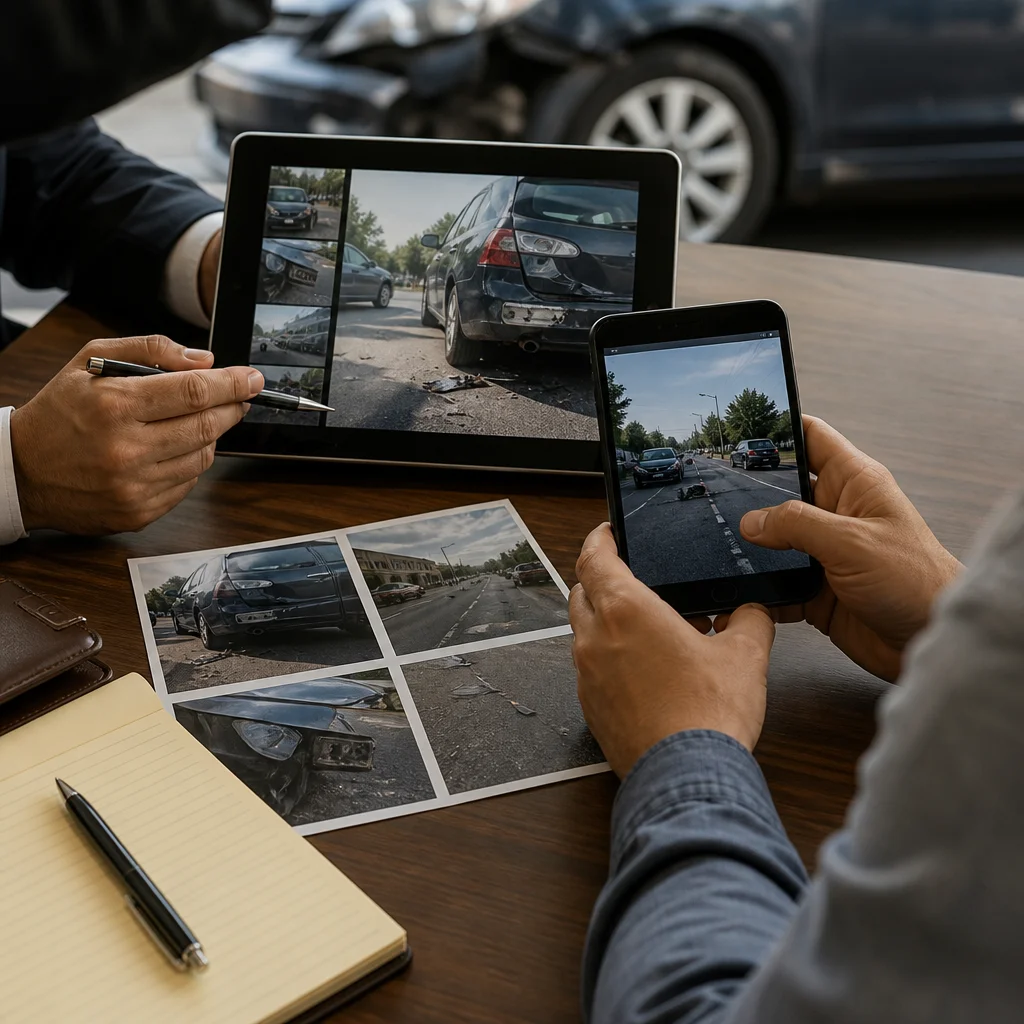
Do not delay this documentation. Preserve any evidence and get medical care immediately. Evidence preservation starts at the scene and continues through your medical treatment as injuries develop.
What to do next: Use your phone’s camera—it’s always with you and automatically embeds helpful metadata. If your phone is damaged, ask a bystander to photograph using theirs, or request a police officer to document the scene.
Video Documentation Techniques That Protect Your Claim
Video captures movement, sequence, and context that still photos cannot. A brief video walkthrough of the accident scene provides a powerful narrative of what happened.
If you can safely do so, record a short video (30 seconds to 2 minutes) showing:
- Your approach to the scene from different angles
- Close-ups of vehicle damage, hazards, or injuries
- Your voice narration explaining what you see and when the accident occurred
- Relevant signage, traffic signals, or environmental conditions
- Wider shots establishing the location and surrounding area
Video testimony from the scene—where you or a witness briefly describes what happened while standing at the location—adds credibility. The viewer hears the witness’s tone, sees their demeanor, and observes the actual environment at once.
Keep videos steady. Use both landscape and portrait orientation if recording on a phone, but landscape is preferred for viewing on larger screens. Ensure adequate lighting; outdoor daytime video is clearest.
Do not edit or alter video after recording. Original, unmodified footage is far more persuasive than edited clips that defense counsel can argue were manipulated.
What to do next: Before leaving the scene, record one comprehensive video walking through the accident area. This takes fewer than five minutes and provides invaluable context for our case review.
Understanding Metadata and Why It Protects You
Metadata is invisible information embedded in digital photos and videos. It includes the date, time, location (GPS coordinates if enabled), camera type, and other technical details that authenticate when and where the image was taken.
This data is powerful in litigation. When we present a photo with intact metadata showing it was taken on the date of the accident at the exact location, opposing counsel cannot credibly argue the image was taken later or somewhere else. Metadata proves authenticity and prevents disputes over timing.
Most smartphones automatically capture and store metadata. When you take a photo on your phone, the image file records the precise timestamp and often your GPS location. Videos embed similar information.
However, metadata can be lost or stripped away. Emailing photos, uploading to social media, or editing in certain software sometimes removes metadata. This is why preserving original files is critical. A photo with metadata intact is worth far more than the same image after metadata has been lost.
Defense attorneys know this. They will argue against undated or unlocated evidence. When your evidence has complete, uncorrupted metadata, their arguments fall apart.
What to do next: Save original image files directly to a secure location. Do not edit, compress, or upload to social media before we review them. If you must share evidence, send original files to us first—we will handle proper documentation and preservation.
How We Use Your Evidence to Build Your Case
The visual evidence you gather becomes the backbone of our investigation and negotiation strategy. We combine your photos and videos with police reports, medical records, and witness statements to construct a comprehensive narrative of the accident.
When we review your documentation, we look for supporting details that establish negligence. We will investigate all available evidence—including traffic camera footage, security recordings from nearby businesses, and information from emergency responders. Your scene photos help us identify which additional evidence sources exist and where to request them.
This evidence then serves multiple purposes. We use it in demand letters to insurance companies, showing adjusters exactly what happened and why their insured party is liable. Clear visual proof often accelerates settlement negotiations because the insurance company’s own adjusters can see the negligence without debate.
If litigation becomes necessary, your evidence is presented to a judge or jury. Photos and videos are more persuasive than testimony alone. When a jury sees the accident scene, the damage, the hazardous condition, or your injuries documented immediately after impact, they make decisions faster and award more complete compensation.
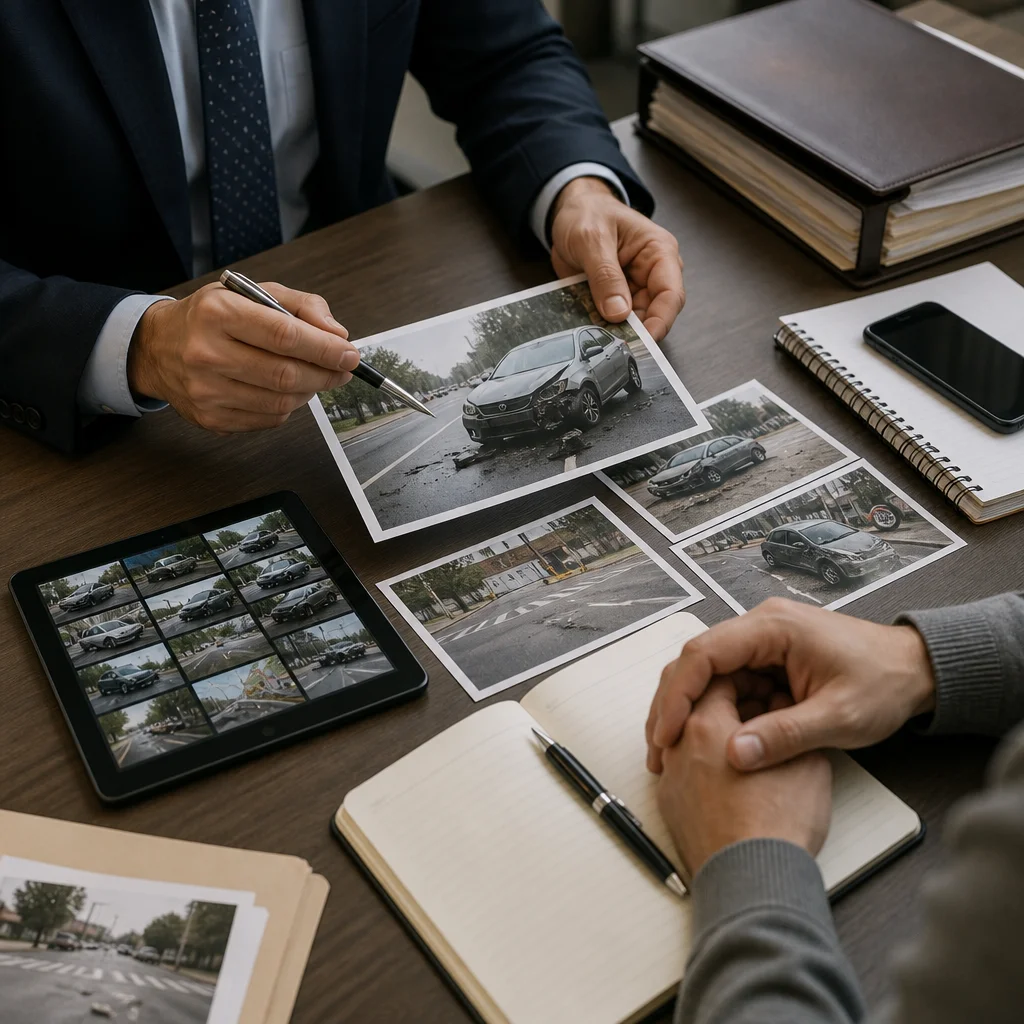
We also protect your evidence by securing it in our case management system, where it cannot be lost or accidentally deleted. Many injury victims mistakenly store accident evidence only on their phones or in a single email account, which risks permanent loss if the device is damaged or the account is compromised.
What to do next: Gather all photos and videos you took, ask witnesses for copies of theirs, and send everything to us as soon as possible. We will catalog, preserve, and integrate this evidence into your case strategy.
Common Evidence Mistakes That Weaken Claims
Well-meaning injury victims often undermine their own cases through preventable errors. Recognizing these mistakes helps you avoid them.
Posting evidence on social media: Once photos are uploaded to Facebook, Instagram, or TikTok, metadata is often stripped, and the insurance company can screenshot and distort them. Worse, social media posts can be used against you—if a photo shows you smiling or active weeks after the accident, defense counsel will argue your injuries are minor. Never post accident evidence or injury photos publicly.
Editing, filtering, or cropping photos: This makes images appear manipulated. Always keep and share original files unchanged. We can enhance clarity if needed during the litigation process.
Taking photos weeks after the accident: Scene conditions change rapidly. Road debris is cleared, weather passes, and vehicle positioning becomes irrelevant. Early documentation is essential.
Photographing only vehicle damage and ignoring the scene: A crushed bumper alone does not prove fault. Context—the traffic signal, road condition, vehicle positioning, signage—matters just as much.
Deleting photos or videos by mistake: Use cloud storage to back up originals immediately. One deleted file might have been decisive evidence.
Neglecting to document injuries over time: Take photos of bruises and swelling daily for the first two weeks, then weekly. This visual record of healing supports your damage claim.
What to do next: Review any photos or videos you have already taken. If you posted them on social media, consider deleting those posts and saving the original files instead. Contact us if you’re uncertain whether your evidence is suitable for your claim.
Preserving Digital Evidence Properly for Your Attorney
Proper preservation means protecting your evidence from loss, corruption, or unintentional alteration. This requires deliberate action on your part.
Store original image and video files in at least two places: a cloud service (Google Drive, OneDrive, iCloud) and an external hard drive if possible. Do not rely on your phone’s internal storage alone—phones are lost, damaged, or reset regularly.
Organize files by date and scene. Label folders clearly: “Car Accident – March 15, 2026 – Photos” and “Car Accident – March 15, 2026 – Videos.” This simple organization saves time when we review your evidence and helps prevent accidental mixing of images from different incidents.
Do not edit, filter, crop, or compress original files. If you need to share evidence quickly via email, that’s acceptable, but always keep the original, unmodified version separate.
When you send evidence to us, include a brief written summary: the date, time, and location where each photo or video was taken, and what each shows. This narrative context helps us understand your evidence and use it more effectively.
Avoid discussing your evidence in text messages, emails, or conversations with insurance adjusters. Defense counsel can obtain these communications and use them against you. Direct all questions about evidence to us.
What to do next: Within 48 hours of your accident, upload all photos and videos to secure cloud storage, and then email them to us. Include your written summary of when and where each was taken.
Evidence Timeline and Statute of Limitations Considerations
California has strict deadlines for filing personal injury claims. The statute of limitations—the filing deadline—is generally two years from the date of injury for personal injury cases. This is not a flexible guideline; missing this deadline means losing your right to sue entirely.
Evidence preservation must happen far sooner than the filing deadline. The sooner you document and preserve evidence, the stronger your claim. Scene conditions change within days or weeks. Witnesses move away or forget details. Medical conditions evolve.
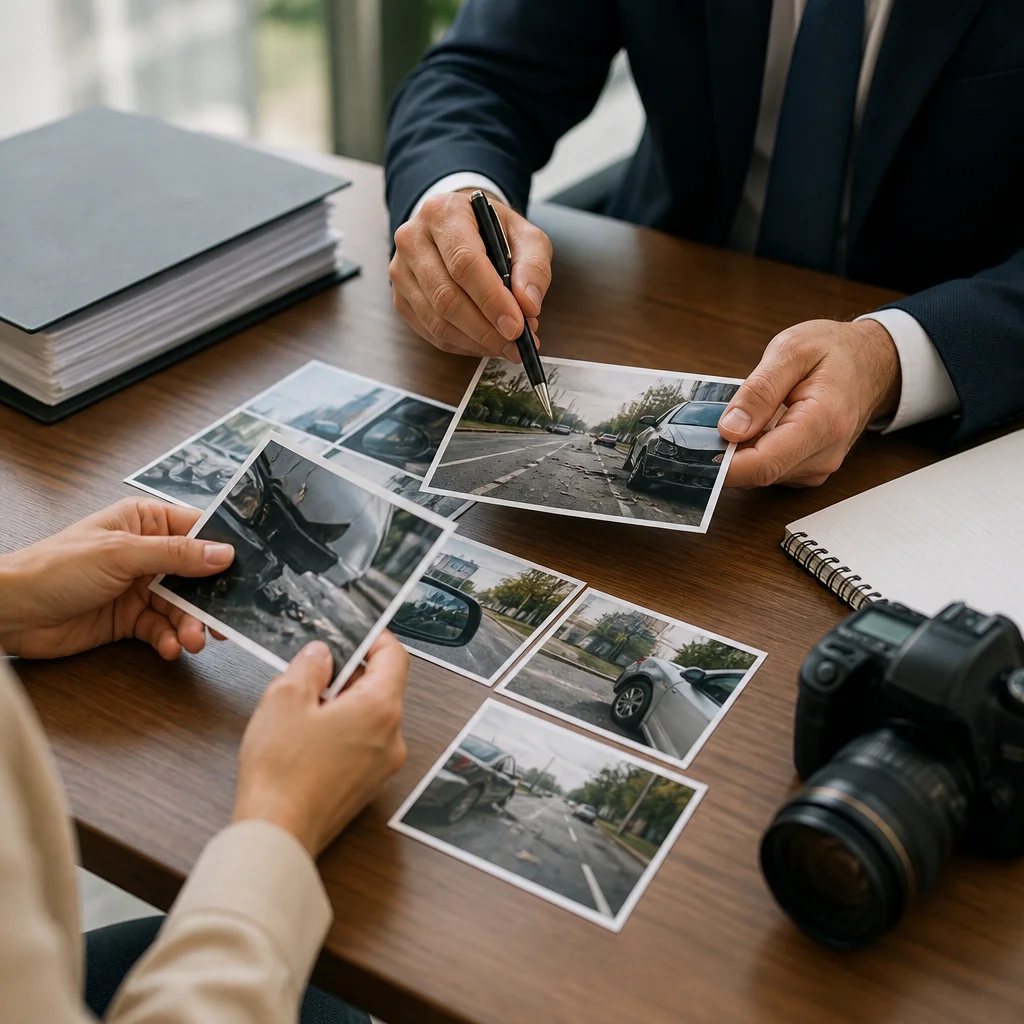
We recommend organizing and sending evidence to us within the first month after your accident. This ensures we have everything needed to investigate thoroughly, contact witnesses while memories are fresh, and prepare demand letters with maximum impact.
If litigation becomes necessary, we file suit well before the statute of limitations expires. However, we do not wait until the deadline approaches. Early filing gives us time to conduct discovery, take depositions, and prepare for trial if settlement fails.
Time is limited—act now. The sooner you contact us with your evidence and case details, the sooner we can investigate all available evidence and protect your rights. Delay weakens your position and increases the risk of losing critical evidence.
What to do next: Do not wait months to contact an attorney. Call us for a free consultation within days of your accident. Bring all evidence you have gathered, and we will assess what additional documentation we need.
How Our Team Maximizes Your Evidence Impact
At Weinberger Law Firm, we understand that photos and videos are only as valuable as how we present and argue them. We combine your evidence with expert investigation and strategic negotiation to maximize your recovery.
We begin by reviewing every image and video you provide, cataloging metadata, and identifying gaps in documentation. We then request additional evidence from police departments, government agencies, private businesses (security footage), and other sources. Our investigation team is skilled at locating evidence you may not know exists.
Next, we integrate your visual evidence into a cohesive narrative. We arrange photos chronologically, pair them with medical records and police reports, and present this material in demand letters and settlement negotiations. Insurance companies see immediately that we have documented proof of negligence and liability.
When evidence is strong, we pursue full and fair compensation—negotiating aggressively for all your damages: medical bills, lost wages, pain and suffering, and other losses. Strong visual evidence often doubles or triples settlement amounts because the insurance company knows defending against clear proof in court is expensive and risky.
If insurance negotiations fail, we use your evidence to prepare for trial. We work with expert witnesses, create visual presentations for the jury, and practice testimony that brings your evidence to life. Juries respond powerfully to clear, well-organized visual proof.
Finally, we protect you from making errors that weaken your case. We advise you on what not to do—no social media posts, no edited images, no unguarded conversations with defense counsel. This protective guidance matters as much as our litigation strategy.
We pursue your case with the understanding that every photo, video, and preserved detail strengthens your position. We handle all evidence preservation and presentation, allowing you to focus on healing. No fee unless we recover for you—your financial risk is zero, and our incentive is complete recovery of your damages.
What to do next: Contact us today for a free consultation. Bring all photos, videos, and documentation you have gathered. We will review your evidence immediately, answer your questions, and begin investigating your claim. Time is limited—let us help you secure the compensation you deserve.