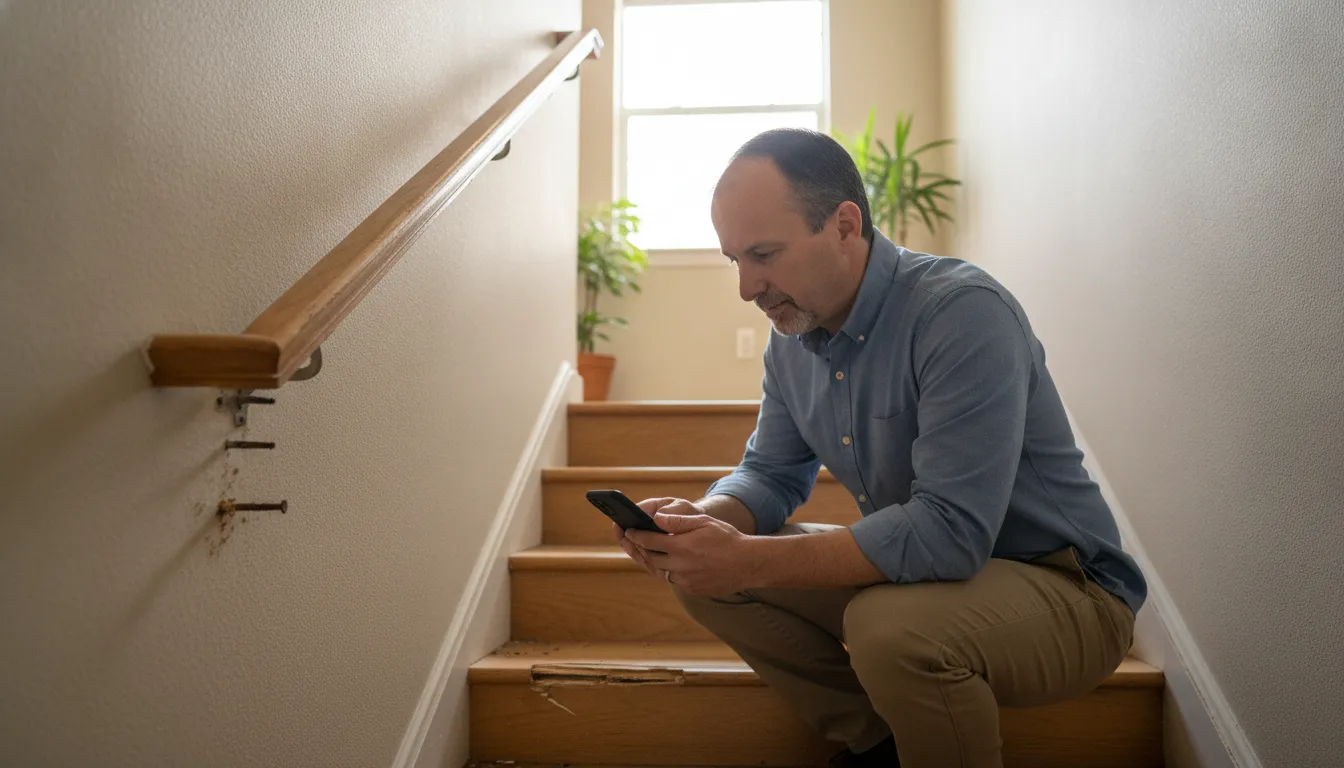
A loose handrail, broken lighting, leaking ceiling, or unrepaired surface can turn an ordinary visit or day at home into a serious injury. When maintenance is neglected, the important questions are who controlled the property, what the responsible party knew, and whether reasonable care could have prevented the harm.
Call Weinberger Law Firm at 916-357-6767 for a free consultation. We handle qualifying injury cases on a contingency-fee basis, so there is no upfront attorney fee and a fee is collected only if the firm recovers compensation.
California Negligent Maintenance and Property Accident Claims generally require evidence that someone owned, leased, occupied, or controlled the property. That person must have failed to use reasonable care in maintaining it and caused an injury through that failure. The facts may involve a rental, business, private residence, or public facility, and responsibility is not automatic.
Understanding the legal elements can help clarify what evidence matters and why notice, control, and the specific property condition often shape the evaluation. The broader principles discussed in Premises Liability and Catastrophic Injury Law in California: Know Your Rights provide useful context as you consider how these claims are evaluated.
How California Negligent Maintenance and Property Accident Claims Are Evaluated
Negligent maintenance generally means failing to use reasonable care to keep property reasonably safe. The issue may involve a hazard that was not repaired, an inspection that was not performed, or a warning that was not provided. California Civil Code section 1714 states that a person is responsible for an injury caused by a lack of ordinary care or skill in managing property. The exact duty depends on the property, the people who used it, the risk involved, and the facts known before the accident. Read California Civil Code section 1714.
Ownership is not the only question. A party may have responsibilities because it leased, occupied, managed, or otherwise controlled the location. Under California premises-liability principles, control alone can be enough to support responsibility, even when the party does not own or possess the property. That can make maintenance agreements, lease terms, property-management duties, and responsibility for repairs important parts of the investigation.
The ordinary-care duty
A person who owns, leases, occupies, or controls property must use reasonable care to discover unsafe conditions. If a foreseeable danger is found, reasonable care may require repairing it, replacing a defective feature, protecting people from it, or giving an adequate warning. This does not mean every accident establishes negligence. The question is whether the person responsible for the property acted as a reasonably careful person would have acted under comparable circumstances. The California Civil Jury Instructions on basic duty of care describe these maintenance, inspection, repair, and warning responsibilities.
The four premises-liability elements
In general, a person bringing a premises-liability claim must establish four connected points:
- The defendant owned, leased, occupied, or controlled the property.
- The defendant negligently used or maintained the property.
- The person bringing the claim suffered harm.
- The defendant’s negligence was a substantial factor in causing that harm.
These elements are drawn from CACI No. 1000. Evidence may include photographs, incident reports, witness accounts, medical records, inspection logs, repair requests, and video when available. The evidence must connect the condition to the injury and help show who had responsibility for addressing it.
Whether a claim is viable remains fact-dependent. A dangerous condition may have appeared moments before an accident, or it may have existed long enough that reasonable inspections should have discovered it. The property type, the party’s control, prior complaints, and the circumstances of the injury can all affect the analysis. This is general information, not legal advice, and a review of the specific facts is necessary before drawing conclusions.
Examples of Property Maintenance Failures That Cause Injuries
Maintenance failures can occur in many settings, from an apartment building or rental home to a store, office, parking area, or private residence. Common examples include broken or uneven stairs, loose handrails, damaged flooring, poor lighting, unrepaired leaks, defective elevators, and walkways left in unsafe condition. A property injury does not automatically establish legal responsibility. The important facts include who controlled the area, what condition existed, how foreseeable the risk was, and whether reasonable steps were taken to repair it or warn people.
California premises-liability guidance explains that a person who owns, leases, occupies, or controls property must use reasonable care to discover unsafe conditions. That person must repair, replace, or adequately warn about dangers that could reasonably harm others. See California Civil Jury Instruction 1001. Control can matter even when the person or company responsible for maintenance is not the property owner.
Common hazards in rental and residential properties
In rental housing and residences, a failure may involve stairs that remain loose after repeated use, a handrail that pulls away from the wall, a leak that creates a slippery surface, or lighting that leaves a passageway difficult to see. A property manager or landlord may also fail to address an elevator problem, damaged flooring, or an unsafe common area. Whether a landlord or another party may be responsible depends on control, notice, repair obligations, and the specific circumstances. A tenant-controlled area can raise different questions from a hallway, stairwell, parking lot, or other common area under someone else’s control.
Unsafe conditions at businesses and shared spaces
Businesses and other public-facing properties may expose visitors to hazards when inspections, cleaning, repairs, or warnings are inadequate. Examples include a torn floor covering, a spill or leak that remains unaddressed, a broken step, poor lighting near an entrance, or an elevator that is not properly maintained. The relevant question is not simply whether an accident happened. It is whether the condition created a foreseeable risk and whether the person responsible for the property acted reasonably in discovering and addressing it.
| Maintenance issue | Evidence that may matter |
|---|---|
| Broken stairs, handrails, or flooring | Photos, repair requests, inspection logs, and witness accounts |
| Leaks, spills, or poor lighting | Incident reports, video, cleaning records, and prior complaints |
| Elevator or shared-area problem | Maintenance records, service reports, warnings, and control agreements |
Evidence should be tied to the condition that caused the injury. Photographs and video of the hazard, witness statements, accident reports, medical records, and maintenance or repair information may help clarify what happened. These are among the materials commonly gathered when investigating negligent maintenance and other dangerous property conditions. Because details can disappear after a repair or cleanup, documenting the scene safely and seeking medical attention promptly can be important. Responsibility remains fact-dependent, and an attorney can evaluate how the condition, control, notice, and injury fit together with the broader principles discussed in Premises Liability and Catastrophic Injury Law in California: Know Your Rights.
How Do You Prove a Property Owner Knew About a Dangerous Condition?
Notice is often the central evidence issue in a property injury case. Actual notice means the owner, manager, landlord, employee, or another responsible person knew about the hazard before the incident. A complaint about a broken stair, a report of a leak, or a maintenance request can help show actual notice. Constructive notice is different. It asks whether the condition existed long enough, and under circumstances serious enough, that reasonable inspections should have discovered it.
Constructive notice is fact-specific. California jury guidance explains that the condition’s nature and duration must have given the property controller enough time to repair it. The controller must also have had time to protect people from it or provide an adequate warning. See CACI No. 1011. The question is not simply whether a hazard existed. It is whether the surrounding facts support a reasonable inference that it should have been found and addressed.
- Identify the condition and its likely timeline. Photograph or video the hazard as soon as safely possible. Note where it was located, how large or visible it appeared, whether it showed signs of age or repeated use, and whether weather or other circumstances affected it. The longer a condition appears to have existed, the more relevant constructive notice may become, although duration must still be proved from the facts.
- Request and preserve inspection and maintenance records. Inspection schedules, work orders, repair invoices, cleaning logs, incident reports, emails, text messages, and prior maintenance requests may reveal what the property owner or manager knew. A missing or irregular inspection can matter too. CACI No. 1011 recognizes that an inspection not made within a reasonable time before an accident may support an inference that the condition existed long enough to be discovered.
- Look for prior complaints and witnesses. Ask whether tenants, employees, customers, neighbors, or passersby reported the problem or observed it before the injury. Witness statements can help establish when the condition appeared, whether warnings were posted, and whether staff walked past it without taking action. In Ortega v. Kmart Corp., the California Supreme Court recognized that circumstantial evidence about inadequate inspections may support an inference of constructive notice. The court also explained that whether a condition lasted long enough to be discovered and remedied remains a question of fact under all the circumstances.
- Connect the hazard to the injury. Keep the incident report, medical records, photographs of visible injuries, treatment notes, and records showing missed work. Witness accounts and expert assessments may help explain how the condition caused the fall, collision, or other event. California cases can arise at businesses, rental properties, government facilities, and private residences, so the relevant records and responsible parties vary by location. Evidence may include photographs and video, witness statements, medical records, accident reports, and expert assessments, so preserving it before it disappears can be important.
These materials do not automatically establish liability. They help evaluate who owned, occupied, leased, or controlled the property, what that person knew or should have known, and whether reasonable action could have prevented the injury. An attorney can assess the evidence and the deadlines that may apply to the claim.
When Can a Landlord Be Responsible for a Tenant’s Injury?
An injury on rental property does not automatically make a landlord legally responsible. The key questions usually involve who controlled the area and who had responsibility for maintenance or repairs. The analysis also considers what the landlord knew and whether reasonable action could have prevented the harm. The lease, repair history, inspection records, tenant complaints, and facts surrounding the accident may all matter.
California’s landlord-duty rules recognize several situations in which responsibility may arise. Before giving possession to a tenant, renewing a lease, or retaking the property, a landlord must conduct a reasonable inspection for unsafe conditions. The landlord must take reasonable precautions against conditions found or reasonably expected to be discovered. The inspection must include common areas under the landlord’s control. See California Civil Jury Instruction 1006.
Common areas and landlord-controlled spaces
After a tenant moves in, a landlord may have a duty to take reasonable precautions against unsafe conditions in areas the landlord controls. Examples include hallways, stairways, walkways, laundry rooms, parking areas, or shared building facilities. This duty generally depends on whether the landlord knew or reasonably should have known about the condition. A missed repair, repeated complaint, deteriorated surface, inadequate lighting, or other maintenance problem may require closer examination of the landlord’s inspection and response practices.
Control can be important even when the landlord is not the only person involved in managing the property. Under the premises-liability framework, a person who owns, leases, occupies, or controls property must use reasonable care to discover unsafe conditions. That person must repair, replace, or adequately warn about dangers that could reasonably harm others. The landlord’s actual role, rather than the label used in a lease or management arrangement, can help determine whether that duty applied.
Tenant-controlled areas, knowledge, and repair authority
The analysis may differ when the dangerous condition was inside an area controlled by the tenant. In that setting, the relevant questions can include whether the landlord had actual knowledge of the condition and whether the landlord had the right and ability to correct it. A landlord may also need to consider the lease’s repair provisions, prior notices, maintenance requests, and whether the landlord retained access or authority to perform the work.
A landlord may not avoid a safe-maintenance duty simply by assigning the work to an independent contractor. California’s nondelegable-duty rule can prevent a landlord from escaping responsibility for failing to maintain property safely through that delegation. Still, liability is fact-dependent. A careful review of the condition, control, notice, inspection timing, lease terms, repair records, and medical evidence is necessary before drawing a conclusion about a tenant injury claim.
What Should You Do After a Negligent Maintenance Injury in California?
After an unsafe-property injury, focus first on your health and safety. Move away from the hazard if you can do so safely, ask for assistance, and obtain medical attention promptly. Tell the provider what happened and describe all symptoms, including pain or limitations that develop later. Medical records can help document the injury and the treatment it requires, but they do not by themselves establish who is responsible.
Report the condition to the property owner, manager, business, landlord, or other responsible contact as soon as practical. Ask for a copy of any incident report or make a written record of who received your report and when. Avoid guessing about how the hazard developed. A careful description of what you observed is more useful than an unsupported conclusion about who caused it.
Preserve evidence while the condition may still be documented
If it is safe, photograph or record the dangerous condition from several angles. Include surrounding features that show where the incident occurred, such as lighting, stairs, flooring, railings, signs, or nearby maintenance areas. Note the date, time, weather if relevant, and the names and contact information of witnesses. Do not return to an unsafe area merely to obtain a better picture.
Ask the property owner or manager to preserve relevant surveillance video, inspection records, work orders, maintenance logs, complaint records, and communications about the condition. Video may be overwritten, and repair work can change the scene. Keep copies of your report, photographs, messages, medical records, bills, wage-loss documentation, and notes about missed work or daily limitations. Evidence that may help includes photographs and video, witness statements, medical records, accident reports, and expert assessments. You can also review this guide to preserving evidence after a property injury.
Understand that the claim depends on the facts
California premises-liability claims generally require evidence that the defendant owned, leased, occupied, or controlled the property. The defendant must also have negligently used or maintained it, and that negligence must have been a substantial factor in causing harm. Responsibility and damages are fact-dependent. The analysis can turn on control of the area, prior reports, inspection practices, the condition’s duration, medical proof, and whether other circumstances contributed to the injury. Injuries can arise at businesses, rental properties, government facilities, or private residences, but the setting alone does not establish liability.
Before signing a release, giving a recorded statement, or accepting a settlement, consider getting advice about the full effect of that decision. Do not minimize symptoms or make assumptions about fault. A California personal injury attorney can review the available evidence, explain possible next steps, and help assess the claim without promising a particular result.
Key Takeaways for a California Property Injury Claim
Before a property injury claim can be evaluated, preserve the condition if it is safe to do so and identify who controlled the area. Notice may be shown through prior complaints and maintenance records, or inferred from how long a visible hazard existed. Keep medical and wage-loss records, and avoid signing a release or making statements about fault before understanding the claim.
These cases depend on specific facts involving control, notice, causation, and injury. A consultation can help identify which records may matter and whether a deadline may apply.
Call Weinberger Law Firm at 916-357-6767 for a free consultation about your property injury. There is no upfront attorney fee on qualifying contingency-fee cases.
Frequently Asked Questions
What are the four elements of a negligent maintenance claim?
Generally, you must show that the defendant owned, leased, occupied, or controlled the property; negligently used or maintained it; that you were harmed; and that the negligence was a substantial factor in causing your harm. The specific evidence depends on the condition, property, and people involved. California Civil Jury Instructions describe these essential factual elements.
What is the difference between actual and constructive notice?
Actual notice means the responsible party knew about the dangerous condition. Constructive notice may apply when the condition existed long enough, and was apparent enough, that reasonable care should have led to its discovery and correction or warning. A missed inspection may support an inference of constructive notice, but whether the hazard lasted long enough is ordinarily fact-dependent. CACI No. 1011 addresses this notice analysis.
Can a landlord be responsible for a tenant’s injury?
Possibly, but landlord responsibility depends on control, notice, and the circumstances of the injury. A landlord generally must reasonably inspect before transferring or retaking possession and must inspect common areas under the landlord’s control. After a tenant takes possession, duties may continue for unsafe conditions in landlord-controlled areas when the landlord knew or reasonably should have known about them. In a tenant-controlled area, actual knowledge plus the right and ability to correct the condition may matter. CACI No. 1006 explains these distinctions.
What evidence can help prove negligent maintenance?
Useful evidence may include photographs or video of the condition, witness statements, incident reports, maintenance and inspection records, communications about prior complaints, and medical records connecting the injury to the incident. Preserve evidence promptly because conditions can change, repairs can be made, and memories can fade. An expert assessment may also be useful, depending on the property and hazard.
Does partial fault prevent someone from bringing a claim?
Not necessarily. A person’s conduct, the property condition, and the conduct of other parties may all be considered when evaluating responsibility. Partial fault does not automatically eliminate a claim, but it can affect how responsibility and potential recovery are analyzed. The outcome depends on the available evidence and the facts of the incident, so an individual assessment is important.
Ready to Discuss Your Unsafe Property Injury?
A conversation with an experienced California personal injury attorney can help you understand which evidence and circumstances may matter in a negligent maintenance claim. Weinberger Law Firm represents injury victims statewide, including throughout Roseville, Sacramento, and Folsom. The firm offers a free consultation and handles qualifying cases on a contingency-fee basis, so there is no attorney fee upfront. A fee is collected only if the firm recovers compensation.
Call Weinberger Law Firm at 916-357-6767 to schedule your free consultation.